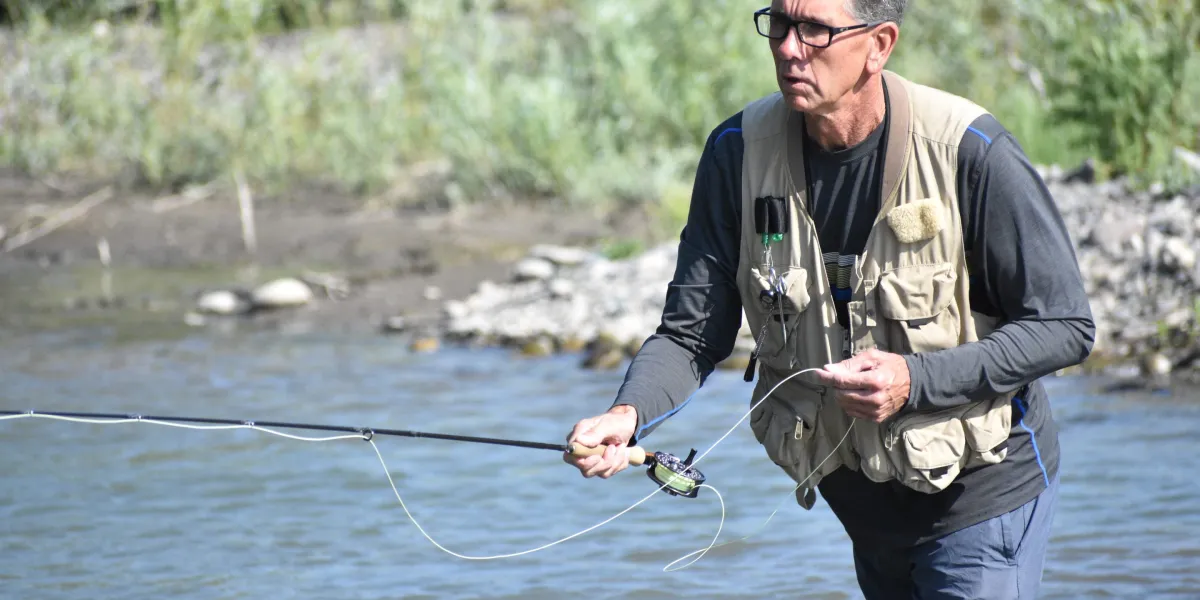
The Big Hole River, a blue-ribbon fishery that’s become a focal point in a years-long debate over nuisance algae growth, is poised to receive an impairment designation.At an open-house meeting in Divide on Tuesday, the Montana Department of Environmental Quality announced that the Big Hole, a mellow freestone river critical to southwest Montana’s outdoor recreation and agriculture economies, is struggling as a result of ecologically detrimental nutrient loading.The term DEQ is using in its discussion of the Big Hole is eutrophication, which describes the link between algae growth and excess nutrients such as nitrogen and phosphorus. When there’s too much algae in a river or lake, dissolved oxygen falls, imperiling fish and the aquatic life they feed on. Algal growth is also unpopular with members of the recreating public because it can make wade-fishing a slipperier — and therefore more perilous — endeavor. And it drives down biodiversity in the macroinvertebrate population, which has repercussions for fish and other species higher up the aquatic food web. Andy Ulven, who leads DEQ’s water quality division, told Montana Free Press on Tuesday that a eutrophication listing would “formalize that there is an issue on the mainstem” of the Big Hole. He added that the agency proposal is still in draft stage and he doesn’t anticipate a final designation for the Big Hole until 2027 at the earliest.
Montana DEQ works toward impairment designation for Big Hole River
The Big Hole River, a blue-ribbon fishery that’s become a focal point in a years-long debate over nuisance algae growth, is poised to receive an impairment designation.
1,080 words~5 min read