25 June 2026
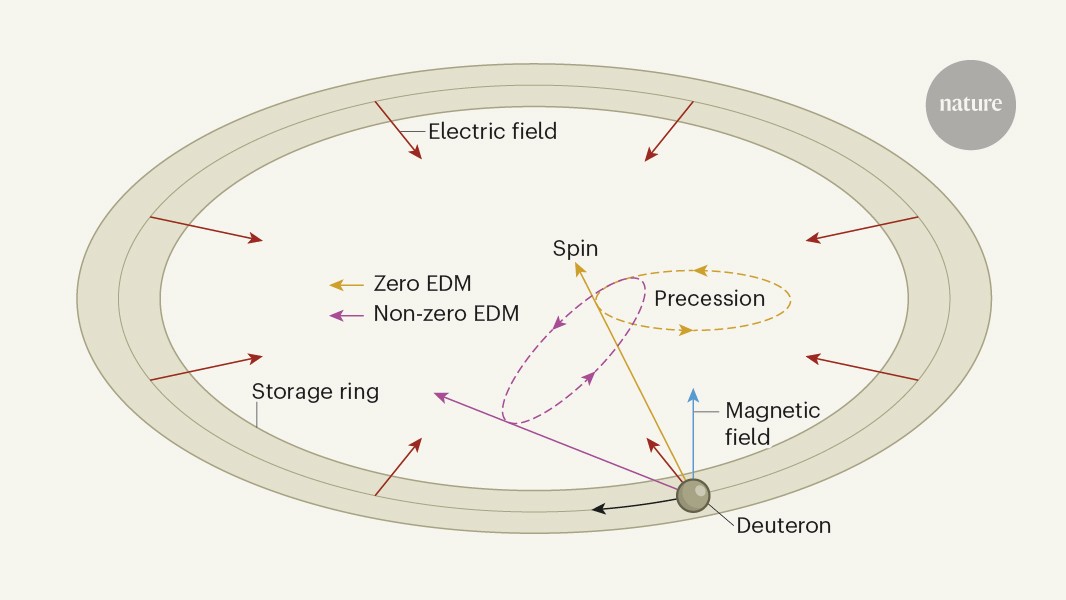
The response of the nucleus of a deuterium atom to electric fields shows no evidence of asymmetry, which is consistent with conventional theories of particle physics.
By
Steven Hoekstra0
Steven Hoekstra
The response of the nucleus of a deuterium atom to electric fields shows no evidence of asymmetry, which is consistent with conventional theories of particle physics.
25 June 2026
The response of the nucleus of a deuterium atom to electric fields shows no evidence of asymmetry, which is consistent with conventional theories of particle physics.
By
Steven Hoekstra0
Steven Hoekstra
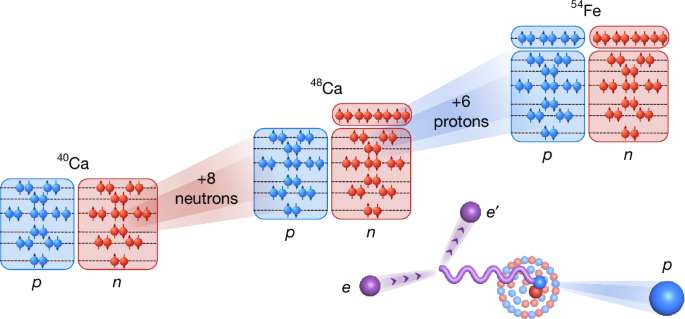
The scattering of high-energy electrons from three different nuclei demonstrated that short-range-correlated pairing depends far…

New calculations seem to have put a 25-year-old particle physics puzzle to rest. But they’ve also created a clash with other…

Scientists spent decades chasing signs of a mysterious new force hidden inside the muon, one of nature’s strangest particles. But…

The concept of a field plays a key role in particle physics, but what exactly is it? From its origins in the study of magnetism…

A new quantum theory bridges two rival models of how impurities behave inside many-particle systems, resolving a problem that has…

En multipliant les expériences destinées à débusquer l’axion, particule hypothétique théorisée dans les années 1970, les…