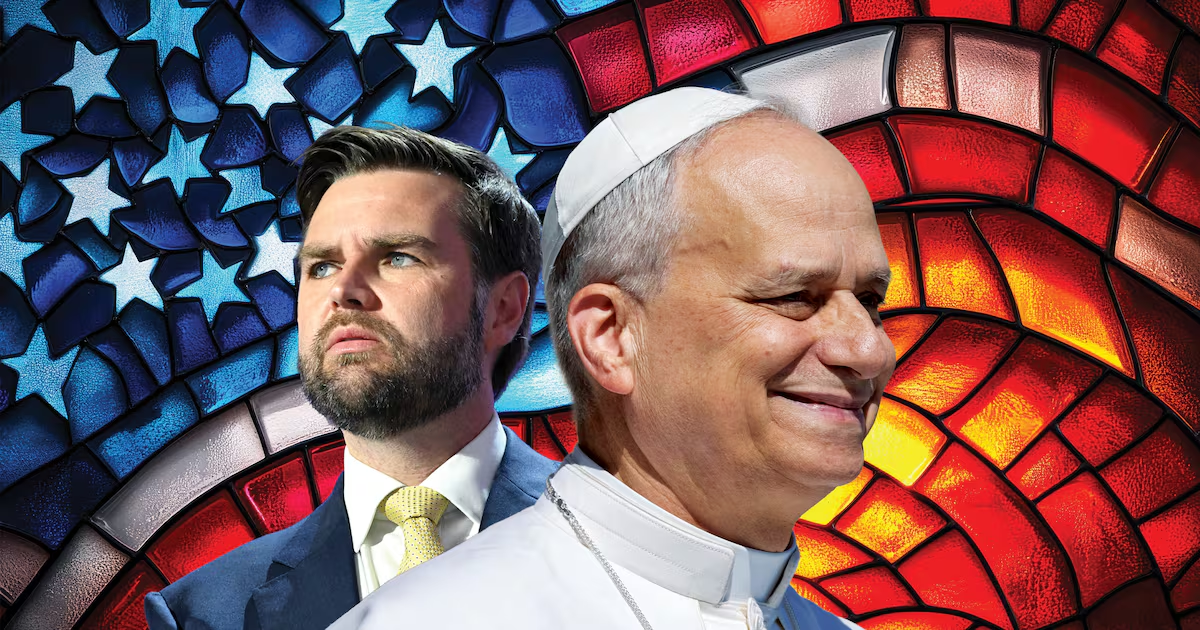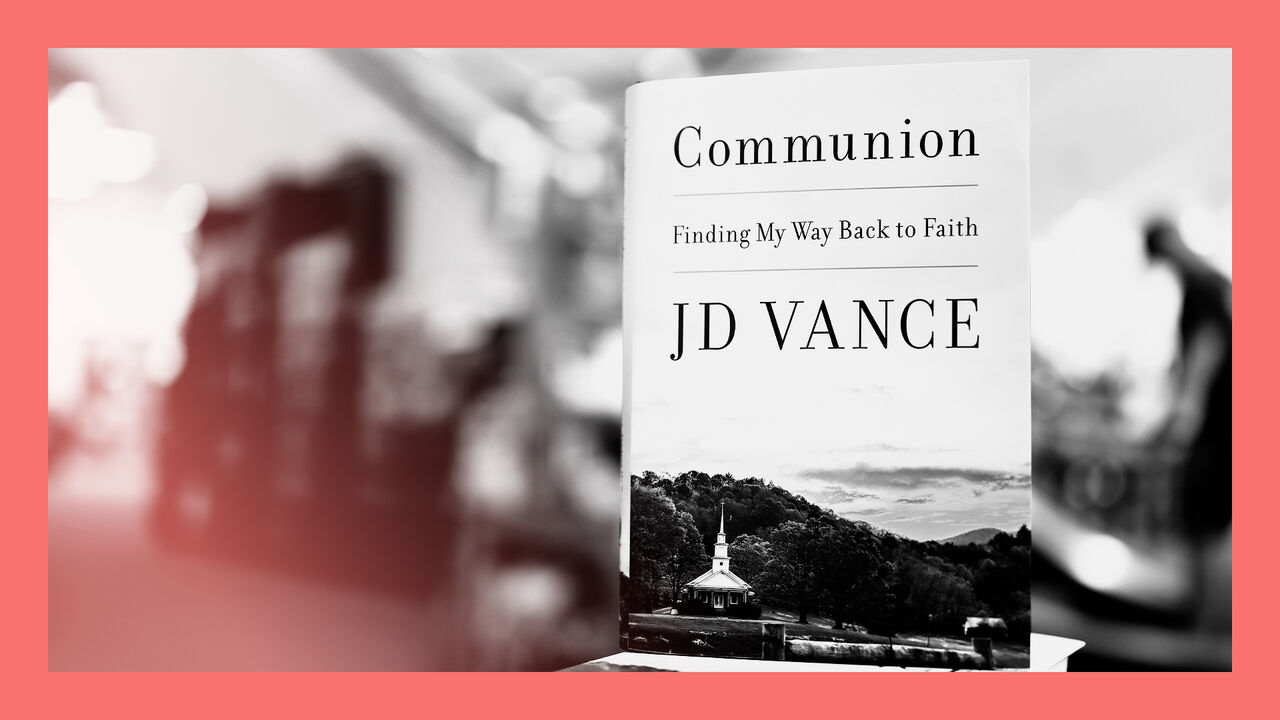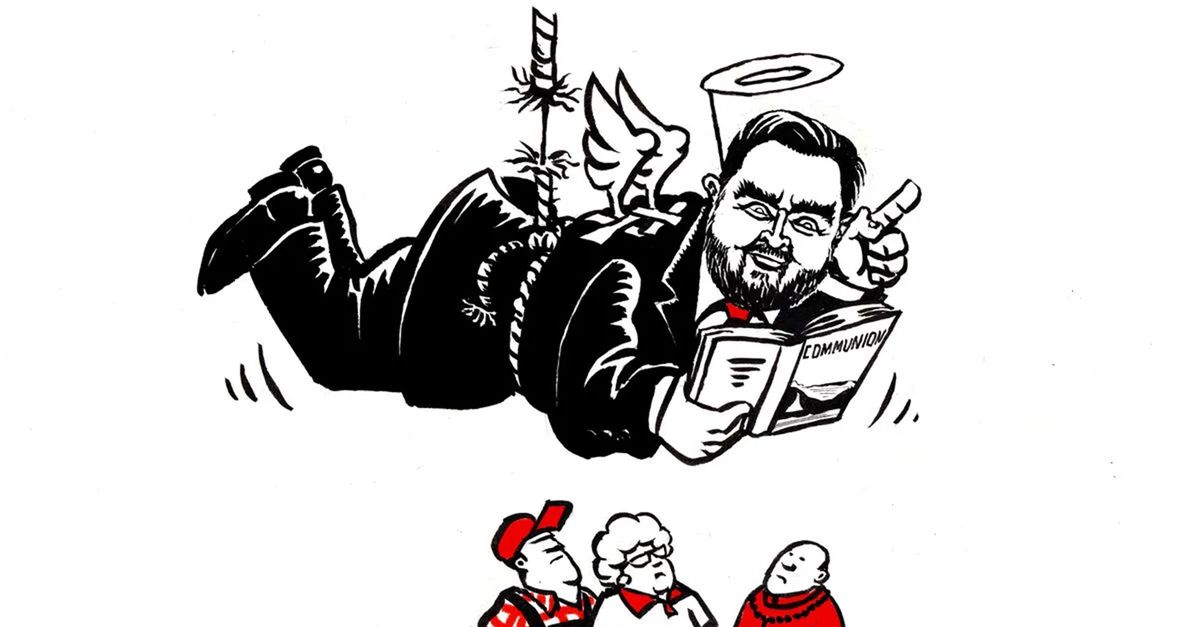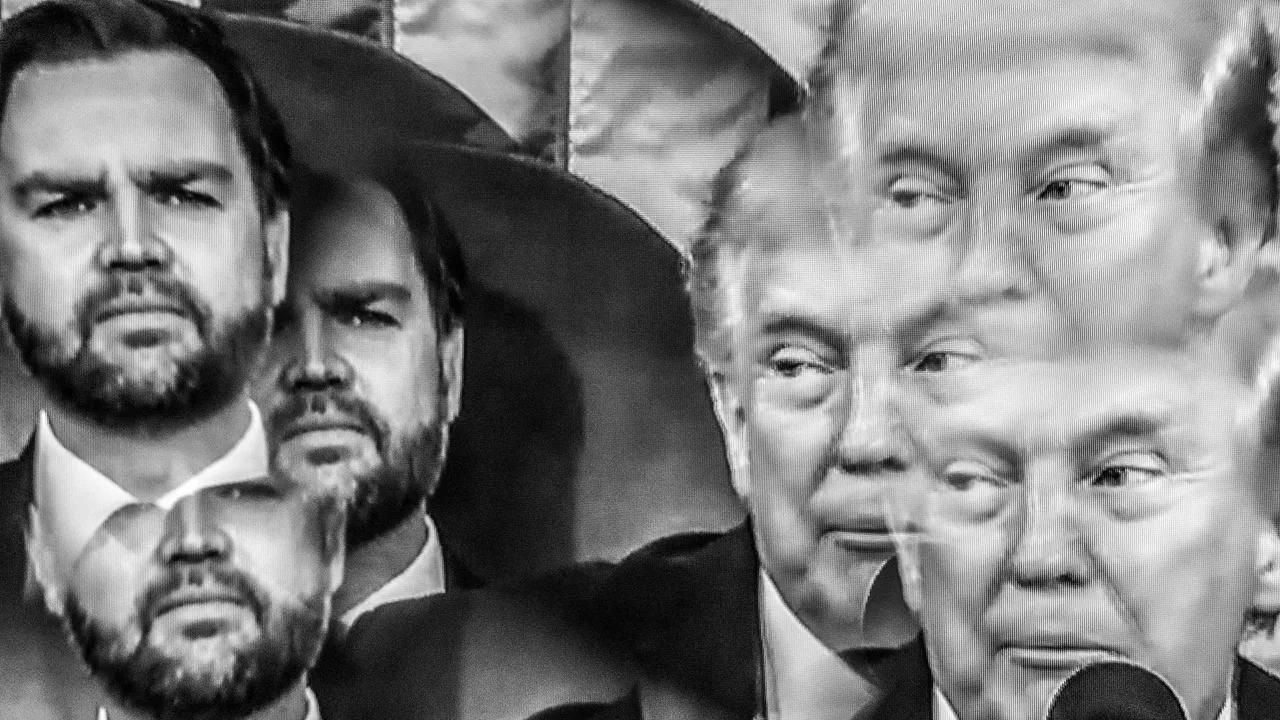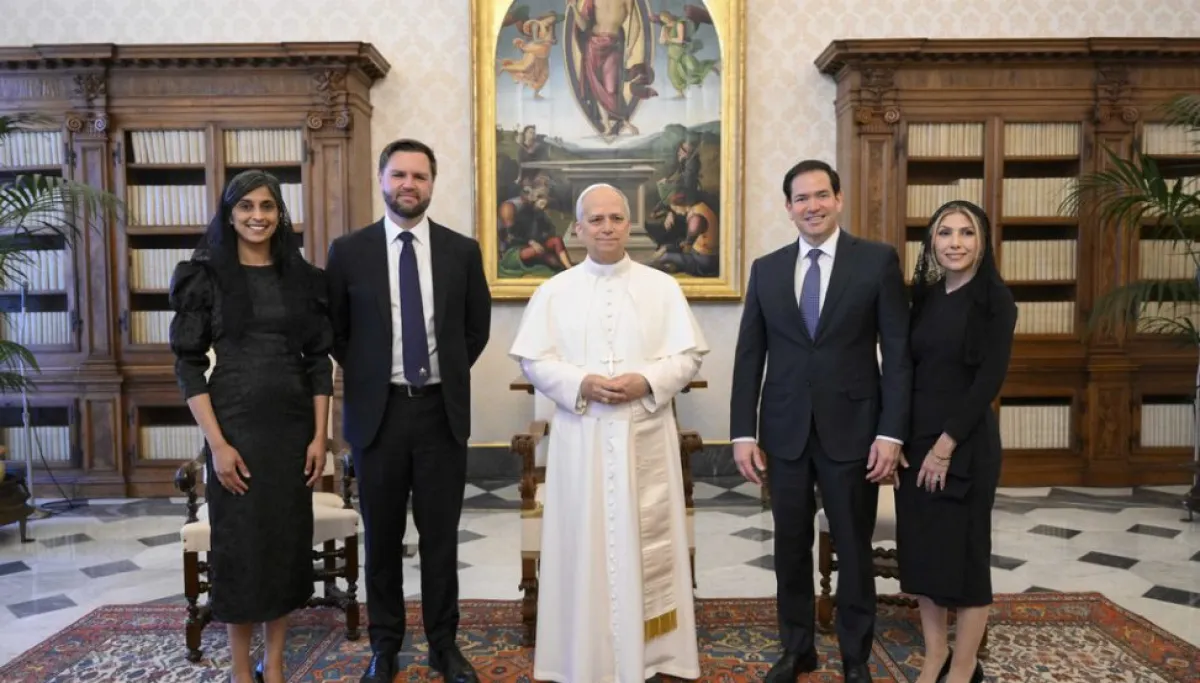
The push to wed the American right to Catholicism is not new, but it has reached a fever pitch. I’m a friend of both — by all means be Catholic, and by all means be right-wing — but please do not imagine that this marriage is anything short of a blunder.The vows are all but ready. JD Vance has just released a conversion memoir, Communion, in which he attributes his own rise to capitalizing on the “the fusion between Republican politics and the Christianity of my youth.” A cadre of intellectuals — notably, Patrick Deneen, whom Vance cites as a major influence, and Adrian Vermeule — are busy drafting the philosophical basis for this union. The popular National Conservatism manifesto declares that in a Christian-majority nation, a subtle way of saying “America,” “public life should be rooted in Christianity and its moral vision.” The Dispatch, in its documentary on the movement, asked in earnest whether Catholicism has become “the backbone” of the right.To be clear, the traditional Christian right is not one faction, nor is it even entirely Catholic, though Catholicism has certainly stolen the spotlight. There are, among others, the integralists, who would subordinate the state to the Church; the withdrawalists, who are buying farms and disappearing; and the national conservatives — Vance’s camp — who want to win elections with border-and-eggs populism and Catholic identity tacked on. Vance flirts with more fringe Catholic postliberalism, but for electoral purposes, he admits: “There are a lot of things the Catholic Church teaches that frankly, Americans would just never go for.”
The electoral case against a Catholic-Conservative wedding
To tie your party to a fraction of voters, who aren't even fond of you, while also threatening to deport many of them, is no winning strategy.
1,062 words~5 min read