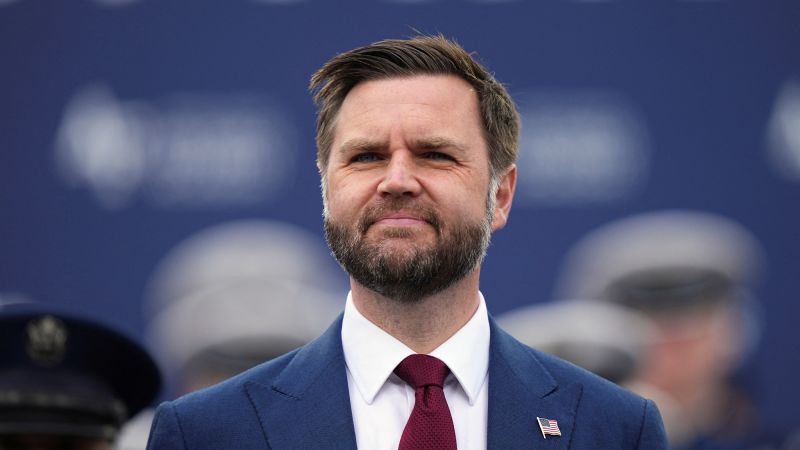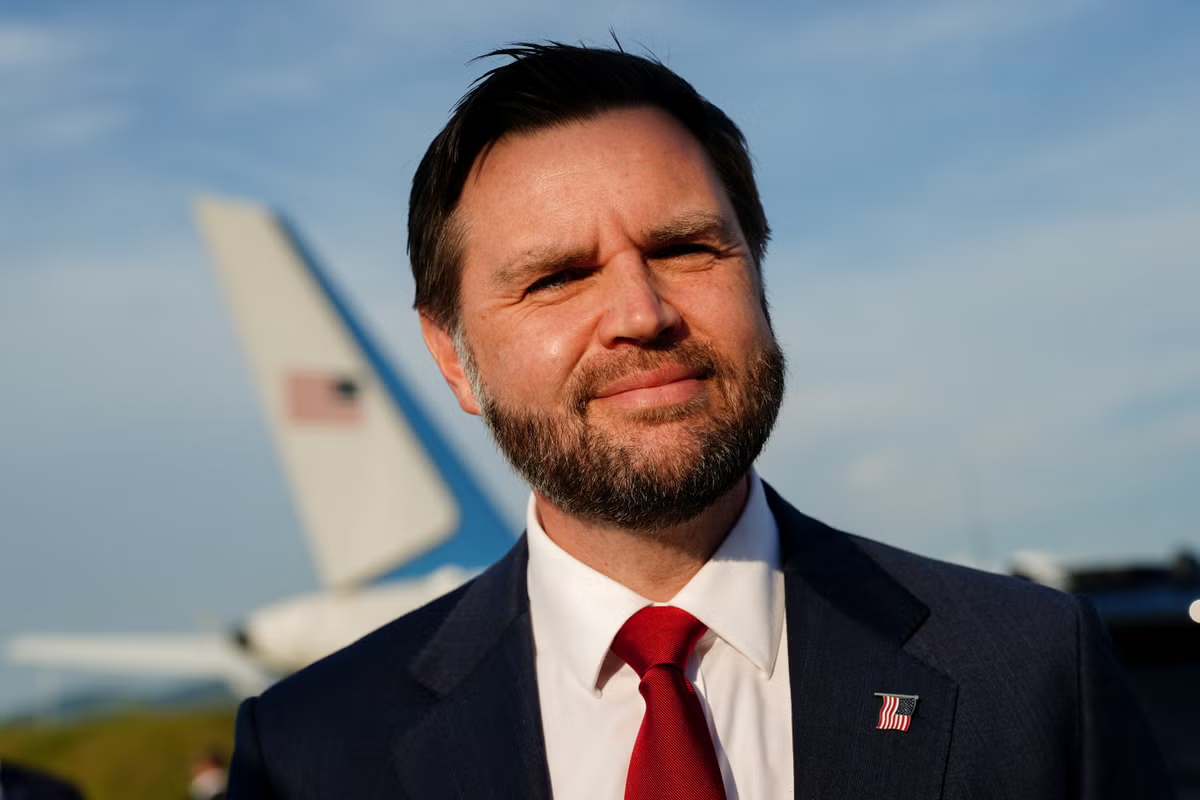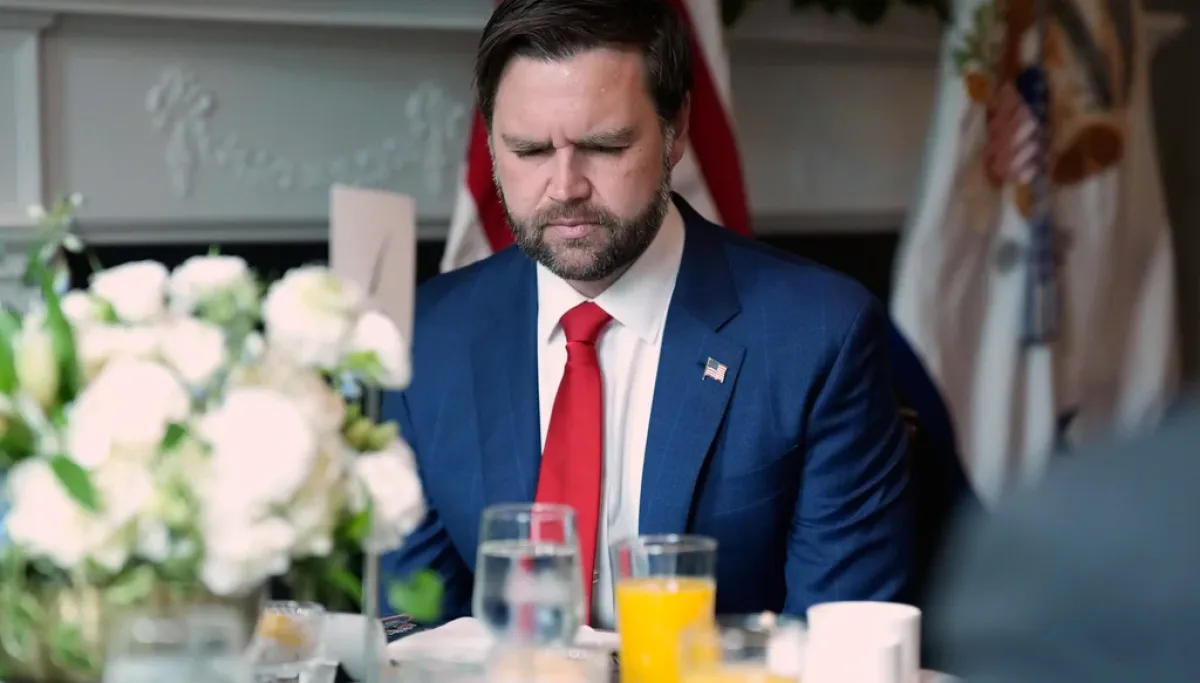
JD Vance had been a Catholic convert for two years when, as an invited speaker at a conference of the Catholic conservative Napa Institute in California in 2021, he mused on what he should do when he disagrees with the pope.“One of the things I’m not totally sure how to deal with as a public figure, as someone who does sometimes disagree, and agree too, with the Holy Father on some core issues, is: what is my role as a new Catholic, a Catholic that has some public voice?” wondered Vance, then a candidate for the Ohio senate and known for writing a memoir about his hardscrabble background.Giving an example of a disagreement, Vance mentioned then pontiff Francis’s restrictions on the traditional Latin-language mass, which Francis had come to see as a source of division within the church, as a rallying point for hardliners who oppose the 1960s-era Vatican II reforms.“Even if I’m not a Latin mass guy, things like that felt wrong,” Vance said. The audience at the Napa Institute – which works to promote a traditionalist and economically conservative version of Catholicism in the US – applauded.Vance would go on to have public disagreements over theological matters with two popes as vice-president of the United States since 2024.In the process he has become the pre-eminent example of a deeper trend in the United States of highly prominent converts to Catholicism trying to steer the church on to a more conservative path, while also exerting an important intellectual influence on the Maga movement seeking to reshape the US.“Some of them really have this plan to not just make America great again, but also to make Catholicism more nationalist, more American,” said Massimo Faggioli, who recently became a professor in ecclesiology at the Loyola Institute at Trinity College Dublin after working in US universities for 17 years.“JD Vance is exhibit A in all this process because he’s the youngest and he’s the most powerful because he’s vice-president. He embodies this drift towards a very ethnocentric view of America and a very theocratic idea of the state, where religion is the centre of the identity of the nation.”High-profile converts to Catholicism range from the Republican former house speaker Newt Gingrich, to self-described Christian nationalist commentator Candace Owens, to the conservative New York Times columnist Ross Douthat.US vice-president JD Vance, who converted to Catholicism in 2019, at St Peter’s Basilica in the Vatican. Photograph: Kenny Holston/The New York Times Other right-wing figures such as former White House chief strategist Steve Bannon were raised Catholic but have come to make Catholicism a pronounced part of their political brand (Bannon broadcasts his War Room podcast in front of a mantlepiece lined with Catholic iconography).“The roster of prominent contemporary American Catholic converts reads like a ‘who’s who’ of Maga and conservative thinkers, advocates and cultural figures,” the National Catholic Reporter wrote in 2024.The fact that the Catholic Church is attracting conservatives in the US is underlined by survey data by the National Study of Catholic Priests showing that 84 per cent of newly ordained priests describe themselves as theologically conservative and just 2 per cent as progressive.This is a profound generational shift from in the late 1960s, when 68 per cent of newly ordained priests in the US described themselves as theologically progressive, and only 16 per cent conservative. It has long-term implications.The trend has been under way since the 1980s, when there was a growth of conservative Catholicism within elite circles in the US, accompanied by a wave of conversion. [ Pope Leo’s strong voice finds an audience - even among non-believersOpens in new window ]Some were attracted to the steadfast conservatism of John Paul II on issues such as abortion and contraception, at a time when churches like the Episcopalians were introducing women priests, and later to the doctrinaire approach of Pope Benedict XVI. Converts, many of them with more conservative views than people raised in the religion, would go on to carve out influential platforms in US universities, Catholic journals and magazines.“Catholicism became after the 1980s the symbol of stability, of immutability, of tradition. And then they got Pope Francis, who said: well guys, things change,” said Faggioli.“For the entire pontificate of Pope Francis between 2013 and 2025, much of my job in America as a Catholic theologian was to explain to some Catholics that Pope Francis was Catholic. Literally.”Pope Francis’s teachings on economics, social justice and the treatment of immigrants were firmly grounded within Catholic tradition, but came across as liberal in a US context. He then outraged conservatives by loosening guidance on whether same-sex marriages can receive a blessing and whether divorced people can receive communion, leaving it down to the “discernment” of individual priests in their parishes given the realities of the modern world and need to not alienate people. It was a shift from a prior ban on people who are not living in a “state of grace” from receiving communion.It’s the strongest warning coming from the papacy in a century against American nationalism— Prof Massimo FaggioliThere was open defiance within the US church, led by the figurehead arch conservative Cardinal Raymond Burke, who issued a series of open challenges to Francis in a letter expressing his “doubts”. “While such high-profile cases of opposition were rare, expressions of disdain for Francis among like-minded bishops or their staff were not,” wrote the Notre Dame history professor Scott Appleby.The pope was widely denounced as heretical by Catholic alt-right online influencers. The same Napa Institute that hosted Vance as a guest speaker became a locus for opponents of Francis, along with the EWTN Catholic media network.“I think the question is: are we disagreeing with definitive, infallible church teaching, or are we disagreeing with the pope if he’s being less than clear?” said Tom Nash, a former theology adviser for EWTN who explains Catholic beliefs to the public at the advocacy group Catholic Answers.“We need to reach out to people. But if you’re saying that people can come to Communion irrespective, muddying the waters on whether they’re in a state of grace or not, then you’re not serving them well. You can’t sanctify, you can’t bless immoral behaviour.”Vance has said repeatedly that part of the appeal of Catholicism was tradition.Pope Francis meeting US vice-president JD Vance. Photograph: Vatican Media/AQP “I really liked that the Catholic Church was just really old,” Vance said when explaining his conversion in 2021. [ The Catholic thinker behind JD Vance’s religious conversionOpens in new window ]“I felt like the modern world was constantly in flux, the things that you believed 10 years ago were no longer even acceptable to believe just 10 years later. The Catholic Church ... it had stood really strong on some of the moral issues.” Particularly important for him was the church’s opposition to abortion, Vance said, mentioning its role in pushing the “American Christian conservative movement ... in a more pro-life direction” in the 1970s.In an essay about his conversion published in Catholic journal The Lamp, Vance said Catholicism had seemed culturally alien to him growing up – “too formal” – at a time when he attended a Pentecostal church.He became an atheist libertarian at college. Reading St Augustine, attending a talk by the arch conservative venture capitalist Peter Thiel, and discovering the French philosopher René Girard began to change his mind. The Hungary-based US conservative writer Rod Dreher, who converted first to Catholicism and then to Orthodoxy, has taken credit for referring Vance to a conservative-leaning Dominican order for religious instruction. In 2019 Vance was received into the faith at St Gertrude Priory in Cincinnati Ohio, which each year invites its parishioners to bring their own hammers to drive 3,000 white crosses into its lawn as a protest against abortion.Vance has a memoir about his conversion due out this summer. It features, as some Catholic commentators have snidely noted, a Methodist church on the cover.When Vance began drawing on Catholic thought to justify “America First” positions, he began to receive pushback from the top. In a 2025 interview with Fox News, Vance cited an “old school ... Christian concept” in defence of anti-immigration policy, saying it was natural for love for one’s family to come first. “Then you love your neighbour, and then you love your community, and then you love your fellow citizens in your own country, and then after that you can focus on and prioritise the rest of the world,” Vance said. He later identified the idea he was referring to as “ordo amoris”, a concept originating the works of St Augustine and Thomas Aquinas.It took less than two weeks for then then-pontiff Francis to issue a highly unusual response.“I have followed closely the major crisis that is taking place in the United States with the initiation of a programme of mass deportations,” Francis wrote in a letter to US bishops.Jesus Christ himself was a migrant and refugee, Francis wrote. While acknowledging that countries have the right to enforce their own laws, Francis rejected the idea that Christian love is “a concentric expansion of interests that little by little extend to other persons and groups”.“The true ordo amoris that must be promoted is that which we discover by meditating constantly on the parable of the ‘Good Samaritan’ ... that is, by meditating on the love that builds a fraternity open to all, without exception,” he wrote.Massimo Faggioli, who recently became a professor in ecclesiology Faggioli considers the letter, one of Francis’s last written works before he died, as the pontiff’s “political testament”.“It’s the strongest warning coming from the papacy in a century against American nationalism, and the connection between nationalism and religion,” Faggioli said.The election of Leo as the first US-born pope raised hopes among conservative Catholics of a like-minded pontiff.His papacy began with Leo contacting alienated parts of the church, while subtly signalling continuity and tradition with a cautious manner of speech that seemed to herald reconciliation after a divisive period.But Leo’s reputation as “the quiet American” has been entirely overturned by his emphatic opposition to the US attack on Iran in a series of sermons, writings and comments to media since March. As well as fierce condemnation of war in general terms and a rejection of aggressors who invoke the name of God, the pope has also addressed the specific policy of the Trump administration, telling journalists the US president’s threat to wipe out a “whole civilisation” in Iran was “unacceptable”.In response, Vance told Fox News the pope should “stick to matters of morality” and questioned the accuracy of his remarks.“When the pope says that God is never on the side of people who wield the sword, there is more than a 1,000-year tradition of just war theory. How do you say that God is never on the side of those who wield the sword?” Vance said at a conservative political conference.“I think it’s very, very important for the pope to be careful when he talks about matters of theology.”Pope Leo at the Malabo Stadium in Malabo. Photograph: Alberto PIZZOLI/AFP via Getty Images This led to an intervention by the Catholic Church’s senior authority on doctrinal matters in the US “in light of recent public comments regarding the Catholic Church’s teaching on war and peace”.It stated that only wars of self-defence are just, and underlined that the pope “is not merely offering opinions on theology, he is preaching the gospel and exercising his ministry as the vicar of Christ”.The incident revived a long-running “family quarrel” within the church between converts and so-called “cradle Catholics”.“There is a particular arrogance that takes root in the newly converted ... The audacity is breathtaking. The irony is almost comic,” Msgr Arthur Holquin, a retired priest with a large social media following, wrote on his blog.“The deeper problem is not merely that Vance is wrong about just war. It is the ecclesiological framework he is importing from American Christian nationalism into a tradition that explicitly rejects it.”There are signs that the ideological chasm between US conservative Catholicism and the papacy will not be bridged under the first American pope. While the Napa Institute recently published a speech by a US entrepreneur describing “profit, and the inequality of its distribution” as “not a bug in the system, but a feature, as designed by God”, Leo has made a clear indication of continuity with Francis.“We must continue, then, to denounce the ‘dictatorship of an economy that kills’,” Leo wrote in one of his earliest works as pope, quoting his predecessor.The same document described the “preferential option for the poor” that emerged from Latin American liberation theology as being “well integrated” into church teaching – the polar opposite of the “prosperity theology” common in the US.July 4th this year will find Leo not marking US Independence Day, but at Lampedusa, the highly symbolic Italian landing point for so many migrants who cross the Mediterranean. He will be following in Francis’s steps.
Rise of ‘new Catholics’ hardens battle lines between US and the Vatican
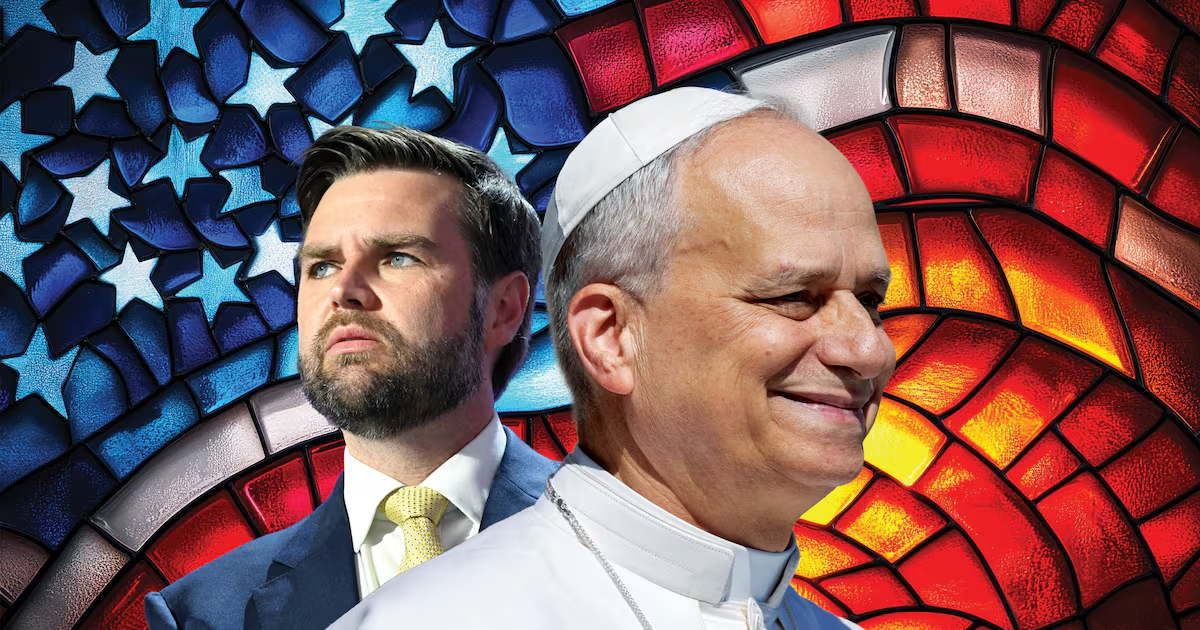
JD Vance’s recent comments reflect a growing movement of conservative believers promoting a more traditionalist, ethnocentric path
2,147 words~10 min read