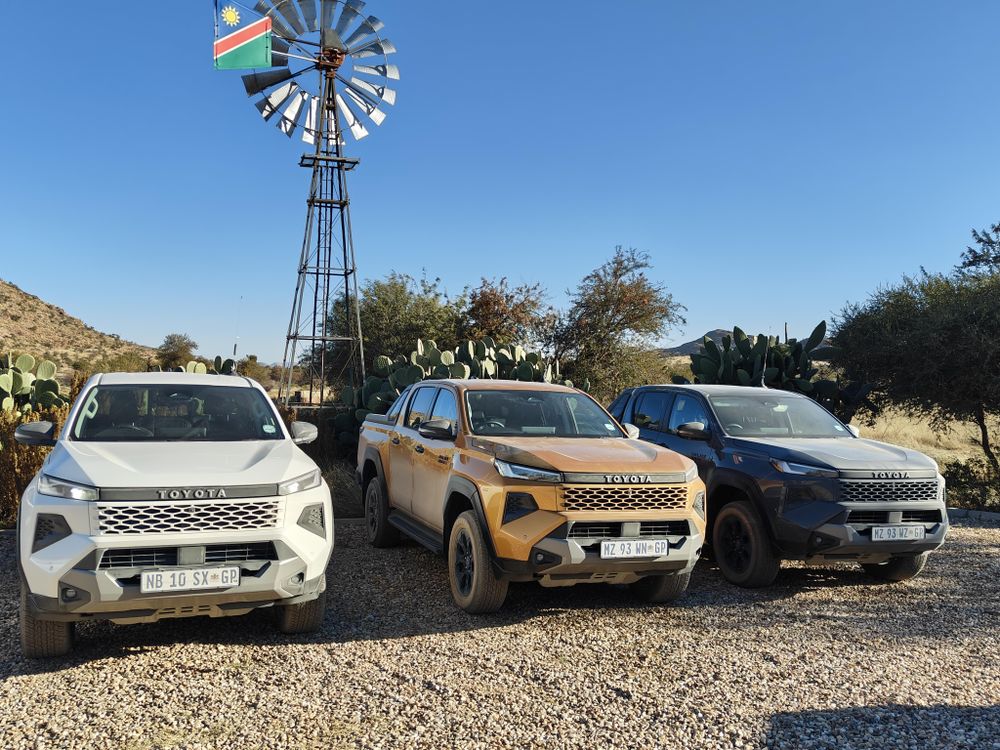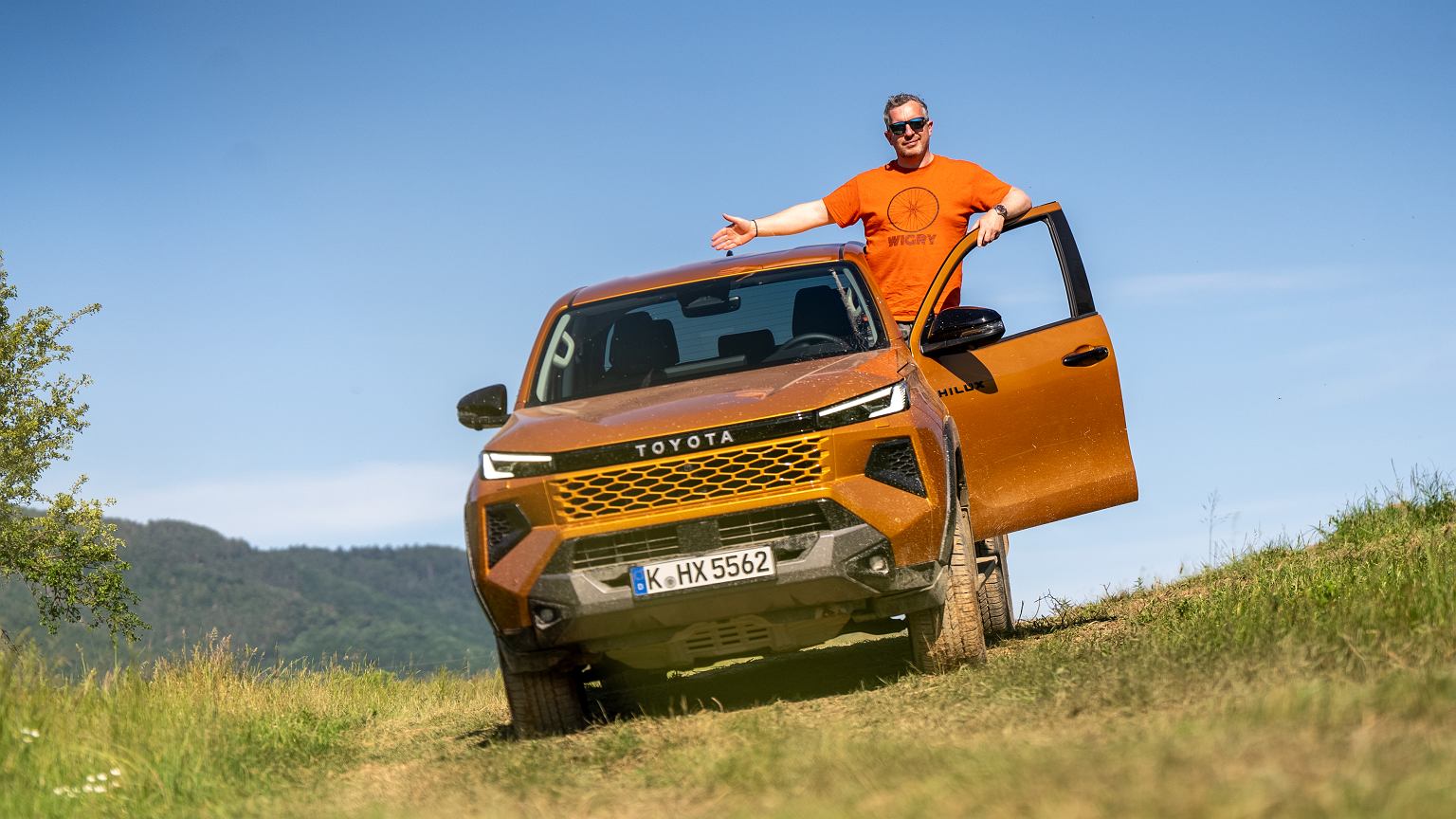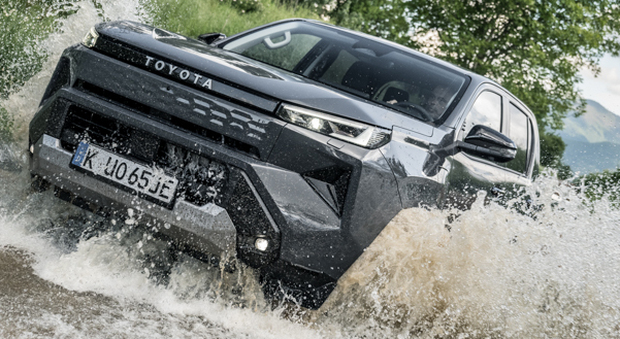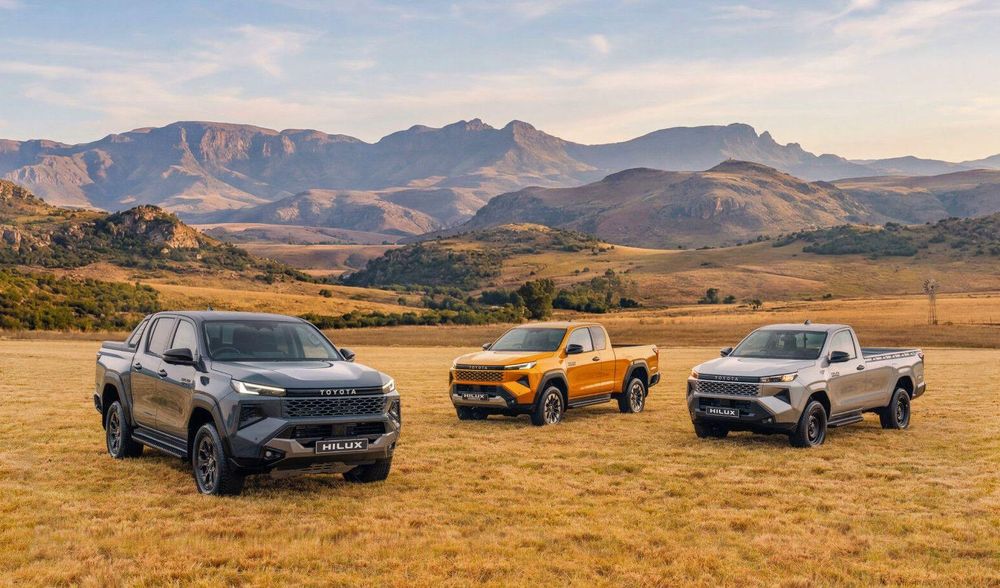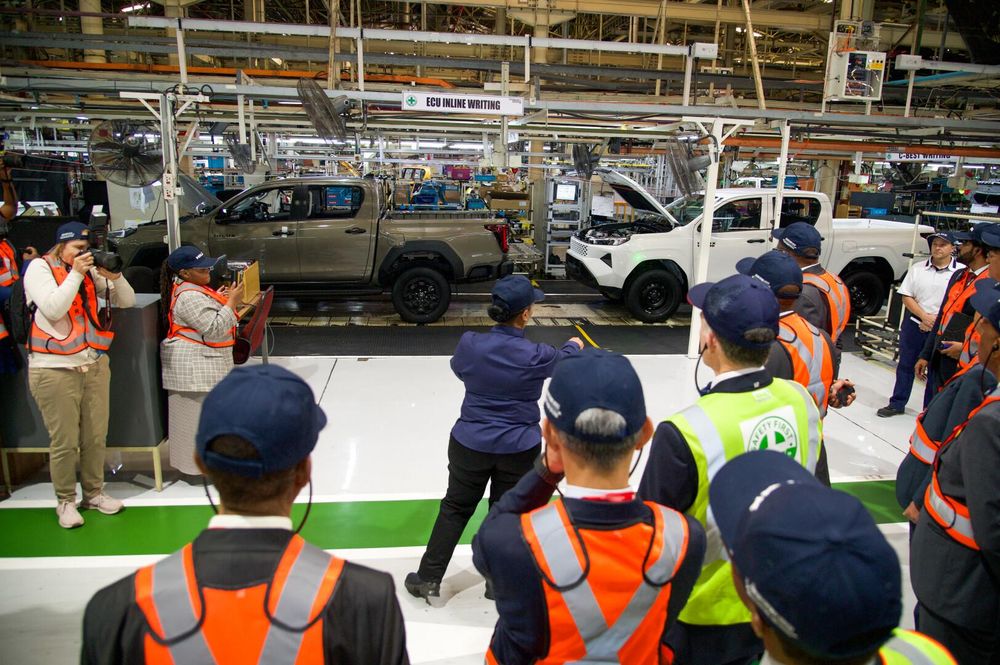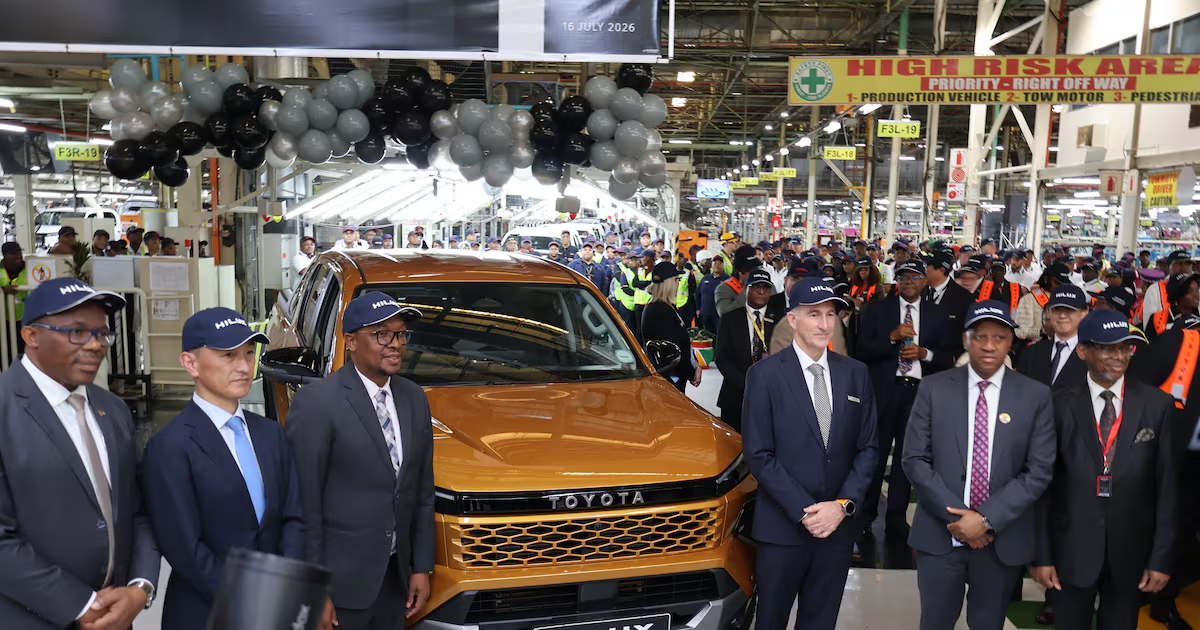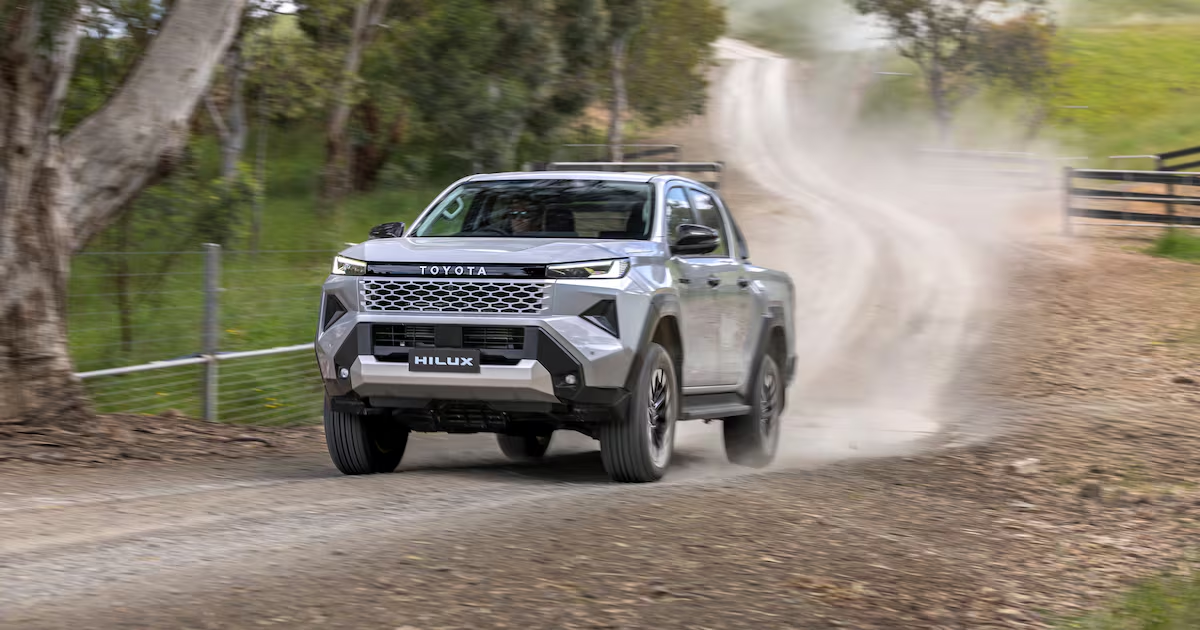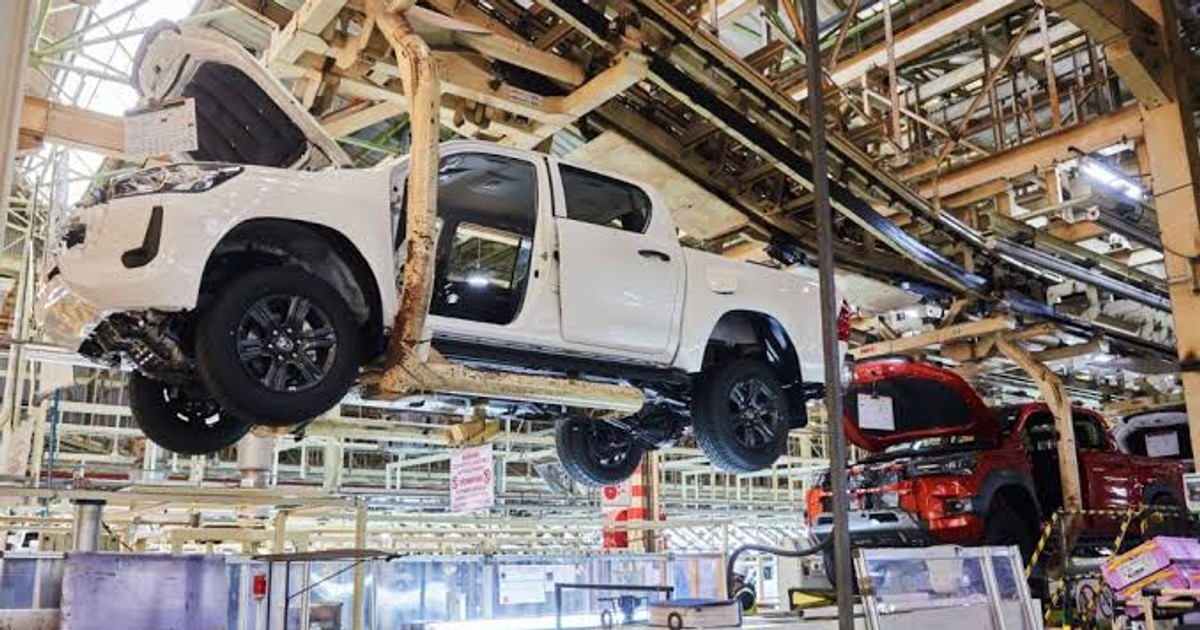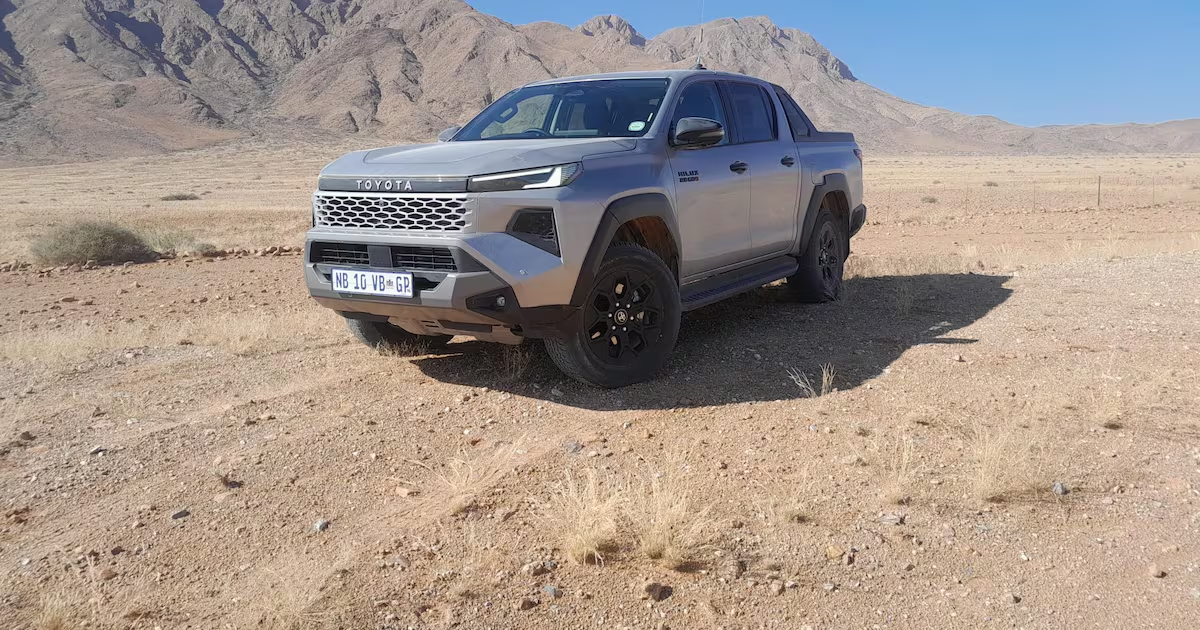
Sales of the ninth-generation Toyota Hilux have officially begun in South Africa. The latest version of the country’s best-selling new vehicle is built at the company’s Durban assembly plant.Now, though, the bakkie market has heated up, chiefly from traditional rivals Ford and Isuzu, but also a growing number of Chinese rivals with cheaper prices.There's a strong influence from the Land Cruiser Prado cabin. (Brenwin Naidu) The new Hilux is more of a comprehensive update than a new model from the ground up, though. We report from the cockpit of the Hilux 2.8 GD-6 Legend 4x4 trim tested at the media launch held earlier this week on the dry but spectacular terrain of Namibia.The polarising looks are a good starting point.The Hilux with the boldest frontal design yet is inspired by a sumo wrestler flexing his pectorals, according to the company. The bluff and upright snout with slim headlights looks aggressive in the metal, while the rest of the reskin is contemporary to the bakkie market, and fitted with LED light technology.Toyota says the latest model was designed with input from customers, who, according to the company, didn’t want radical changes from the eighth-generation model. It’s the reason the new dimensions don’t change from the 5,320mm length, 1,815mm width and 3,085mm of the wheelbase of the predecessor from 2016, despite new rivals arriving with bloated sizes.The Hilux Legend trim blends stylish looks and luxury with bakkie functionality. (PHUTI MPYANE) Hilux trims to choose from include the SRX, Raider and Legend, and the range launches with a limited seven models comprising a pair of short wheelbase Xtra Cab and five double-cab variants, all on leaf spring and rigid-axle rear suspension and available in 4x2 or 4x4 guises, and powered exclusively by the 2.8 GD-6 engine. More models with smaller engine capacities will be launched in 2027.The inside is a complete rethink, too. Higher-quality materials are used to craft a more ergonomic dashboard layout that retains physical buttons and toggle switches for various functions.The Hilux has become even more digitalised, with USB-C ports exclusively and wireless connection to mobile devices.A floating, colourful and digital central screen with touch-operation blends with the steering wheel that mimics the unit found in the latest Land Cruiser Prado. The new seat design with powered control also came to the fore during the 1,000km-plus kilometres driven.New features to be had in the cabin include an AC inverter with a two-pin plug point for household units such as kettles or mobile chargers to be plugged in, though the unit was faulty in both the vehicles we drove, a quality workmanship low point.With more gravel road than it has tarred, Namibia’s road network offered the ideal conditions to test the new Hilux’s capabilities. The ride quality and steering response is improved thanks to revised suspension, damping and electric power steering.The better ride plushness is felt immediately, though the tyre pressures in the two cars we eventually drove were deflated by about 20Kpa in mitigation of the long drive on gravel roads.The insulation of the cabin didn’t allow dust to infiltrate inside, and the climate control was very effective, pointing to persistent build quality and comfort objectives.The 48V mild hybrid system that couples a 12kW and 65Nm electric motor and 7.6kg battery is now standard fitment in the Legend nameplate. The system, with regenerative braking, transforms the trusty old 2.8 GD-6 engine into a smoother and more efficient operator that consumed 11.4l/100km during the adventure of mostly spirited driving.Stability on loose surfaces is enhanced by the new mechanical tweaks, the four-wheel drive system and electronic safety nets including electronic stability control.The Hilux proved a steady and punchy companion on the roads, with Toyota SA mentioning the new chassis setup is created to satisfy requirements for both toughness and comfort. It shows promise of delivering on that mandate, including towing 3,500kg braked trailers.VerdictThe first-drive verdict says the improvements in refinement on the latest Hilux are palpable despite the controversial design. It’s well priced, comfy and likeable, with aims to be as dashing as the newer competition while retaining the tough-warrior reputation polished over time since 1968.It’s sold as standard with a three-year/100,000km warranty and nine services/90,000km service plans.PricingXtra CabHilux 2.8 GD-6 Raider X - R751,800Hilux 2.8 GD-6 Raider X 4x4- R842,200Double CabHilux 2.8 GD-6 SRX - R658,500Hilux 2.8 GD-6 SRX 4x4 - R764,100Hilux 2.8 GD-6 Raider 4x4 - R892,900Hilux 2.8 GD-6 48V Legend - R945,500Hilux 2.8 GD-6 48V Legend 4x4 - R999,900Business Day
FIRST DRIVE: New Toyota Hilux tested on 1000km-plus Namibian gravel
The comprehensive facelift of the outgoing model drives better with new features
741 words~3 min read