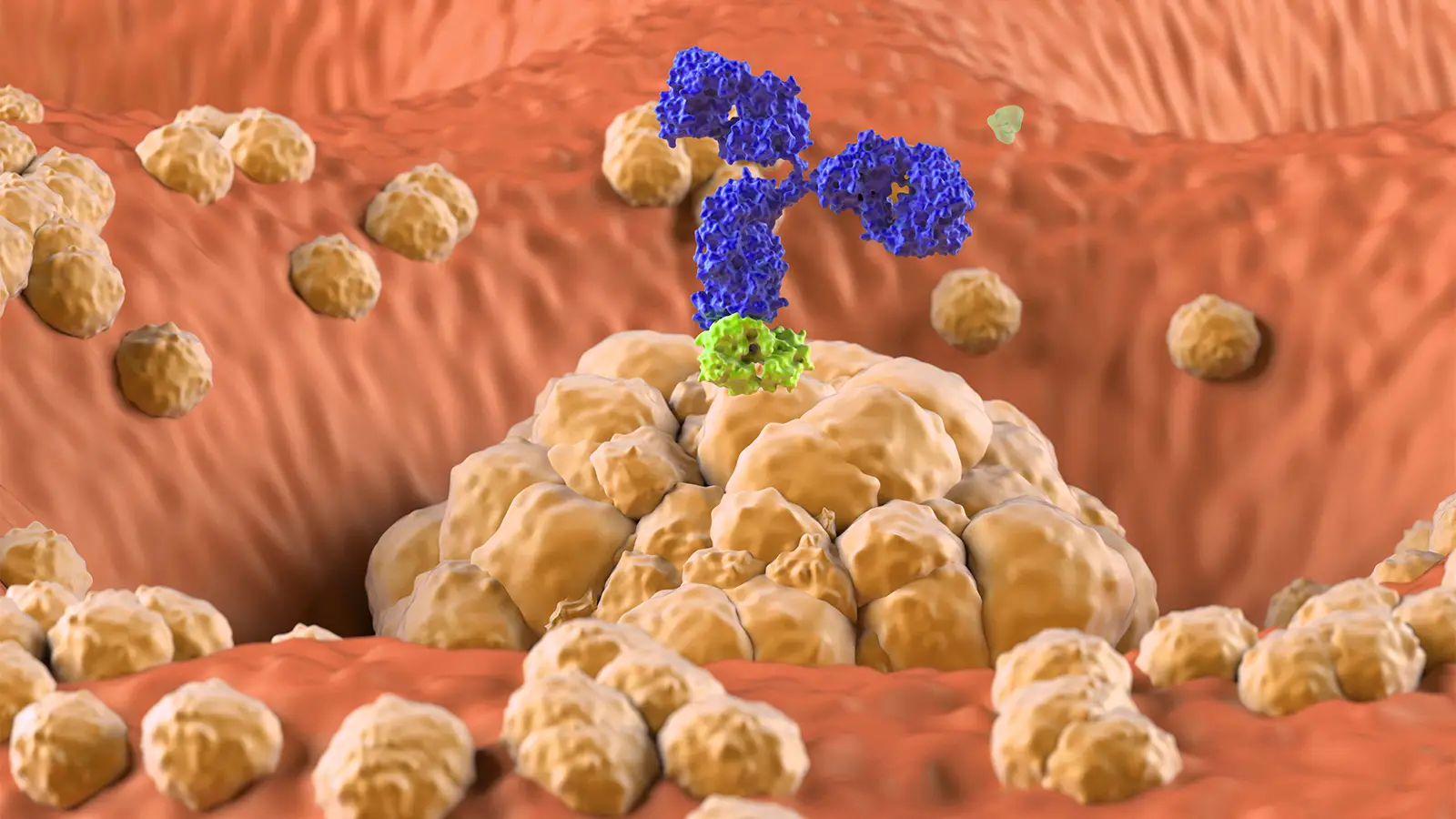
AstraZeneca and Gilead have won approval for treatments of an advanced form of the disease. Drug companies have found promising new options for one of the most aggressive and hardest-to-treat forms of breast cancer after decades with few breakthroughs.Upward of 48,000 Americans were diagnosed with triple-negative breast cancer last year.Gilead Sciences won Food and Drug Administration approval Wednesday to sell its drug Trodelvy as a first treatment for newly diagnosed patients with the advanced form of a type of breast cancer known as “triple negative” because it has characteristics that render common treatments ineffective.It is the second such approval in about a month: AstraZeneca and Daiichi Sankyo’s rival drug, Datroway, was approved for a similar group of patients in May.Both of the drugs are antibody-drug conjugates—a type of targeted therapy that uses an antibody to identify a protein found on most triple-negative tumor cells and then delivers a concentrated dose of chemotherapy directly into the cancer.The aim is to spare more healthy tissue than standard chemotherapy, which attacks growing cells throughout the body. These drugs both reduced the risk of progression of the disease by around 40% when compared with chemo.“The progress is a lot more palpable right now and bringing us a greater deal of hope and excitement,” said Dr. Carmen Calfa, a breast medical oncologist at the Sylvester Comprehensive Cancer Center in Miami who wasn’t involved in either study.Upward of 48,000 Americans were diagnosed with triple-negative breast cancer last year. It is often diagnosed in younger, Black and Latina women. Patients with the advanced form of the disease live for a median of less than two years.The disease’s speed is why doctors say the first treatment choice matters more than for slower-moving cancers. Triple-negative breast cancer recurs and spreads after an average of around 2½ years, compared with five years for other breast cancers. About half of patients never get a second type of treatment.Gilead’s approval rests on two trials, both measuring how long Trodelvy kept tumors from growing. There isn’t enough data yet to determine whether the drug extended patient’s lives. Trodelvy, when given on its own, cut the risk of tumor progression or death by 38%, compared with chemotherapy, in patients who weren’t eligible for immunotherapy.TrodelvyIn patients who could take immunotherapy, which represents about 30% of all triple negative breast cancer patients, a combination of Gilead’s drug and Merck’s Keytruda cut the risk of tumor progression or death by 35%.AstraZeneca’s drug Datroway, in its own trial against chemotherapy, cut the same risk by 43% and extended median survival by five months compared with chemo. AstraZeneca didn’t test its drug in combination with immunotherapy for this approval.The two drugs haven’t been tested against each other, so doctors can’t say which works better.Analysts expect Datroway’s breast-cancer sales will top out at $714 million annually, according to life-sciences firm Norstella. Trodelvy’s sales for breast cancer are expected to peak above $2.4 billion.“It’s really important to have the most active drugs in those early lines of therapy,” said Dietmar Berger, Gilead’s chief medical officer.Terri Childers learned she had triple-negative breast cancer that had spread to her chest and lungs in late 2023. Her doctors told her that she would eventually die from the disease, 63-year-old Childers recalled, but that they’d try to buy her time.Terri Childers at the University of Texas MD Anderson Cancer Center in 2024.Her oncologist at the University of Texas MD Anderson Cancer Center offered to enroll her in Gilead’s clinical trial, and she started treatment the following January. “That was the only thing I was really offered,” said Childers, who was also eligible for immunotherapy. “There was no existing medicine that they had that would kill this.”By March 2024, her tumors had shrunk. She’s since had a mastectomy, 44 rounds of radiation and a recurrence that sent her back to treatment. Childers drove more than six hours from her home in Abilene, Texas, to Houston three times a month until her oncologist arranged for her to get infusions of Trodelvy and Keytruda, the immunotherapy, closer to home.Scans in May showed Childers’ cancer still shrinking. She now spends the days that she’s not exhausted by cancer treatment at her grandchildren’s baseball games and dance recitals—she says she hasn’t missed one yet.AstraZeneca and Gilead are testing their drugs at earlier stages of the disease, including using their medicines to shrink tumors before breast removal surgery in cases where the cancer hasn’t spread throughout the body and as a follow-up treatment to clear out any leftover cancer cells before they have a chance to spread.“We’re seeing this very impressive benefit in the metastatic setting,” said Dr. Sara Tolaney, chief of the breast oncology division at Dana-Farber Cancer Institute who worked on the Gilead trials and was involved in early design of AstraZeneca’s. “It makes us want to move these drugs into earlier-stage disease and try to cure more patients.”Write to Xavier Martinez at xavier.martinez@wsj.com
New Drugs Are Replacing Chemo for Aggressive Breast Cancer
AstraZeneca and Gilead have won approval for treatments of an advanced form of the disease.
815 words~4 min read