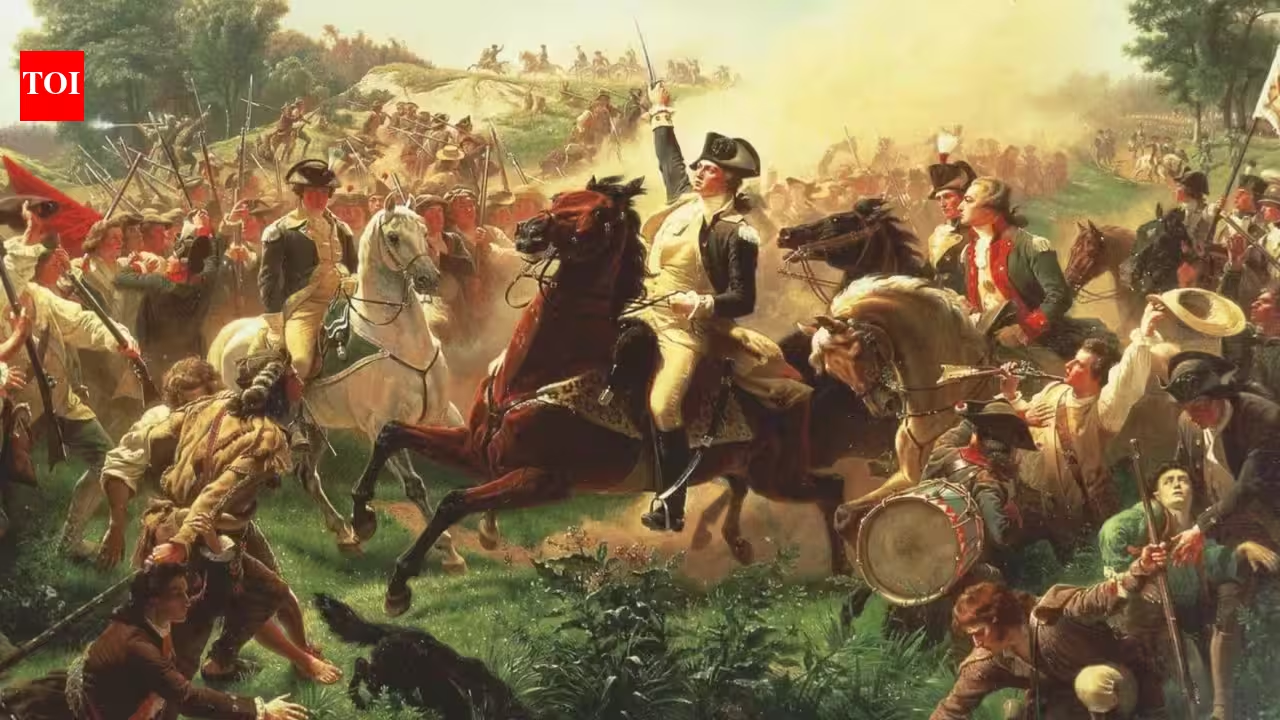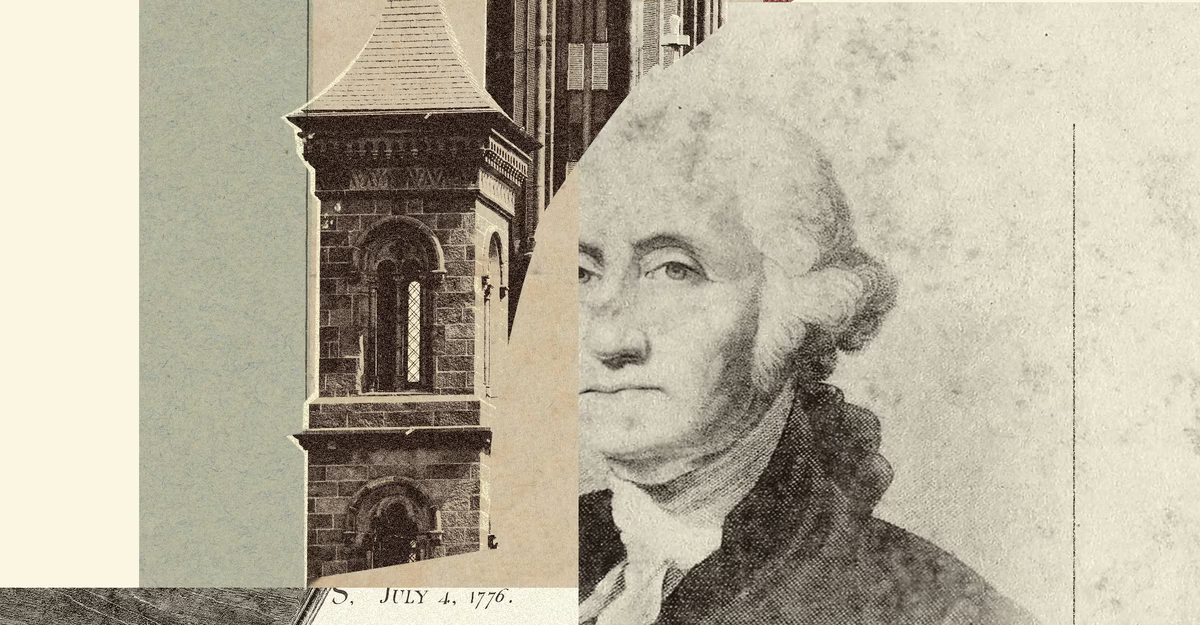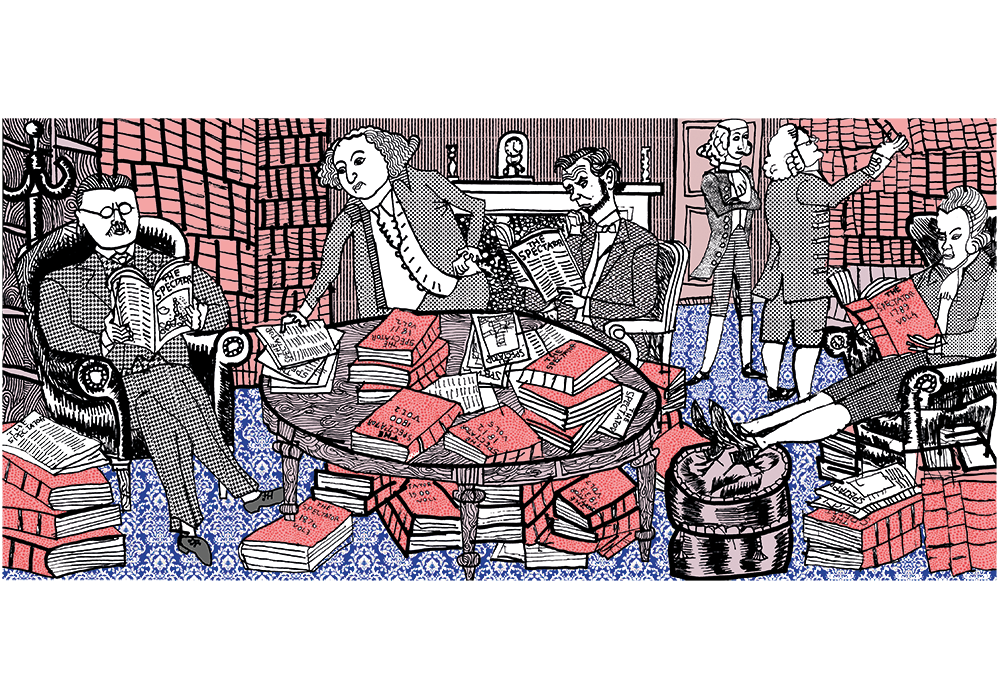
The Spectator was there at the founding of America. George Washington had six copies of the original 18th-century Spectator at his Mount Vernon estate and read them often. He shared with Joseph Addison, The Spectator’s co-publisher, an interest in how to educate ideal citizens: men and women with wit and grit.
Young Washington read The Spectator in the hope of bettering himself, too. Both of his older half-brothers had been educated in England and he wished also for the manners and polish of an English gentleman. For the pioneering, self-improving men who would go on to create an independent America, the 18th-century Spectator was both an education and a guide. ‘I bought it, read it over and over, and was much delighted with it,’ wrote Benjamin Franklin in his autobiography. ‘I thought the Writing excellent, and wish’d if possible to imitate it.’
That’s quite an understatement. Franklin would copy out Spectator articles, memorise them, even put them into verse. In his curriculum for the Philadelphia Academy, ‘Sketch of an English School’, he stated that younger boys ought to read ‘some of the easier Spectators’, while the older students were to learn the ‘sentiments of a Spectator’ and be able to write in its style.