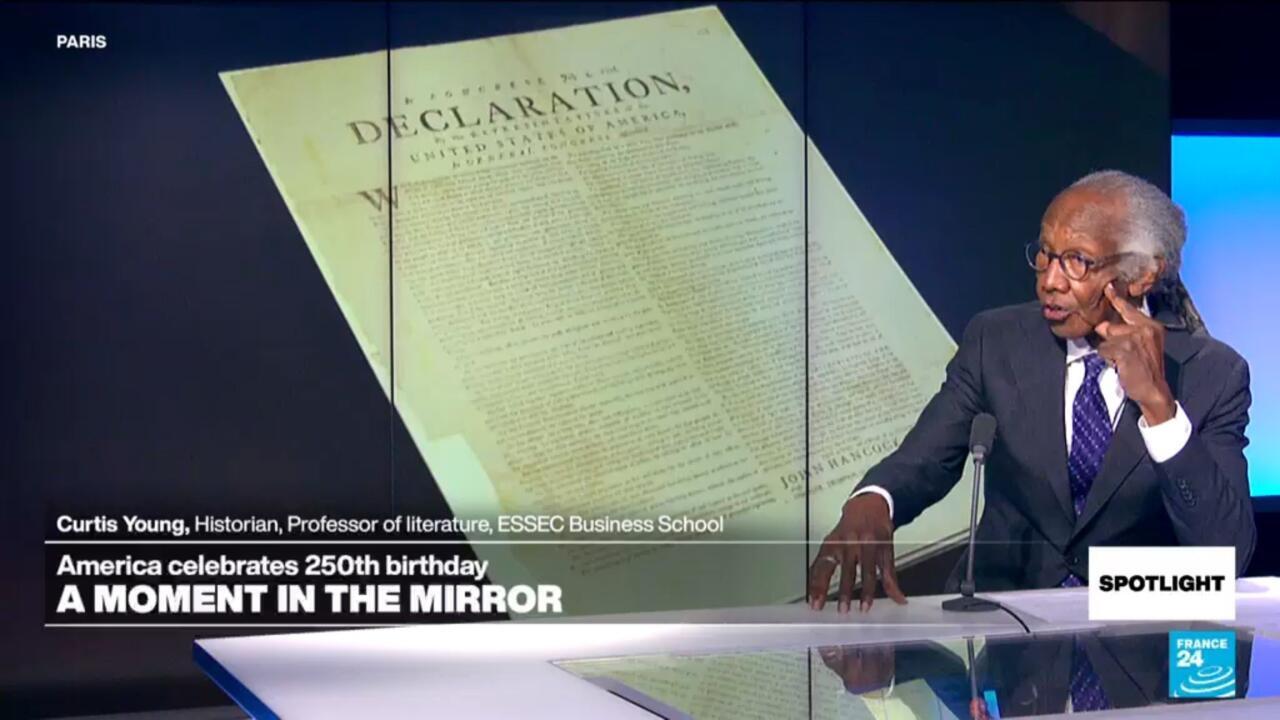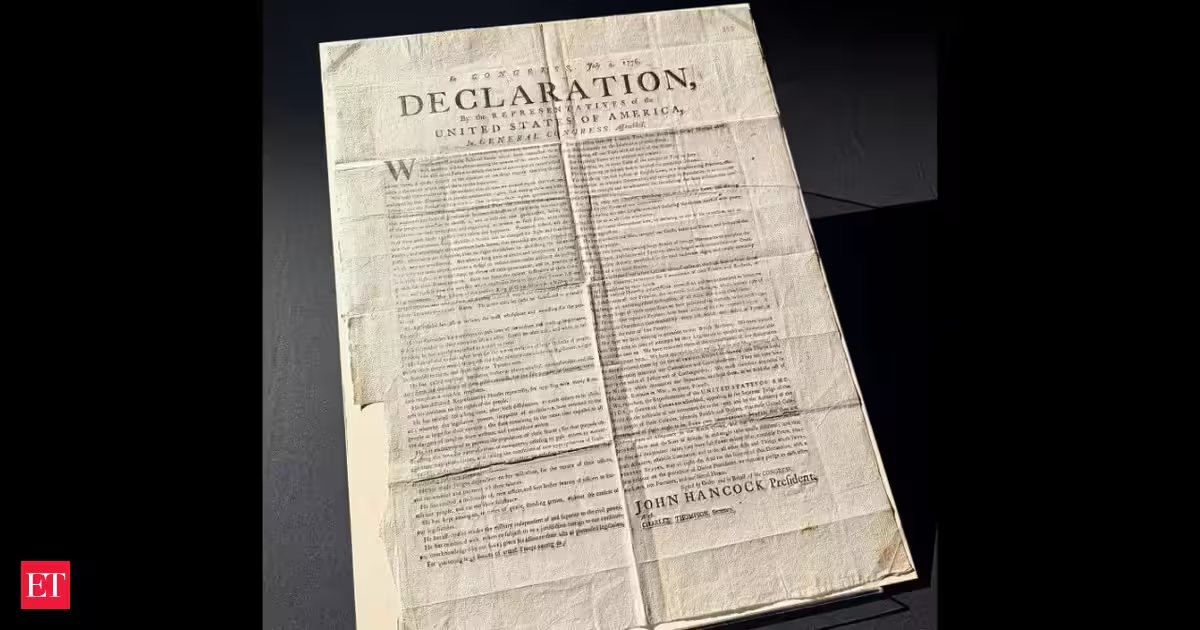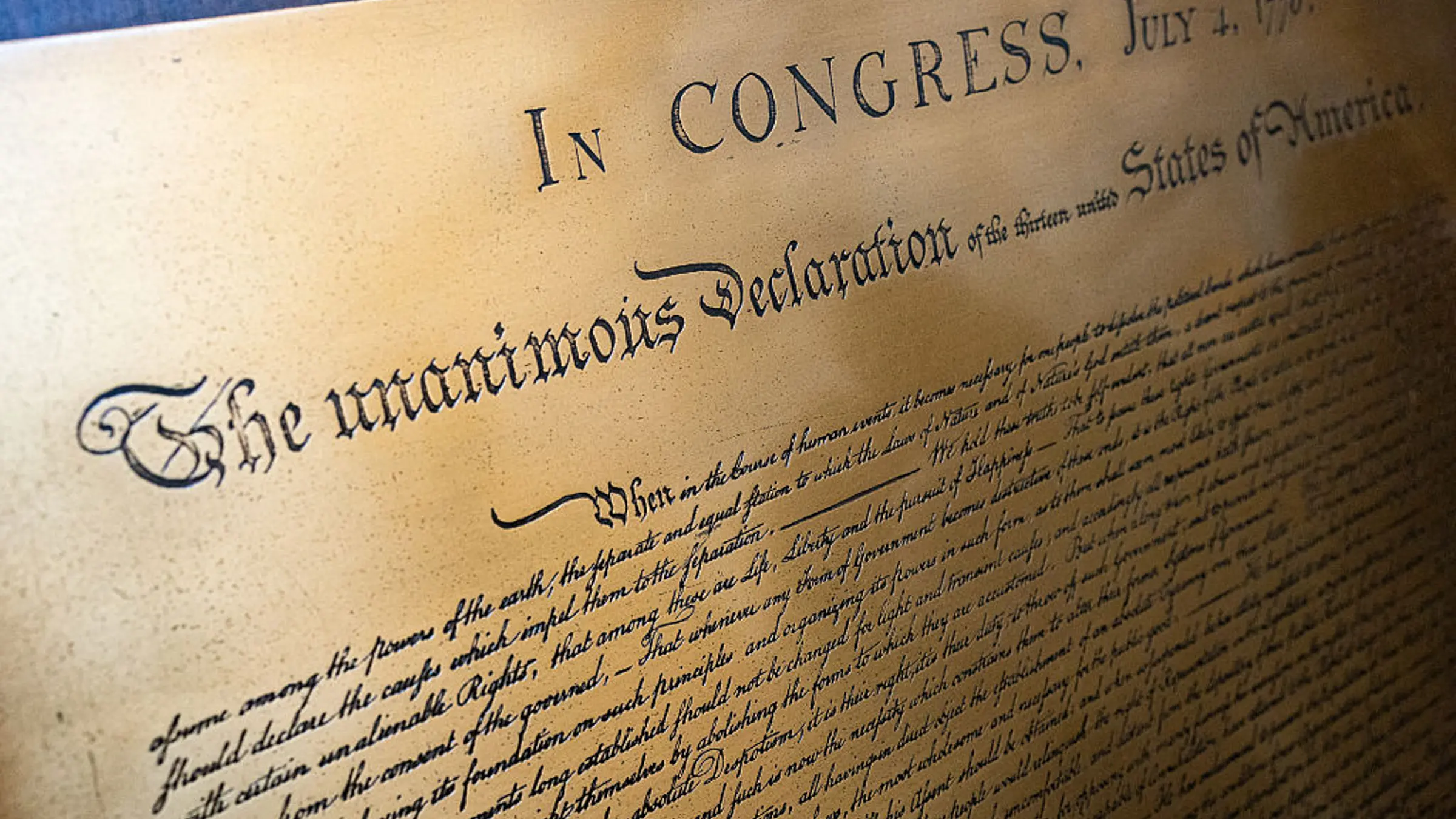
In Focus delivers deeper coverage of the political, cultural, and ideological issues shaping America. Published daily by senior writers and experts, these in-depth pieces go beyond the headlines to give readers the full picture. You can find our full list of In Focus pieces here.Your book traces the Declaration as both a physical document and a living symbol. Why is the original parchment so necessary to the American civic imagination?
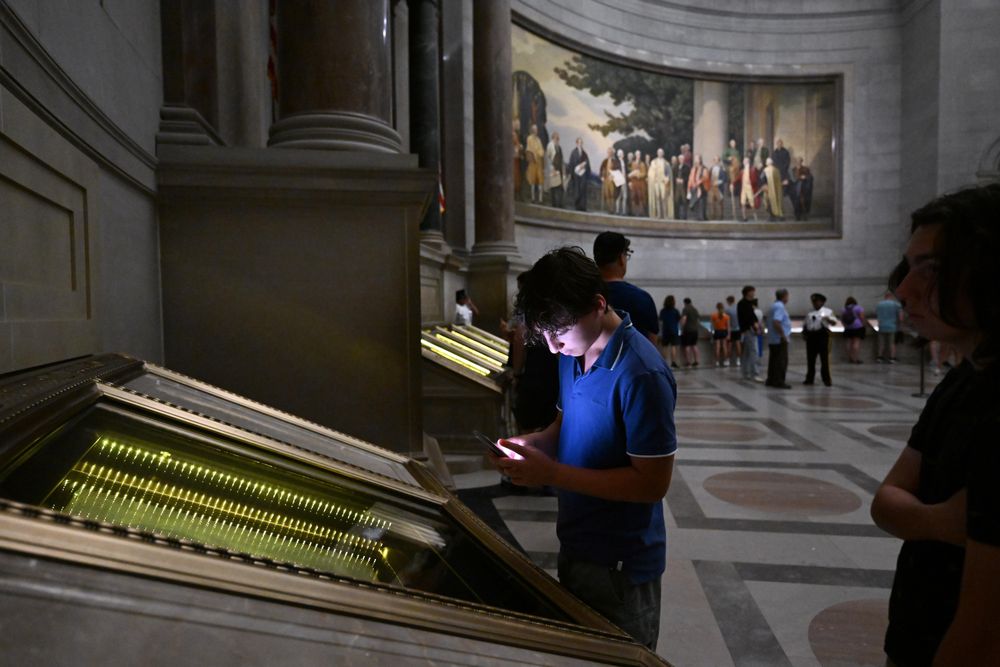
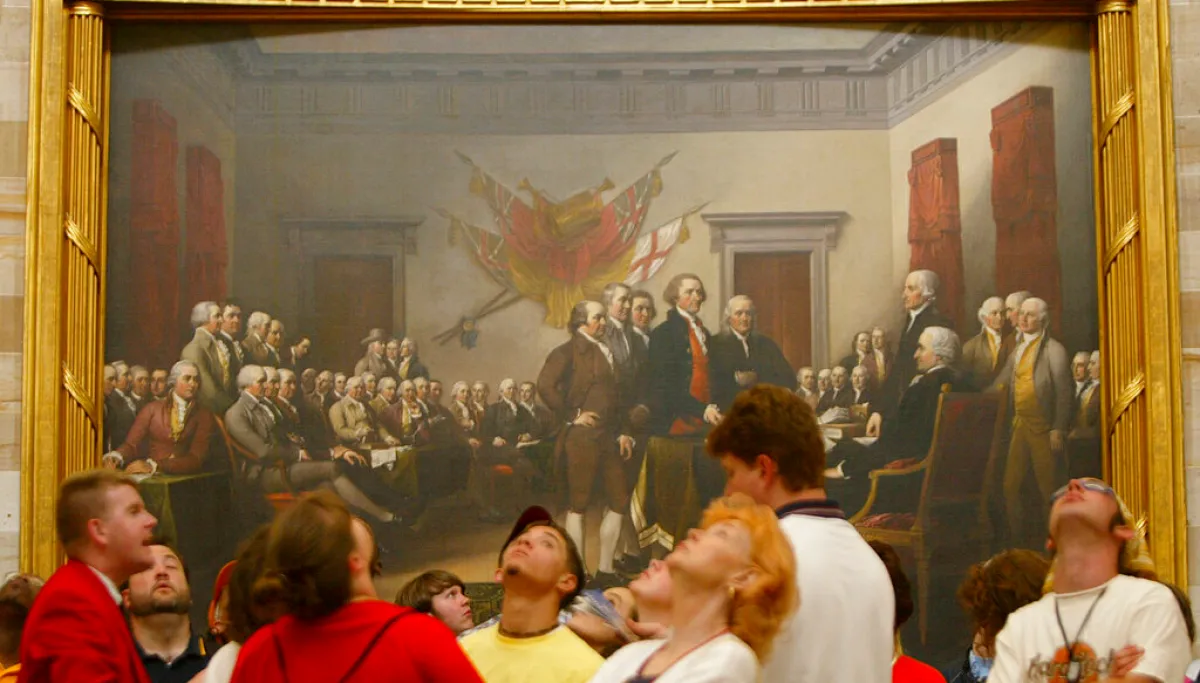
Humans have always gravitated toward physical objects of personal or communal significance, and we lament those that have disappeared. Think of all the great attempts to uncover or recreate the Roman Forum, the pyramids, the Sphinx — we gravitate to physical artifacts as we should.America is a younger country, and one that regularly overturns its history. So we generally have far less of that than other nations. What we do have, uniquely, are the documents that founded us — starting with the Declaration, then the Constitution, the Bill of Rights, the Emancipation Proclamation. Few older nations have the same connection to founding documents because they define themselves through more ancient physical artifacts instead.When you stand before the actual parchment that John Hancock and Thomas Jefferson signed, it becomes a time machine. It brings you back to those founding moments in a way that then draws you to the ideas themselves. That’s where the physical and the philosophical mix. If we lost the document, we would still know what was in the Declaration — but it would be so much less tangible to us. We now treat it as a sacred trust, a national responsibility.You chart several near-disasters in the book — moments when the Declaration could have been lost forever. Would our history have changed significantly if it had been destroyed?In some ways, no. The Declaration was printed hundreds if not thousands of times in newspapers, broadsheets, and collections of documents. Everyone knew what it said. But I think we would have felt orphaned. Those men can never come back to sign it again. If the document had been destroyed — most notably in 1814, or potentially during the Civil War — every July Fourth since, we would have been celebrating in front of an empty shrine.Think of the Ten Commandments. They are probably the single most reproduced set of beliefs in human history, and yet we still don’t have the original tablets, and there is an absence that has never been recovered. The Declaration would have been in that same category. There would have been guilt, I think, at losing a piece of paper so important that 56 men pledged their lives, fortunes, and sacred honor to each other by signing it.That’s why someone like Stephen Pleasonton — the State Department clerk who spirited the document out of Washington just ahead of the British in 1814 — is a genuine national hero. Without him, for the past 212 years, we would have been celebrating July Fourth in front of an empty shrine. It would have been one of the great lost artifacts of history.Visitors tour the Capitol Rotunda in front of John Trumbull’s 1818 painting of the Committee of Five presenting their draft of the Declaration of Independence to the Second Continental Congress on Thursday, May 15, 2003. (AP Photo/Charles Dharapak)