In South Africa, 47% of the national population is energy poor, meaning that they spend more than 10%-15% of their income on power and still do not have nearly enough for their basic needs.
The problem is getting worse as informal or shack settlements continue to grow. This growth has accelerated since the Covid-19 pandemic. The number of households exposed to precarious energy conditions is rising.
À lire aussi :
South Africans are leaving the electricity network – but are solar mini-grids a fair solution?
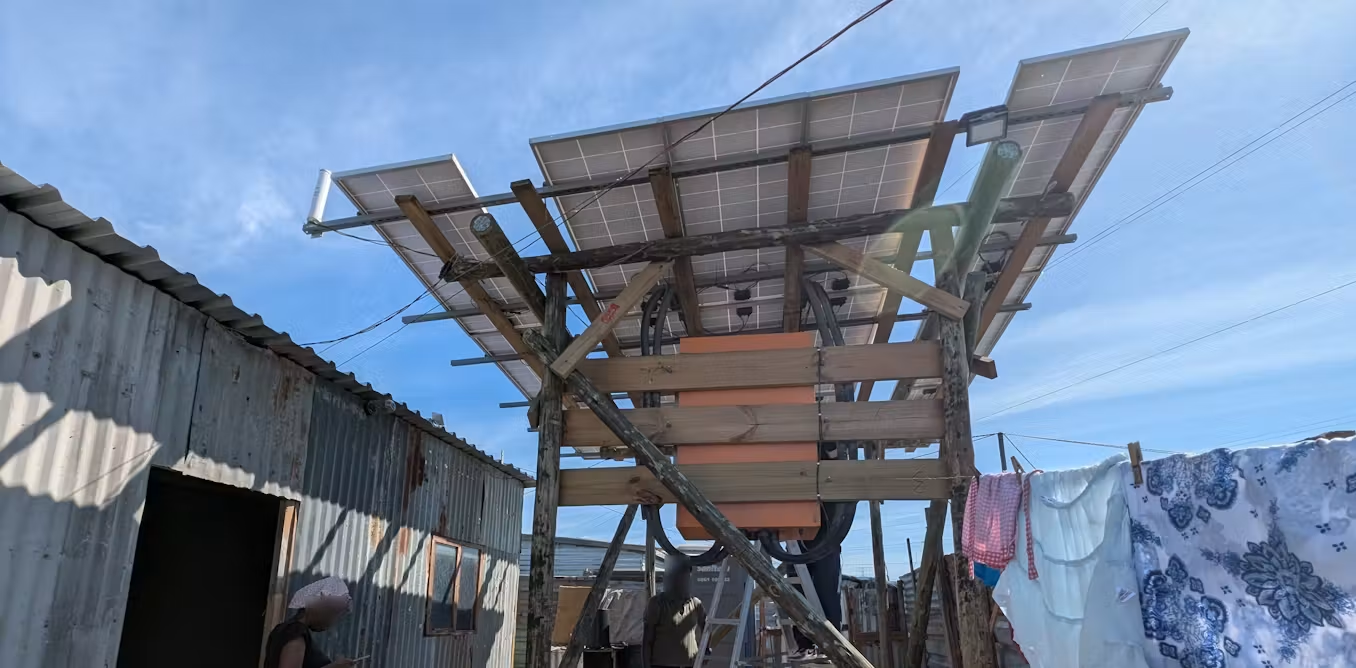
As an urban geography researcher, I was part of a team that studied Qandu Qandu, an informal settlement in Cape Town, from 2020 to 2023. We explored whether solar power and entrepreneurship training could help households cope with unreliable, unaffordable and unsafe access to electricity.