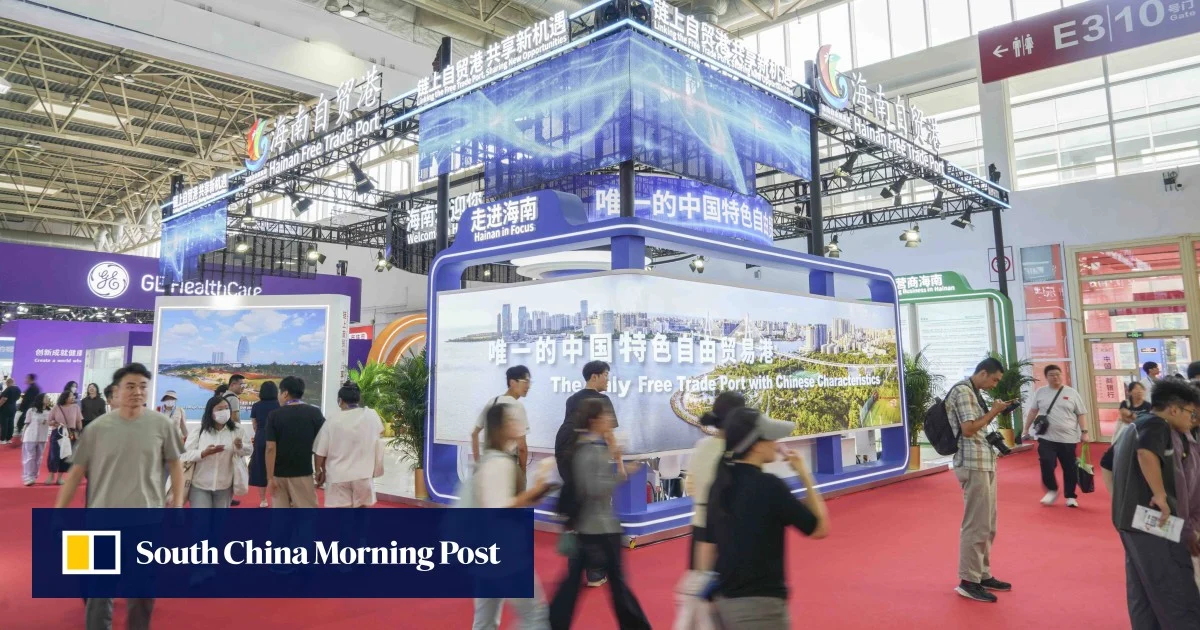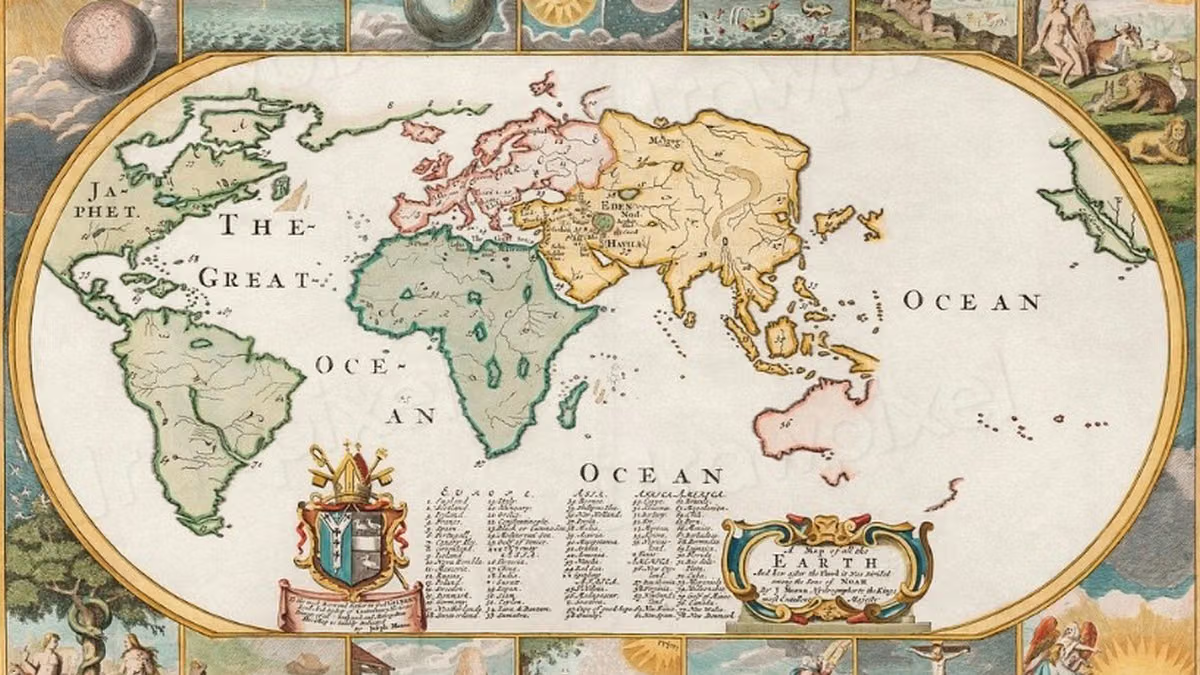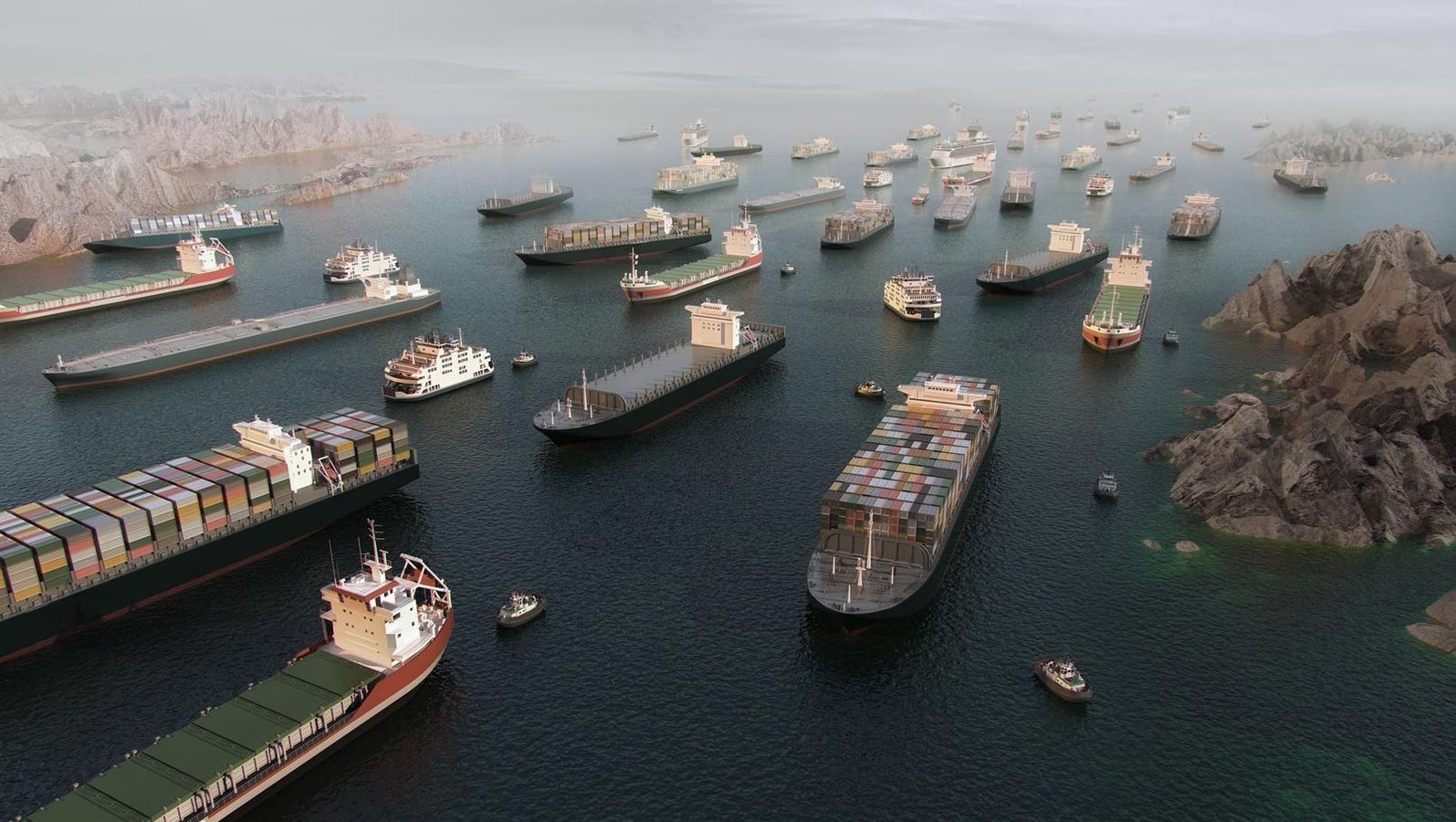
Koray Köse is a supply chain expert, tech futurist, author, former Gartner analyst and CEO & Founder of KŌSE ADVISORY.gettyGlobalization has new owners. For most of the last few decades, we behaved as if globalization belonged to large corporations: If firms could stretch supply chains worldwide, source from the cheapest locations and sell into the biggest markets, efficiency would follow. Boards optimized for quarter‑to‑quarter P&L. That logic reshaped entire economies.In this model, the U.S. offloaded much of its industrial base and turned into a service and innovation economy. Germany focused on industrial niches and high‑end machinery. Mediterranean countries leaned into tourism and entertainment. This was globalization as a corporate efficiency project: multinational corporations in the lead, with governments mostly setting up the rules frameworks within which they would operate.But that phase is ending. The new “owners” of globalization are states or alliances that project power—military, economic, technological or all three; they think in decades, not quarters; and they practice rigorous statecraft, aligning their laws, finance, infrastructure and industrial policy toward long‑term goals.From a pragmatic, infrastructure-driven standpoint, this makes sense; you cannot build ports, rail corridors, energy grids or semiconductor ecosystems on three‑month incentives. These are 15- to 30-year gambits. They require stability not just across election cycles but also through systemic geopolitical overhauls.But the shift is not just pragmatic; it is also ideological. In this new era of re‑globalization, value chains are being redesigned by governments and blocs, not just optimized by firms, with the goal of solidifying hegemony. And for business leaders, none of this is abstract geopolitical theory; it is the real-life context in which suppliers, logistics and technologies now must be considered.From Supranational Referees To Power‑Projecting BlocsIn the halcyon days of globalization, we all acted as though there were a neutral “rules‑based order” managed by supranational institutions: the UN, WHO, WTO and others. These organizations were meant to be the neutral “referees”—setting norms, arbitrating disputes and smoothing frictions so markets could do their work.That façade, pleasant as it may have been, is cracking. These institutions still exist, but their ability to project power is severely limited. They issue reports, pass resolutions and convene conferences, yet they struggle to enforce decisions or shape outcomes when major powers disagree. Their mandates are often right in principle, but in practice, they are slow, bogged down by bureaucracy and politicization.By contrast, the real owners of this new phase are alliances and blocs that can act decisively. These include coalitions like NATO or the G7; emerging groupings like BRICS and BRICS‑plus; regional constellations built around shared infrastructure, energy, logistics ... or even shared enmity. These players have a “flex” the supranational organizations largely lack: instruments of hard power. They can move troops, impose or lift sanctions, redirect investment and control access to critical corridors that will shape trade.Globalization is no longer managed from above by benevolent, fair-minded institutions. Today, it is being contested, manipulated and reorganized by competing blocs. For enterprises, risk exposure now comes less from misalignment with a global rules‑based order and more from being trapped between competing alliance priorities that govern their critical markets and routes; every major supply chain decision is a bet on a bloc’s long‑term strategy, not just a cost curve. From Supply Chains To Value-Chain StatecraftIt no longer makes sense to view supply chains as neutral, linear sequences to be optimized. That mindset is outdated because it treats each link in isolation: “Make this factory cheaper, that shipment faster, this warehouse leaner.” But the reality is that one can optimize each link and still lose the strategic game.What matters today is value-chain statecraft. This term refers to the deliberate use of entire value chains—raw materials, refining, manufacturing, technology, talent and consumption—as instruments of (usually national) power.China, the “fortress” to powerful global alliances, exemplifies value-chain statecraft in action. As a nation, it has not settled for being a raw materials and cheap labor provider. Step by step, it has moved up the chain: from mining to refining, from basic assembly to complex production, from foreign exports to robust domestic markets, from importing technology to developing its own (including AI and advanced biotech). Some of these are not profitable or “clean” (environmentally, ethically) by Western standards, but Western social mores matter little in this type of long‑term strategy. China’s climb up the value chain has effectively turned its industrial ecosystem into a fortress, giving Beijing leverage vis‑à‑vis U.S. and European alliances that still rely on Chinese inputs for critical sectors.By contrast, much of the West is still optimized for quarterly returns and strict regulations, often making industrial investment slow, expensive and politically fraught. We’ve built systems designed “not to fail,” while nations like China have built systems that fail fast, rebuild fast and climb the value chain.Value‑chain statecraft is now visible not just in China but also in Turkey’s corridor and energy strategy, Israel’s tech ecosystems, Ethiopia’s logistics and manufacturing hubs, and in the renewed U.S. push to hard‑wire near‑shoring across the Americas. Consequently, the question for enterprise leaders must no longer just be “Is my supply chain efficient?” but “Whose statecraft does my value chain serve—and what leverage does that give them over me?”Health, Defense And Critical DependenciesWithin a value-chain statecraft strategy, health, energy and defense are vital arenas of power projection. A country that can decide who gets medicine, oil and gas or key defense implements (and when) holds far more leverage than one that simply sells goods.Over the last two decades, China has quietly built dominance not only in obvious strategic materials but also in less visible ways. Pharmaceuticals are a prime example. The West often reassures itself that India (seen as friendly or, at worst, neutral) is their major drug supplier. But in many cases, India is only adding value at the final step: pressing pills, finishing formulations. The critical active pharmaceutical ingredients (APIs) still come from China.This creates a significant risk: If those API exports stopped for any reason, countries like the U.S. would quickly face shortages of antibiotics, insulin and other essential medicines. The same pattern holds in parts of the defense supply chain, technology supply chain and advanced biomanufacturing. China has aggregated the supply base; now, it can wield that control as a tool of geopolitical influence.AI-driven supply chain intelligence is becoming foundational to value-chain statecraft. As Exiger CEO Brandon Daniels testified before Congress in a hearing on pharmaceutical supply chain risks, opaque dependencies, especially on Chinese APIs, are now understood as systemic national security vulnerabilities. Platforms like Exiger increasingly sit at the intersection of intelligence and enforcement, including in missile defense supply chain readiness. For enterprise leaders, the lesson is clear: Your most important dependencies are likely in the inputs you barely register—chemical precursors, specialty materials, sub‑tier suppliers. These are operational risks that sit precariously at the intersection of national security, health and foreign policy.Planting Seeds In The Right SoilThere is a Turkish saying I grew up with: “Bugün ektiğini yarın biçersin, ama hangi toprağa ektiğini unutursan, hasada şaşırırsın.” What you sow today, you will reap tomorrow, but if you forget which soil you planted in, you should not be surprised by the harvest. Even the best seeds—capital, technology and contracts—will fail if they’re planted in the wrong soil. In geopolitical terms, the soil is the historical, cultural and political context of your alliances.When governments and enterprises look for new partners, they often focus on the spreadsheet: resources, market size, labor costs, logistics. But durable alliances depend on deeper questions:• Is there a history of trust or of betrayal and conflict?• Are there poorly buried grievances—wars, genocides, colonial exploitation—that might be reanimated in a crisis?• How strong is the cultural, ideological and political alignment beneath the trade deals?You see this tension within Europe, where nominally aligned countries still struggle with legacies that shape public opinion for generations. You see it in relationships between former colonial powers and resource‑rich states, where economic necessity collides with unresolved history. The more diverse and internally conflicted the “soil,” the harder it is to act decisively in situations that stress-test an alignment.For businesses, this means assessing not only what a potential partner can offer (minerals, manufacturing, markets) but also how stable the relationship will be amid political churn. It means looking closely at your value chains, your choke points and the realistic odds that key partnerships and arrangements will become unstable or untenable if a political situation shifts overnight. In an era where politics and economics are inextricable, resilience comes from planting operations and critical relationships in good “soil”—alliances you can read, fault lines you can live with and the resilience to withstand not just calm seasons but also prolonged turmoil. Forbes Technology Council is an invitation-only community for world-class CIOs, CTOs and technology executives. Do I qualify?
Alliances And Fortresses: How Value-Chain Statecraft Is Reshaping The World Order
Globalization has left the corporate boardroom for the geopolitical battlefield, forcing leaders to treat supply chains as the new primary instruments of state power.
1,454 words~7 min read