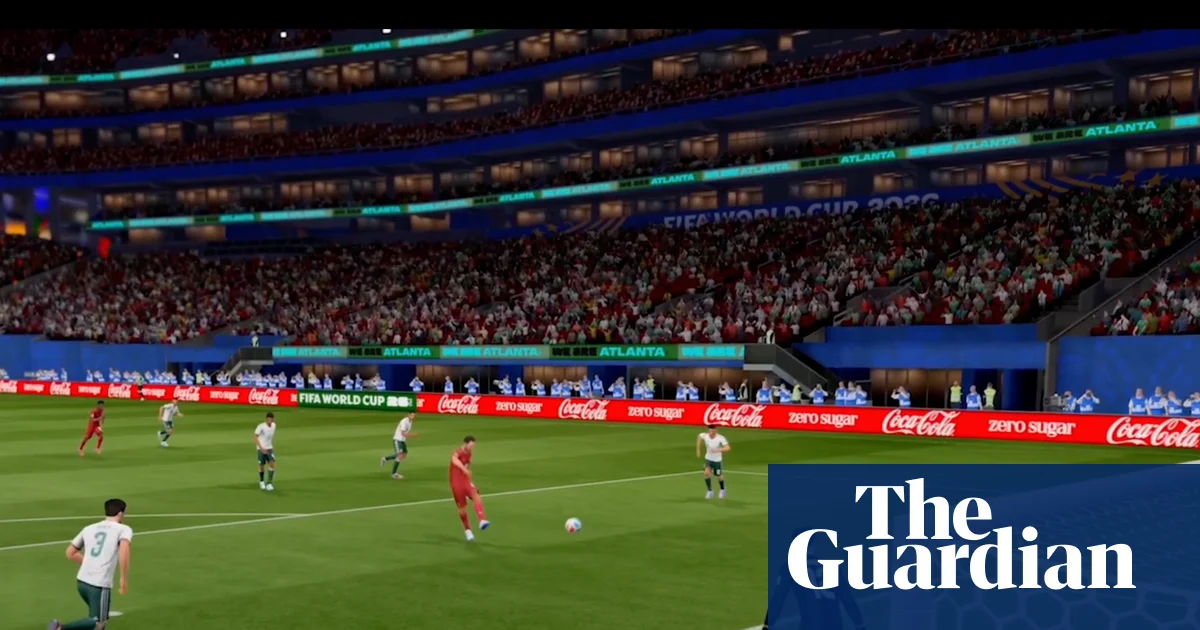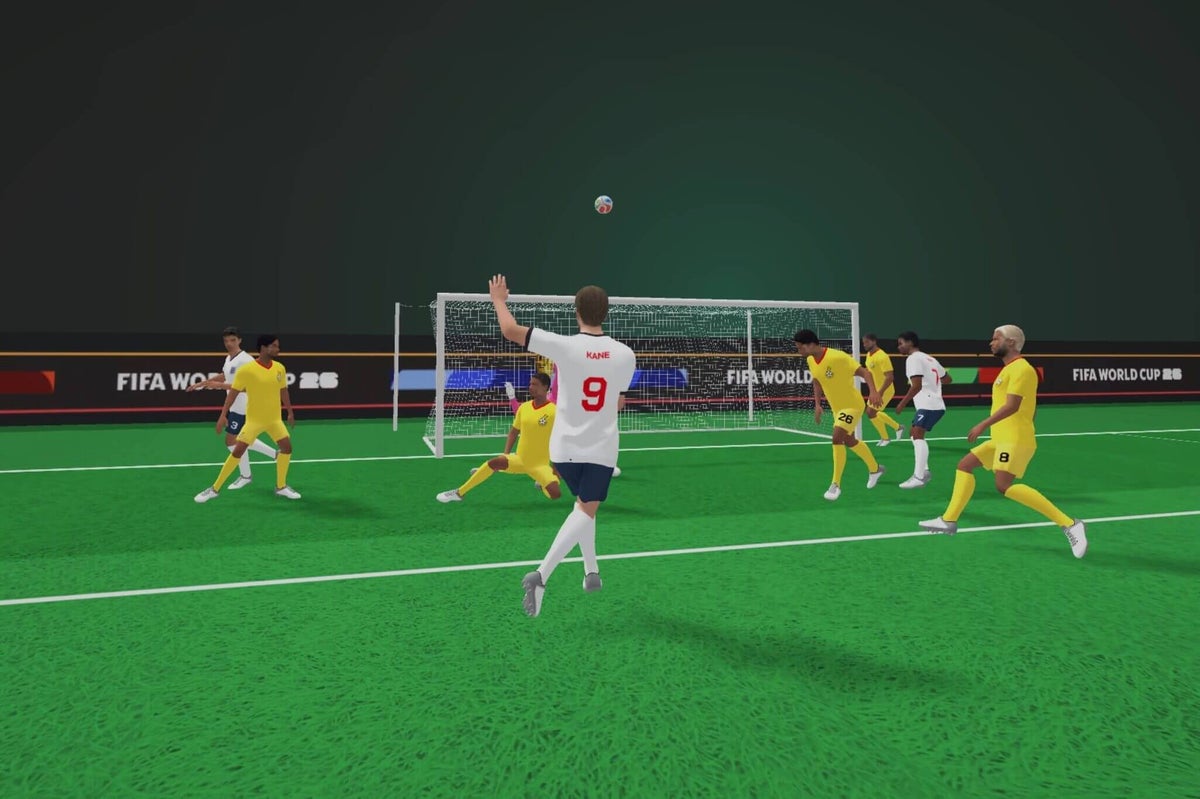
Get free access to the most comprehensive World Cup coverage in The Athletic app.Stadio San Nicola, Bari, June 9, 1990. The Soviet Union have started brightly in their opening game of the World Cup against Romania and have a free kick, 25 yards from goal. Oleh Kuznetsov’s dummied run-up leaves the ball for Oleh Protasov to drill one, but it’s a tame effort that somehow dribbles through the Romanian wall for Silviu Lung to save comfortably down to his right.What happens next is, for the time, groundbreaking. The Soviet broadcaster has something unprecedented up its sleeve: a virtual, three-dimensional replay.Soviet TV's virtual replay, 1990 World CupAdam HurreyThe simulated free kick is, in hindsight, a bit pathetic. The (presumably warehouse-sized) Cold War-era supercomputer has managed to make Protasov look like he’s playing in stilettos, but also revealed that the referee hasn’t done his job.“The wall, you can literally see it clearly now, how poorly it was placed,” complains the Soviet commentator. “Well, not really a wall, but, you know, a flimsy little fence, where there were gaps. Then this distance to the wall, that’s what shows the referee’s mistake. He’s obliged to (make it) nine metres but there were only eight. So, electronics help to convince not only the players of their mistakes, but also the referees.”Gillette Stadium, Foxborough, June 16, 2026. Against Norway, Iraq goalkeeper Jalal Hassan is about to discover in the flesh that — to reboot Jorge Valdano’s superb line about Brazilian striker Ronaldo — Erling Haaland is not a man, he’s a herd. Hassan hesitates over an undercooked backpass, Haaland smells blood, and Iraq are toast.At first sight on TV, this was, at worst, a mid-level goalkeeping calamity; at best, an occupational hazard for a ball-playing goalkeeper in the 2020s. But this World Cup has more angles than ever before. In fact, it has all of them.
The World Cup in 3D: Through the players’ eyes, football’s latest attempt at immersion has its moments
From Erling Haaland bearing down on you to helping a referee with cramp, this broadcasting innovation provides an alternative perspective
1,646 words~7 min read