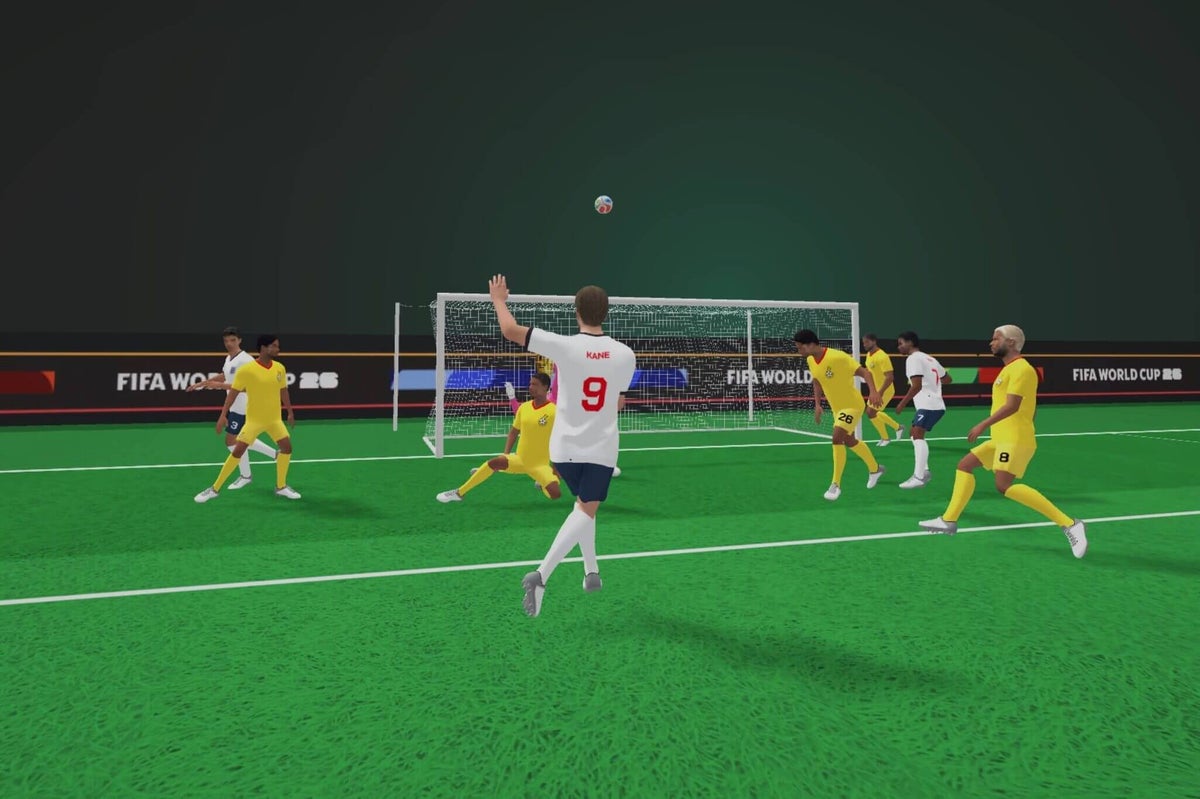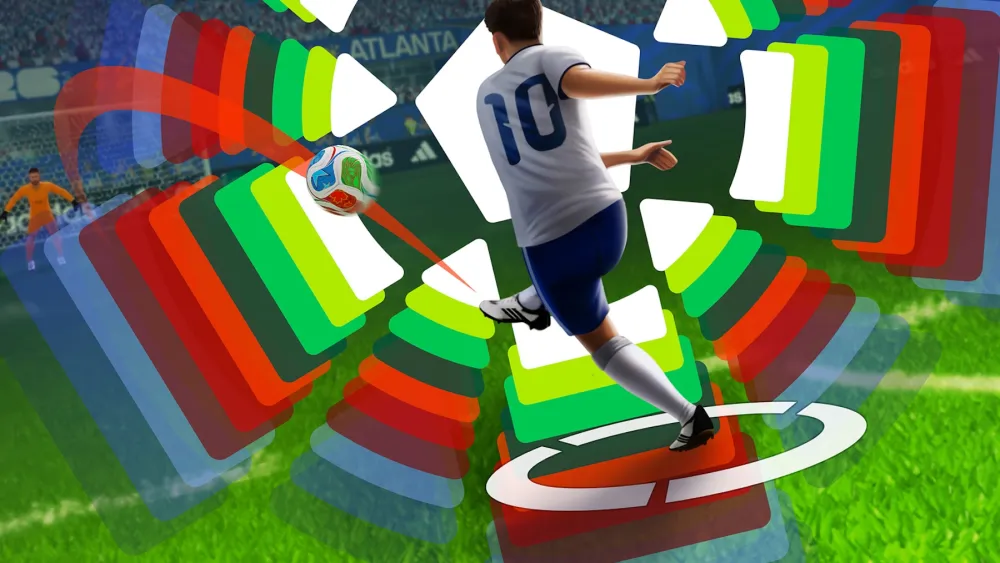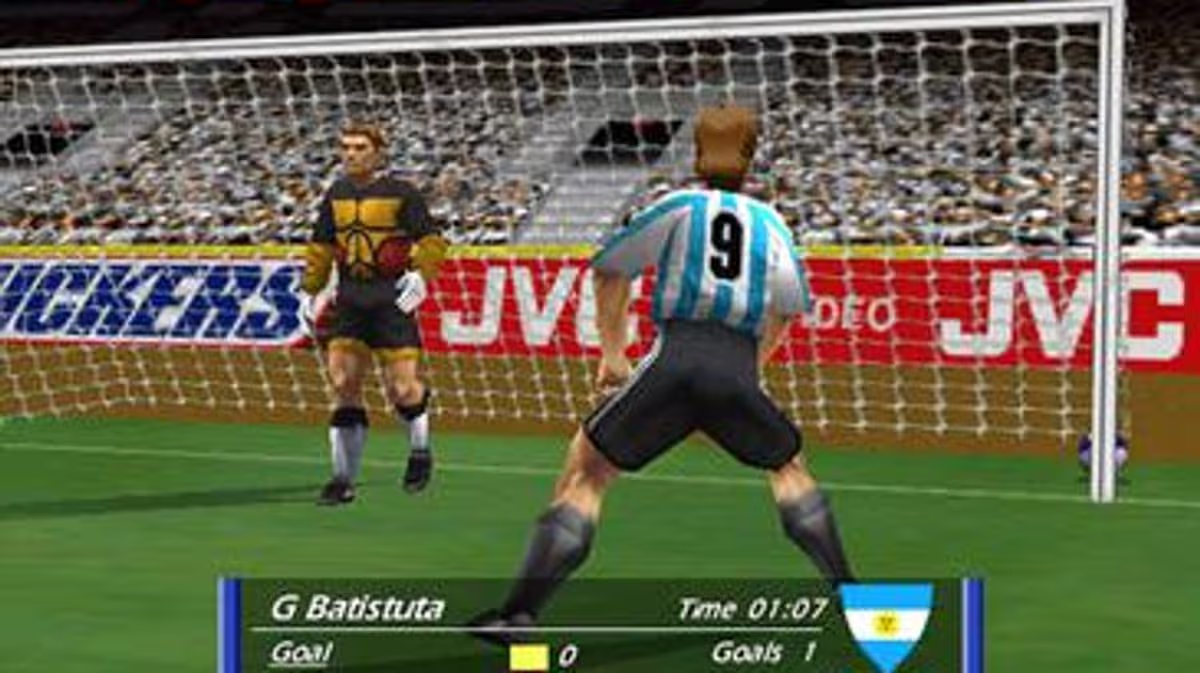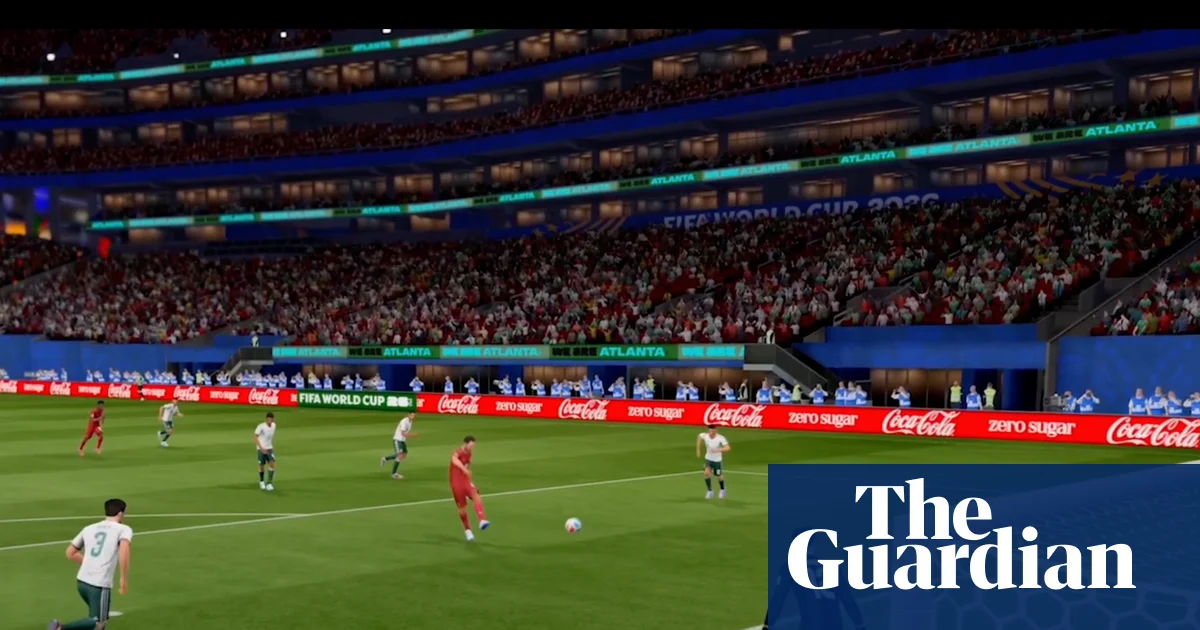
I come with a warning to all football fans: if you’ve been enjoying the World Cup enough to think, “I’d like to re-enact this on a football video game”, do not go to Netflix and play Fifa World Cup: Launch Edition, the officially licensed game of the tournament, which streams via your smart TV or computer. Developed by the virtually unknown Delphi Interactive, it’s a juddering, dated calamity, with sluggish controls (via your phone, once you’ve downloaded the app) and commentary courtesy of Clive Tyldesley that delivers all the excitement of a robotic train station announcement.Until this, it was largely agreed that the worst World Cup football game in history was World Cup Carnival, the first official Fifa tie-in, which was released on various home computers in 1986. Publisher US Gold thought it had a deal with the Manchester studio Ocean Software to repurpose its acclaimed title Match Day, but the agreement fell through. With three months to go before Mexico 86, US Gold was forced to effectively rebadge a dire 1984 sim, World Cup Football, by the fading developer Artic. To add some value to the package, the game was released in a fancy big box complete with a fixtures chart, a World Cup facts poster and some flag stickers. Nobody was fooled – the World Cup Carnival was a critical and commercial disaster.Four years later, Sega’s World Cup Italia ’90 for the Mega Drive was another catastrophe, with its terrible controls, awful music and a weirdly zoomed-in view of the pitch that didn’t let you see beyond a few metres. For USA 94, US Gold somehow wrangled the official licence again and actually put out a decent footie sim … but only if you happened to buy the SNES version. The home computer alternative was memorably described in Amiga Power magazine as, “an inoperable canker on the lungs of the innocent children of the world”. Firm but fair.The first official Fifa tie-in … World Cup Carnival, from 1986. Photograph: US GoldFor France 98, the Electronic Arts era began, the publisher bringing its decent Fifa football engine, as well as real teams, players and stadiums, to the world stage. Fifa: Road to World Cup 98 is considered one of the greatest World Cup sims, with the 2006 and 2010 instalments coming in close behind. But after 2014, the World Cup experience was consumed within the main Fifa titles and that was that.The problem is, the games have rarely been able to engage with what makes the World Cup such a memorable tournament. It’s the whole spectacle – the crowds bringing diverse footballing cultures into the arena, the sometimes disastrous ceremonies (remember the Diana Ross penalty at US 94?), the terrible team songs. Although, actually, there have been attempts. The Sega Mega CD version of World Cup USA 94 featured two tracks by the rock band Scorpions, including No Pain No Gain, the official anthem of the German side which contained the immortal lyrics “You got no vision in your head, you got no vision, better dead”. That seemed a tad harsh until Germany got knocked out in the quarter finals by Bulgaria. Later, for 2010 FIFA World Cup South Africa, EA’s development team included the infamous vuvuzela horn noise, which would become the defining feature of that tournament (especially for us tinnitus sufferers).Game developers have also found it hard to replicate those moments of idiosyncratic panache that enliven the narrative of every tournament. The audacity of the Cruyff turn, the joy of Roger Milla’s goal celebrations, the mind-bending shock of Zidane’s head-butt. Often these only attain iconic status in hindsight, which is tough to reproduce in a video game that launches before the event – although EA’s best Fifa World Cup titles have all featured modes that let you play out key moments from World Cup history. Fifa World Cup 2014 even included a Story of Finals mode that let you play out key scenarios from the tournament, which EA Sports made available for download just an hour after the matches. However, the most notorious attempt to exploit a single moment of a World Cup was 1986 goalkeeping sim Peter Shilton’s Handball Maradona, which brilliantly featured neither Peter Shilton nor Maradona.Simulating fandom … Despelote. Photograph: Panic GamesOften, the true beauty of the World Cup happens on its periphery, a fact we are already witnessing with this summer’s tournament, from the glorious exploits of the Tartan army in Boston to the TikTok moments of Mexico and South Korea fans swapping shirts and dancing in the street. The only game that’s ever really attempted to capture this sense of the World Cup as a cultural rather than sporting phenomenon is Despelote, an indie narrative drama about one boy and his obsession with Ecuador’s qualification for the 2002 tournament. The matches themselves take place merely on TV sets in the background of neighbourhood bars and family get-togethers, yet there is in this game more love, drama and knowledge of the sport than a thousand hours of Fifa World Cup: Launch Edition.Stick with EA Sports FC or Konami’s eFootball if you want to have your own World Cup at home, or maybe go retro and find your old copy of Fifa World Cup 2006. It’s fun, it’s got good music and it lets you continually score from the halfway line with David Beckham. What more could you want?What to playPaint yourself safe … Meccha Chameleon. Photograph: LemorionThe latest smash hit indie social game is Meccha Chameleon, a multiplayer hide-and-seek-’em-up in which players have to use a simple painting tool to daub their characters so they blend in with the background. Seekers then come and try to find the hiders and, this being an online video game, shoot them.It’s frantic, silly and fiendishly creative: finding a spot on one of the maps that you feel confident to paint yourself into – whether it’s a laundry room or a farm outbuilding – is a challenging artistic and perceptual task, as well as a neat game mechanic.Meccha Chameleon perfectly encapsulates two popular and interconnected indie genres – prop games (hide and seek, but people disguise themselves as everyday objects) and the slightly pejoratively named “friendslop” (accessible, crudely designed multiplayer titles). So no wonder it has sold 7m units in less than a month. (Also, thanks to my son Albie for drawing my attention to it!)Available on: PC
The history of brilliantly terrible World Cup video games
As football fans revel in the real world tournament, its digital counterparts continue to stumble in capturing the hyped up atmosphere
1,679 words~8 min read