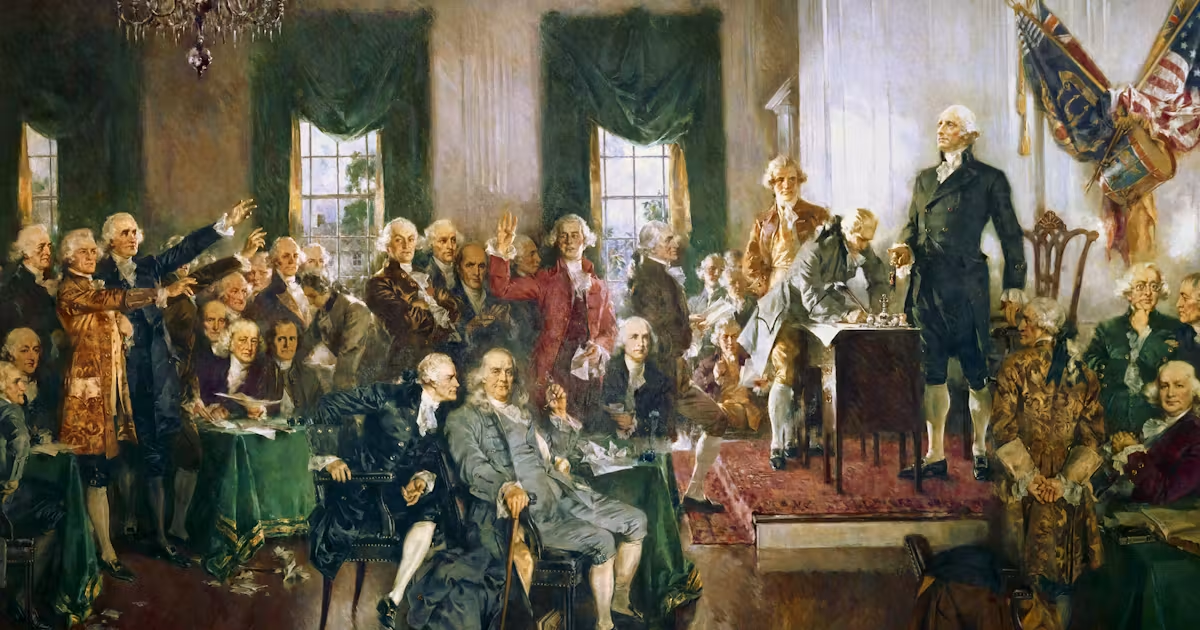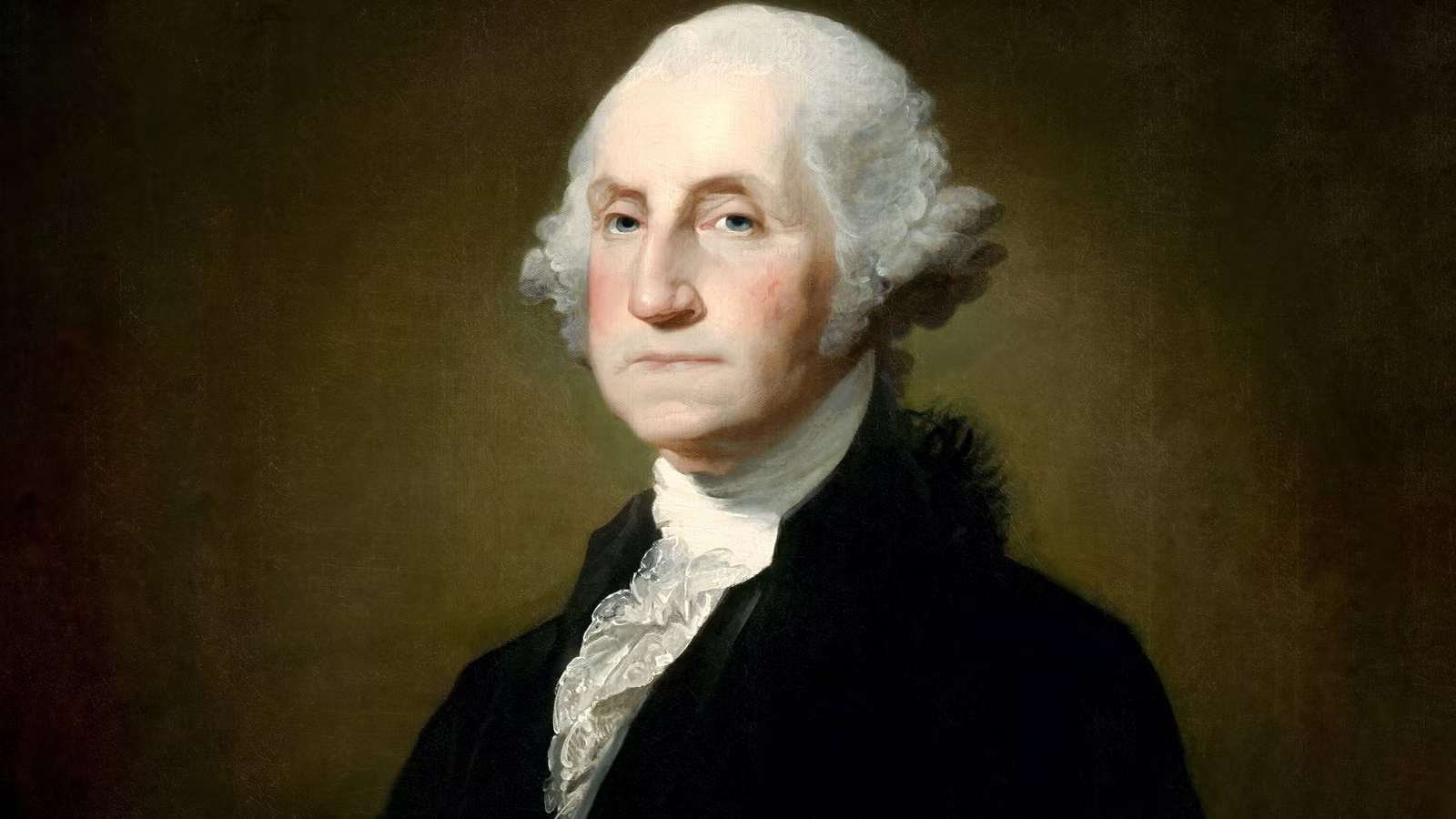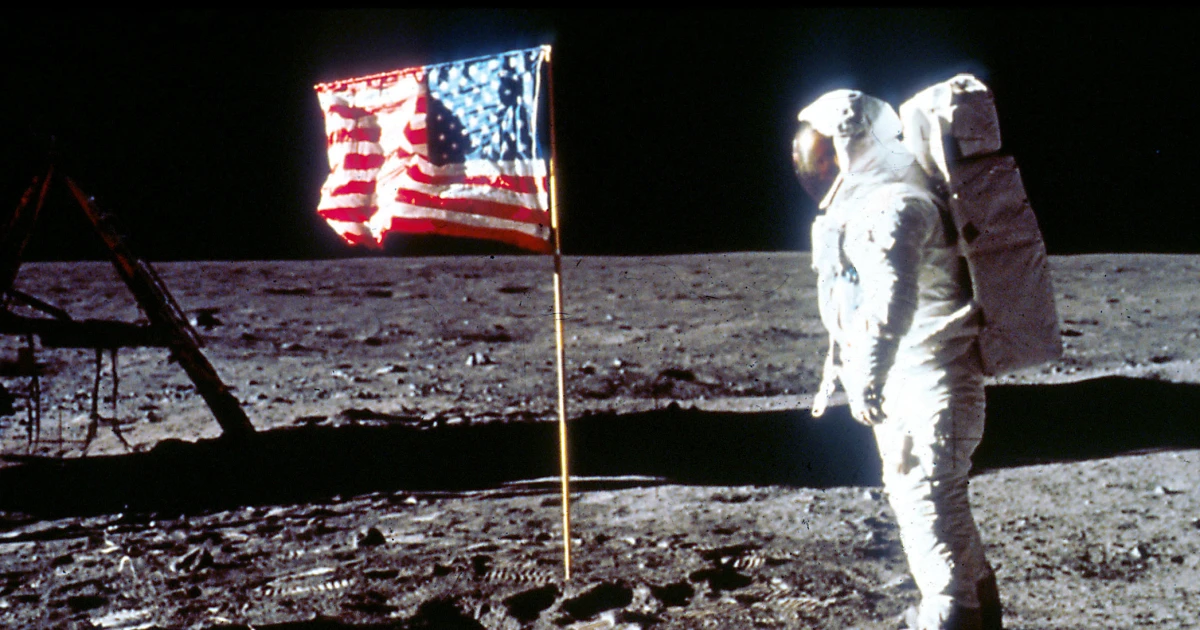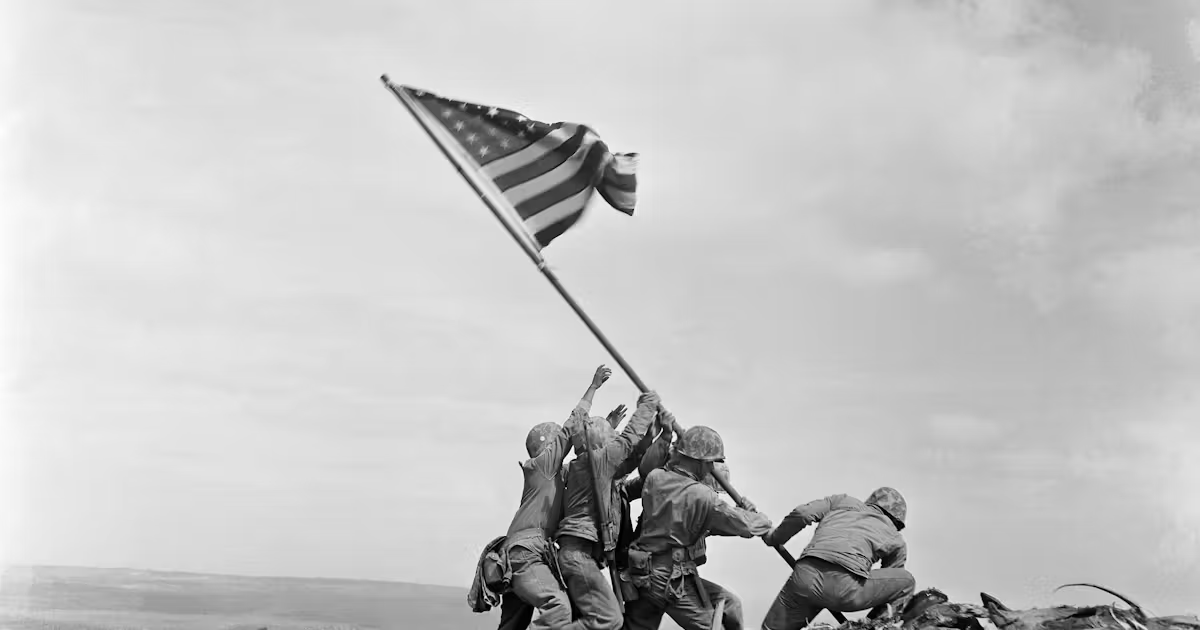
The USA at 2506The Most Important Women in American History7The Images That Define American History8The Most Influential Founding Fathers View All NASA1. The moon landing“That’s one small step for man, one giant leap for mankind,” and perhaps the defining image of U.S. history, a potent symbol of American ingenuity, persistence, and power.Destitute Pea Pickers in California. Mother of Seven Children. Age Thirty-Two. Nipomo, California, other title Migrant Mother, 1936. Dorothea Lange/U.S. Farm Security Administration/Office of War Information/Library of CongressT-2. Migrant MotherDorothea Lange’s 1936 classic—depicting a 32-year-old mother of seven surrounded by two of her children and with an infant in her lap, her brow furrowed with resignation and uncertainty—is an image that became synonymous with the desperate poverty facing Americans during the Great Depression.T-2. Raising the flag at Iwo Jima (at top) An AP photographer captured this iconic image atop Mount Suribachi in February 1945. Before the year was out, it was on a postage stamp and had won the Pulitzer Prize. Washington Crossing the Delaware, 1851. Emanuel Leutze/Getty4. Washington Crossing the DelawareSeventy-five years after the fact, German American painter Emanuel Leutze memorialized George Washington’s Christmas night raid across the ice-choked and storm-sieged Delaware River in one of the nation’s most famous paintings.Alamy5. MLK leading the March on Washington for Jobs and FreedomThe enduring image of a quarter-million people surrounding the reflecting pool and watching a Black preacher deliver a historic speech in front of the Lincoln Memorial celebrates the best of America.Mushroom Cloud Over Nagasaki, 1945. Lt. Charles Levy/ GettyT-6. Mushroom clouds over JapanThe explosive aftermath of the dropping of two atomic bombs by the United States over Hiroshima and Nagasaki in August 1945 is a fraught symbol of strength and terror, power and horror.The Terror of Warri, other title Napalm Girl, 1972. Associated PressT-6. The Terror of WarAlso known as Napalm Girl, this 1972 photo depicts nine-year-old Kim Phuc running naked, along with other children, from a napalm attack. It captured the horror of the war the United States was waging in Southeast Asia.The Scourged Back, c. 1863. McPherson & Oliver/ Library of CongressT-8. The Scourged BackThis early 1863 photograph, which received broad attention when published in Harper’s Weekly, exposes the brutality of slavery in a way words never could.T-8. The Statue of Liberty (Liberty Enlightening the World)The 305-foot-tall symbol of America’s role as a beacon of democracy and freedom has welcomed countless immigrants to our shores since its dedication in 1886.Phil Mascione/Chicago Tribune/GettyT-8. Emmett Till in his casketTwo white Mississippians kidnapped and savagely murdered this 14-year-old. Till’s mother elected to display his nigh-unrecognizable body in an open, glass-topped coffin—and then Jet magazine published photos of him. The nation could not look away.Will Counts/Indiana University ArchivesT-8. Little Rock Nine photo of Hazel Bryan screaming at Elizabeth EckfordThe hate-filled Bryan and stoic Eckford instantly became the contrasting faces of school desegregation in 1957 Little Rock, Arkansas.The Problem We All Live With , 1964. Illustration for Look magazine by Norman Rockwell. Courtesy of the Norman Rockwell Family Agency/Norman Rockwell Art Collection Trust, Norman Rockwell Studio Collection Artwork/The Norman Rockwell Museum Collection T-8. Ruby Bridges integrating New Orleans schoolsSix-year-old Ruby just wanted to go to school, but in 1960, she needed federal marshals to get past screaming white protesters. She made an indelible impression photographically, and then in Norman Rockwell’s 1964 illustration for Look magazine, The Problem We All Live With.T-8. Eugene “Bull” Connor releasing dogs on and fire-hosing civil rights protesters in Birmingham, AlabamaConnor, the city’s commissioner of public safety and a rabid segregationist, took issue with young people protesting in Birmingham. He didn’t count on the media beaming images of the brutality to the rest of the country.T-14. American Progress by John GastIt “once represented unabashed notions of manifest destiny, then came to encapsulate for many the hubris of settler colonialism,” Calvin University’s Kristin Kobes Du Mez noted. Is it any surprise that Donald Trump’s Department of Homeland Security now uses it as a recruiting tool?T-14. 9/11 imagesNo American who was alive can forget the scenes from September 11, 2001.T-16. Declaration of Independence by John TrumbullTrumbull’s masterwork took more than three decades to complete as he tried to get each of the Founders’ faces correct.Ron Haviv/VII/Redux for The New Republic T-16. January 6No amount of Trump revisionism will remove this stain from our history, as he rallied supporters to violently halt the peaceful transfer of power.John Filo/Universal History Archive/GettyT-16. Kent StateMary Ann Vecchio’s face captures the anguish and outrage that would sweep the country when Ohio National Guardsmen shot 13 students, killing four, who were protesting the Vietnam War and the U.S. invasion of Cambodia.GettyT-19. JFK in Dallas, November 22, 1963That day in Dallas was a demarcation point for a generation of Americans—afterward, the country’s very path seemed to drift into darkness.T-19. Bloody Sunday/Selma March1965’s “Bloody Sunday” saw 600 marchers on their way to Montgomery, Alabama, attacked and brutalized by law enforcement officers after crossing the Edmund Pettus Bridge, yet another shock to the nation’s conscience in the civil rights era.
The Images That Define American History
A visual chronicle of the national experience, from Iwo Jima to Emmett Till to January 6
832 words~4 min read