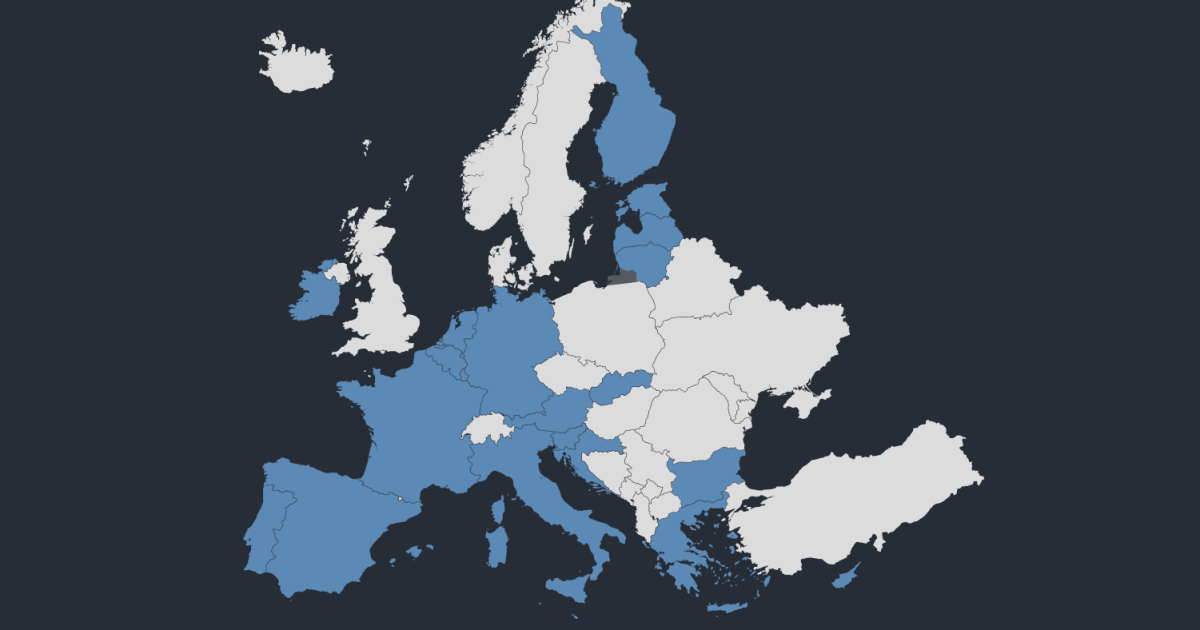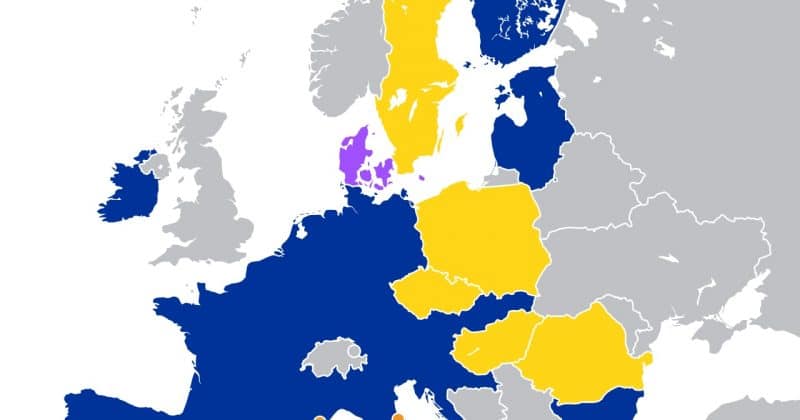
Bulgaria is set to become the 21st member of the eurozone on January 1, 2026, after the European Central Bank’s June 2025 Convergence Report confirmed the country had achieved sufficient economic and legal convergence. The remaining five non-euro EU nations under review, the Czech Republic, Hungary, Poland, Romania, and Sweden, haven’t crossed the finish line yet.
What the ECB found
The ECB’s convergence assessments follow a structured process that evaluates countries against a set of traditional macroeconomic criteria. The June 2024 report examined all six non-euro EU members, and by the time the June 2025 follow-up landed, Bulgaria was the only one that had made the grade.
The primary stumbling block for the remaining five countries is inflation. Meeting the price stability criterion requires a nation’s inflation rate to be close to that of the three best-performing EU member states over a 12-month observation period. For countries like Hungary and Romania, which have wrestled with elevated consumer prices in recent years, that bar has been particularly hard to clear.
Poland, the Czech Republic, and Sweden each face their own mix of challenges across the convergence criteria, ranging from fiscal targets to central bank independence requirements. Sweden’s case is especially notable: the country has been eligible to join the eurozone for years but has shown little political appetite to do so, effectively treating its EU treaty obligation as optional.