U.S. Trade Representative Jamieson Greer spoke with former U.S. Trade Representative Michael Froman at the Council on Foreign Relations (CFR) on May 26. Much attention fell on the U.S.-China summit results, but the more revealing aspect was the candor with which Greer discussed the direction of the trade order the Trump administration is pursuing.
Greer argued that the Chinese state-run economy is not merely an economic system but part of China’s political system itself, and that expecting Beijing to reform state-owned enterprises, reduce subsidies, or shift to a domestic-demand-led economy is unrealistic. He suggested that the United States had largely abandoned expectations that China would fundamentally reform its state-led economic model.
This does not mean Washington is relaxing its opposition to China. Rather, the U.S. is seeking to manage the effects of that competition. The aim is to control economic relations through tariffs, export controls, investment regulations, and rules of origin – ensuring competition while maintaining stability.
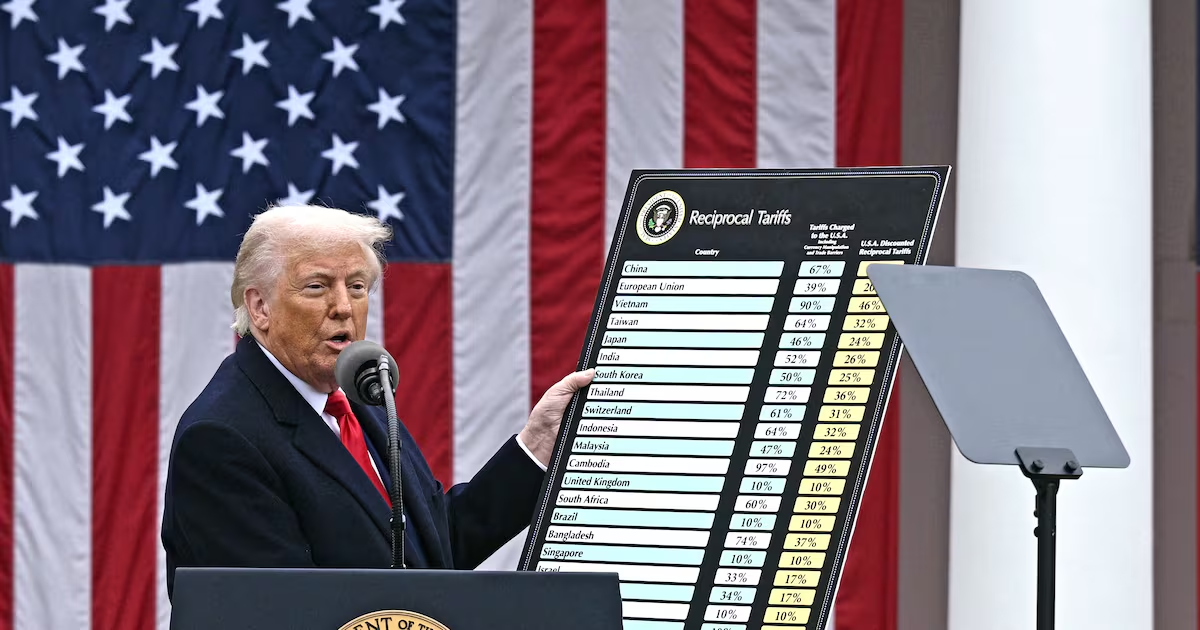
Greer also indicated that MFN (most-favored-nation) treatment, the cornerstone of WTO rules, would not sit at the center of the future trade order. MFN tariffs will remain a minimum floor, but actual market access and tariff conditions will be set through bilateral negotiations.