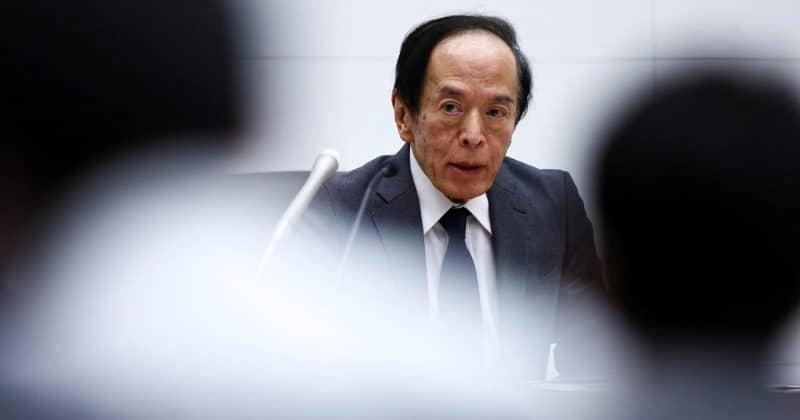
Bank of Japan Governor Kazuo Ueda told a gathering of business leaders in Tokyo on June 3 that Japan’s economy will likely grow more slowly in fiscal 2026, primarily because of surging crude oil prices tied to geopolitical tensions in the Middle East. But he maintained the recovery would continue at a moderate pace.
The speech, delivered at the Kisaragi-kai Meeting, was supposed to be a routine policy signal ahead of the BOJ’s June 15-16 meeting. Then Ueda was hospitalized shortly after delivering it, turning what should have been a straightforward macro story into something considerably more complicated.
What Ueda actually said
Japan’s economy faces a temporary growth headwind from rising energy costs, driven largely by the Iran conflict and broader instability in the Middle East. Despite that drag, Ueda pointed to several factors keeping the recovery intact: strong corporate profits, government fiscal interventions, and accommodating financial conditions.
On inflation, Ueda projected that underlying price growth, stripping out temporary factors, would gradually approach the BOJ’s 2% target sometime between the second half of fiscal 2026 and fiscal 2027. He also acknowledged the need to carefully weigh the pros and cons of raising interest rates further.