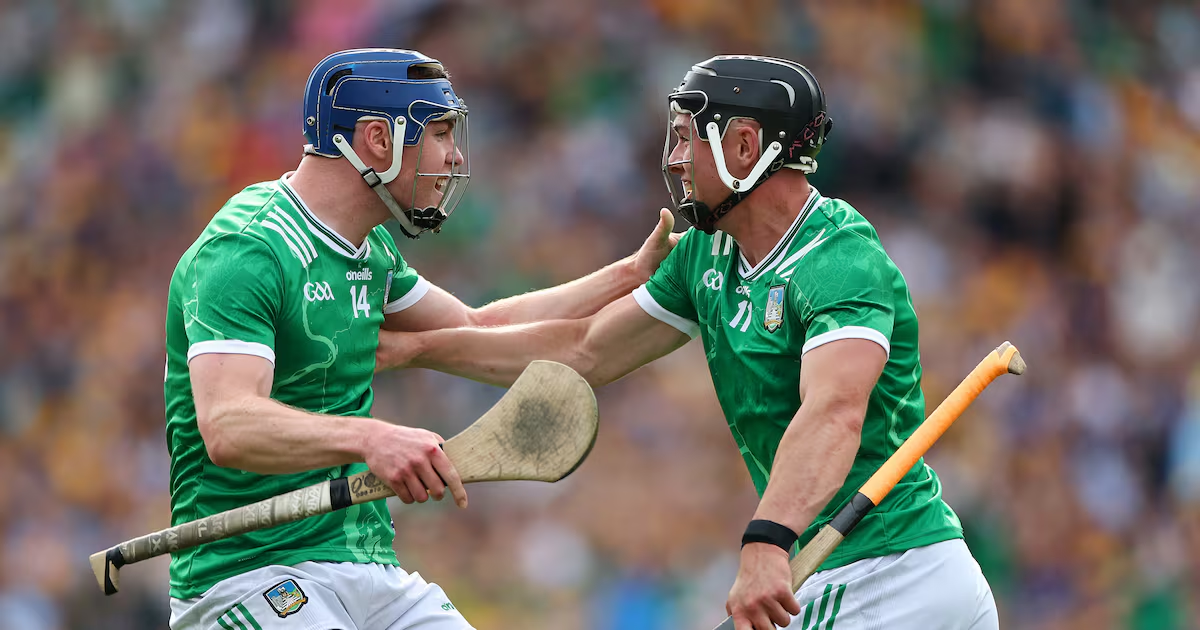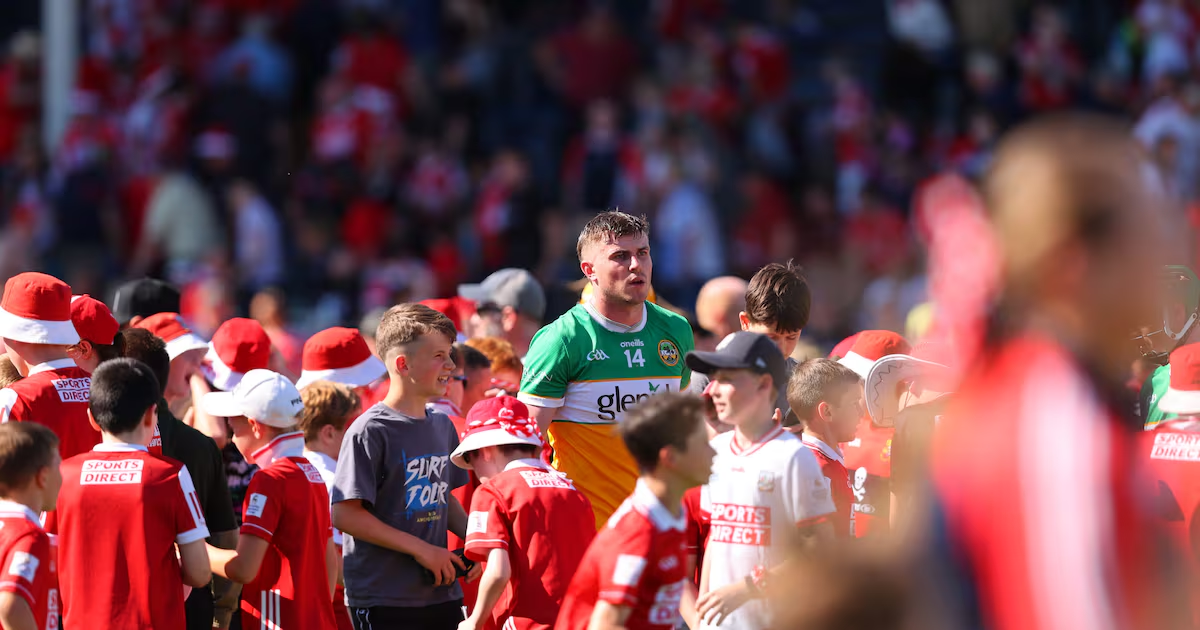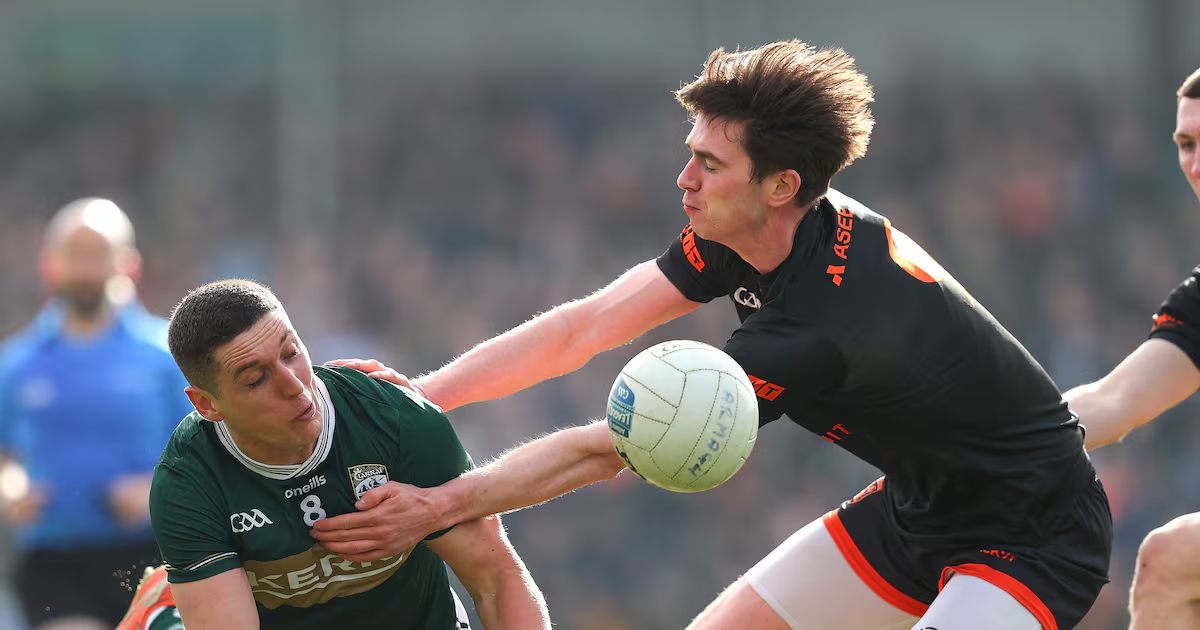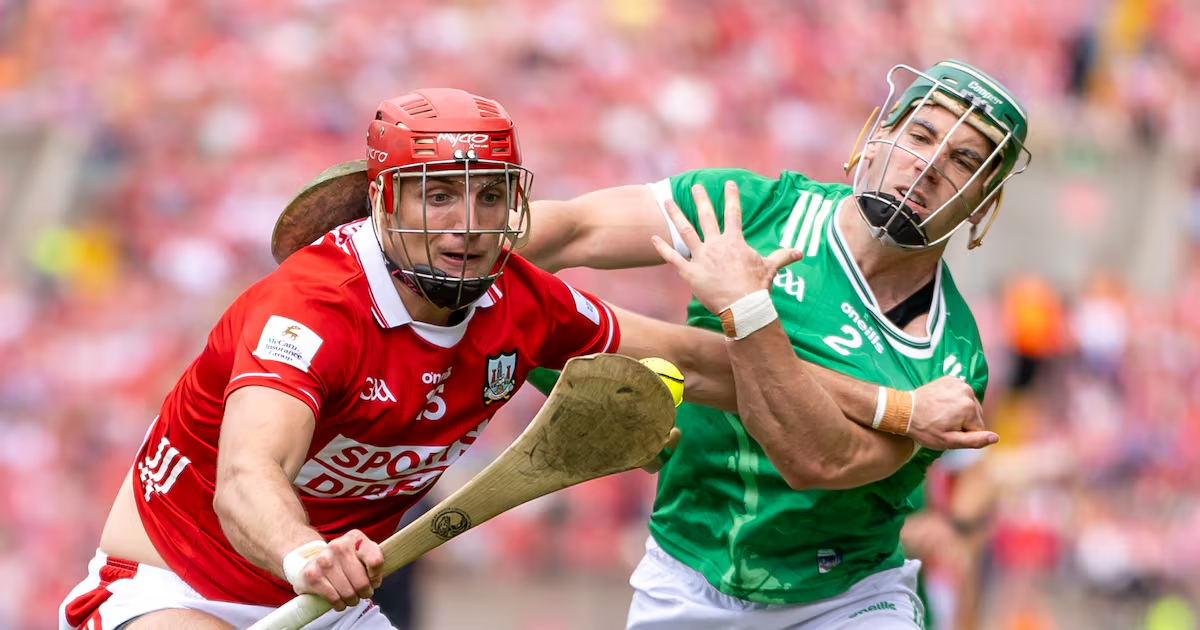
Like any bull run, hurling’s fabulous recent few seasons have given way to fairly queasy market sentiment. It’s not difficult to see why. The season to date, with just three matches to go, has been underwhelming to put it mildly.There has been plenty of comment on the poverty of competitiveness in the two All-Ireland quarter-finals, the championship round that has been looking for a bigger and more satisfactory profile in the past couple of years.GAA president Jarlath Burns was two years ago alerted to dissatisfaction among hurling counties at the loss of profile for the quarter-finals during consultations with the provinces about possible changes to the football championship.Despite a consequent, ham-fisted attempt to switch the 2024 quarter-finals to a Sunday at about a week’s notice, this series of matches has always been on a Saturday since 2019.Anyway, hurling got its way at the weekend and on Sunday an ill-starred Cork-Offaly broadcast was, first of all, unable to screen immediately on RTÉ One because of extra-time in the Dublin-Donegal football match and then swiftly turned into a rout.Taken in tandem with the Clare-Dublin match on Saturday, which featured a new low in quarter-final attendances (down from last year’s 15,414 for Tipperary-Galway) of 13,279 – apart from the empty stadiums of Covid – the weekend was, as Denis Walsh has pointed out, the worst cumulative quarter-final thrashings for 12 years.This is now the fifth year of the current structure, which came as an afterthought to football’s embrace of the round-robin quarter-finals in 2018. An old proposal to use that format in the two hurling provinces was dusted down and became an instant success.Well, in respect of Munster it did. That provincial championship has taken box-office to new levels. But, as occasionally mentioned here, the perfect storm of format and a keen competitiveness between a sufficient number of the counties drove huge attendances.What would happen when that competitiveness became blunted? To an extent that question has been answered. The year the GAA decided to drop the preliminary quarter-finals because the record of the McDonagh Cup finalists had been so dismal, the beatings continued in the quarter-finals themselves.Elite hurling is a small community. Leaving aside the four counties who have won All-Irelands in the past 10 years, and Kildare who have never won one, the remaining six competitors this year have been waiting an accumulated 245 years since last lifting the Liam MacCarthy – or an average of more than 80 seasons apiece.Competition therefore needs careful curating and, given the ebb and flow of fortunes, it has to have a dynamic structure because the optimal format will change from time to time – unlike football, which God knows had its own challenges in the past decade-and-a-half but remains robust. For instance, during Kilkenny’s heyday a round-robin design wouldn’t have worked as well given the serial chastisement the other Leinster counties could have expected. Even as a declining force, the county managed six successive provincial titles even if they created an unwanted record by not turning any of them into an All-Ireland.Limerick's William O'Donoghue fouls Conor Keane of Waterford during the sides' Munster championship game last month. Photograph: James Lawlor/INPHO What would be a more suitable format? In their serial inability to get out of Munster, Waterford have several hard-luck stories, probably none more frustrating than this year when they finished fourth having drawn one and lost three on competitive scorelines.Their sense of injustice centres on not being able to compete with Leinster counties at the business end of the season, as they would in football, because the Sam Maguire is backloaded.In other words, the fourth or fifth team in Munster would fancy a crack at the Dublins, Offalys, Wexfords and, yes, even Kilkennys of the world.It is broadly appreciated that the success of the Munster championship depends on the strict jeopardy of not making the top three, but that this in turn undermines the quality of the All-Ireland stages.In a way it’s a false dichotomy because at some point Munster is going to be incapable of continuing as a golden goose. Competition will flag, Cork supporters will get bored and the turnstiles will slow down.That issue of fairness is only one element of the present dissatisfaction with the hurling championship. Nicky English, a long-standing hurling analyst in this newspaper, has expressed misgivings about the split season from the start on the grounds that the game has to be played differently in April and early summer than is the case at this time of year.Only recently he suggested that even a small extension would create space to drag back more fixtures, at least the provincial finals, so they are played in current conditions – not that sun and mid-20s temperatures are guaranteed in this country even around midsummer.Everyone knows the metrics of waning visibility: just seven championship matches remain at the end of May. At this point, with the longest day just passed, there are only two weekends of hurling to go.Meanwhile, football is having a golden age, partly based on a format that keeps most counties involved until the middle of June, but also thanks to the impact of the FRC rule changes that, counter-intuitively, appear to have played a role in the surprises and shocks that continue to pepper the big-ball championship.What is irking the hurling community is that on top of everything else plenty of football teams are getting to play at the best time of year – the very time that is arguably more urgently needed to showcase their game.sean.moran@irishtimes.com
Seán Moran: Hurling skies darken with flapping chickens coming home to roost
Dynamic structure needed in game because capacity of counties constantly fluctuates
919 words~4 min read