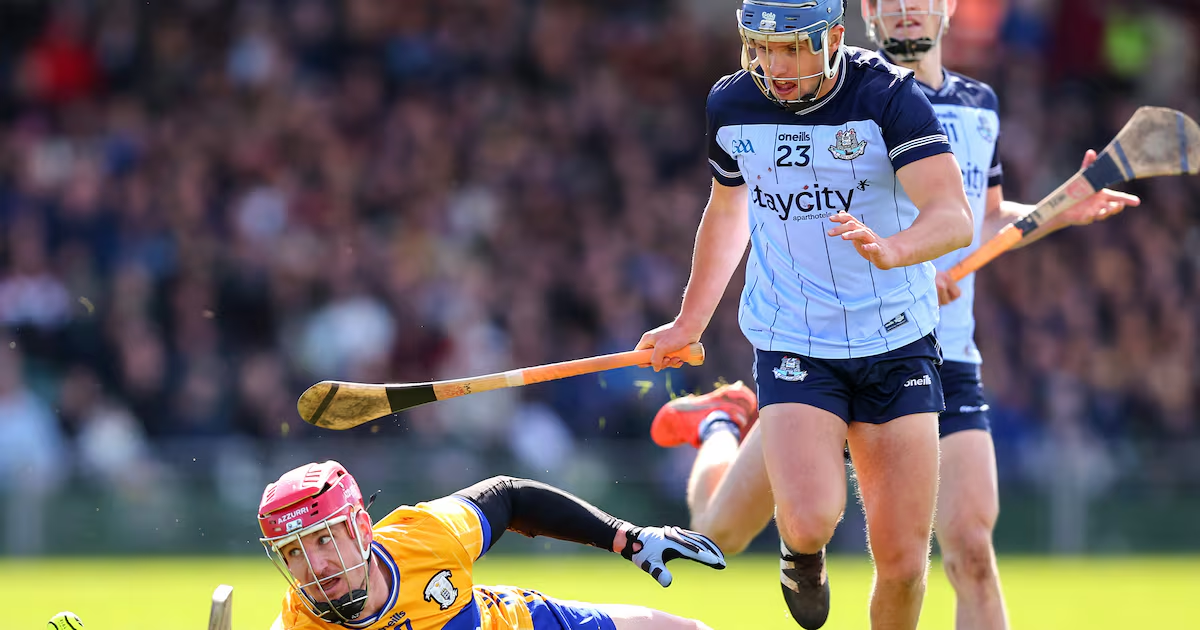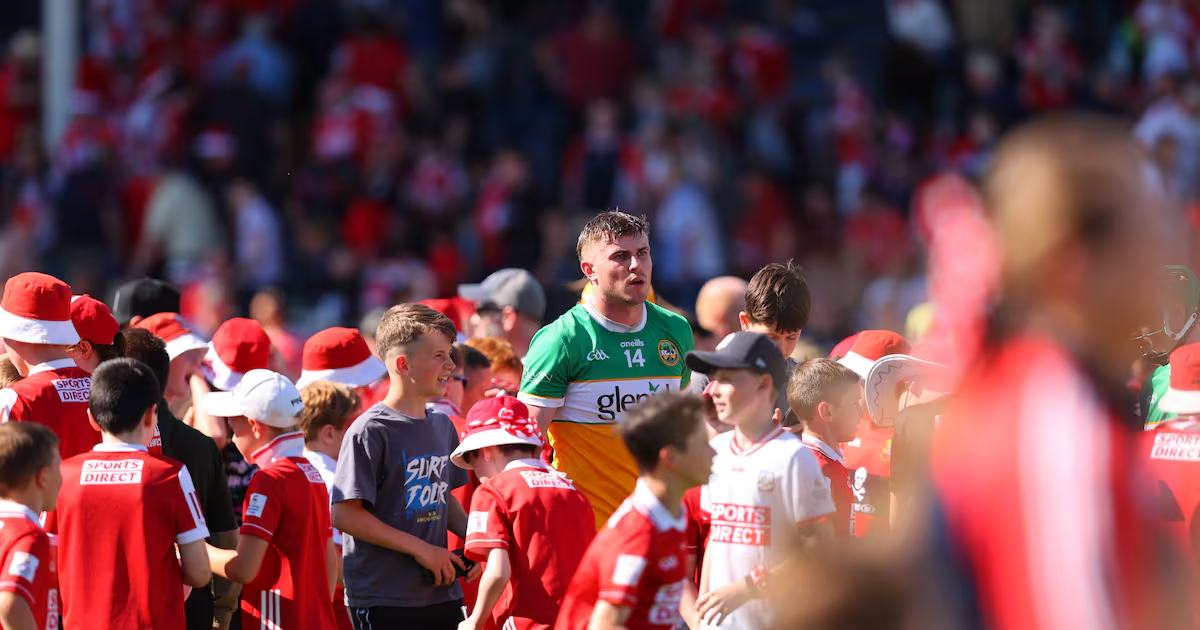
For hurling, it was a celestial freak show: the summer solstice and a total eclipse of the sun on the same weekend. The hurling quarter-finals have been difficult and disappointing for many years, but this weekend they landed with a dead cat bounce.Double-digit beatings at this stage of the championship are not a new phenomenon. Since the modern quarter-finals started with a reprieve for beaten provincial finalists in 1997, there had been 15 double-digit beatings before this weekend: Wexford had suffered four, Galway and Antrim three each; Cork, Down, Derry, Laois and Dublin had shared the others. But 2014 was the only other time when, like this weekend, both games were blowouts. Neither game had a redeeming quality. The only story from the weekend that cut through the noise was the terrible injury to David Reidy on Saturday night when he was floored by a shoulder to the head. For a couple of days, it sparked an important conversation about head-high tackling in the game, which may yet lead to stricter enforcement of the rules and a heightened duty of care from players. Clare's Conor Leen with referee James Owens as David Reidy receives medical treatment for a serious head injury. Photograph: Tom O'Hanlon/Inpho But, as spectacles, both quarter-finals were desolate and disposable. In recent years the hurling quarter-finals had become a cause celebre for people who were inclined to think hurling didn’t get a fair deal. For a couple of years, they were messed around by RTÉ’s contractual commitment to broadcast rugby’s URC final – regardless of who was playing – and the GAA’s insistence that the Tailteann Cup semi-finals should be the Sunday centrepiece of that weekend. The GAA has since resiled from that position on the Tailteann Cup, and RTÉ no longer has rights to show the URC. But given a clear run, the hurling quarter-finals couldn’t stand on their own two feet. On the Sunday Game’s live coverage from Thurles, Neil McManus tried to drum up some outrage about the early stages of the Cork-Offaly game being shunted on to the RTÉ Player after the Dublin-Donegal game in Croke Park had gone to extra-time. But there was no market for that sentiment this year. By the time the live coverage joined the main channel after about 10 minutes, the relatives were around the bed and the priest had been called. The games, though, were in step with a rash of dispiritingly one-sided games this summer. At elite level, hurling has always been prone to mismatches. The early rounds of the old qualifier system were full of them. The alarming difference this year, though, was that some of the game’s most powerful counties couldn’t stand up for falling down: Tipperary, twice, Clare, twice, and Kilkenny all suffered double-digit beatings along the way. In the history of the game, has that ever happened to those three teams in the same season? Never. [ Denis Walsh: Hurling has changed profoundly, without anyone giving or seeking permissionOpens in new window ]A little over a fortnight ago, Dublin were primed to make a breakthrough in the Leinster final; instead, they finished the season losing two games by an aggregate of 27 points. Of the 29 games played in this year’s championship so far, 14 of them have been decided by double-digit margins. Of the 11 teams in the Liam MacCarthy Cup, only four have not suffered at least one double-digit loss: Limerick, Cork, Galway and Waterford. From every angle it has been deflating. Tipperary manager Liam Cahill at the TUS Gaelic Ground last month, where his side were heavily defeated by Limerick. Photograph: Tom Maher/Inpho What it underlines again is the fragility of hurling’s ecosystem. In the football championship there are counties in every province that are miles off the pace or, in a given year, derailed by poor leadership. But football’s middle class is much bigger than hurling’s. In a good year – or in a brilliant year, like this one – other teams are liable to emerge from the pack and make waves: Westmeath, Louth, Cork, Roscommon and Monaghan have all electrified the football championship this year, without any of them having the credentials to win the All-Ireland. Until this weekend, the Offaly hurlers had elements of that profile, even though everybody had a sense that their breakthrough had come too soon. The hurling championship cannot afford anyone to go missing. When Tipperary, Kilkenny and Wexford are as bad as they were this year, the championship suffers grievously. [ Nicky English: Clare show glimpses of form but big Dublin win overshadowed by injury tollOpens in new window ]The events of the weekend, and the instant success of the latest tweak to the football championship, is bound to generate another conversation about the structure of the hurling championship. A former intercounty manager has made a suggestion based on the play-off system in American college football. It would mean the McDonagh Cup winners being added as the 12th seeds at the preliminary quarter-final stage and it would also mean that the provincial championships would determine the rankings for the All-Ireland series, with nobody eliminated until then.The provincial finalists would go straight to All-Ireland quarter-finals, with home advantage. The other eight teams in each province would play off according to their finishing position in the round-robin groups. The make-up of the semi-finals would be determined by an open draw. Under that system, this year’s results would have produced these preliminary quarter-finals: Kilkenny v Tipperary, Waterford v Wexford, Offaly v Laois and Clare v Kildare.Would the provincial championships be emasculated if everyone qualified? Would the crowds disappear in Munster? Would that be a risk worth taking, if it meant that there were more games and hurling wasn’t completely swamped by football in midseason? Hurling’s new advisory group has no brief to review the championship structure and maybe there is no stomach in Croke Park, or elsewhere, to jeopardise the extraordinary income from the Munster championship. It is also true that no format could survive the kind of demoralising results that have been visited on this year’s championship. The summers of 2018, 2023 and 2024 were among the greatest in the history of the hurling championship because at least six teams were consistently producing performances at an elite level. This year, that number is hovering at two. Hurling can’t afford another year like this.
The fragility of hurling’s ecosystem was exposed yet again in the quarter-finals
Hurling can’t afford another year like this – 14 of the 29 championship games so far have been decided by double-digit margins
1,060 words~5 min read