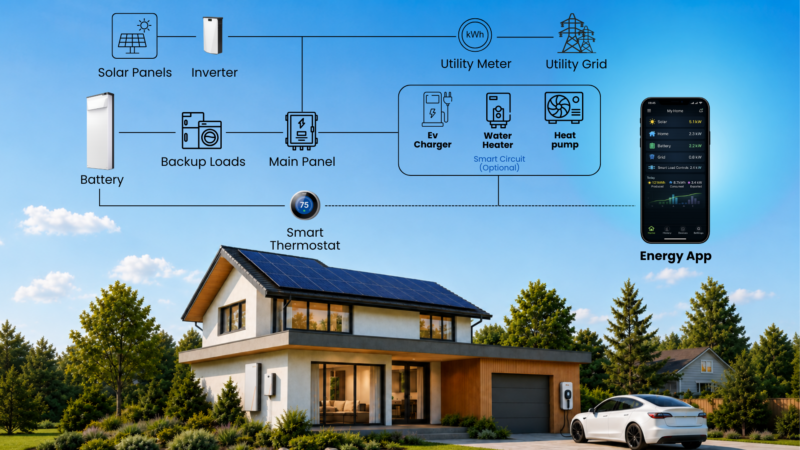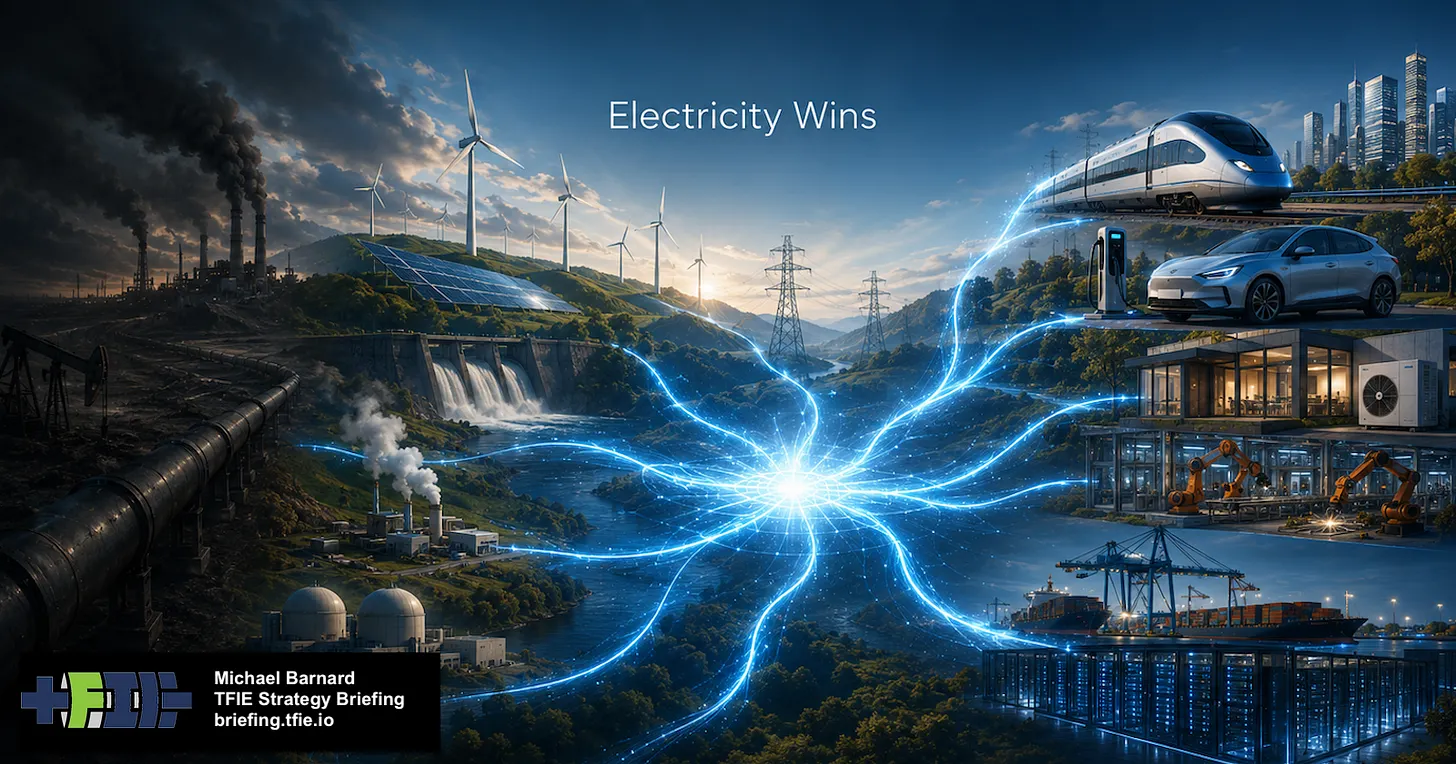
Electricity’s strategic value is the shared platform between many energy sources and many useful services.
Support CleanTechnica's work through a Substack subscription or on Stripe.
One of the easiest ways to get the energy transition wrong is to treat electricity as just another fuel. Coal, oil, gas, hydrogen, ammonia, methanol and electricity are often placed in parallel columns, as if the future is mainly a substitution table. That framing preserves too much of the fossil economy’s structure. Electricity is not another barrel, tonne or cubic metre with a cleaner label attached. It is the system layer that lets energy sources and useful services separate from one another.
The fossil economy is tightly coupled. A gasoline car requires oil production, refineries, distribution terminals, fuel stations, internal combustion engines, maintenance systems and tailpipe pollution controls. A gas furnace depends on gas wells, processing, pipelines, meters, combustion equipment, flues and local air pollution. A coal plant brings mines, rail links, boilers, ash handling, cooling systems, emissions controls and coal-market exposure with it.
Those chains can be optimized and regulated. They can sometimes be cleaned up at the margin. But the useful service remains tied to a specific fuel pathway. The car needs gasoline or diesel. The furnace needs gas. The coal plant needs coal. Every day, the system has to keep extracting, processing, transporting and burning mass to deliver the next unit of service.