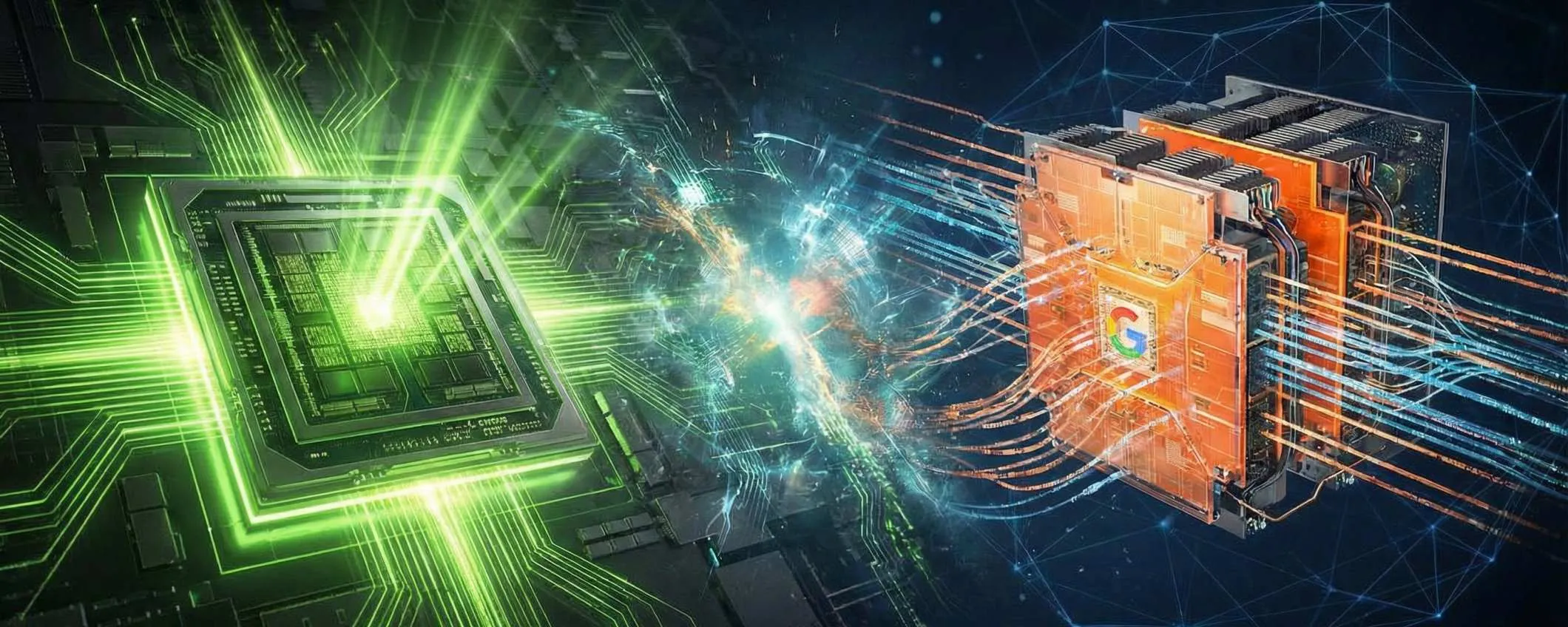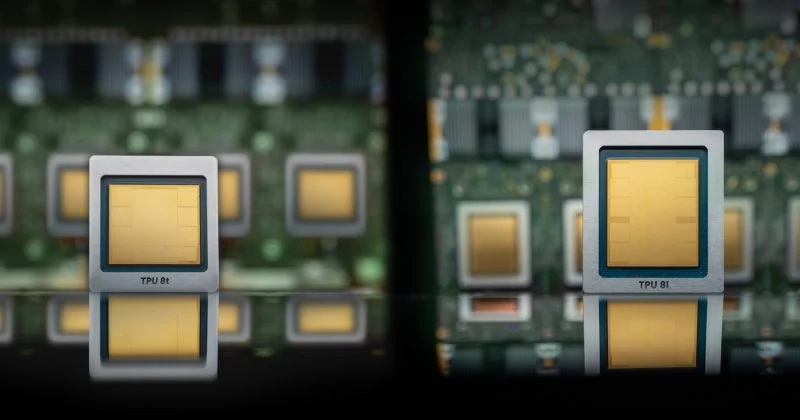
When Google launched the TPU Developer Hub, the technical signal was clear: the company wants to reduce friction between ML practitioners and specialized acceleration hardware. As an architect who spends a significant portion of time designing inference and training pipelines for financial systems — where every millisecond of latency and every dollar of compute cost must be justified — I read that announcement with productive skepticism. TPUs are not new; what changes is the developer experience layer and the proposition of making this hardware accessible beyond Google's own research labs. In this article, I analyze what the TPU Developer Hub actually delivers, where it differentiates from alternatives like GPU instances on AWS, where it imposes hard trade-offs, and how I would structure an adoption decision in a regulated financial environment.
Numbers that define the context
~4.6x — TPU v5e throughput gain vs. A100 in LLM training (public JAX/MaxText benchmarks). For dense models above 7B parameters in bfloat16; results vary with network topology and batch size
$2.20/h — Cost per TPU v5e chip on-demand (us-central1, 1 chip). Compared to ~$3.06/h per A100 GPU on equivalent p4d.xlarge on AWS us-east-1; cost parity depends heavily on utilization efficiency