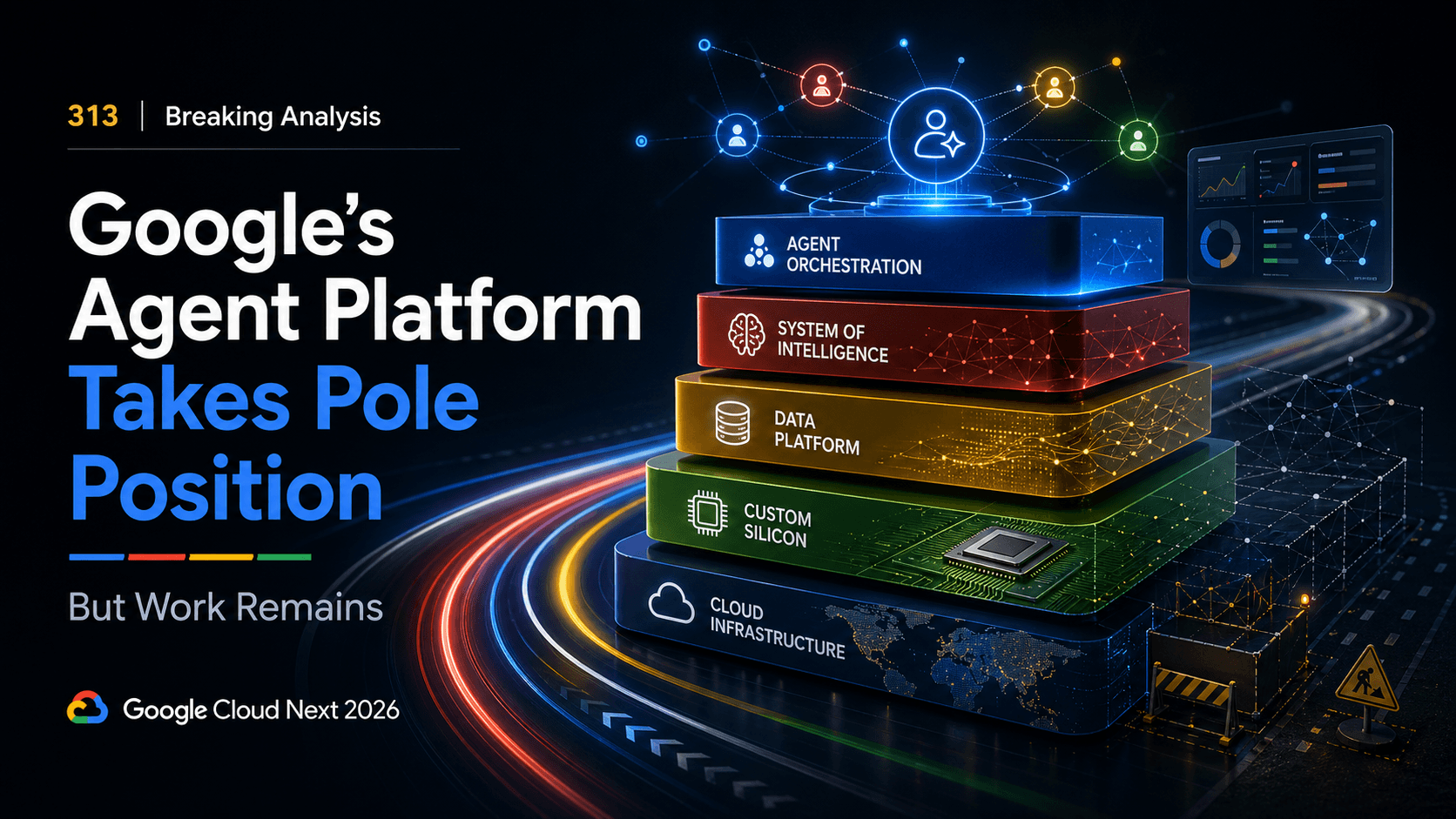
Google used its Cloud Next '26 conference to unveil its eighth-generation TPUs, a revamped agent platform, and a new AI layer for Workspace. The company is pitching the whole package under the banner "Agentic Enterprise."
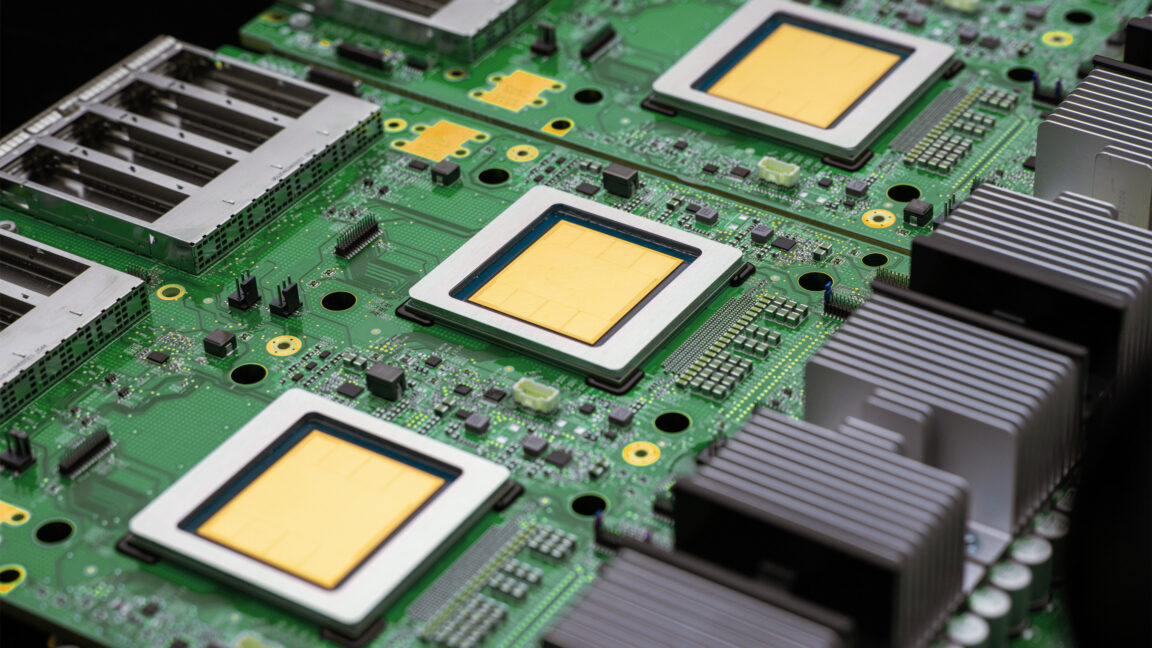
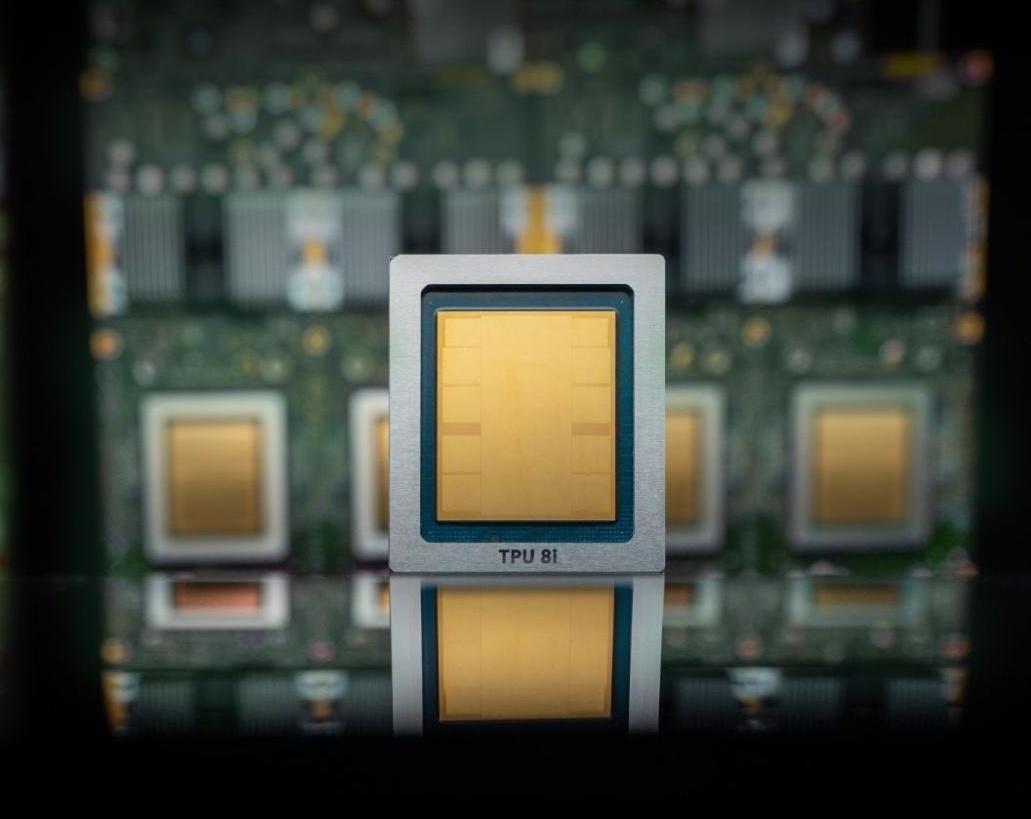
For the first time, Google is splitting its Tensor Processing Units into two variants: TPU 8t for training and TPU 8i for inference. According to Amin Vahdat, SVP and chief technologist for AI and infrastructure, the move is a response to rising inference demands from agents that plan, act, and learn in loops.
Compared to Nvidia, Google is betting less on raw single-chip performance and more on scale. As The Register notes, Nvidia's upcoming Rubin GPUs offer more compute and significantly more memory bandwidth per chip than the TPU 8t. But when training frontier models, what matters is how many chips you can efficiently link together.
That's where Google has the edge, according to The Register. Nvidia's latest GPUs connect up to 576 accelerators in a single NVLink domain before slower Ethernet or InfiniBand links kick in. Google, by contrast, uses optical circuit switches to link 9,600 TPUs in a single pod. Its new Virgo Network can tie multiple data centers together into clusters of up to one million TPUs. A managed Lustre storage system pushes data straight into accelerator memory. Google is targeting a "goodput" rate of around 97 percent - meaning the share of time chips spend actually training rather than waiting on checkpoints or recovering from errors.