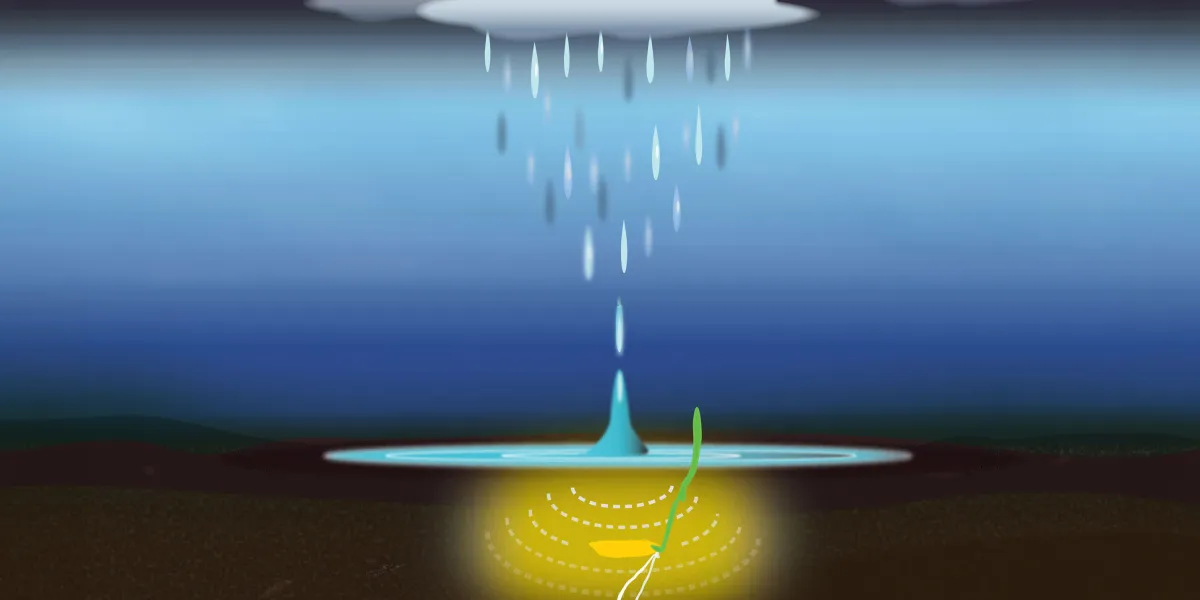
MIT Alumni News: 77Rice seeds sprout faster when they sense the landing droplets’ sound vibrations.June 23, 2026Cadine Navarro MIT engineers have found the first direct evidence that plant seeds can sense sounds in nature: Rice submerged in shallow water germinated 30% to 40% more quickly when exposed to vibrations from water dripping on the surface. They think other types of seeds may respond similarly. When a raindrop hits a puddle’s surface or the ground, the researchers found, the vibrations from the resulting sound wave can be strong enough to dislodge tiny gravity-sensing organelles called statoliths. The jostling of these statoliths is a signal for seeds and seedlings to grow and sprout, even if only the sound waves—not the water itself—are close enough to reach them. This phenomenon may confer a biological advantage: If seeds are close enough to the surface to respond to the sound of rain, they are likely at an optimal depth to grow. “What this study is saying is that seeds can sense sound in ways that can help them survive,” says Nicholas Makris ’83, PhD ’91, a professor of mechanical engineering at MIT, who coauthored a paper on the work with Cadine Navarro, SM ’25, a former graduate student in the Department of Urban Studies and Planning. “The energy of the rain sound is enough to accelerate a seed’s growth.” Keep ReadingStay connectedIllustration by Rose WongGet the latest updates fromMIT Technology ReviewDiscover special offers, top stories,
Plants appear to detect the patter of falling rain
Rice seeds sprout faster when they sense the landing droplets’ sound vibrations.
244 words~1 min read