This audio is auto-generated. Please let us know if you have feedback.
Recent years have seen brands making promises to uphold labor rights and respect a living wage for garment workers. But a new report on the import price of a wardrobe staple, the cotton T-shirt, challenges the seriousness of those commitments.
The report, released last month by Swiss environmental and labor watchdog Public Eye and global nonprofit Clean Clothes Campaign, focuses on cotton T-shirts imported by the European Union — the world’s largest import market for the product — and how their pricing model directly impacts supplier labor conditions.
From 2001 to 2024, the price of this product rose slightly, from $2.15 to $2.67. But accounting for EU and global inflation, the change from $2.15 to $2.67 actually represents a 3.1% decline per year, meaning that the price has fallen by about half in real terms, the report says, raising the question of where these savings come from.
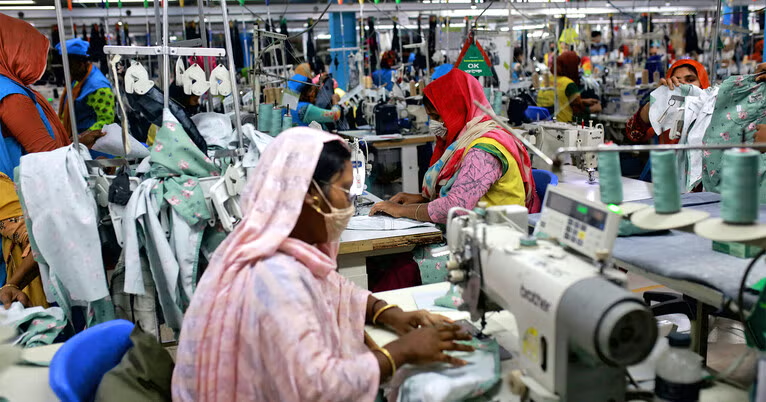
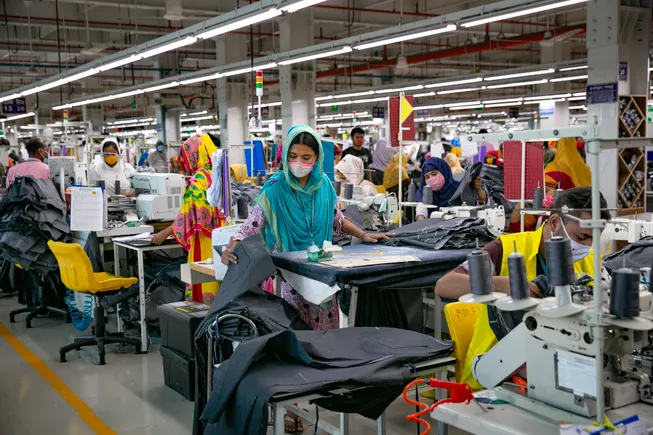
The report focused further on Bangladesh, since 61% of the EU’s T-shirt imports are manufactured there. In 2024, a T-shirt imported from Bangladesh was even cheaper than the average, at just $2.06. About one-fifth of Bangladesh’s cotton T-shirt exports in 2025 were bought by six brands: Bestseller, Primark, H&M Group, Inditex (Zara), LPP, and Fast Retailing (UNIQLO), the report found, based on detailed trade data. Fast Retailing pays the most, an average of $16.95 per kilogram, and LPP pays the least, $10.11 per kg (price per weight is a more accurate comparison, as the weight of t-shirts can vary by brand, the report authors say.) For comparison, In 2025 the average EU import price for cotton T-shirts was $16 per kg, and for T-shirts sourced from Bangladesh, it was just $13 per kg.