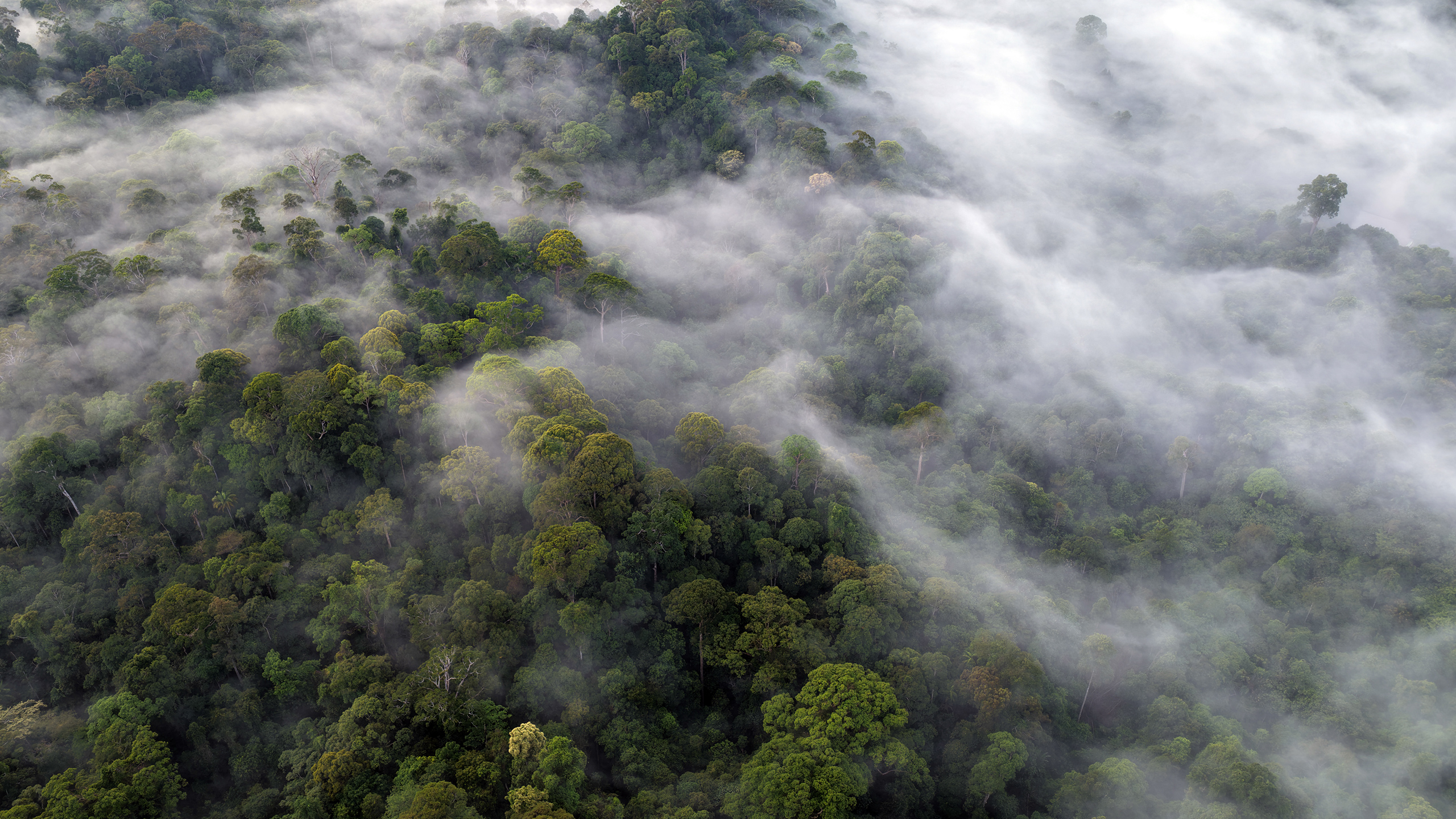
Forests in places like Indonesian Papua do not disappear because trees fall, but because governance fails, a new op-ed argues.What’s needed is a rethink of how Indigenous territories have been systematically stripped of effective governance, and what a shift back to local jurisdiction over forests would allow.“It’s a shift from protecting forests as external objects to governing territories as living systems, from delivering projects to building institutions, and from treating communities as beneficiaries to recognizing them as decision-makers,” the author writes.This article is a commentary. The views expressed are those of the author, not necessarily of Mongabay.
For decades, deforestation has been treated as the central problem. It’s measured in hectares lost, monitored through satellites, and addressed through conservation programs, carbon mechanisms, and development interventions. Yet despite billions of dollars invested, forests continue to decline.
What if we have been diagnosing it wrong?
Deforestation is not the disease. It is a symptom. The deeper problem is the erosion of governance over territory, over resources, and ultimately, over the future itself.
To see this more clearly, it helps to begin not with global statistics, but with a people and place, like Namblong, in Indonesian Papua, an Indigenous territory spanning more than 52,000 hectares (128,500 acres) that’s governed by a tribe of 44 clans. Around 42,000 hectares (almost 104,000 acres) remain forested as a living landscape shaped by generations of customary governance.