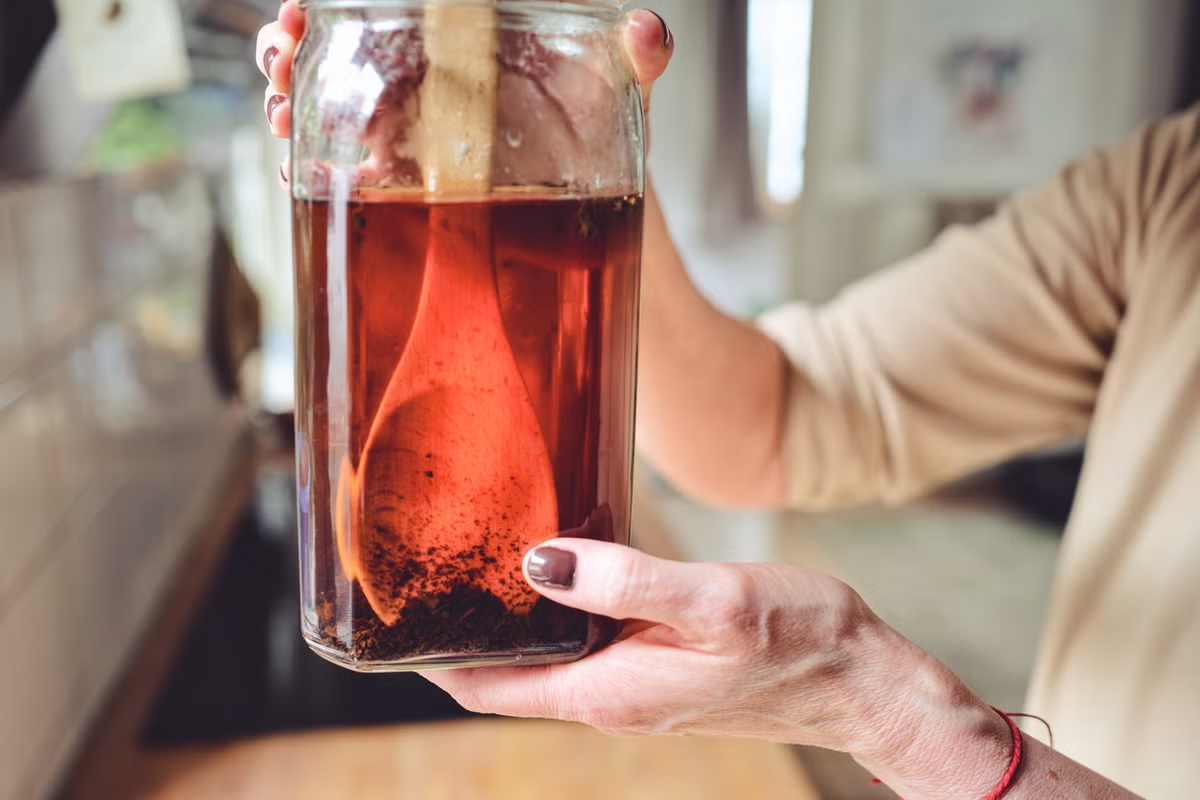
Kombucha has surged in popularity worldwide in recent years, becoming one of the most widely consumed fermented drinks. While many people choose it for its distinctive flavor, researchers are taking a closer look at what is happening inside the beverage during fermentation and how its ingredients may influence its properties.
Scientists from the Wrocław University of Environmental and Life Sciences and Wroclaw Medical University (Associate Professor Helena Moreira, PhD, Associate Professor Ewa Barg, PhD, and Anna Szyjka, MSc Eng.) set out to investigate one key question: Does the type of tea used to make kombucha affect the final product? Their findings revealed much larger differences than expected.
The research team compared kombuchas made from black, green, white, oolong, and pu-erh teas. Their study was published in the journal Food Chemistry.
"The type of tea acts as a specific matrix that shapes the course of fermentation and the final composition of kombucha," explains Associate Professor Helena Moreira, PhD, from the Department of Basic Medical Sciences and Immunology, Wroclaw Medical University. "Individual teas differ in their content of polyphenols, catechins, caffeine, and other bioactive compounds, which are subsequently metabolized by SCOBY microorganisms. As a result, fermentation proceeds with different dynamics, and the final beverages differ in both chemical and aromatic profiles."