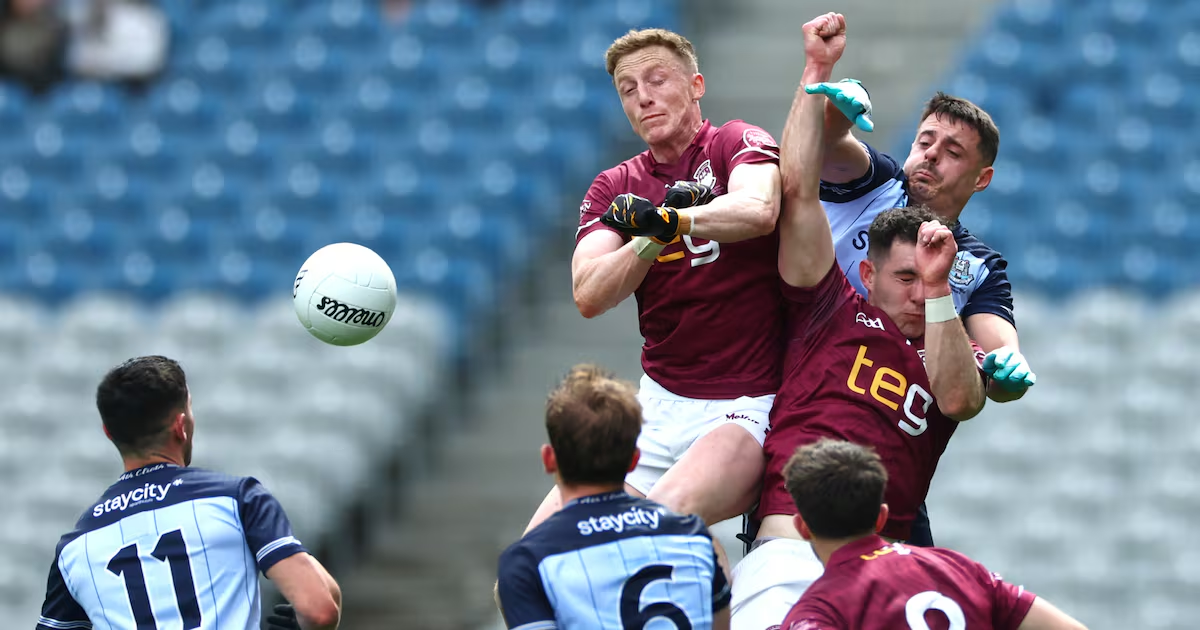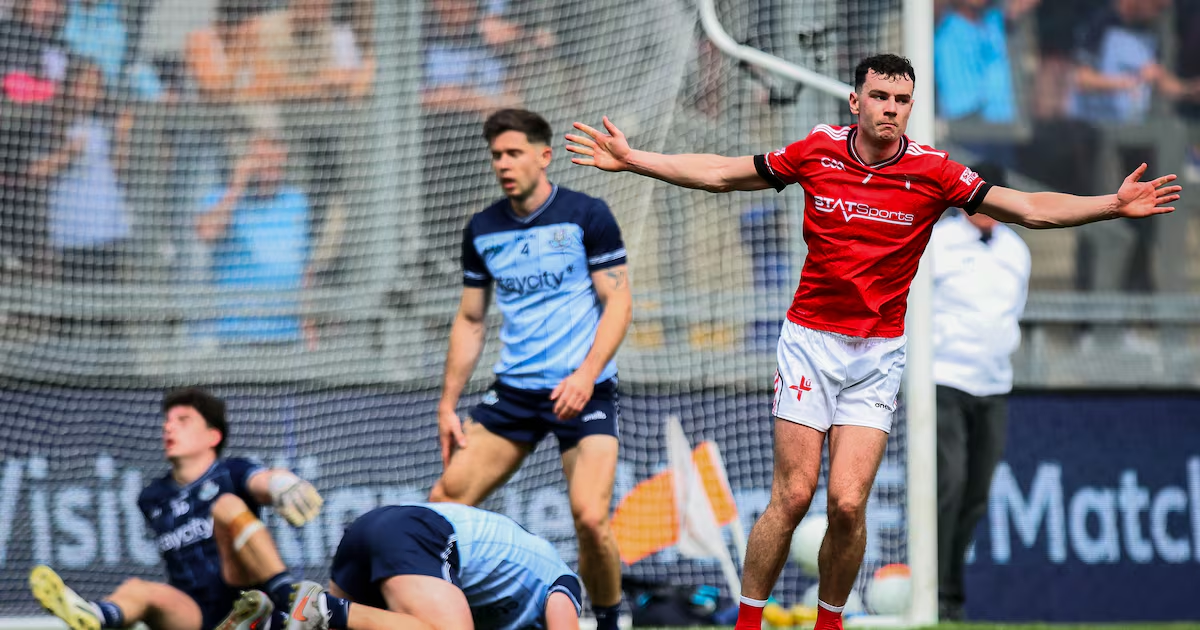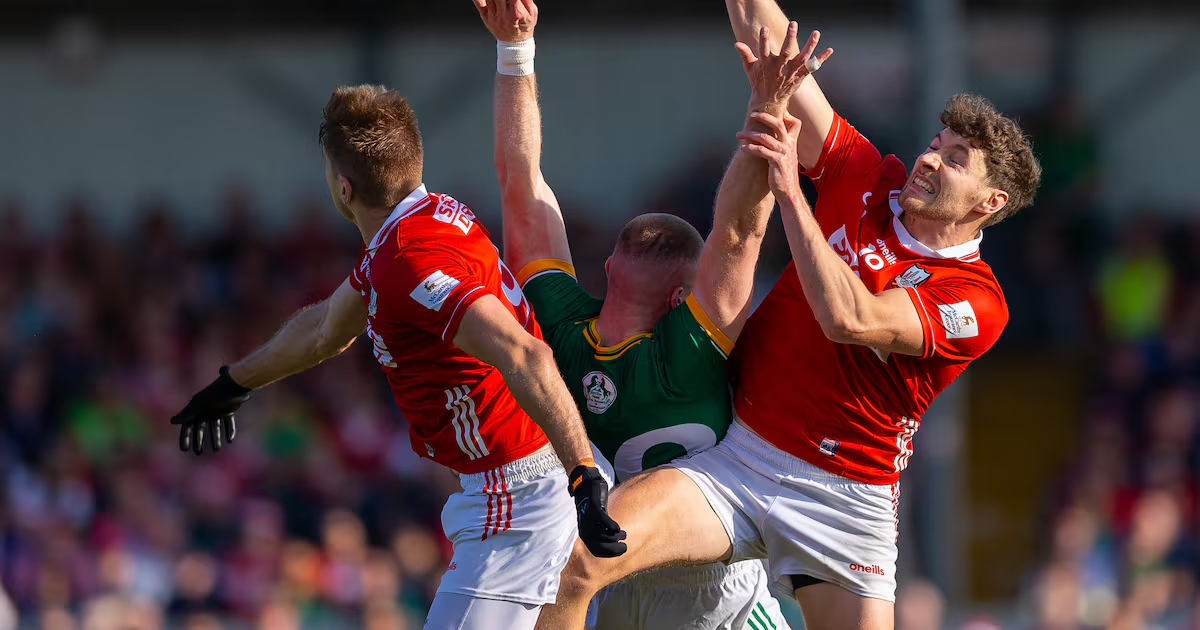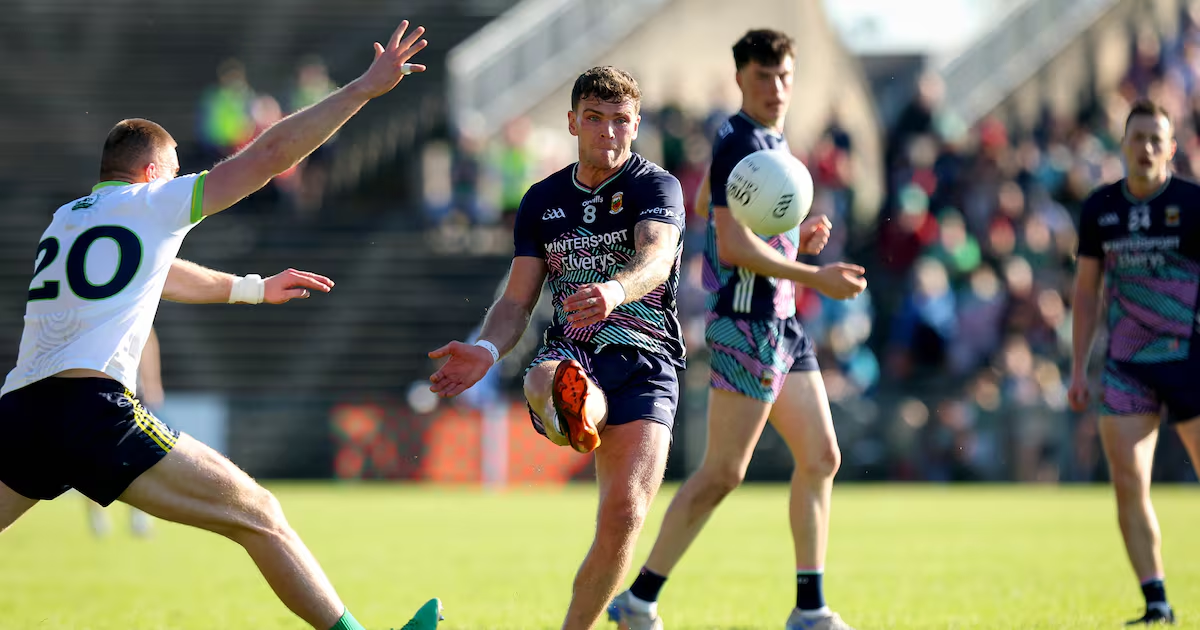
As management teams prepare for the quarter-finals this weekend, many different scenarios will be put on the table. One will be what do we do if we have a man sent off? And what do we do if the opposition have a man sent off?Even a 10-minute black card period is likely to be discussed. With the pressure that can be exerted on an opposition’s kickout with a high press, it can be a really strong platform if there is a numerical advantage of an extra man to allow a more co-ordinated press and an extra body around the breaking ball. Then there is the element of control of the ball when a team gets their hands on it and being able to recycle possession with the numerical advantage and manipulate the opposition’s defence to create high percentage shots. There have been very few players sent off in the All-Ireland series to date. Micheál Burns in the half-time brawl in Killarney, which led to Donegal being untouchable as they won the second half of that encounter against Kerry by 1-9 to 0-7, with Kerry finishing with two two-pointers to take the bleak look off the scoreboard. Effectively Donegal dictated the encounter in the 15 v 14 scenario and 11 v 10 slow attacks. The other two games where a player has received a red card have involved Meath. They went a man up against Cork when they were trailing 0-25 to 1-20 on the scoreboard, as Colm O’Callaghan was given his marching orders in the 50th minute. There was still 20 minutes of playing time left at this point and despite a man advantage, Meath lost that closing quarter 0-5 to 0-4.Much of the narrative around this would have been how Meath continued with their high octane attacking style and didn’t try to utilise the extra man enough, with slower-paced, deliberate attacks. In the final period of that game, Meath outshot Cork by 11 to six, yet the quality of the shots was the problem. Meath didn’t convert any of their three two-point efforts and they lost possession three times with ambitious passes. They were forcing the game, while at the other end, Cork hit a majestic two-pointer through Steven Sherlock and the damage could have been worse but for a correctly called square ball that ruled out a Cork goal. Meath and Cork shots after Cork's Colm O’Callaghan received his red card. Meath’s attacking shape was chaotic during these final 20 minutes and they never looked to use the principle of inside overloads to create space around the arc for shots for both one- and two-pointers. This lack of awareness on the day of how to manufacture space outside during slow-paced attacks stunted Meath. This left considerable pressure on the outside shooters, when space could have been created to allow them higher percentage shots. No inside overloads leaving shooting zone cluttered versus Cork setting up attack. In Castlebar on Saturday, Ronan Jones got sent off with Meath leading 2-12 to 0-14 and still 15 minutes on the clock. Mayo started their man advantage with an immediate two-pointer for Jordan Flynn, where Meath were unable to adjust their defensive system and the Crossmolina man had all the time in the world to convert his shot under zero pressure. It was his second two-pointer of the half, which was later followed by a similarly easy Jack Carney effort. Jordan Flynn and Jack Carney convert two-pointers under zero pressure from Meath. Mayo then won the next three Meath kickouts, as they forced Seán Brennan long and they managed to score twice off these three kickout wins (all three breaking balls), with scores from Ryan O’Donoghue and Tommy Conroy. This helped level the game up at 0-18 to 2-12 and it appeared like Mayo would cruise to victory, but it’s never straightforward with Mayo. Strong Mayo press versus slack Mayo kickout press gave Meath a chance. Mayo will be disappointed that they allowed Seán Rafferty secure the next kickout short in the corner and this nearly cost them dearly, but Jack Livingstone bailed them out with an unbelievable save at close range from the ever impressive Ciarán Caulfield. Jack O’Connor managed to score from the rebound but Meath failed to register another score in the remaining 12 minutes.Despite Mayo strongly pressing the first three Meath kickouts after the sending off and sending them to contests, they allowed Meath get four short balls away on the remaining kickouts. Meath got three shots off from these four, but will be disappointed with the Jordan Morris effort and missed Seán Brennan free that they didn’t punish Mayo appropriately for their slackness.With the extra body it is unforgivable to allow the kickout away and even more so not to utilise the extra body by pressing high up the pitch, as Meath transitioned the ball out. This off-the-ball control will surely be an area that Andy Moran will look to address ahead of their visit to Croke Park and a resurgent Cork. Ciarán Caulfield goal effort in 14 v 15 game. Meath goals from direct central runs. The Mayo rearguard and defensive structure is so vulnerable to individual switch offs. It is not through lack of effort from the defenders but their awareness of identifying danger can be questioned, as their defence was opened for first-half goals by a Caulfield one-two and a Seán Coffey untracked strike run, both through the centre of the Mayo defence. Caulfield’s second goal effort that was thwarted by the spectacular Livingstone save will rankle even more as a simple reverse handpass from Bryan Menton to Caulfield opened them up, despite the numerical advantage. It is unlikely that Mayo will address this defensive frailty accordingly this season, as they have conceded countless goal chances, particularly against Monaghan and Roscommon. A well-drilled Cork attacking set-up is likely to be able to manipulate this Mayo defensive effort, but a serious game is in store as Mayo will be heavy metal in their attack as usual.
Tactical analysis: How to use an extra man in Gaelic football
Mayo were fortunate to come through against Meath as they gave them a chance with some slack kickout pressing
1,000 words~5 min read