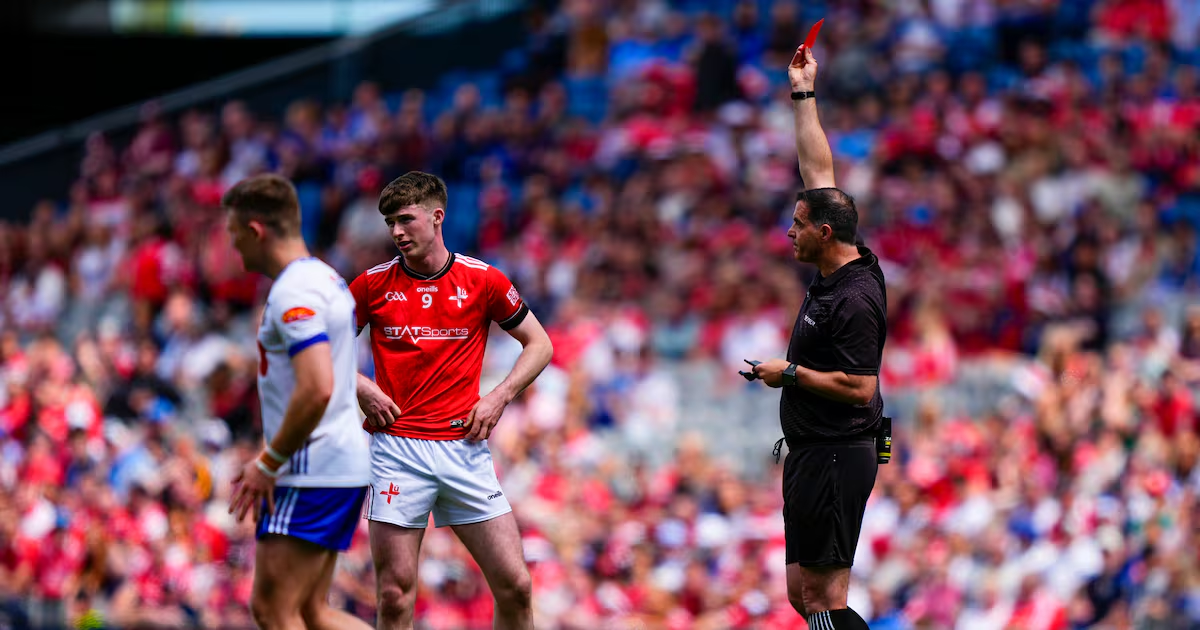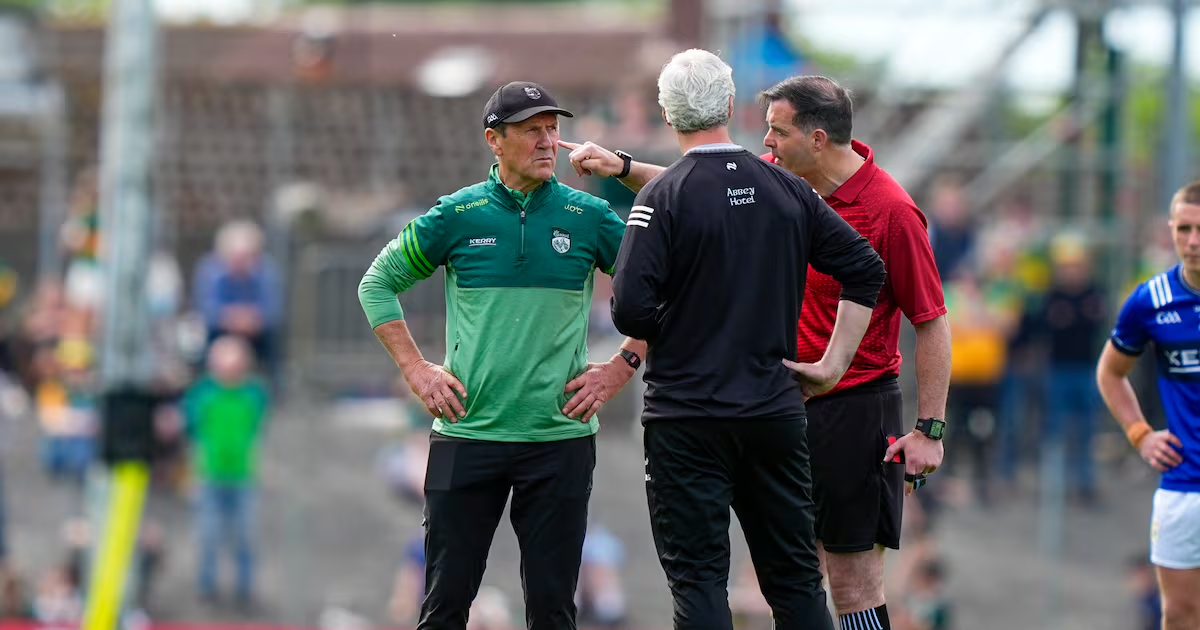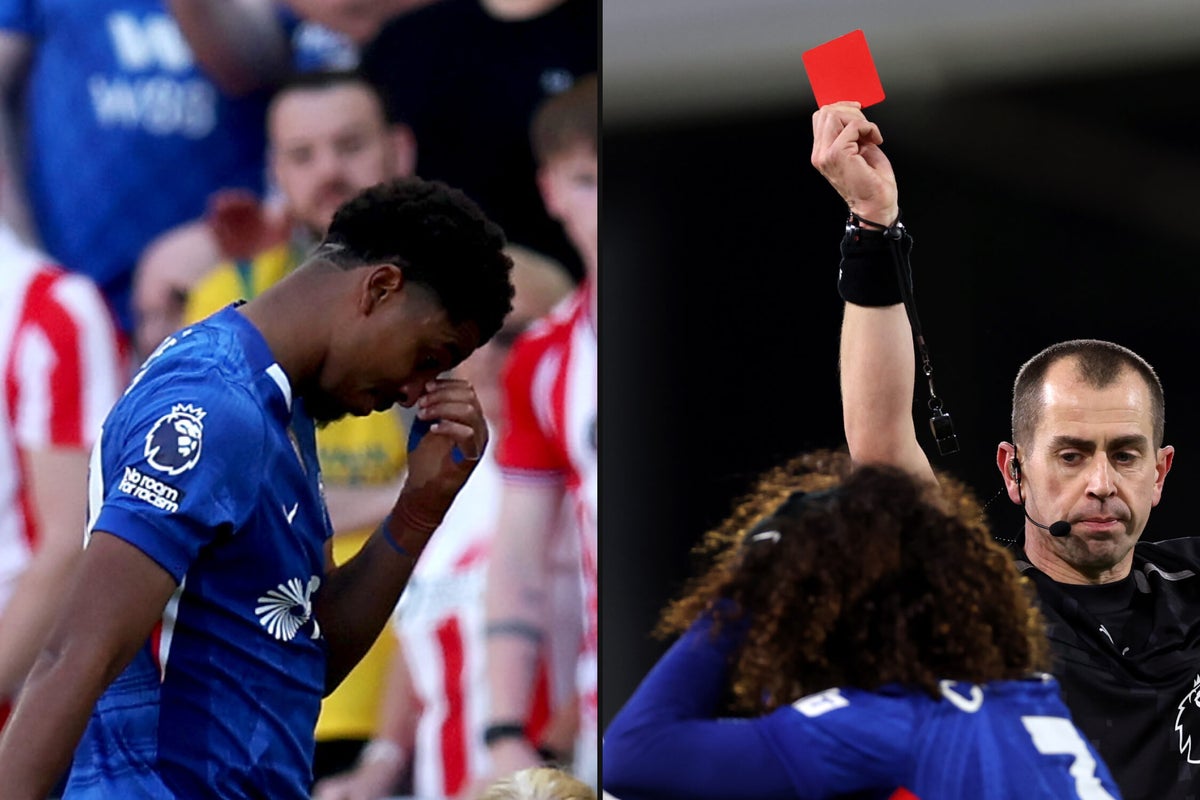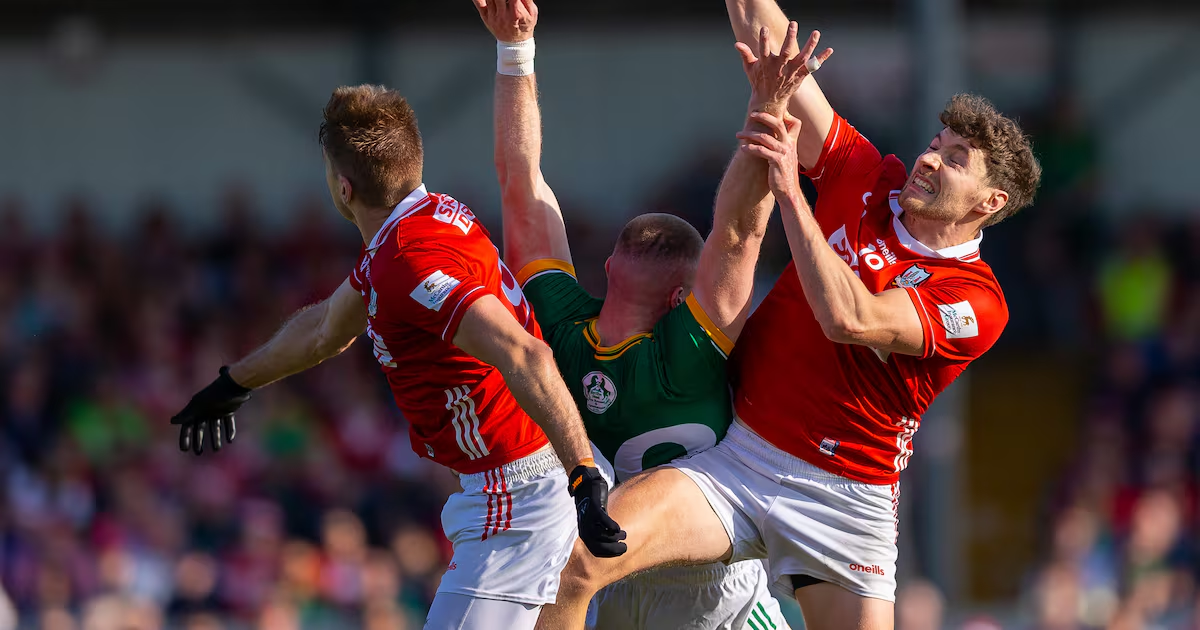
Whatever about the red mist that descended at half-time in the Donegal-Kerry match – which has already been dealt with by the authorities, so I won’t linger on that topic given everyone has moved on – it was the effect of red cards, which admittedly have been few and far between under the new rules, that caught my attention. It wasn’t so much the actions which led to the actual issuing of those two red cards last weekend – one to Micheál Burns of Kerry in losing to Donegal and the other to Cork’s Colm O’Callaghan in their win over Meath – but the contrasting impact those dismissals had on the outcomes. It has become a real peril for any team to be at a numerical disadvantage, even if Cork managed to defy that observation on this occasion.In both instances we saw different examples of the huge effects of those red cards. The structured and controlled manner of Donegal means that even when it is 15 versus 15 they are very hard to break down, so when it came to a situation where Kerry were defending a man down or occasionally attacking with a man less, their task became an impossible one. Donegal are impenetrable at the best of times, even more so when they are a man up. With their control and ability to retain possession, they also made full use of the advantage offered by the rule restrictions on playing numbers in each half. The other side of the coin came in Páirc Uí Rinn. Meath’s style of attacking play, and a gameplan that is somewhat chaotic in nature and certainly not as structured as others, meant they couldn’t adjust to keep out Cork, even with a numerical advantage for near-on 20 minutes. [ Darragh Ó Sé: Jim McGuinness acted like any manager would when he saw his player get split openOpens in new window ]Meath’s tendency to play a kicking game definitely didn’t help their cause, which – unlike Donegal – led to a failure to retain possession and offered Cork a way back.What is evident under the new rules is that there are fewer red cards being dished out and the changes have generally made for much better and faster football. But the message delivered by Donegal – backing up the National League win over Kerry by going down to Killarney and repeating the dose – is that their entire focus is on getting their hands on the Sam Maguire.Shea Malone of Donegal celebrates his goal against Kerry in Fitzgerald Stadium, Killarney, on May 23rd. Photograph: James Lawlor/©INPHO Losing to Down in Ulster really proved to be no big deal, to be honest: they’d won the last two Ulster titles without managing to go all the way and lift the All-Ireland so with only Sam left on the agenda it played into their hands. And at this stage they look to be the main contenders – along with Kerry when players return – to achieve that goal. If Ciarán Thompson manages to regain fitness, nearly a year out from suffering a cruciate ligament injury in last year’s All-Ireland final, then he will give Donegal further options going forward.Ciarán Thompson's return would be a massive boost for Donegal. Photograph: Leah Scholes/©INPHO That first half of the Donegal-Kerry match was a great advertisement for the new rules, as good a half of football as you’d get and with an aggressive edge. There were also brilliant examples of how teams push up on opposition kickouts and some fine examples of two-pointers from both teams.All of which brings us on to Dublin, who have struggled with winning possession off their own kickouts and have also been poor in delivering two-pointers.They are back in action with Louth for their second meeting this year. I don’t think there will be any fear in the Louth camp, who probably left the Leinster semi-final disappointed about losing but thinking they’d love another crack at the Dubs. That has come to pass quickly, and Dublin head in on the back of that provincial final loss to Westmeath with questions hanging over their kickout strategy, with an inability to even win short ones, and also that lack of two-pointer firepower.[ Dublin’s high-percentage shooting philosophy is haunting them in two-point eraOpens in new window ]I would say that Dublin are not only way down the list in terms of two-pointer conversion rates in the country, but must also be down near the bottom of the pile for two-pointer attempts. I believe there has to be individual player accountability on why Dublin are having such issues on both fronts.Donegal's Finnbarr Roarty is focused on the senior team. Photograph: Tom Maher/©INPHO Dublin had that generational team with Jim Gavin but the conveyor belt of playing talent has dried up, so it will be interesting to see what players involved in the Tyrone-Kerry All-Ireland Under-20 final eventually move on to bigger things at senior level. Donegal’s Finnbarr Roarty has already made that jump and the workload of combining both 20s and seniors has finished so he can focus purely now on senior.The age eligibility move from under-21 to under-20 has meant not as many players are having to juggle that playing load and Tyrone, who are looking for a three-in-a-row at the grade, must be hoping their own conveyor belt yields dividends in the long run, even if that is not a given.The under-20s remains a hugely important grade on its own merit and for progressing talent on to senior level even if – for most – it takes time and is not an automatic transition.
Discipline a crucial factor as red cards have power to turn the tide in modern football
It has become a real peril for any team to be at a numerical disadvantage
936 words~4 min read