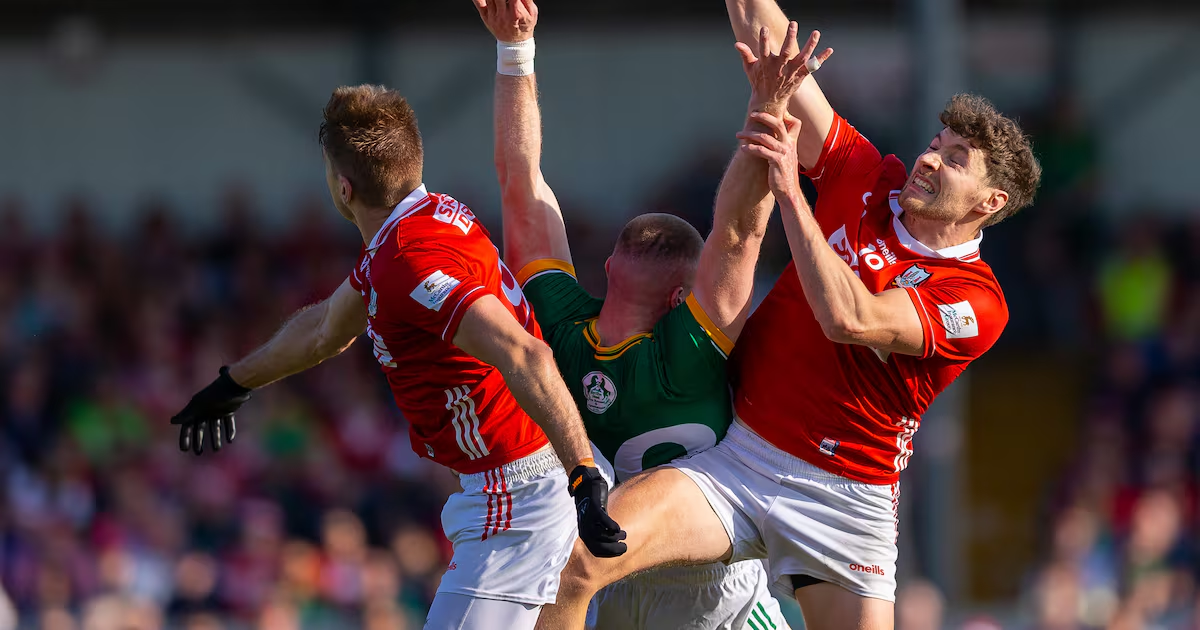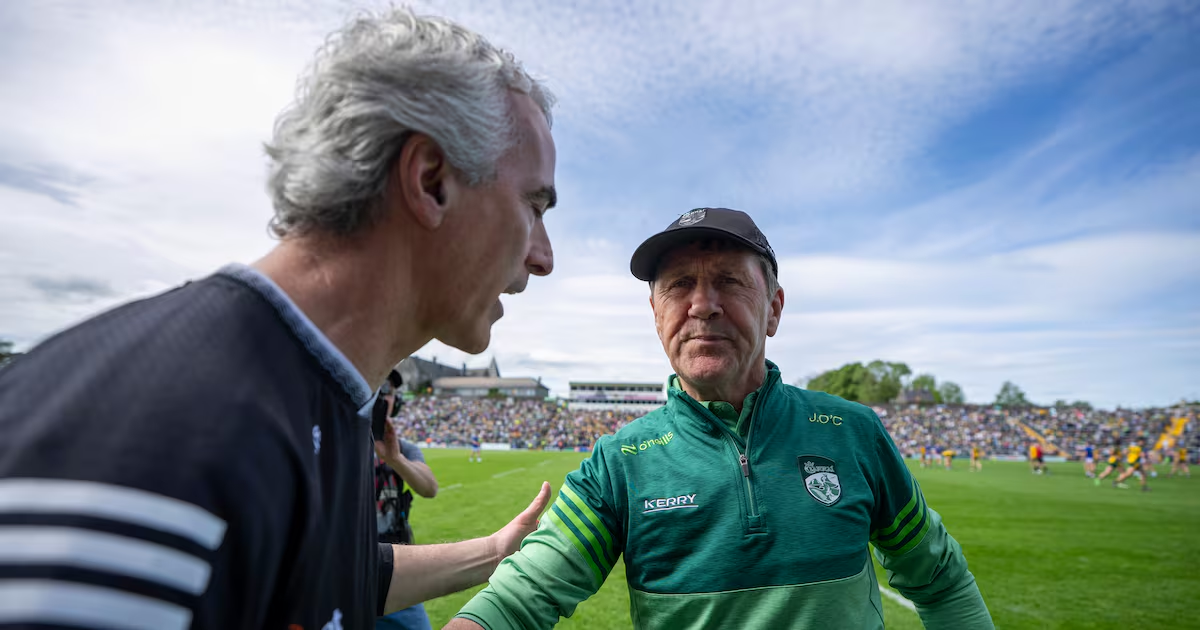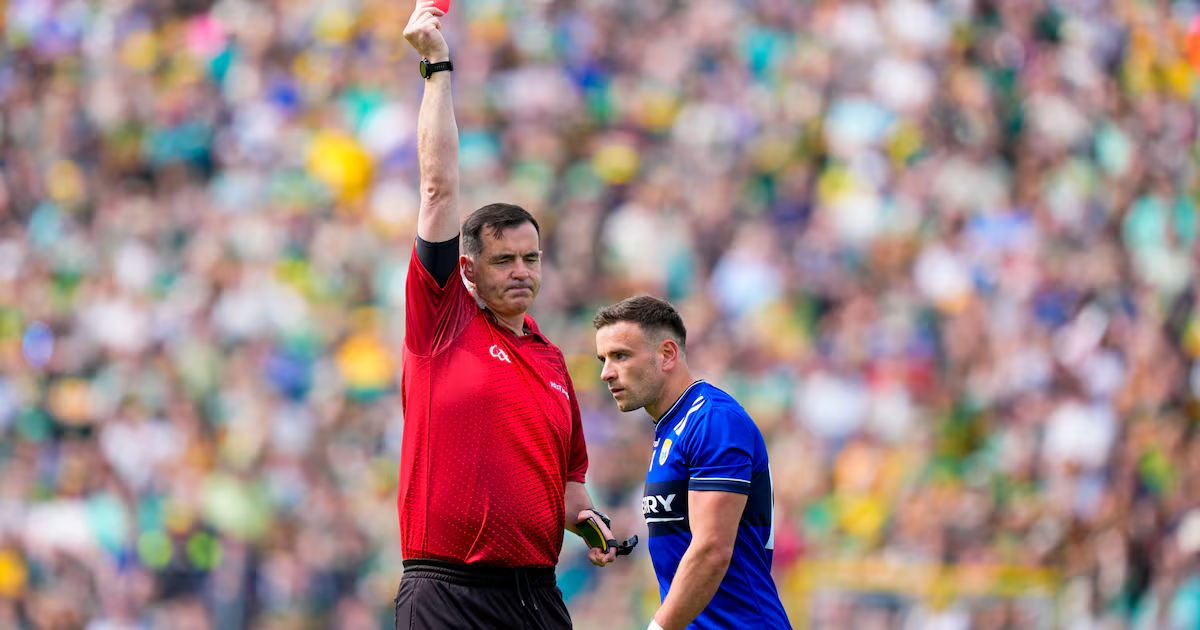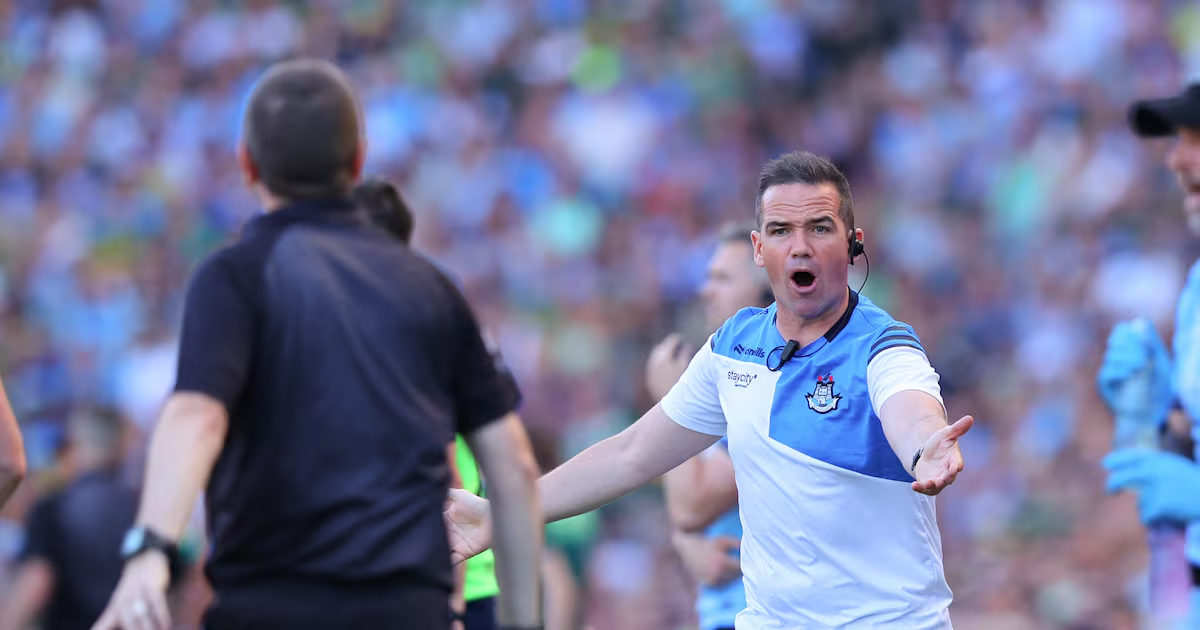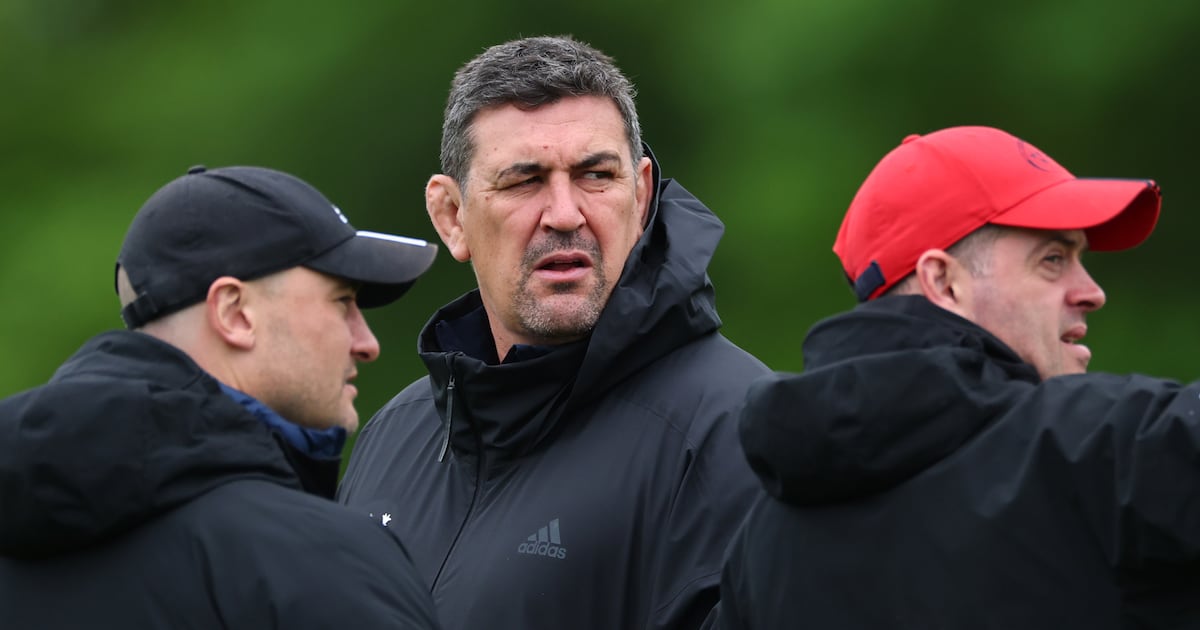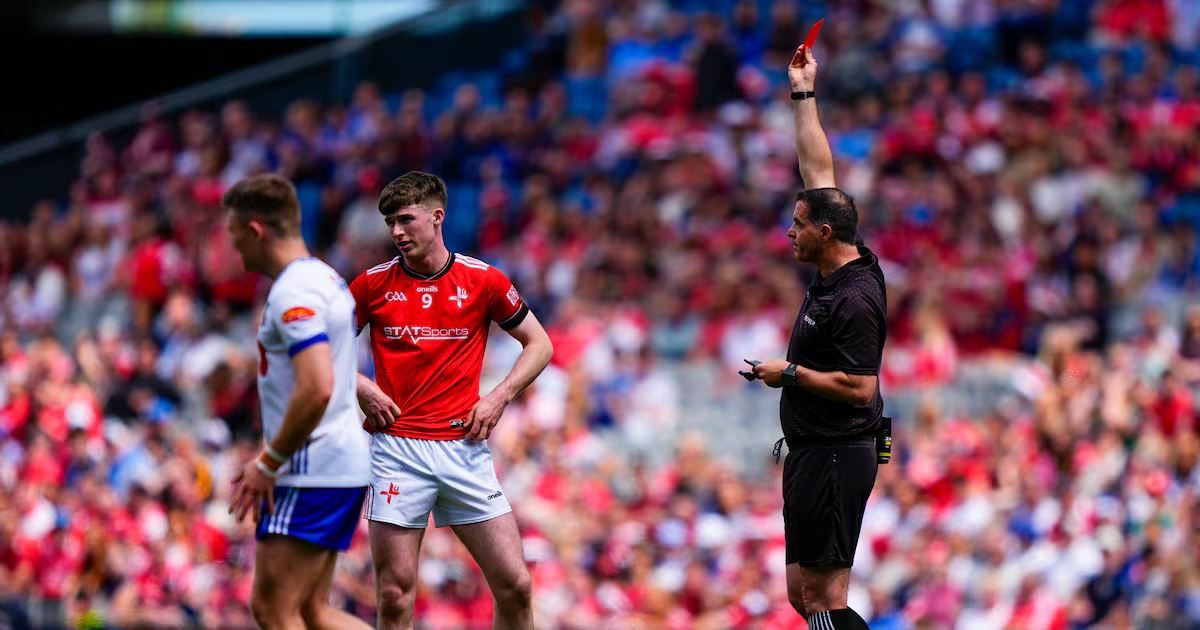
It was a brilliant championship weekend, but unfortunately in the afterglow of the All-Ireland quarter-finals, there has been a lot of focus on refereeing decisions.Firstly, in relation to Seán Callaghan’s sending off for Louth, I think Seán Hurson got the decision correct.Some people might feel it’s a harsh red card because it’s in the sixth minute of the game. However, if that decision is made in the 66th minute, I don’t think you’d have anybody complaining.We can’t get to a stage where we’re using an excuse that it’s a mistimed shoulder and he’s six inches taller than the player he catches. And you can’t have exceptions made for the stage of the game the incident occurred. If it’s a red card in the last minute, it should be a red card in the first minute.At a time when, globally, head injuries in sport are a major talking point, this can’t be ignored. I heard Gavin Devlin saying Callaghan “isn’t that type of player” – and I have no doubt he isn’t a dirty player. But there is an onus on the tackler to get their timing and positioning right. Otherwise, you leave the referee with a decision to make.Hurson was appointed to do a job and he was fulfilling his role in that instance.The same goes for David Gough in the Dublin-Galway game – I thought he got the two big decisions right.For the Dublin penalty, if Colm Basquel had cut inside Liam Silke, yes, Cian Hernon would have come across to tackle. But Con O’Callaghan was completely unmarked to Basquel’s left. So, it was a goal-scoring opportunity because it would have been a two-on-one for Dublin.Then, at the other end of the field, for me John Maher was slipping as he entered contact with Ciarán Kilkenny. Perhaps you would get a free for that further out the field, but it’s too big a call to give that as a penalty.The fact Dublin had received a penalty a few minutes earlier obviously added to Galway’s frustration, but I feel Gough got those calls right.Con O’Callaghan steps up to take a penalty for Dublin during their All-Ireland SFC quarter-final win against Galway on Sunday at Croke Park. Photograph: James Lawlor/Inpho You just have to acknowledge that on some occasions, decisions go your way, while on others they don’t.In injury-time of the 2024 Connacht SFC final, Galway had a big call go in their favour against Mayo when Conor Loftus was incorrectly penalised for overcarrying. Connor Gleeson scored the resulting free and Galway won the decider by a single point.Gough was the referee that afternoon and later admitted he got the decision wrong.If that call had gone the other way, Kevin McStay may not have been removed from his position as Mayo manager last year. He’d have won a provincial title and he’d have won a National League title, so a lot changed on the back of that decision.So, to borrow an old phrase, it’s swings and roundabouts.After Sunday’s game, Pádraic Joyce said Galway will have to own the defeat. And they will.They lost 10 of their 18 kickouts in the first half. And they didn’t kick a wide in that opening period. Dublin kicked six wides and led by a point at the turnaround.If I was involved with Galway, the first areas I would have been assessing relate to kickouts and getting more shots off. Why? Because these are the things you can control – not the decisions of referees.There was also debate on some calls made by Paddy Neilan in the Kerry-Tyrone game on Saturday. Neilan is a fine referee so he’ll probably be disappointed with a couple of key decisions.On the 45 awarded to Kerry, that’s not necessarily on him, but more his umpiring team. He was a little bit let down on that front.The big decision for me was the Conn Kilpatrick incident – that’s a free, it’s not a 50-metre advancement.Kerry players surround referee Paddy Neilan during their All-Ireland SFC quarter-final win against Tyrone at Croke Park on Saturday. Photograph: James Crombie/Inpho One of the most significant consequences of big refereeing calls over the weekend was the sight of a team playing for 64 minutes at a numerical disadvantage and demonstrating that it is actually possible to win in the current game. Louth ripped up all we knew, or thought we knew.With 14 players v 15 players for 64 minutes, Louth won that game by seven points because they were three adrift when Callaghan was sent off.The power that performance will give those players is immeasurable – they’ll believe they can do anything now. In a strange way, the sending off forced them to make a collective decision. It put them at a crossroads and it’s as if they just said, “we have to go the hard way now, but we’re going to go together”.In travelling that road, they were colossal.From Dara McDonnell to Conor Grimes to Sam Mulroy to James Maguire to Ciarán Downey, they were exceptional. Louth got four points from their defence, all bar one of their starting six forwards scored and they also got six points off the bench.If ever there was an effort whereby 14 players raised their games to make up for the one absentee, this was a case study in what “team” looks like. And fair credit must go to Devlin and the management team in that as well.You don’t get that level of performance and belief from just a couple of months of work. It isn’t because of Devlin delivering some sort of Any Given Sunday speech either. It comes from constantly turning up and working hard. Rinse, repeat.It goes back to nights in Darver when Devlin and Mickey Harte first started with Louth in Division 4.Louth manager Gavin Devlin celebrates his team's All-Ireland quarter-final win with his son Niall. Photograph: James Lawlor/Inpho At that time, I can’t imagine they were selling the possibility of winning an All-Ireland to the Louth players, but the squad has just built year-on-year over the past six seasons.Yes, they got a fortuitous goal against Armagh. But Louth had stayed in that game to still be in with a chance in the dying seconds against one of the All-Ireland favourites. They got that little bit of luck but fortune favours the brave.And they were led on the field on Sunday by the bravery and brilliance of Mulroy. In the closing stages, Mulroy was back in front of his own goal collecting a Monaghan shot that dropped short. Then, in the 68th minute, he was on the end line at the far side of the pitch where he pulled off one of the classiest pieces of skill you will see in this year’s championship – flicking the ball up to his hands and then offloading to Ciarán Byrne.As Byrne kicked the ball over the bar, Mulroy was still on his knees with not another drop of energy left to give. You talk about leaders and leadership, there it was on full show.And because of how they responded to the adversity of an early red card, Louth have earned themselves an opportunity to reach a first All-Ireland SFC final since 1957.
Stephen Rochford: If it’s a red card in the 66th minute, it’s a red card in the sixth minute
Gaelic football needs to move away from excusing fouls based on the stage of the game they’re committed
1,195 words~5 min read