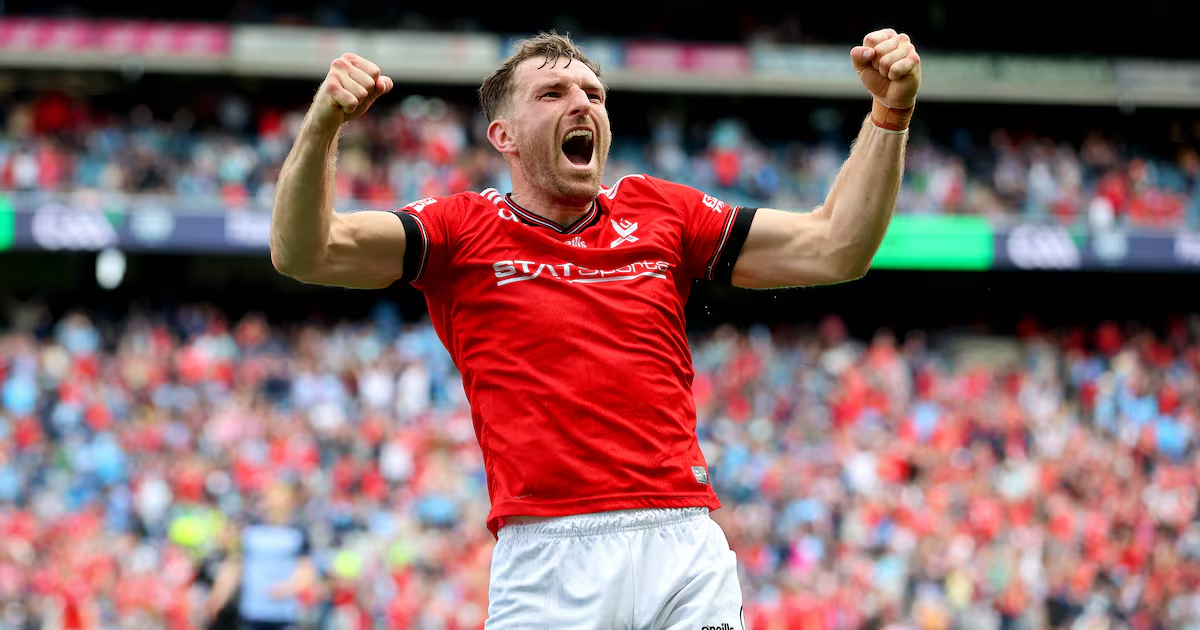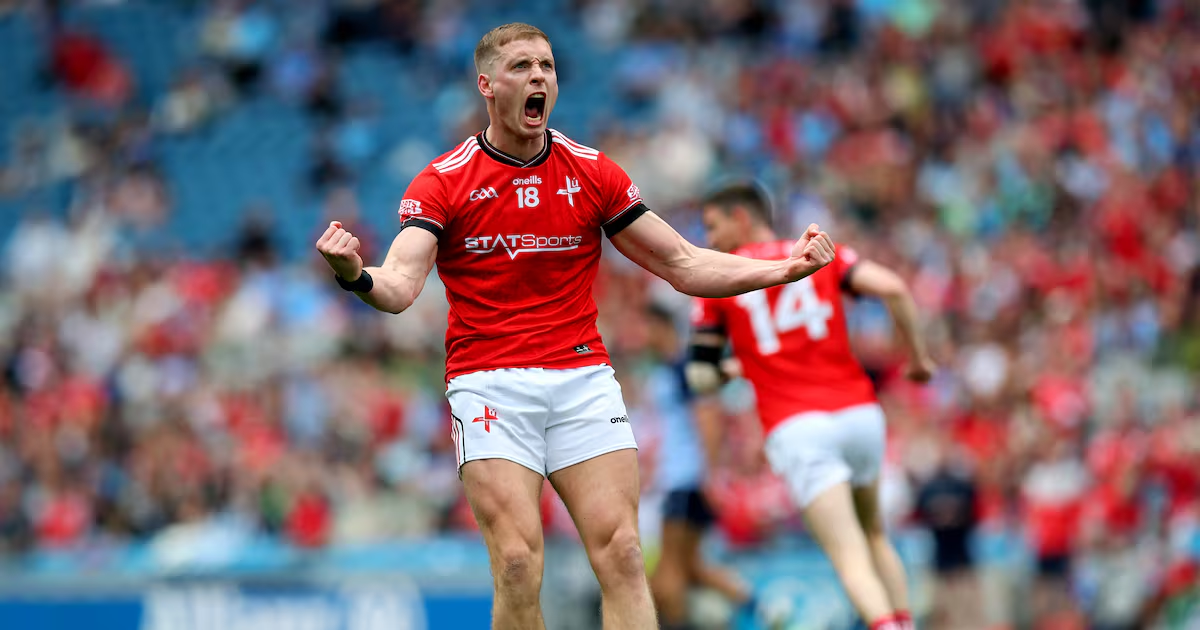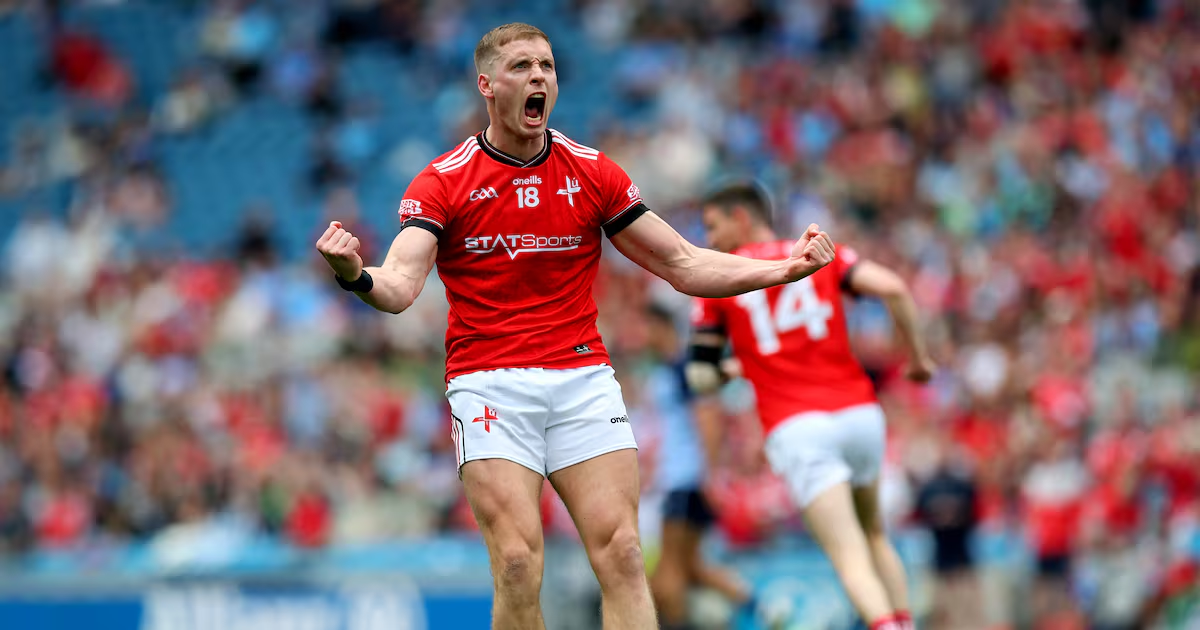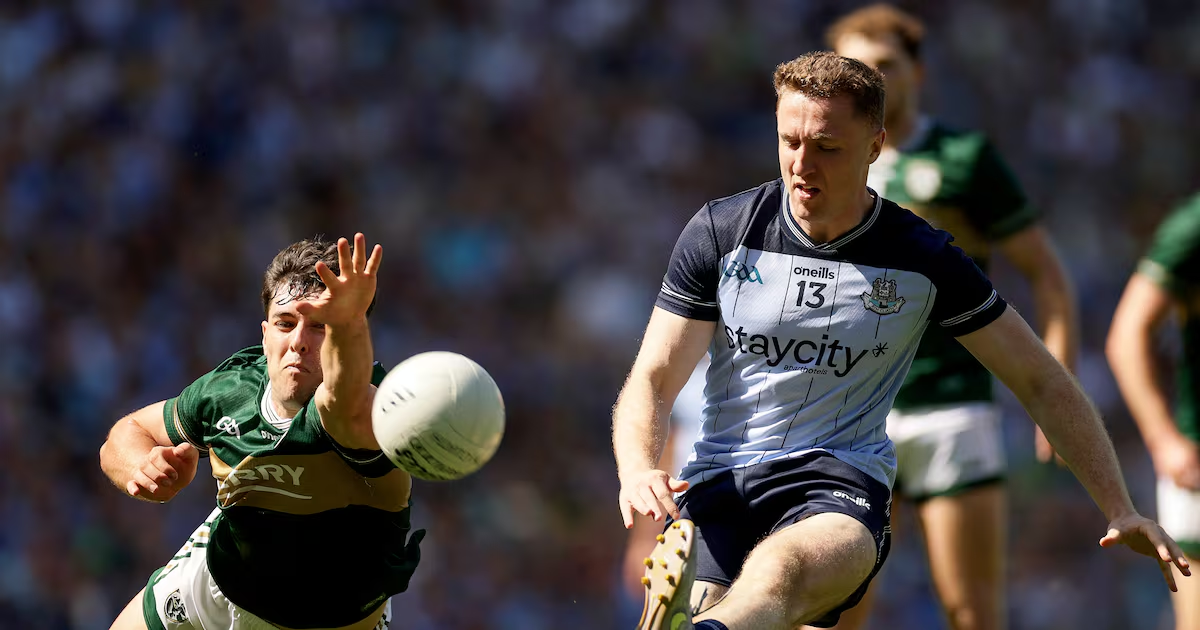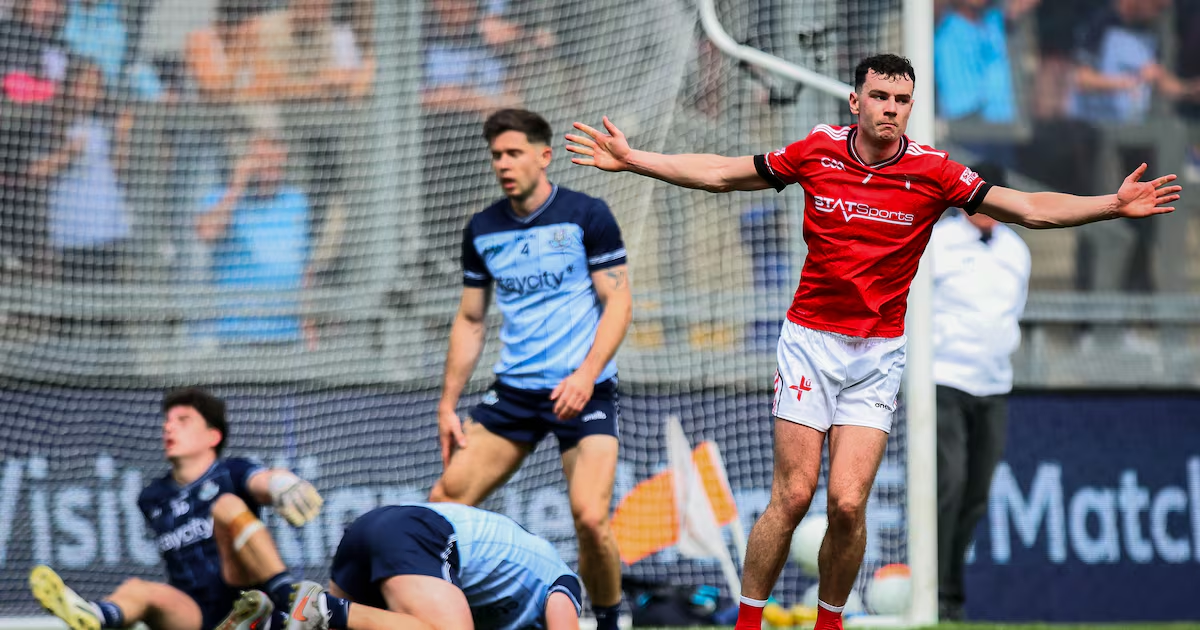
It was interesting to note some of the comments from Louth goalkeeper Niall McDonnell’s post-game interview with GAA+ when he talked about learning from the Leinster semi-final loss to Dublin in Portlaoise. Dublin beat Louth that day 0-20 to 0-10, so his specific comments gave a real insight into where Gavin Devlin’s team’s focus was to ensure the turnaround we saw in Croke Park at the weekend. The point that struck most was his comment about the first half: “We weren’t a patch on what we could be - went in regrouped, six points in the new game is nothing.” McDonnell continued, “Our own kickout failed massively against Dublin in Portlaoise and our own attack also failed, so we went after those two threads massively. We just called each other out at half-time and it worked out well in the second half.” Match performance indicators Dashboard from the Leinster semi-final clash between Dublin and Louth. It would be a lazy narrative though to view this through the prism of righting the wrongs of the first day, as on both their own kickout and shot conversion, the first-half performance for Louth at the weekend was largely in line with the Portlaoise clash. It was half-time adjustments which were crucial for Louth. Louth managed to fix some issues from the first day, but because Dublin brough some slight alterations to their game - including a switch of goalkeeper and the return of Con O’Callaghan - Louth were unable to make their tweaks pay straight away, so the half-time adjustments were crucial. The most evident tweak was in their kickouts. Louth kickoutsWhen O’Donnell was quizzed about his kickout distribution he commented: “In fairness to the [management] they do serious work on video analysis ... so we saw opportunities there.”Louth opted for a kickout strategy which had much less variety than the day in Portlaoise, but far more clarity. McDonnell was attempting risky isolated kickouts to runners the first day and Dublin disrupted these effectively as they were into pockets without a line of sight. Dashboard on Louth kickout comparisons, covering the Leinster game, and both halves from Sunday in Croke Park. However, Louth only managed to retain 44% of their kickouts in the first half as they predominantly went to the central cluster and opted for piggery (as Kieran McGeeney would put it). Louth would have expected some joy from this, following Dublin’s issues in this area against Westmeath but Dublin were up for the battle, which gave them a platform for their well deserved six-point half-time lead.Typical kickout set up from Louth in the first half aimed at the central cluster In the second half, Louth again set up with this central cluster of bodies but opted for a ‘bunch and break’ approach. This immediately yielded some success with the James Maguire goal in the 40th minute following Daire Nally getting hands on ball. There was a second phase to this kickout as most of the players stayed central but Maguire’s break was at a different angle as he broke forward to accept Nally’s excellent 60m aggressive kick pass. Louth switched to a 'bunch and break' in the second half - this incident sees Nally slip out for the second goal. Interestingly, at times Sam Mulroy had a role in coming back to be involved in short kickouts, like in the 11th minute when he helped work a short ball out after Dublin won four in a row on long breaks. This helped break momentum and Louth managed to get out for a score. Mulroy also won another two of these shorts in the second half from the bunch and break method.Sam Mulroy coming deep as a short option away from the 'bunch and break'. Louth attackingThe big difference for Louth was the improvement in their shot conversion, from 29% (Leinster game) to 40% (first Half Sunday) to 72% (second half). Interestingly they had a very similar shot count both days, with only a modest change, going from 31 to 33 shots. This was led by marquee players who were showing a greater willingness to bide their time in possession, something they didn’t have in Portlaoise, as they chased goals against a solid Dublin rearguard. The first score of the second half was Craig Lennon punching a hole straight through the Dublin defence, something he’d done so well during his All-Star year in 2025. Half time also saw the introduction of Ryan Burns, and within three minutes of the restart he’d made his impact with a two-pointer after a tasty flick up off the ground, as Louth immediately whittled Dublin lead to two points. This two pointer was from an area which four weeks previously Louth had shot seven times and failed to convert on all seven attempts. This bench impact was huge from a shooting perspective, with Ciarán Byrne (0-3) and Ryan Burns (0-2) to the fore.Louth shooting comparisons, from Leinster game, Sunday first half and Sunday second half. Defensive structureDuring the game in Portlaoise, Niall Scully gave a colossal display, as he had the freedom of Portlaoise, with a total of 79 possessions. It was obvious that this wasn’t going to be the case this time out. In the 8th minute, before a Louth kickout, Nally clashed with Scully - both men were booked as battle lines were firmly drawn. In fact most of the time as Scully looked to operate as a pivot on the outside of Dublin attacks, it was Louth’s Ciaran Downey who was detailed him to curb his influence. Scully had managed to get a number of kicks from this pivot position off into the 15 corner the first day out, but this was completely negated in Croke Park. The change in defensive approach by Louth from the Leinster game, with regard to Dublin playmakers. While stifling Scully (and others) was a huge defensive ploy, the attacking merits of having such a good ball player marking the opposition’s pivot player was evident in the 47th minute when Downey carried the ball untouched from his own 45 to the Dublin D and slotted over, after an excellent Louth turnover. This more aggressive approach was also shown in the amount of traditional blocks that Louth got on Dublin, three in the space of 90 seconds from the 25th minute, the pick of the bunch by Nally. The block by Paul Matthews on Lee Gannon as he attempted a 68th-minute two-pointer energised the vocal Louth support at this stage. Blocks like that can bring real energy to a team and their supporters. Textbook blocks were key aspects of Louth's defending. The endgameIt seems like a lot of games at the moment are coming down to one final phase where getting hands on the ball from a kickout is vital and this game was no different. Ciarán Byrne showed he still had some of the skill learned during his time in the AFL, as his towering catch on the final Louth kickout was a fitting ending for the Wee county - he fed Paul Matthews to add the insurance point for Louth as the clock ticked towards the hooter. Final Louth kickout featured an overload and an isolated run. Again this was a very specific kickout set-up with the cluster on one side and Craig Lennon making a dart to the far side - two options off the same set up. The final dashboard below shows Louth’s sheer efficiency, as their 40 possessions yielded 30 points (4-18) on the board, emphasising goals really do win games. Their productivity (points per 10 team possessions) went from 2.78 to 7.5 in a matter of four weeks - a huge improvement. Performance indicators dashboard from Sunday's All-Ireland SFC clash. Paul O’Brien is a performance analyst with The Performance Process.
How Louth used smart tweaks and superb efficiency to shoot down Dublin
The Wee County changed their kickout approach at half-time to turn the momentum at Croke Park
1,296 words~6 min read