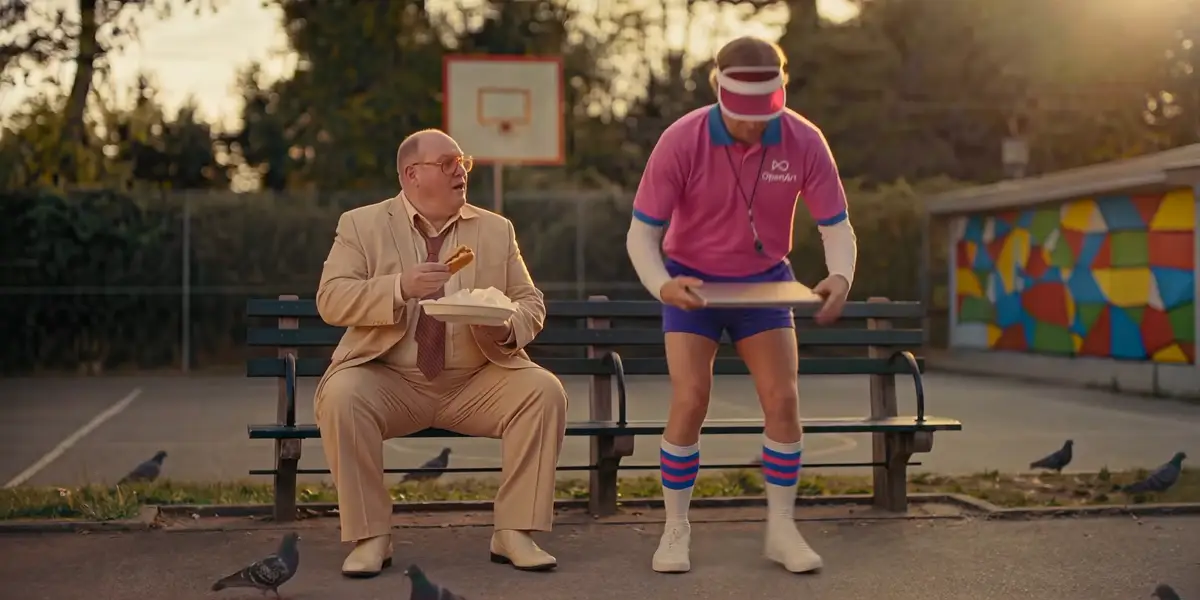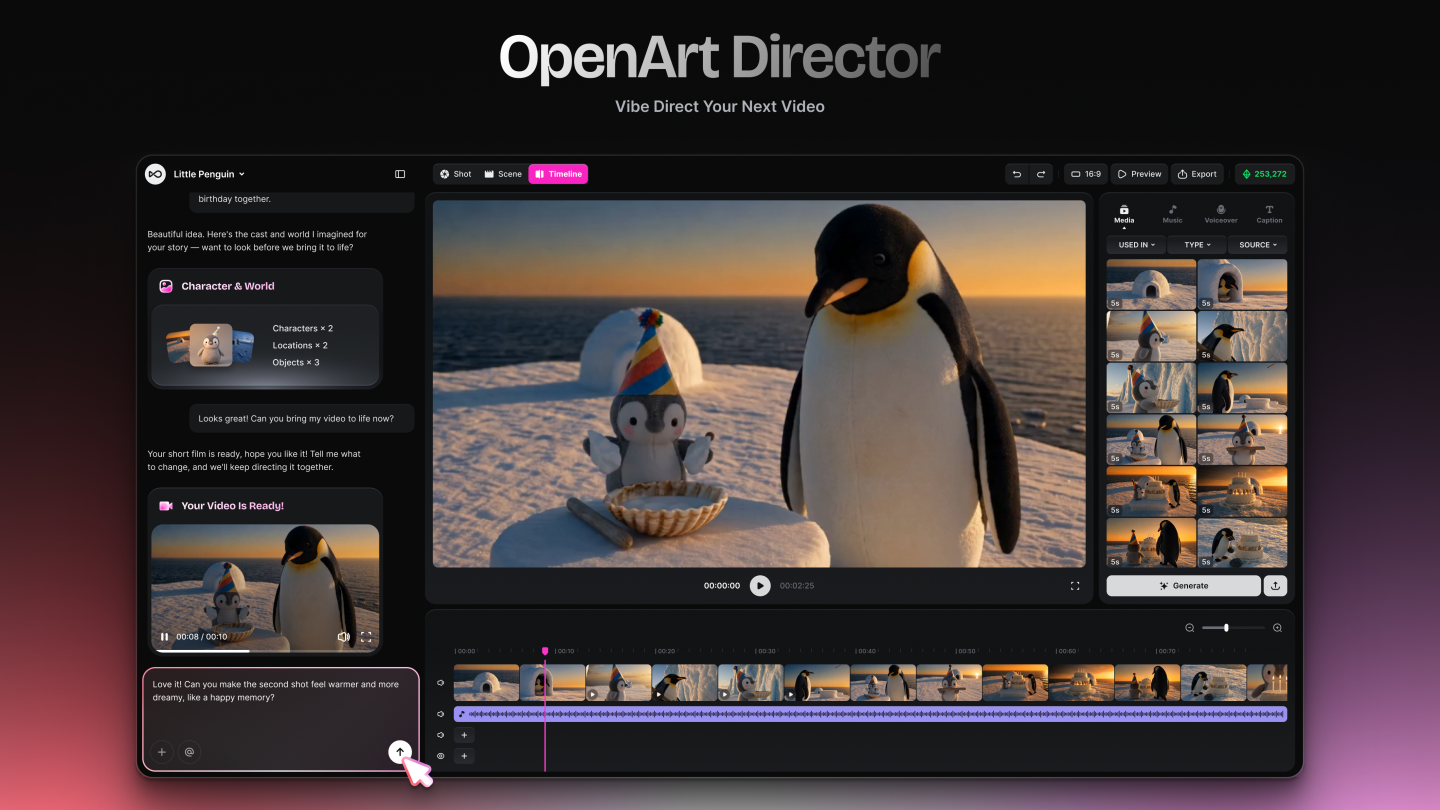
Over the brief, long history of video-generation models, every new release is accompanied by the hype that this one, finally, will be the breakthrough that becomes a standard.There’s no definitive reason yet to think that will be the case for OpenArt‘s “Director,” a tool from a Redwood City company led by a pair of ex-Google engineers that the firm is planning to launch Tuesday. But the program offers some intriguing new features that could pave a faster path to the top of the heap.Rather than requiring a painstaking assemblage of clips of five or ten seconds long, as most tools offer, OpenArt’s Director allows users to put together a film as long as five minutes. The program also sets up a conversational system that starts with storyboarding and ends with post, basically handholding a user through the completion of a short (or a five-minute scene in a feature). Collectively, the new elements allow for what co-founder/CEO Coco Mao and other executives at the company call “vibe directing” — a transfer of the term vibe coding to the auteur space. OpenArt’s aim is to allow someone with no technical filmmaking skill but an abundance of storytelling vision to produce a film just like a vibe coder can generate an app.“With vibe coding you’re giving the vibes and you forget even the code exists,” Mao said in an interview. “You guide, you task, give feedback, and then the machine just creates. And I think for us vibe directing is very similar to that, where user could forget any tools or craft and just imagine, react and give taste. And then the machine just creates,” added the executive, who founded the company with her former Google colleague John Qiao.The company blends a host of models, from Seedance to Runway, to produce its films; its virtue lies in how it chooses from the most suitable model in a given situation but also, more consequentially, from its simple user interface. Think the old-school way of piecing together your taxes ground-up vs. TurboTax’s interview mode and you’ll have a sense of the experience they’re going for. (“We can handle a lot of these small decisions so that people are not stuck in prompt writing,” is how Mao puts it.)There remains the question of whether vibe coding works in the artistic space, where the goal is not simply a functional end product but a more nebulous, subjective piece of art. In the latter instance the precision — and the struggle — often has a direct impact on the final product.
Vibe Directing? An AI Startup Run by Ex-Googlers Say Their New Model Can Make It Happen (Exclusive)
OpenArt Has Launched "Director” with an eye toward targeting both Hollywood directors and everyday Finchers.
1,215 words~6 min read