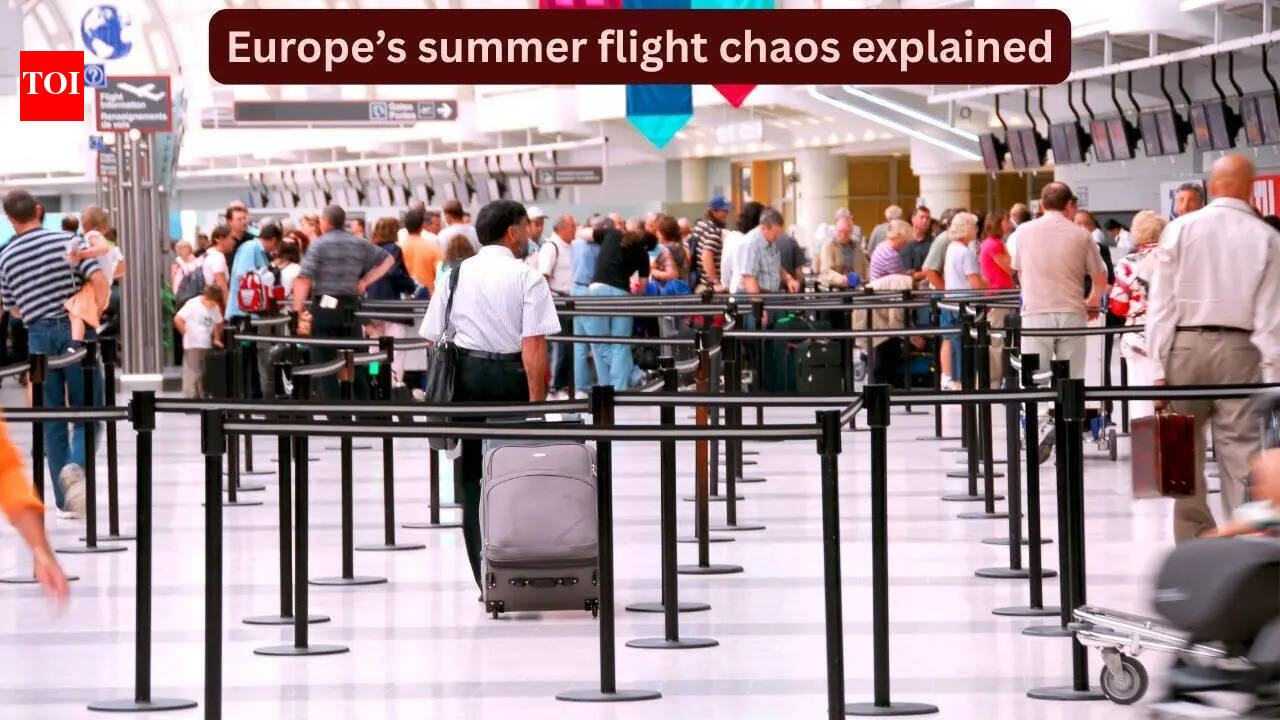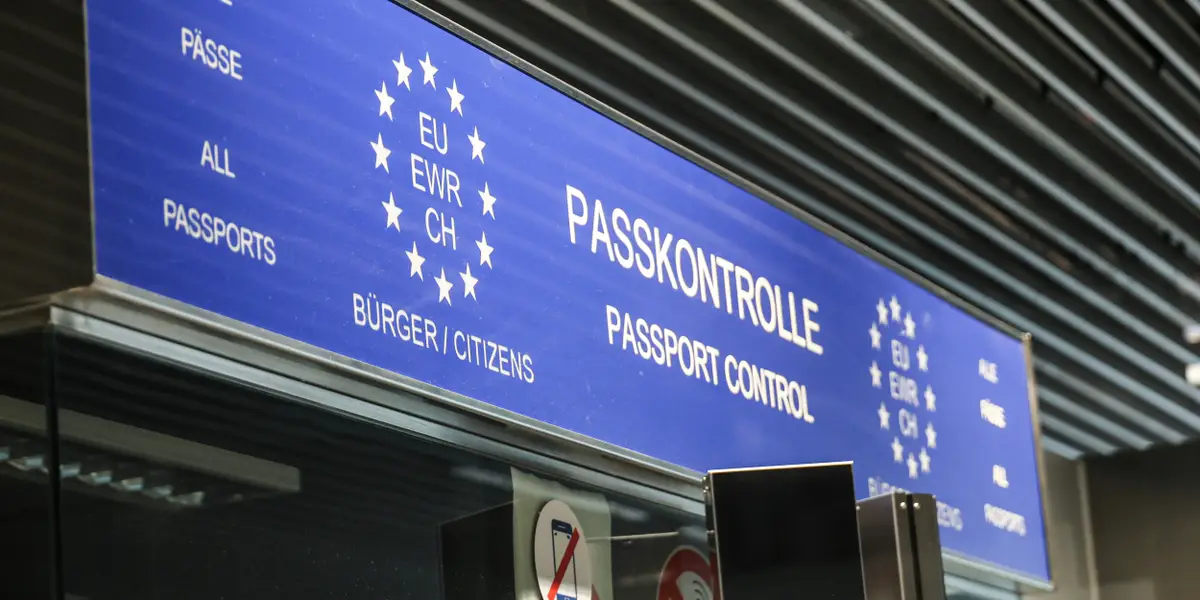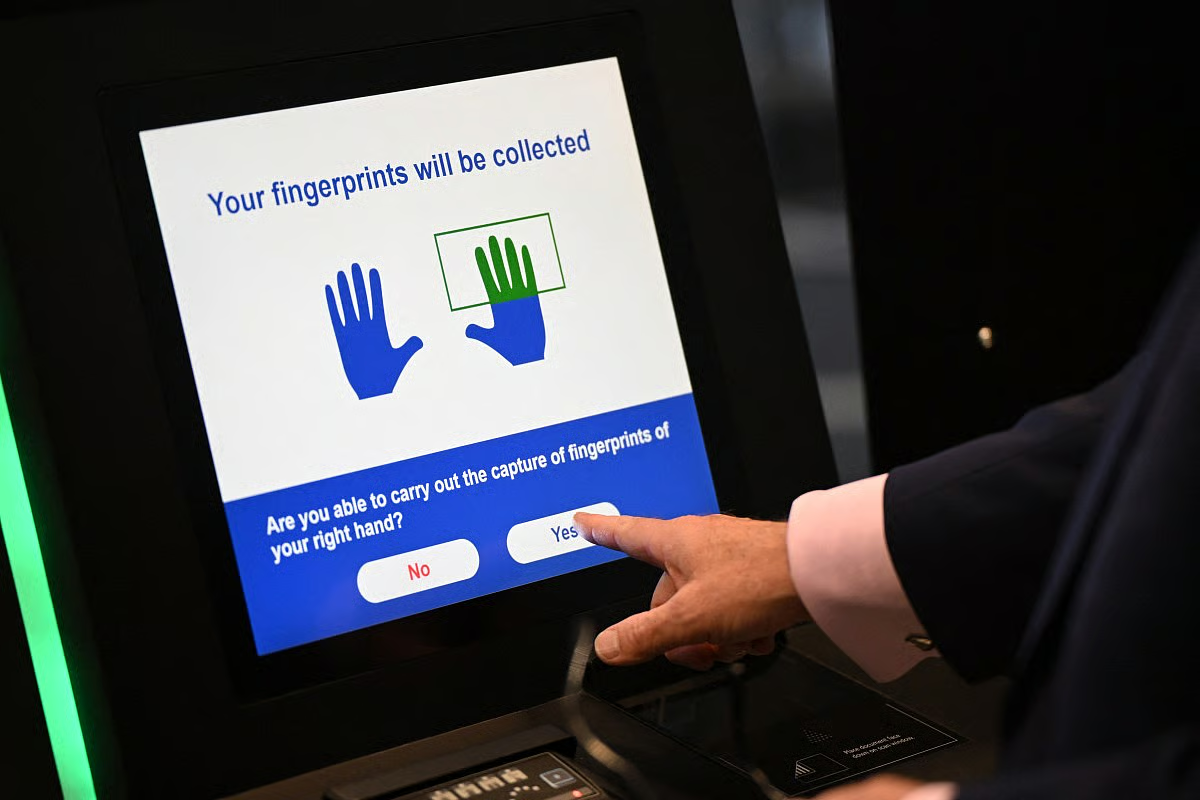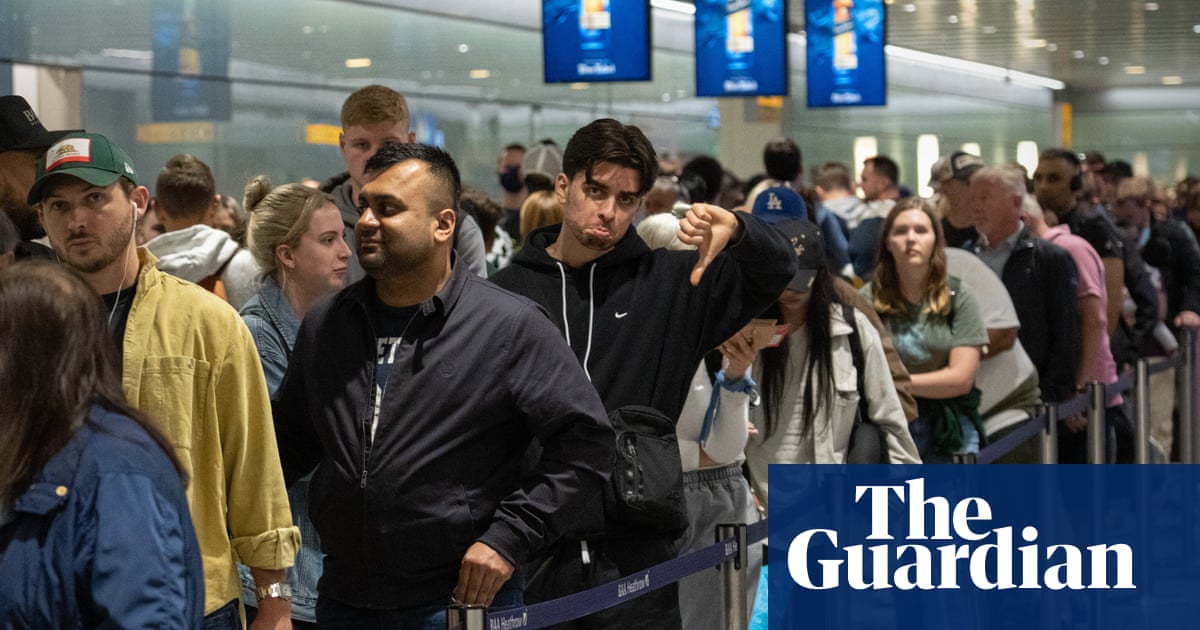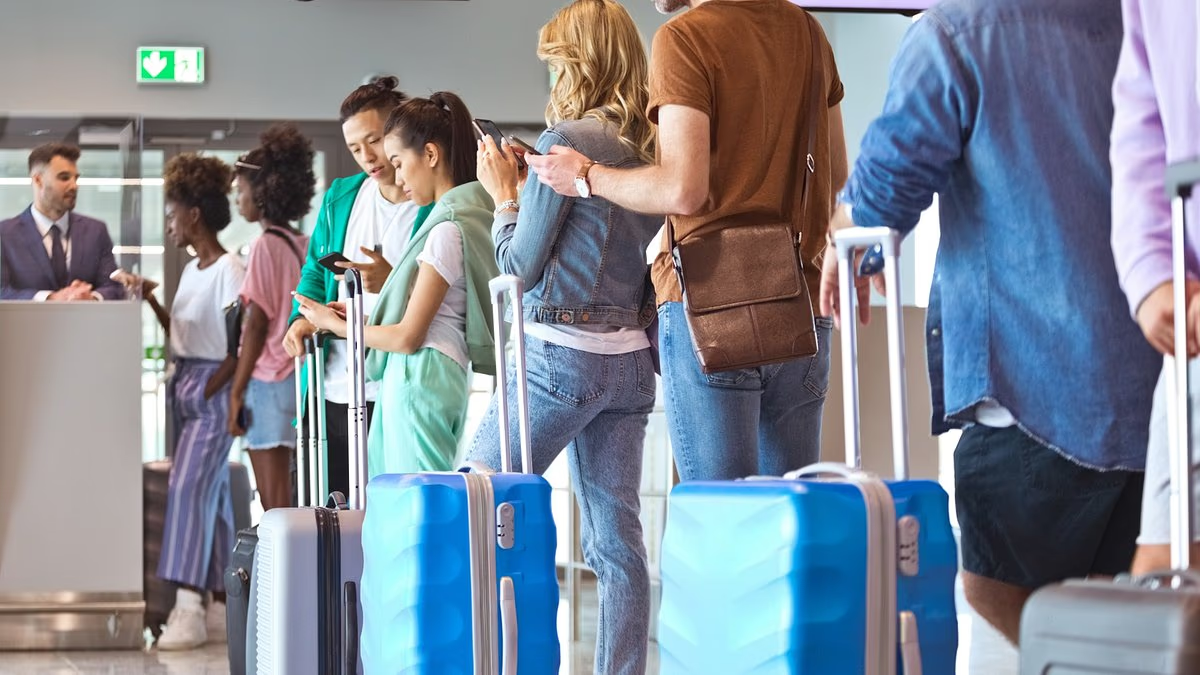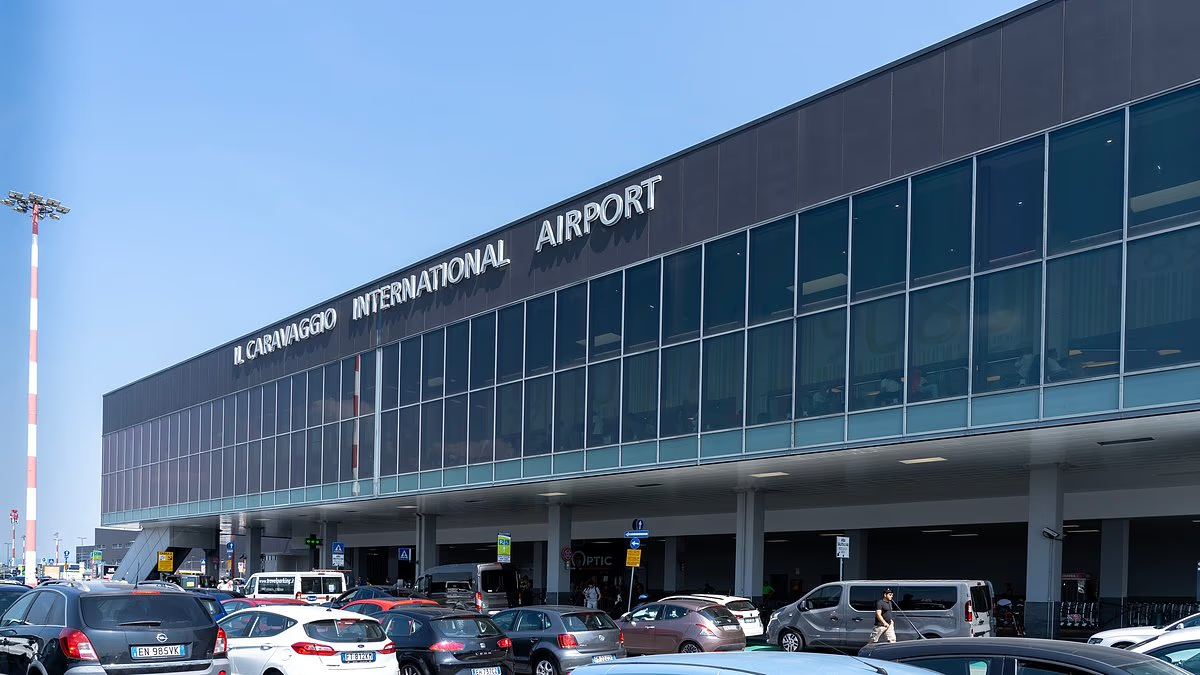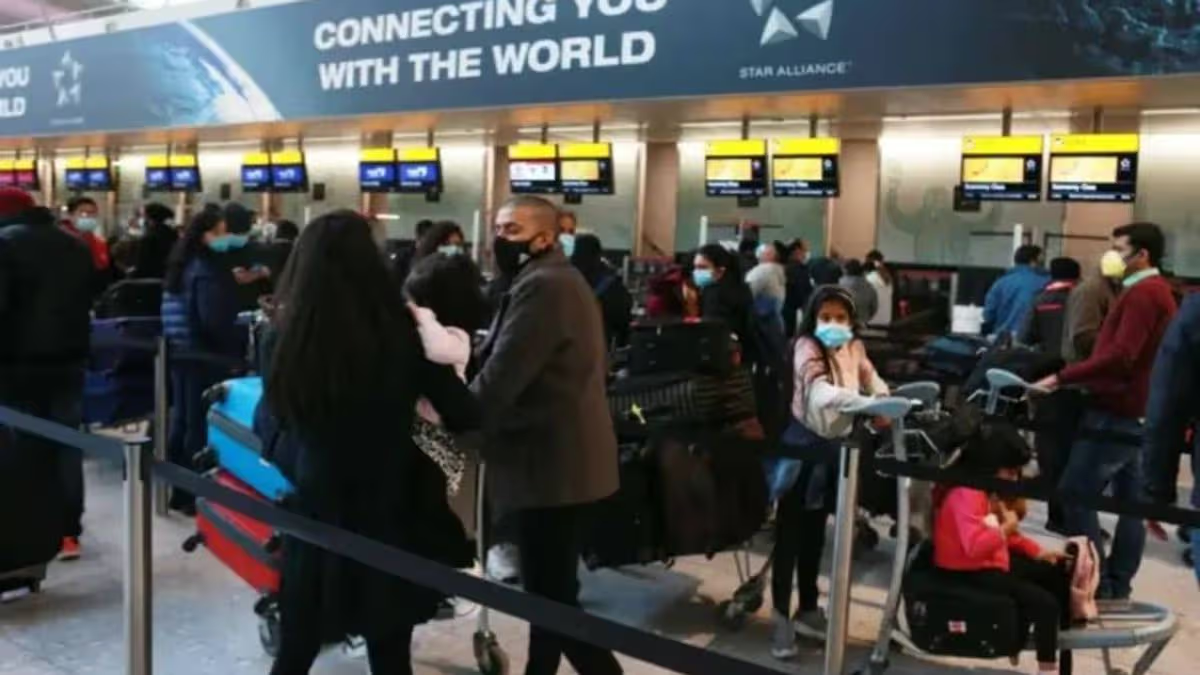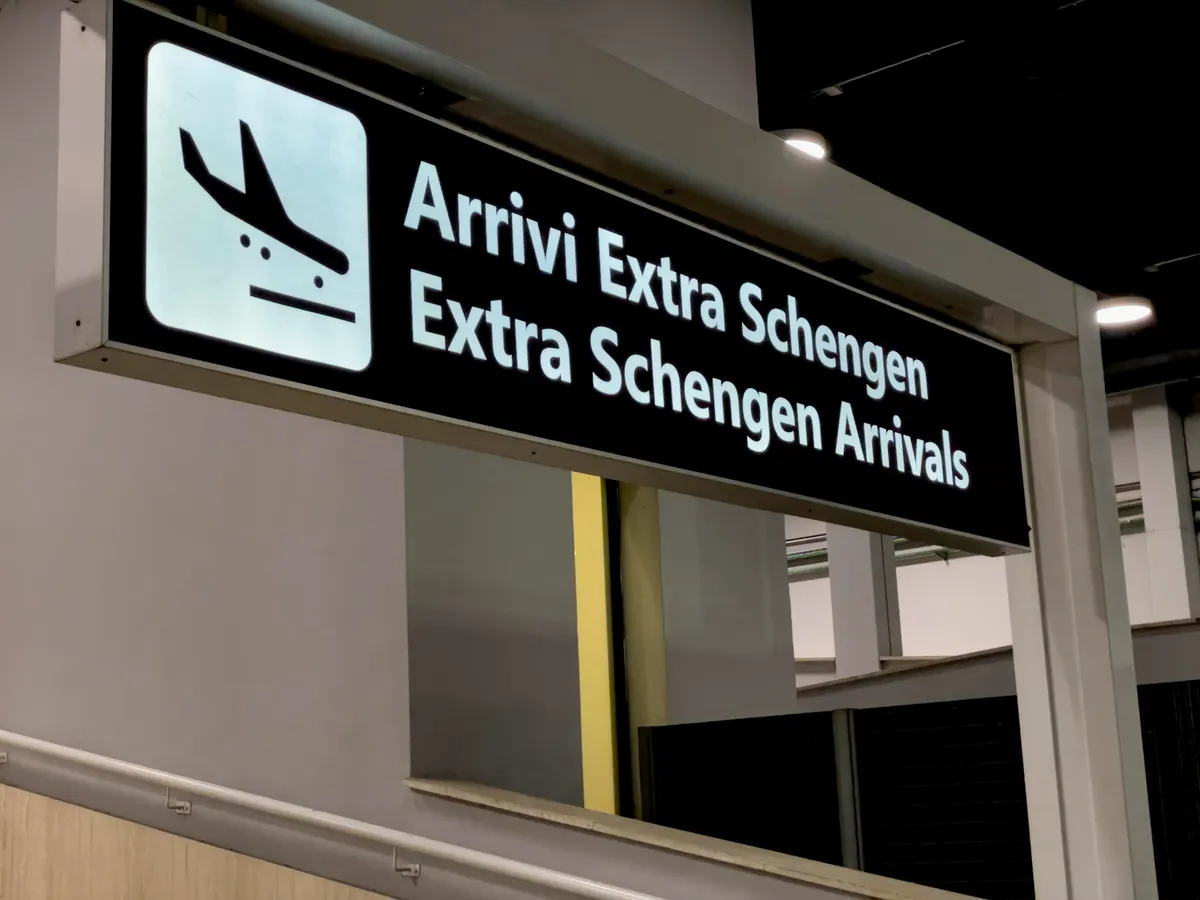
If you are from the Schengen zone, arriving in Europe is easy. For the rest of us, not so much right now.gettyIf you somehow missed it, the news has been full of horror stories over travelers missing flight connections and spending hours in lines across Europe—a problem that appears to be getting worse, maybe much worse, as we are just starting to enter peak travel season to Europe. At issue is the rollout of a new program called the Entry/Exit System, or ESS, which has been a leisure and business travel disaster, but there are some smart moves you can make if travelling abroad in the next few months, even if you are not going to Europe, but are passing through. Here is my advice on how to avoid Europe’s ESS airport delays.ESS requires all first time visitors to countries in the European Union and Schengen area to register biometrics (fingerprints or eye scans) at automated kiosks on their first point of arrival, whether leaving the airport or often when changing planes, especially within the region. This data is supposed to be stored for three years and make future travel faster and ultimately increase efficiency and speed things up, but right now, that looks like a far off dream. Shortly after its April 10, 2026 rollout, there was brief moment of pleasant surprise in the travel industry and things seemed smooth with the occasional anecdotal horror story, but that was one of the most off-peak times for travel to Europe. It quickly got worse, with technological and administrative failures across the continent at land, sea and especially air borders. Travel industry website Luxury Travel Advisor recently interview the owner of a top U.S. travel agency who said clients are reporting delays of one to four hours arriving in Milan. One hour is a long time to wait on these lines, but doable. Four means probably missing any connecting flight, and Milan is a major hub that handles the second most traffic into Italy, just about everyone’s favorite summer place to go. Many other major airports in Greece, the Netherlands, France, Germany and Portugal have been singled out as problematic.Passport Control at Schiphol Airport, Amsterdam, May 2027gettyIt’s hard to tell how bad it really is even if you go in person, because waits vary dramatically by time of day, day of week, airport, and roll of the dice on how the fickle new technology is working and what staffing levels and personnel decisions are at the moment. Much of the outcry is anecdotal, but there lots of anecdotes. So, a big problem is the sheer unpredictability, and without knowing you are going to be standing in line for four hours it is hard to plan for it, and if you do you just added a lot of useless airport time if it ends up only taking an hour. If you plan for a four hour wait you get a four hour wait, whether you are in line or not. MORE FOR YOUMy brother-in-law flew into Amsterdam a few days ago en route to Florence and texted me that: “It was pretty troubling. Many were having issues with their fingerprints. People tried multiple times and then had to back out and go to a different line. It happened to my wife. She backed out and went to a manned lane. Then I went into the same automated lane that she tried and it failed for me to. I untucked my shirt and scrubbed the glass fingerprint panel and tried again and it was ok. It was happening to a lot of people and the immigration people just waited it out and didn’t do anything.” Airline executives have taken to the news shows to vent their frustration, and many travelers have reported four to six hour delays and missed flights. A lot of travelers fall in between these extremes with three hours a commonly cited number. The Financial Times (FT) reported that” European airports in 15 countries have reported ‘very bad’ delays resulting from the EU’s new electronic border system,” and that “new border system causes up to three-hour delays.” That was just five days after the rollout, before airports got busy. A relative of mine flew to Porto, Lisbon a week and a half ago and this should be one of the easier gateways, a smaller city with relatively little onward connectivity. After a frustrating 45 minutes at a kiosk, which apparently isn’t that bad, they processed her manually but then gave her the bad news—if she returns to Europe she has to simply start over, so it was time doubly wasted.ESS is used in all of the EU except Ireland and Cyprus, as well as non-EU countries in the supposedly easy to cross border Schengen area, such as Switzerland and Norway. Problems are generally worse in airports that are major hubs or bigger terminus destinations. But there are other issues beyond just the initial delays and frustration. Some repeat visitors are being told to register again, even though this is exactly opposite the purpose of ESS. In many cases, repeat visitors who have successfully registered still have to wait in line for kiosks with all the first timers, saving almost nothing. And in many cases the machines just don’t work.ETIAS. com, the site of the European Travel Information and Authorization System, the next big EU travel “innovation,” an online advance visa-like registration process with scheduled implementation later this year, warned that as summer travel picks up waits of six hours could become the norm—not the exception—and that the ESS issues could take up to two years to resolve. That update was eight days ago.So, the bottom line is your trip might be fine, might be inconvenient, might be a nightmare, you have no real way of knowing, especially as we get deeper into peak summer season. I am actually a “take it as it comes” traveler who understands that the world is unpredictable and things sometimes go sideways, not an alarmist, but this is not a hurricane or volcanic eruption, it’s a continent-wide institutional problem affecting some of the world’s most popular airports with no clear end in sight. So as a very frequent international traveler for the past three decades, my advice is plan for the not quite worst but pretty bad case.How to Avoid Europe’s ESS Airport DelaysDon’t Go to (Most of) EuropeThis is the simplest answer, and while it sounds trite, the reality is that Europe will still be there next summer (though the ESS problems may be as well) and in many cases it’s better in the off-season. I love Europe but I’m not going this summer—vacation time is too precious to lose day or more stuck in an airport because of bureaucracy. If you haven't been to Cappadocia, Turkey, this mighty be the smart time to gogettySummer is great—though crowded—in Spain, France, Greece and Italy, but it’s also a wonderful time to visit Turkey/Turkiye, or to try a new slice of Europe like Serbia or Montenegro. How about Canada? And don’t forget the United Kingdom, where summer is painfully short, but Scotland, England and Wales all have plenty of charms. Ireland is a great exception as an EU country without ESS, tons of great reasons to visit, and one of the shortest flight times from the U.S. with lots of non-stops. Summer 2026 could become the year of Ireland, and personally I am big fan of Turkey. At the end of last year, I wrote a feature here at Forbes titled “Visit Turkey in 2026 For Great Food, Culture, History and Travel Value.” Add in ultra-easy access form the U.S. and it was almost like I had a crystal ball.If enough travelers choose this strategy, it might force positive changes. The World Travel & Tourism Council says if delays of three hours or more become routine, it could cost Europe $45.4 billion in visitor spending. Maybe they should have thought of that or tested the system more extensively before deployment. The UK is suddenly looking like a smart summer travel choice, where you can check out highlights like UNESCO World Heritage Site Stonehenge.gettyBut I realize a lot of people are going to go to Europe or go through Europe anyway. The first thing you should probably do, at least if you have an iPhone, since there is no Android alternative, is pre-register through the Travel Europe Pre-Registration for ESS app. But this just saves you some time, it does not alleviate the tedious in person process, so if you don’t have an iPhone, it’s not that big a deal. If you choose to, it has to be done within 72 hours of departure. Do Not Change Planes In (Most of) Europe!How you choose to fly has probably never been as important as it is right now.This one may also sound trite, but it’s actually much easier to do than you might think. Note that this will not save you time doing ESS because you have to do it somewhere, but going through it upon arrival at your destination just delays your check in at the hotel, so if it takes four hours it takes four hours. However, going through ESS between flights may well cause you, like thousands of travelers already, to miss your onward connection, and then who knows? You might go in a few hours, you might go tomorrow, or you might go the next day—it’s peak season and there are not a lot of empty seats. Bear in mind that no one is going to pay for your hotel and meals during this delay.Even if you already have tickets and travel plans and it will cost you money to change them, it might be money well spent. This is especially vital if your arrival is time sensitive, like catching a cruise out of Rome, or anything on the first or even second day you can’t afford to miss. If you don’t mind overnighting in an airport or are an eternal optimist who believes hope is a strategy, you can always stick with what you have.Otherwise, there are two scenarios for this.You Are Heading To A European DestinationFly non-stop from the U.S. If you are headed to Paris or Milan, that’s easy. If you are headed to places like Venice or San Sebastian or Mallorca, it’s tougher, especially if you do not live in New York, Washington, DC, Atlanta or a handful of major hub cities. But it’s still doable.Say you live in Madison, WI and are heading to Venice. You are going to have to change planes, period. So change on this side of the ocean. The vast majority of flight routings will have you change in Europe, which makes sense because there are more options on more carriers. But American flies to Venice from Chicago O’Hare, Dallas-Ft. Worth and Philadelphia; Delta goes from Atlanta and New York’s JFK; while United goes from Washington’s Dulles. Likewise, United recently became the first U.S carrier flying non-stop to San Sebastian and Mallorca, and there are many similar examples such as Madeira and the Azores which now have non-stops (which is why you should use a Travel Advisor who knows these things). These may cost more, but this is not the summer or part of your trip to skimp on.Famed for its "Flying Chef" progam, Turkish Airlines just won Best Airline Europe along with Best Business Class, Econmy Class and food for both at the 2025 Skytrax World Airline AwardsCourtesy of Turkish AirlinesOr you can fly Europe’s best airline through the best airport hub in Europe that is unaffected by ESS—Istanbul. Turkish Airlines flies to more countries worldwide than any other carrier period (and yes they go to Venice), with non-stops to Istanbul from 14 major U.S airports, making it really easy. In the Skytrax World Airline Awards, the “Oscars of Aviation,” Turkish just won Best Airline In Europe (again), as well as sweeping the table for Europe with Best Economy Class, Best Business Class, Best Economy Catering, and Best Business Class Catering (its famous “flying chefs). The crazy thing is that they are usually less expensive than their big European counterparts while offering better service and food. Istanbul is a wonderful new state of the art airport, and while routing to places like Venice through Istanbul has traditionally taken longer, that was before ESS, which Turkey does not have.Alternatively, there is Dublin and Shannon with onward connections via Aer Lingus, and there’s London. If you had asked me a year ago if I would be suggesting making it a point to change planes in Heathrow, something savvy travelers have earnestly avoided for years, I would have said you were crazy. Not so much right now. Yes the transfers between terminals are terrible and security lines often long, but there are a ton of direct flights from the U.S., a ton of connections—and no ESS.You Are Heading Beyond EuropeThis one is easy but tricky. In many cases if you fly through a European airport from a non-Schengen country (U.S.) to another non-Schengen country (South Africa, India, etc.) you won’t have to go through ESS and stay in a sterile “transit” zone. But at many big hub airports in Europe, you have to change terminals and do have to clear ESS anyway, and in many cases you just can’t be sure because gates change and it varies by airport. Even if you research this to the most minute detail, anytime you travel, there is the chance something goes wrong and you need to rebook, and your carefully planned change in Milan might end up being Frankfurt (or vice versa). Also, if something “normal” goes wrong, meaning non-ESS related, you might often choose to leave the airport for a hotel, but that definitely means going through ESS no matter what your airport or final destination.Fortunately, this is the easiest scenario to solve, following the rule above: Do Not Change Planes In Most of Europe! If you are headed to some place like Hong Kong, Tokyo or Sydney, this is a non-issue for most fliers. But there are lot of places where its gets stickier, like much of Africa, India, the Middle East or non-EU Eastern European/Balkan destinations like Montenegro, mentioned above. These are the spots that if you do a flight search for you will get a mix of EU, non-EU and non-European carriers.For example, I just flew to India. To get to Delhi, I had to change somewhere, and many of the options were on carriers such as Swiss and Lufthansa. But I flew Qatar through Doha, the airline that consistently wins best World’s Best Airline and World’s Business Class, which I recently wrote about in detail here at Forbes. My next choice would have been Turkish. You can risk long waits in line at European hubs, or fly Skytrax' World's Best Airline, Qatar, on your next long haul tripQatar AirwaysThis is the same scenario as for European destinations above, except it adds in all the exceptional Middle Eastern carriers such as Qatar, which by the way is launching daily service from American Airlines hub Philadelphia on August 1, which will be its 14th North American gateway with non-stop flights to Doha. Say you want to go see the fabled ruins of Petra in Jordan. Search flights from New York and you’ll get the option to change in Madrid, alongside Doha and Istanbul. If you are headed on safari to South Africa, one of the hottest trends in Bucket List travel right now, you will have lots of options to change in many European cities, but do not take these (except London). You can use the first strategy above and change on this side and then fly non-stop to South Africa on United, or for a more luxurious experience, you can choose Turkish, Qatar or Emirates. Either way, a good strategy for how to avoid Europe’s ESS airport delays this summer. Wishing you safe and smooth travels!
How To Avoid Europe’s ESS Airport Delays—No Matter Where You’re Flying
Everyone hopes their trips go smoothly, but when it comes to summer travel, hope is not a strategy. Europe is a bit messy right now, and you need to think about flying.
2,660 words~12 min read