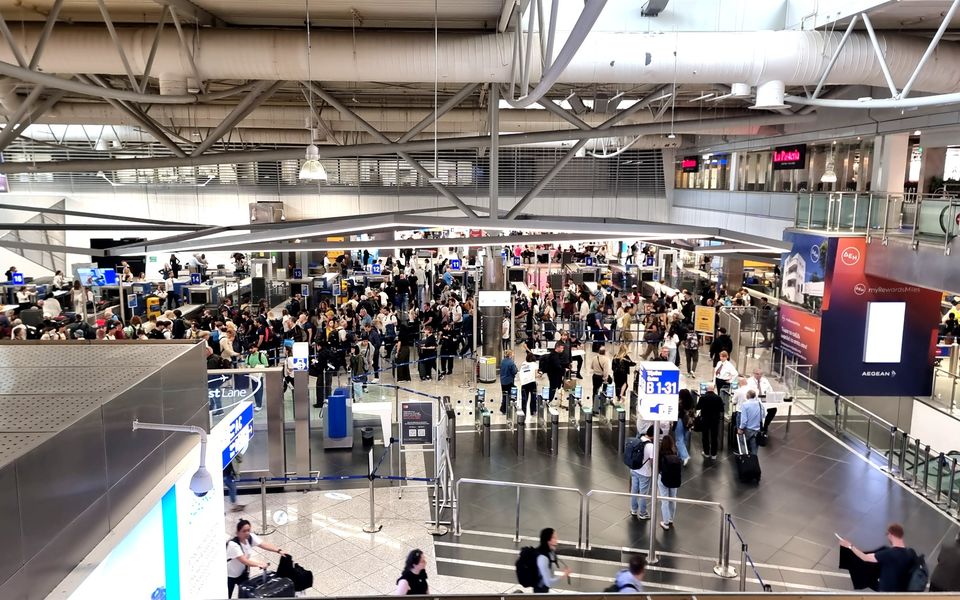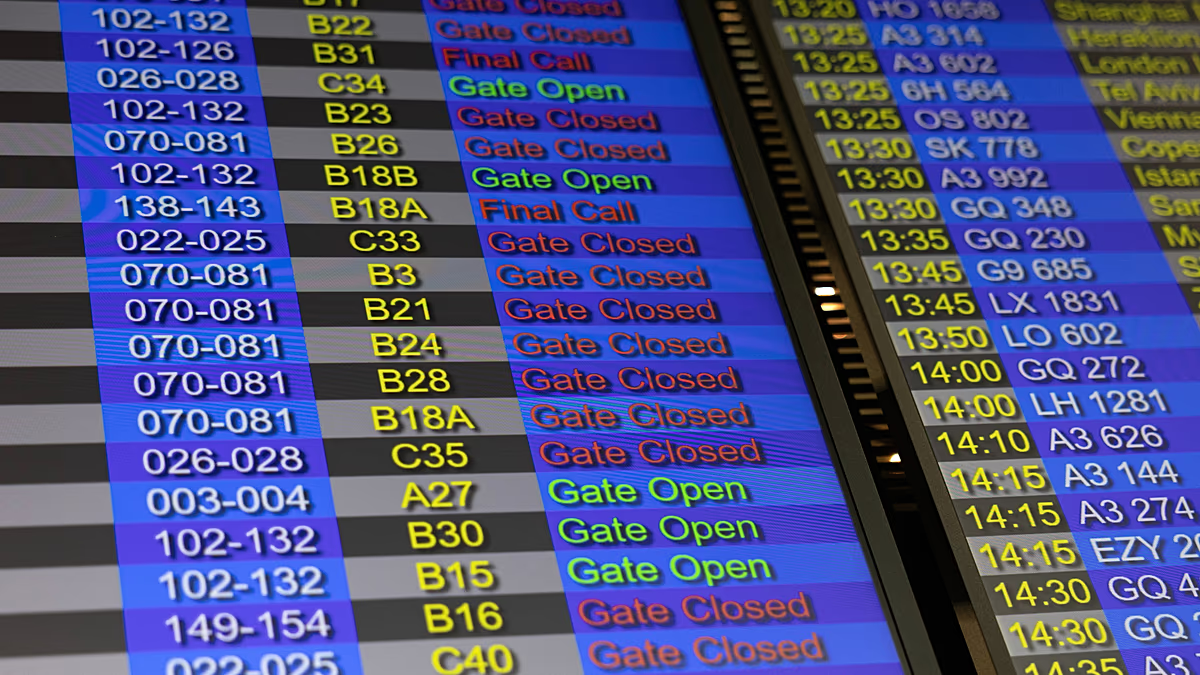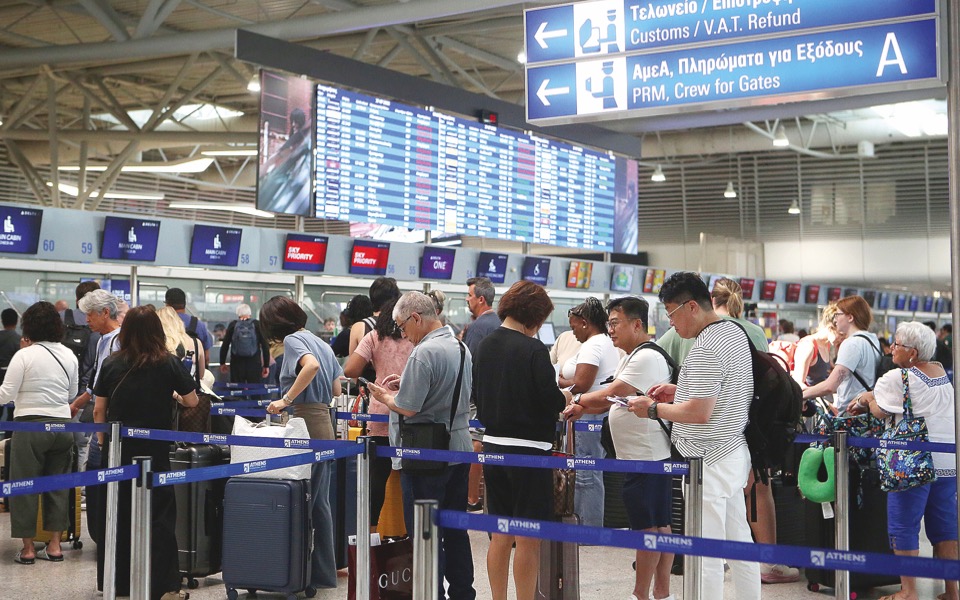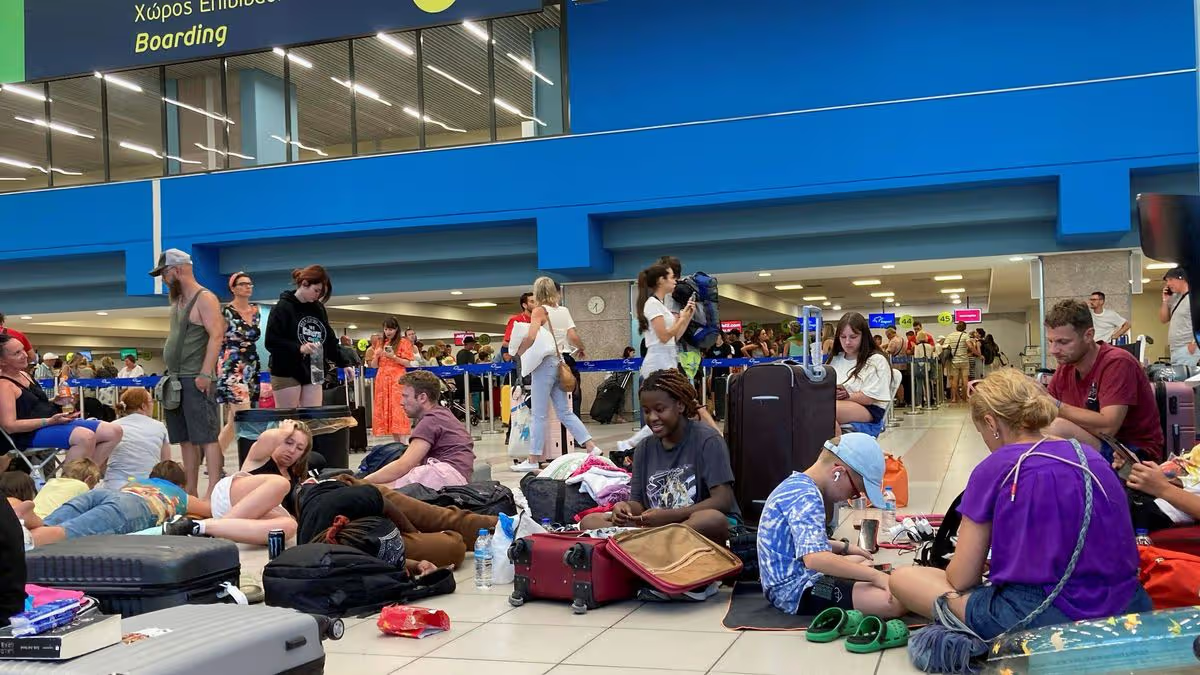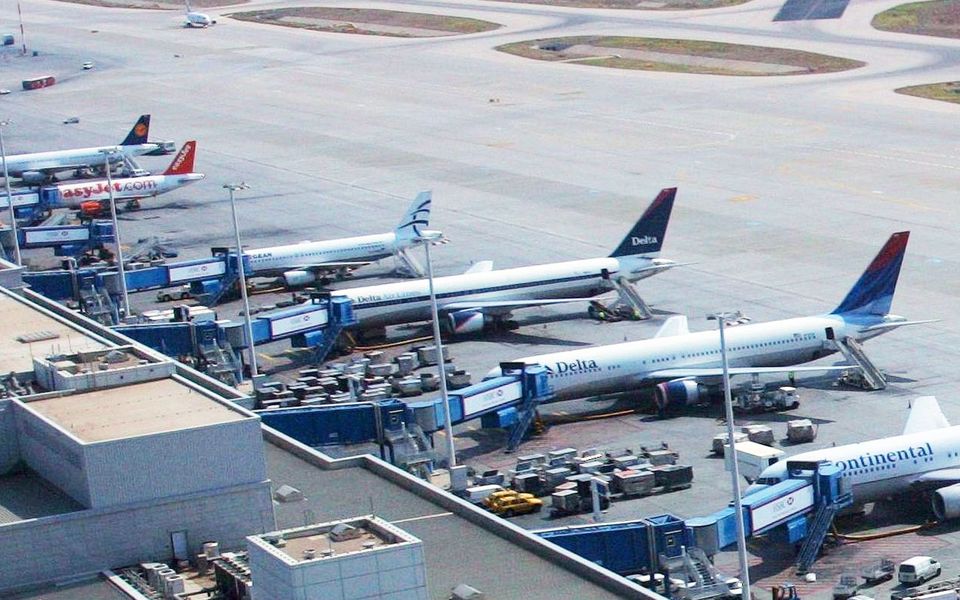
The new flight routes have turned Greece into a key hub connecting Europe with the Eastern Mediterranean and Asia, increasing demand on air traffic management systems. [AMNA]
The return of the summer travel season has once again brought flight delays into sharp focus across Europe, with Greece facing heightened pressure this year due to a combination of peak tourism demand and geopolitical disruption in the wider Middle East.
The crisis in the region has altered established air corridors, forcing widespread rerouting of flights and increasing traffic density over Greek airspace. As a result, the Athens Flight Information Region (FIR) has emerged as a key transit zone between Europe, the Eastern Mediterranean, and Asia.
According to the latest Eurocontrol data for the first half of June, Greece ranks among the most affected countries in the European network, alongside Cyprus, Albania, Serbia, and Montenegro. The country accounts for 14% of total en-route Air Traffic Flow Management (ATFM) delays, with 9.5% concentrated in the Athens Area Control Center and 4.4% in the Macedonia sector.
Unlike other European states where delays are primarily driven by staffing shortages and capacity constraints, Greece is additionally impacted by increased overflight traffic diverted away from Middle Eastern airspace. This rerouting has significantly raised operational complexity for air traffic management authorities.