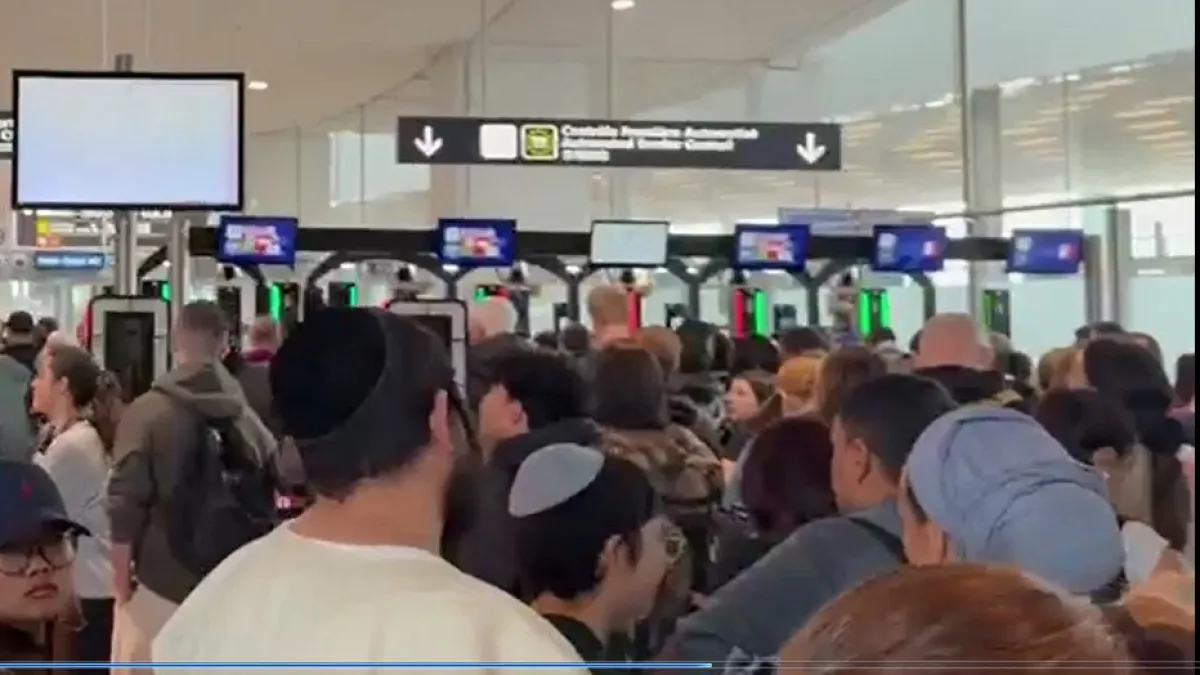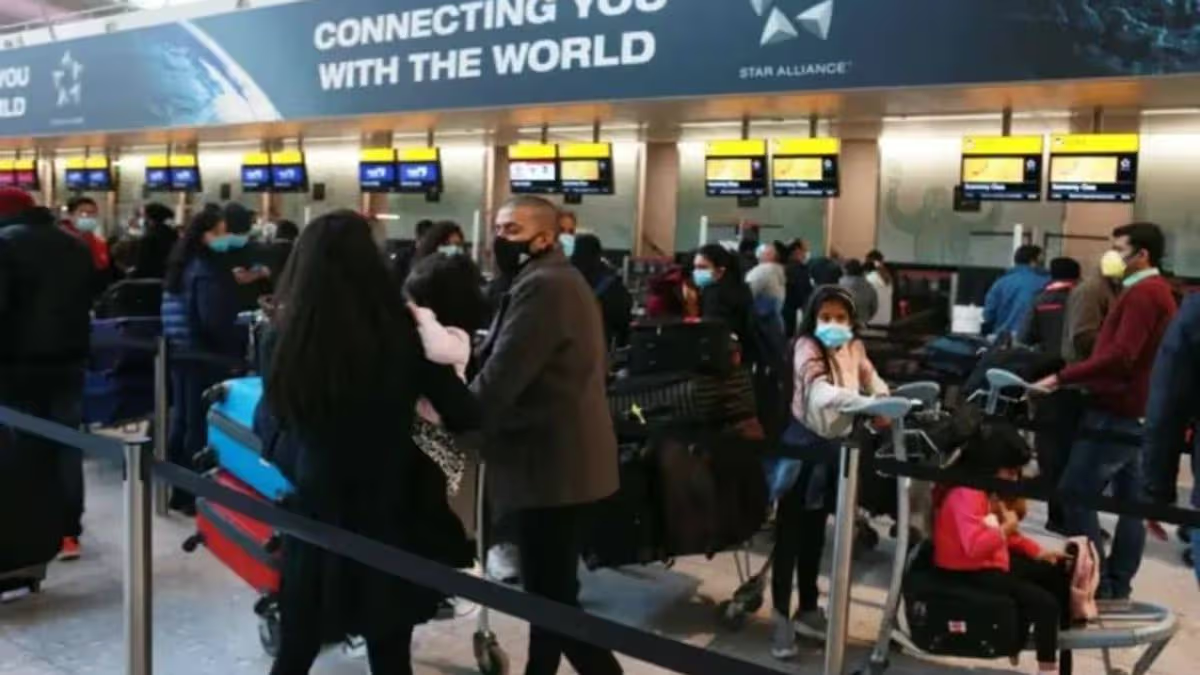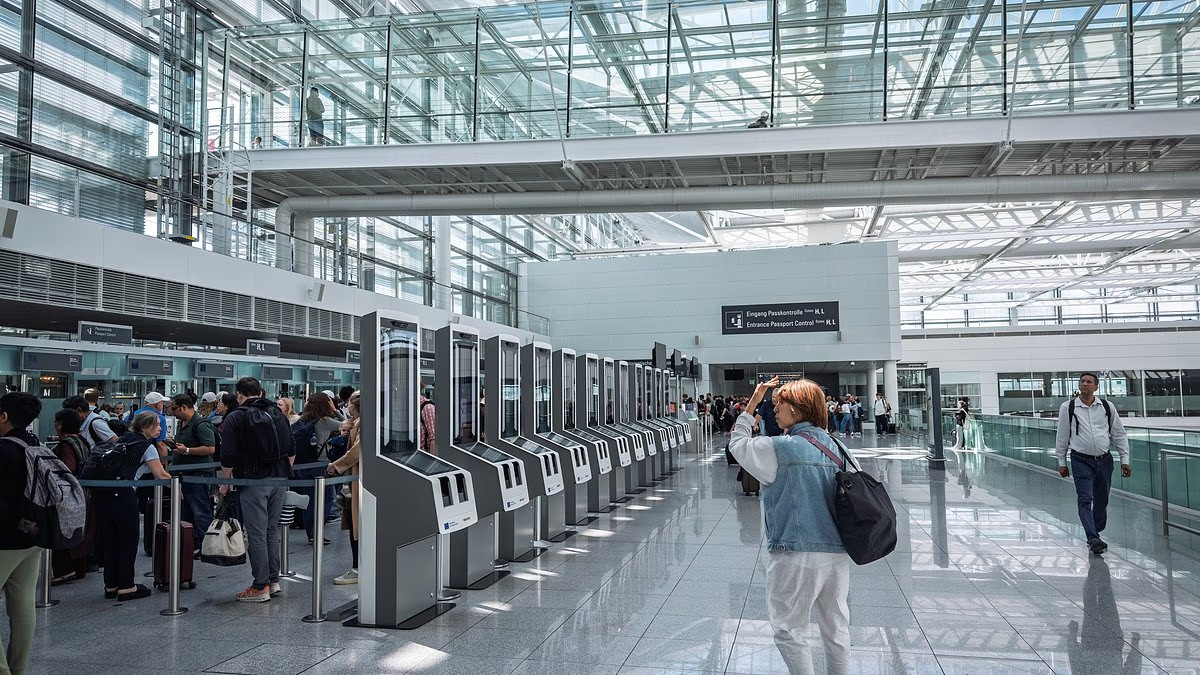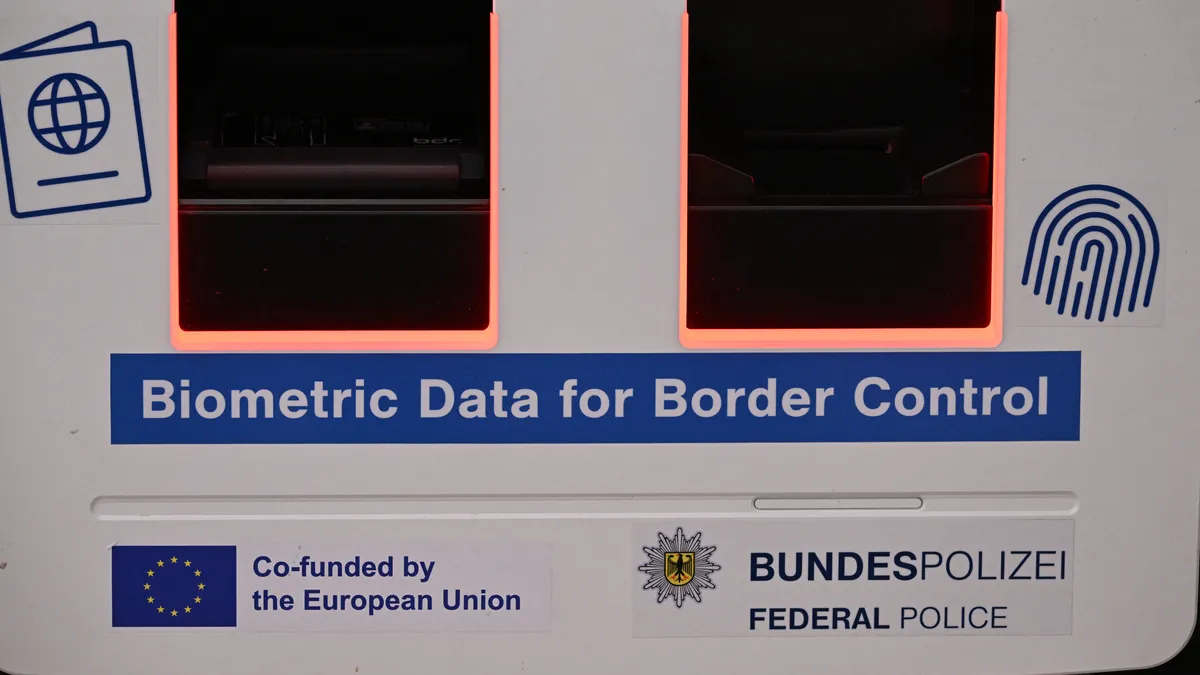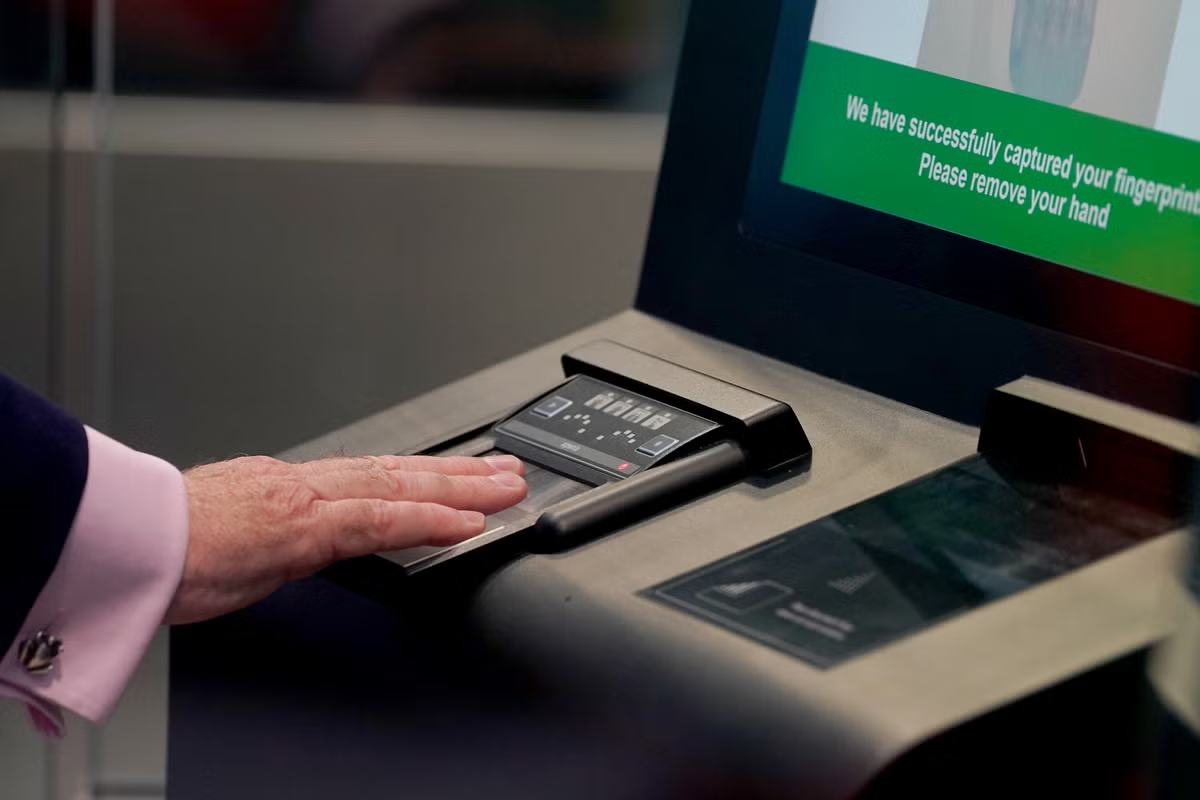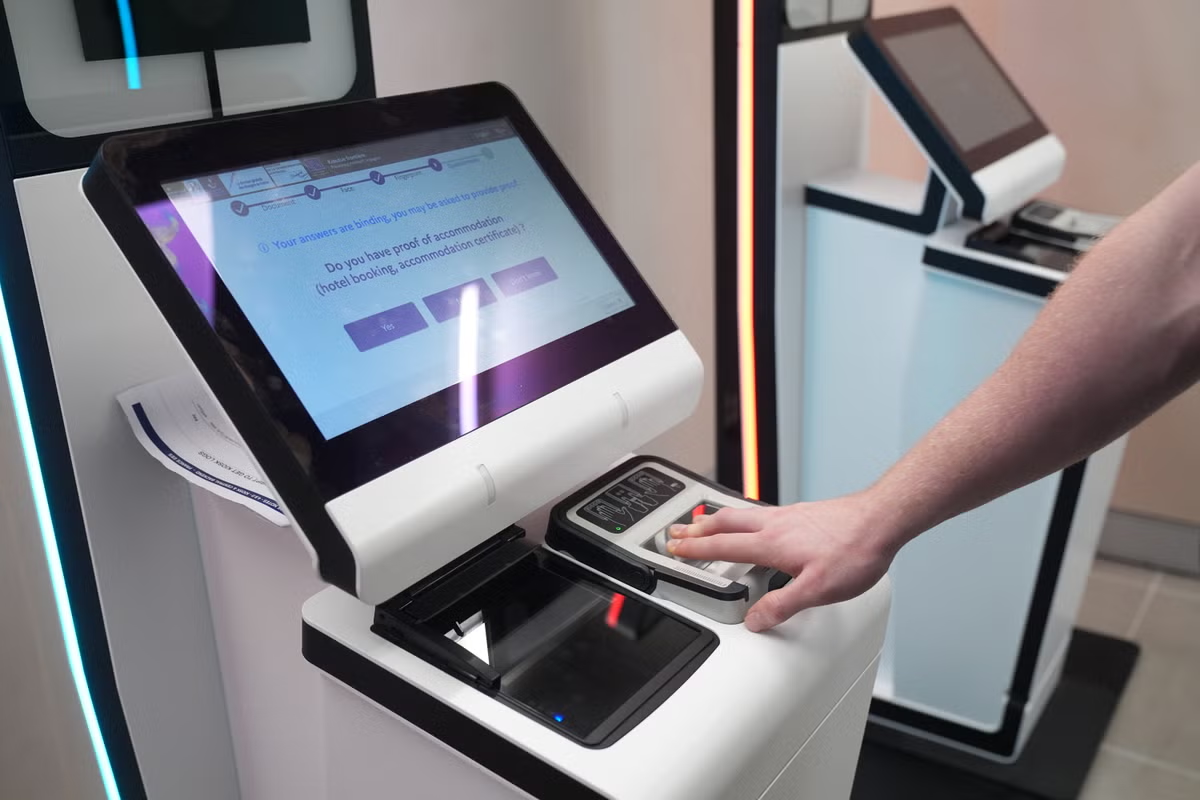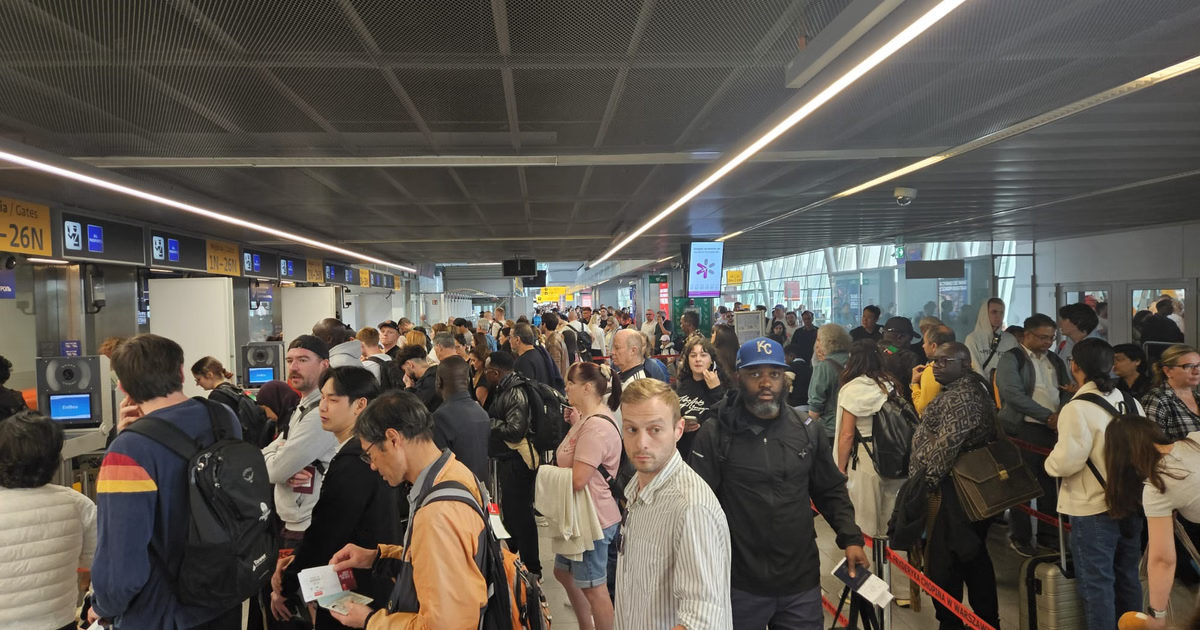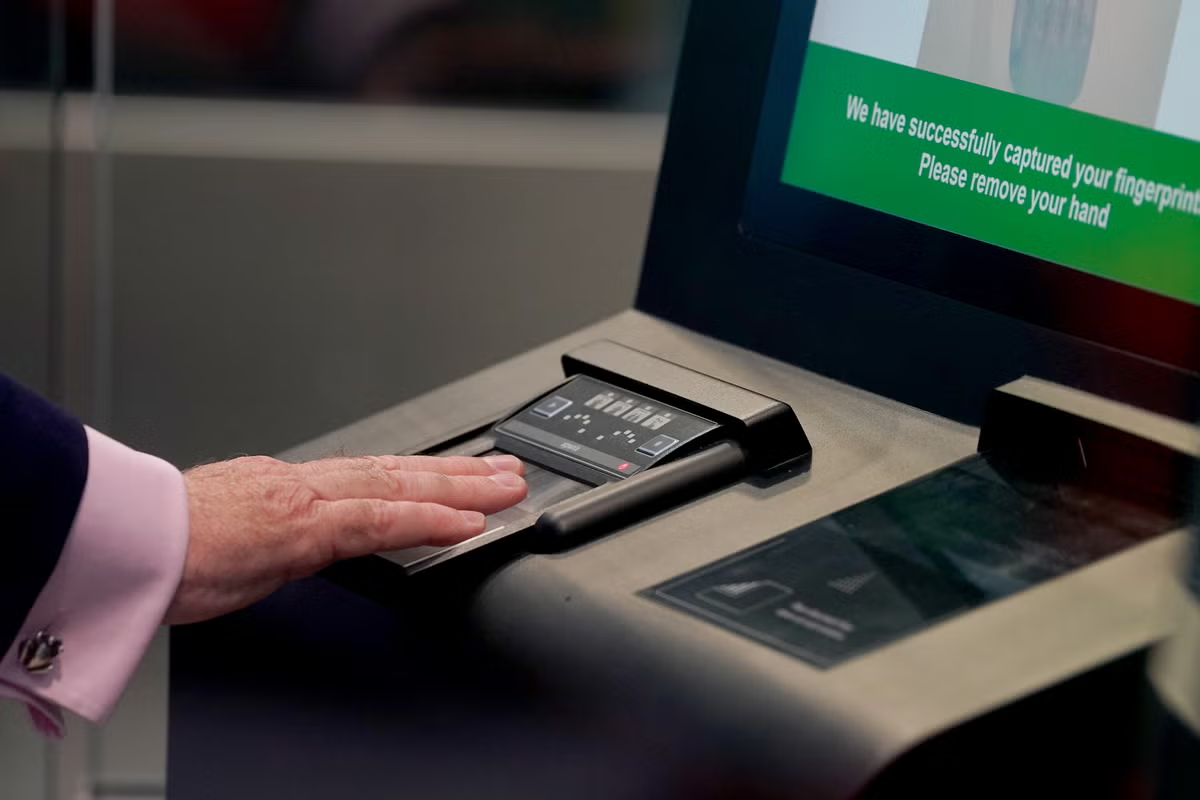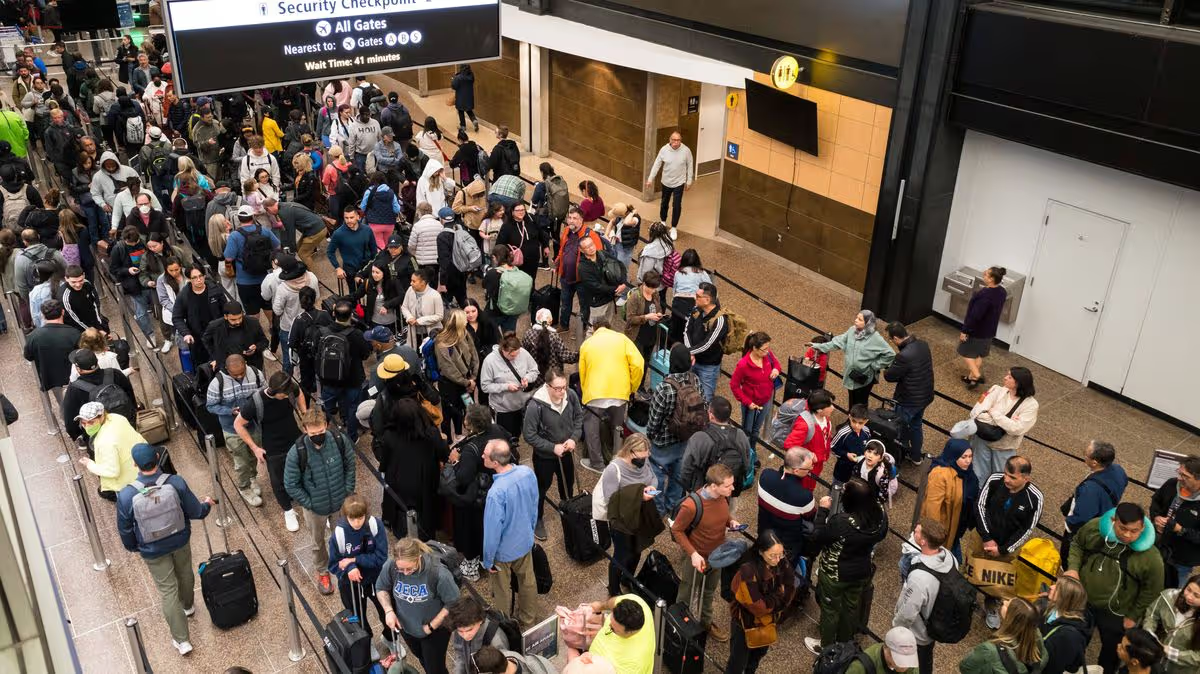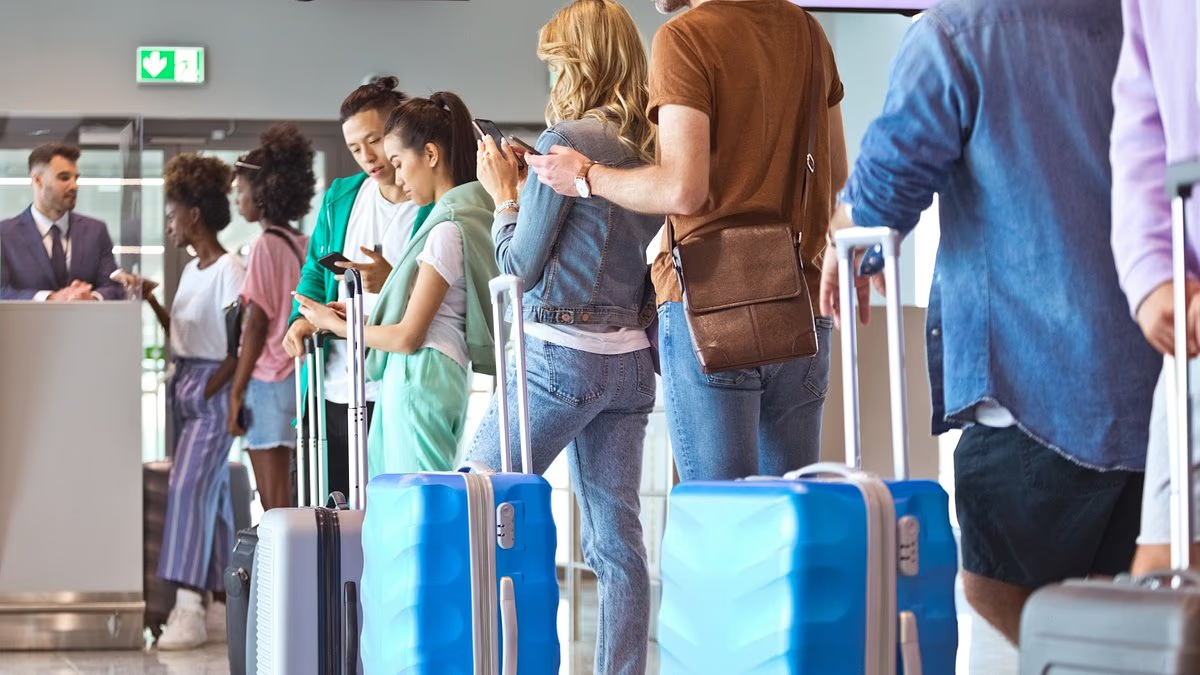
Travellers are being advised to arrive at least three hours before flights to and from Europe – or else face missing journeys.Widespread problems with the full implementation of the European Union’s new Entry/Exit System, which began on April 10, have caused huge delays at border controls that have led to some passengers missing flights.Faulty technology and hold-ups as travellers provide biometric data in the form of fingerprints and facial scans have resulted in long snaking queues at airports including Milan and Schiphol in Amsterdam.The Daily Mail’s Holiday Guru columnist is advising ‘extreme caution’ over the next few weeks of travel, continuing into the summer holidays. Arriving at least three hours before departure is recommended: ‘Yes this is an hour more than usual, but it’s better than queueing for ages and then having the double whammy of not making your flight,’ they say.The previous suggested time of arrival at airports prior to short-haul European flights was two hours.This week’s travel chaos was widely predicted given that even small increases in passenger processing time had seemed likely to have added hours to time spent at some airports – although which exactly would be worst prepared was hard to predict.Even if you add 20 extra seconds per passenger – and multiply that by 189, the capacity of a Ryanair Boeing 737-800 plane – this adds up to 63 minutes. When several planes arrive or depart at the same time in busy periods, the knock-on effect is huge.As few as four such planes arriving simultaneously at an airport could mean a delay of four hours and 12 minutes. And this is considered by some aviation experts to be a potential underestimate. Widespread problems with the full implementation of the European Union’s new Entry/Exit System have caused huge delays at border controls Faulty technology and hold-ups as travellers provide biometric data in the form of fingerprints and facial scans has resulted in long snaking queues at airports‘Sadly, it seems the EU has pushed on with the EES without preparing adequately,’ says Holiday Guru.Significantly more machines, with more border officials in attendance at manual kiosks to pick up the slack in the event of long queues during the early period, have simply not been arranged at many airports, it would seem.It is, in short, a massive failure.The idea behind EES was to digitalise entry to the Schengen Area, covering 25 Schengen Area nations plus Iceland, Norway, Switzerland, and Liechtenstein so people from third-party countries could not overstay the 90-day limit during any 180-day period.But delays caused by shambolic preparation, with certain countries such as Estonia advanced than others, could mean planes miss departure slots, adding even more time to delays. There’s also a possibility of flights taking off without passengers due to crews needing to depart or else exceed safety-regulated working hours.This is understood to be what happened when an EasyJet flight from Milan departed with as few as 30 people on board and around 100 stranded in the airport on Sunday.It is worth bearing in mind that if passengers do not arrive in time for their flights, they are not due compensation from the airline. They will simply be regarded as ‘no shows’, as harsh as this may seem. It is, however, possible some travel insurance policies may provide financial cover.For those considering booking holidays in weeks to come, countries outside the Schengen Area may be more appealing than ever, including the likes of Morocco, Tunisia, Turkey or Albania. Other attractive destinations for avoiding airport queues will be Cyprus and Ireland, both of which are outside the Schengen Area, despite being within the EU.So the bottom line for travellers to Schengen Area countries is to allow plenty of time, with canny passengers perhaps arriving super early and using extra time to dine at food halls in departure areas to be safe.Patience will be required on arrival – and those who are hiring rental cars will need to adjust pick-up times or face losing bookings by missing ‘windows’ for when their car is held/reserved for them.In theory, EES will lead to speedier passage through airports in the long-term. But not for now… it’s all a bit of a lottery for the time being. The entry/exit system... a few basics What is the EES?A new system of border entry kiosks designed to collect biometric data (fingerprints and facial scans) to speed up Schengen Area border checks, preventing overstayers, detecting identity fraud and preventing irregular migration.Why are there problems?Not enough investment in machines and staff.Is it in place at ports as well as airports?Yes – EES machines at Dover have been installed, but they are not yet functioning properly due to technical issues on the French side. Instead, border officers have been processing travellers manually.Where are the worst affected places?Expect delays at Dover and the Eurotunnel entry point in Folkestone, as well as returning from Calais. On the Eurostar from London St. Pancras, the border controls mean French officials process passengers in London. But technical issues mean the new system isn’t fully operational here yet either, leading to delays.Are old-fashioned stamps being replaced altogether?During this early period, it’s possible that where machines are simply not functioning, stamps could be given manually.Will it be ok by the summer?Probably not.What should I do?Allow more time – arrive at airports at least three hours ahead for flights to the Schengen Area.
How to avoid EES travel chaos this summer: Everything you need to know
Faulty technology and hold-ups as travellers provide biometric data in the form of fingerprints and facial scans has resulted in long snaking queues at airports.
890 words~4 min read