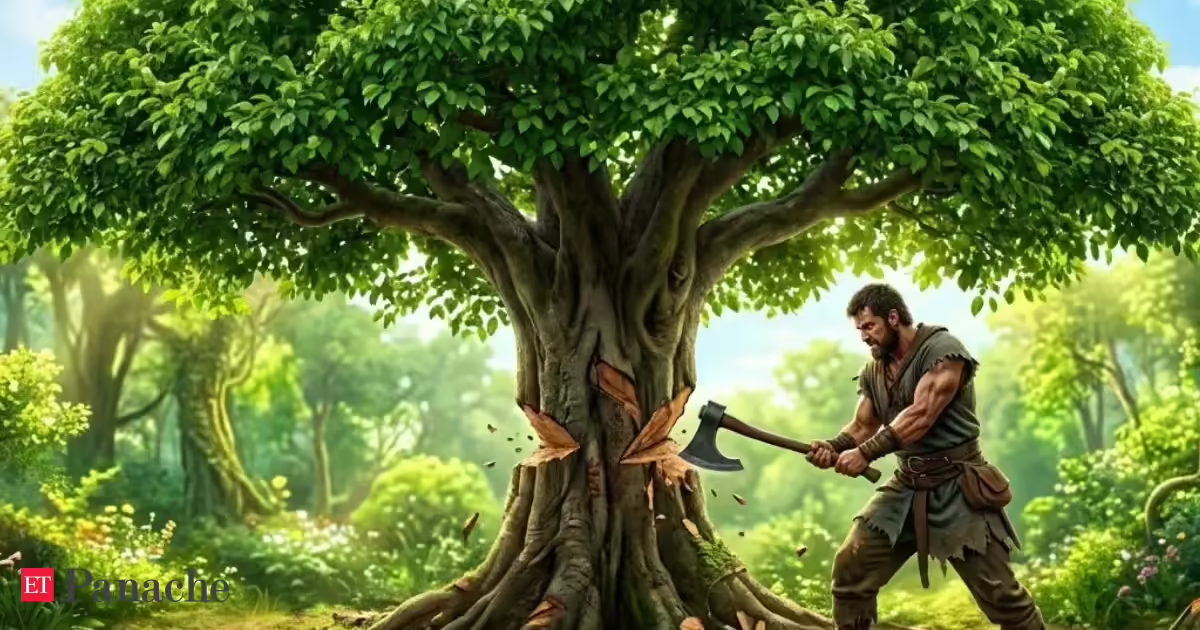
African proverb of the day: 'The axe forgets but the tree remembers' - life lessons on empathy, emotions, understanding pain and different perspectivesAn African proverb, often shared through traditional wisdom, uses a simple image from nature to explain a deeper truth about human actions and their consequences. Like many proverbs that draw lessons from everyday life, it turns a familiar sight of an axe cutting into a tree into a reflection on memory, power and harm.The saying paints a clear picture: the axe may strike the tree and move on, but the tree remains marked by the wound. The person holding the axe may forget the moment, while the one that experiences the impact carries the memory.The proverb is not only about destruction or physical damage. The axe represents anyone or anything with the power to cause harm, while the tree represents those left dealing with the consequences. It highlights an imbalance often seen in life: the person making a decision may move ahead, but the person affected continues to live with its effects.In workplaces, for example, a leader may view a difficult decision as necessary for an organisation’s future. But for employees who lose their jobs, that same decision may represent uncertainty, financial stress and a turning point in their lives. A company may issue an apology after a mistake, but for those who experienced unfair treatment, the impact may not disappear so quickly.The proverb also applies to personal relationships. A harsh argument or careless actions may be a passing moment for the person who causes it. But for the person who receives it, it may become a memory that shapes how they see the relationship long afterwards.Beyond individual experiences, the saying also reflects how societies remember their past. Those who hold power may consider certain events finished chapters, while those affected may continue to carry the memories and consequences. What one person sees as something that has been left behind may remain deeply present for another.However, the wisdom of the proverb is not only about remembering pain. It is also about accountability. It reminds those with influence that their actions often travel further than they realise. Power may allow someone to move on quickly, but it does not erase the marks left behind.At the same time, the image of the tree carries a message of resilience. A tree may carry the scar of the axe, yet it continues to grow. Remembering does not always mean remaining trapped by the past; it can also mean learning, rebuilding and becoming stronger.The reason this proverb continues to endure is because it captures a universal experience: people rarely remember the impact of their actions in the same way as those who live through them. It serves as a reminder that every choice, word and action leaves behind a story, and often, the one who bears the wound remembers it longest.
African proverb of the day: 'The axe forgets; the tree remembers' — a reminder that wounds outlive power
An African proverb, often shared through traditional wisdom, uses a simple image from nature to explain a deeper truth about human actions and their consequences. Like many proverbs that draw lessons from everyday life, it turns a familiar sight of an axe cutting into a tree into a reflection on memory, power and harm.
478 words~2 min read