Image credit: By Jeff Dahl – Own work by uploader, Based on the public domain document: [1], CC BY-SA 3.0, Link
By Stephanie Parker
This research from the NeuroAI Lab of Martin Schrimpf, part of EPFL’s Schools of Computer and Communication Sciences and Life Sciences, uses AI models to predict exactly where to stimulate the brain to evoke images of faces and specific objects in the users instead of simply evoking spots of light. The models developed at EPFL were used by Dutch researchers for live trials on sighted monkeys. The preliminary results, presented in April at the International Conference on Learning Representations, show very promising implications for vision in humans as well.
“The motivation for this project is that there are many people with visual deficits that are irreparable, in the sense that somewhere along the visual processing stream, starting with the retina, there is a deficit which cannot be repaired,” says Johannes Mehrer, a scientist in the NeuroAI lab who led the research. “One way of tackling this problem is to develop a visual prosthesis.”
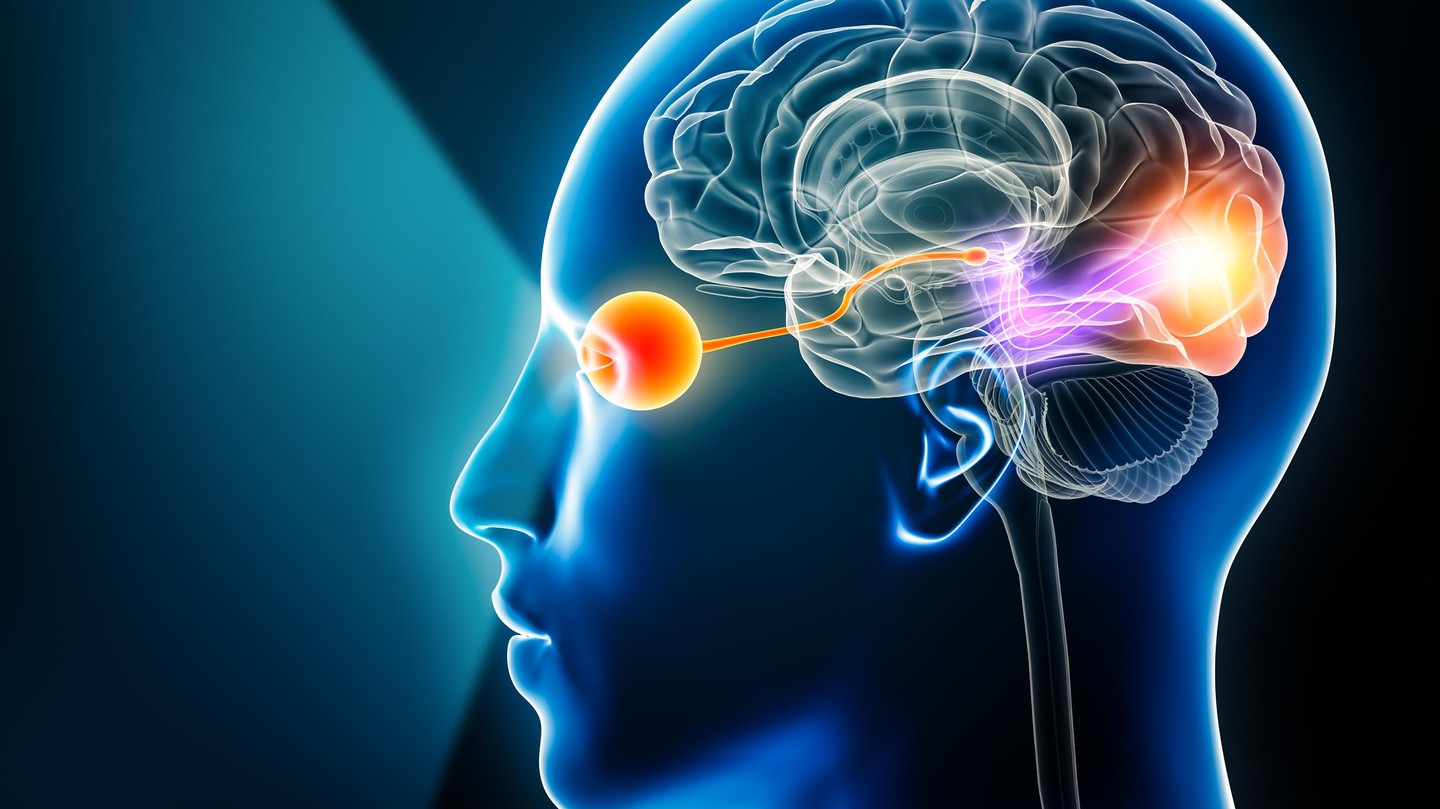
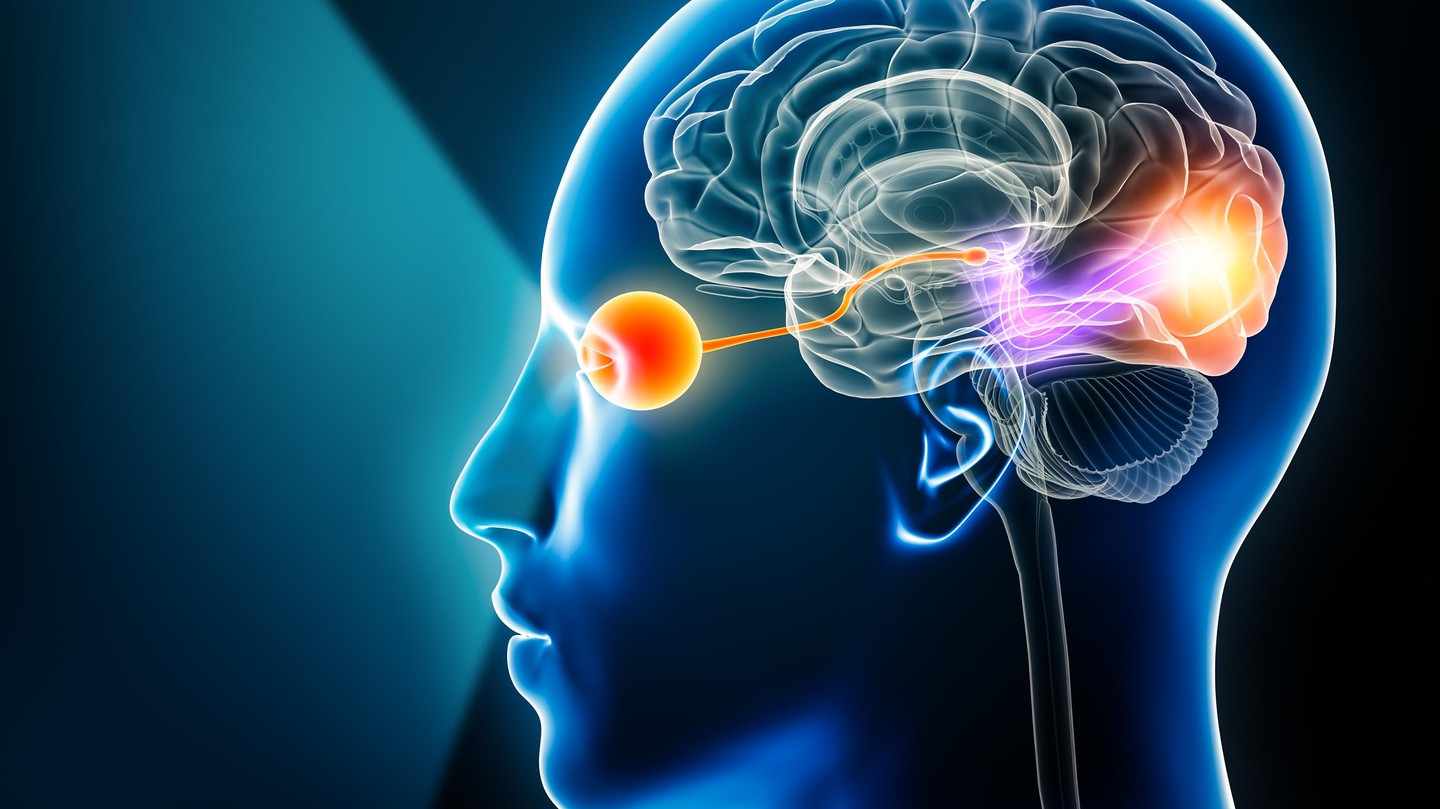
There are multiple kinds of visual prosthetics including retinal, optical nerve, and cortical. Retinal prosthetics are placed somewhere on the retina, and optical nerve prosthetics are used when the retina is too damaged for an implant and the optical nerve can be stimulated instead. When neither the retina nor optical nerve can be implanted, cortical prosthetics are used. These bypass the retina and optical nerve entirely and work instead by stimulating the visual cortex, using electrodes to “draw” images onto it. However, thus far, this approach is limited in that it targets lower-level regions of the brain where it is only possible to project light flashes and simple shapes. There are also hardware constraints because multiple electrodes are needed to stimulate different areas at the same time, but only a certain number of electrodes can be used in one area.