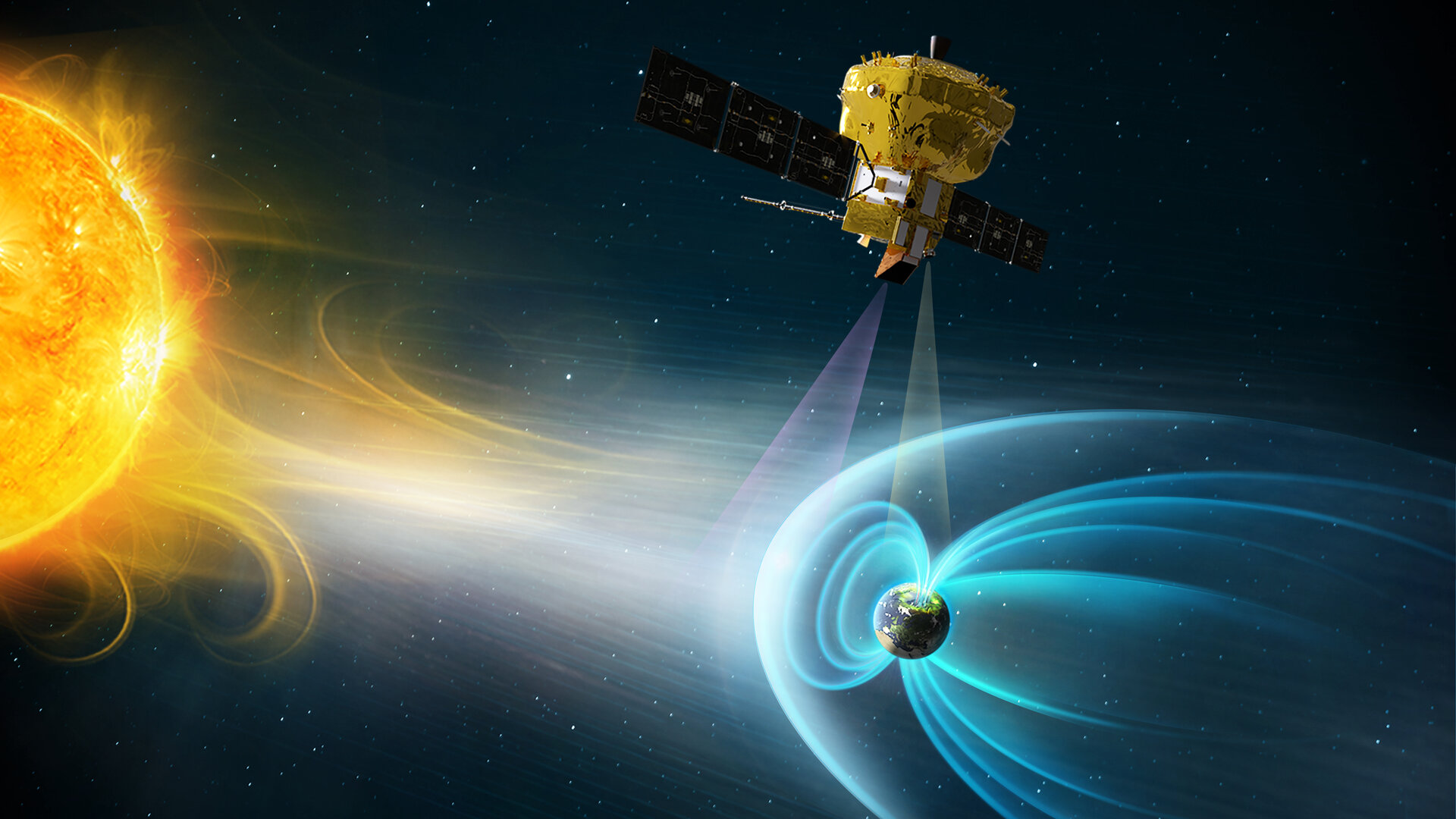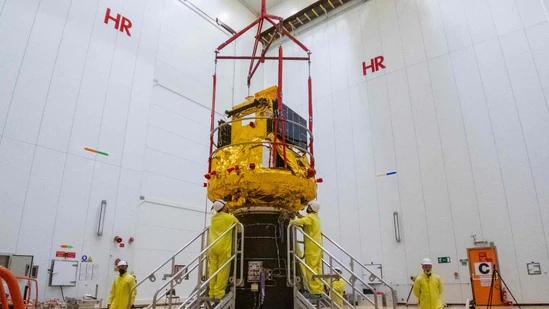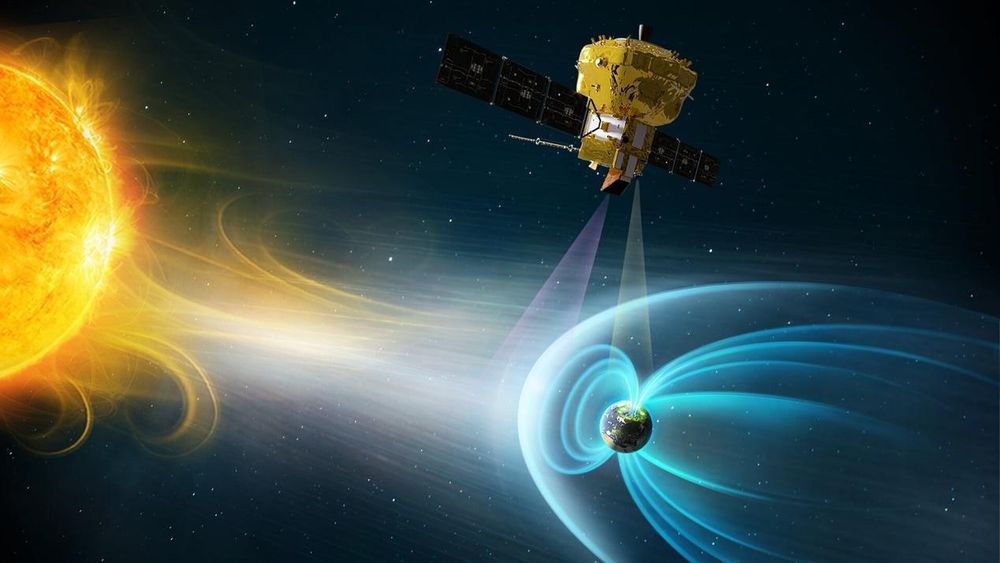
An illustration of the Solar wind Magnetosphere Ionosphere Link Explorer (SMILE) satellite in orbit.
The newly launched Solar wind Magnetosphere Ionosphere Link Explorer (SMILE), a collaborative satellite mission between China and Europe, has successfully entered its designated orbit. This mission marks a groundbreaking advance in solar-terrestrial exploration. Using innovative soft X-ray imaging — a global first — SMILE will achieve panoramic imaging of the Earth's magnetosphere.
As the last mission of the strategic pioneer program on space science (Phase II) of the Chinese Academy of Sciences, SMILE addresses a gap in China's space exploration capabilities and marks a pivotal transformation – from isolated breakthroughs to a constellation of space science satellites.
Space science defines the frontier of deep-space exploration and serves as a key benchmark of national scientific and technological strength. For many years, China's space science program operated from a relatively modest foundation, lacking self-developed high-end exploration satellites and independent data streams. Research largely depended on publicly available foreign datasets, creating major constraints on advanced, frontier scientific research.