Story audio is generated using AI
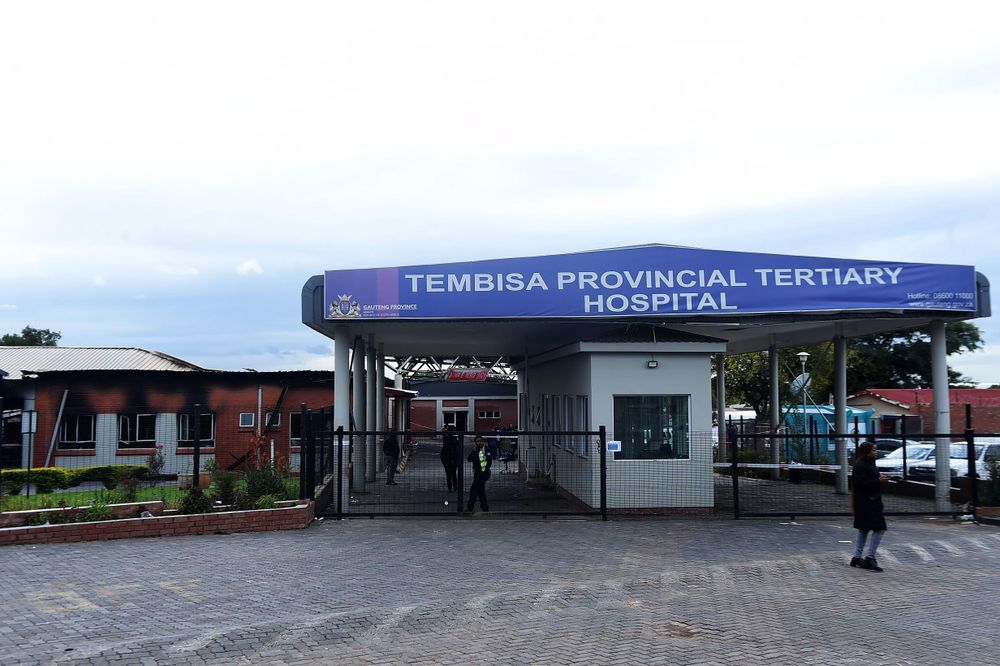
The water that killed at least 31 people in Hammanskraal in 2023 did not arrive by accident. It passed through a wastewater treatment works that had been the subject of a multimillion-rand refurbishment contract awarded to companies with no credible capacity to do the work. The plant was never fixed. The contractors were paid anyway. The cholera came later. The sequence is numbingly familiar: a public need, a procurement process, a connected intermediary, a payment, and at the end of the pipe, nothing. What is less often said is what this sequence is doing to the transformation agenda.Post-apartheid economic policy rested on a defensible premise: that markets left alone would reproduce apartheid’s racial distribution of capital, and that the state should therefore use its purchasing power of more than R1-trillion a year in all spheres as a deliberate instrument of redistribution.Preferential procurement was written into the constitution. Broad-Based BEE codes, contractor development programmes and 30% subcontracting requirements were designed to build the black industrial and professional class that apartheid had legislated out of existence.That project has not failed uniformly. A genuine black professional class exists today that did not exist in 1994; black-owned firms operate at every level of the Construction Industry Development Board grading system; the professional councils register black engineers, quantity surveyors and construction managers in numbers unimaginable a generation ago.Fronting industryThe tragedy is that corruption colonised the project’s instruments, and in doing so has discredited its purpose. Empowerment criteria were meant to reward genuine ownership and capability rather than proximity to the deciding official. Fronting has become an industry. The 30% subcontracting provision, intended to pull emerging contractors up the value chain, was inverted into a protection racket, with armed “business forums” demanding a share not of the work but of the contract value. By 2019 the civil engineering contractors body Safcec estimated more than 180 projects worth upwards of R63bn had been invaded or disrupted. A country that must build its way out of an infrastructure deficit has allowed the act of building to become dangerous.Honest emerging contractors carry the heaviest cost. A firm that prices honestly loses to one that has priced a kickback in. A builder that invests in plant and people watches the award go to a shelf company that subcontracts the work back at a margin. The state’s own payment culture — invoices ageing past 30, 60 and 90 days while connected creditors are paid first — completes the squeeze. In practice, the empowerment state often bankrupts the empowered.The physical evidence is everywhere. Medupi and Kusile, conceived at roughly R150bn combined, delivered late and defective at more than R450bn. Transnet’s R54bn locomotive procurement was structured around kickbacks rather than spares, with rail volumes collapsing from about 226-million tonnes to barely 150-million tonnes. Passenger Rail Agency of South Africa stations were stripped to the brick once looted security contracts had collapsed, and the state now spends tens of billions essentially buying back infrastructure it already owned. This is recovery spending, not development spending, as the money builds nothing new.Nor did capture end with the Gupta brothers’ flight. The Madlanga commission has spent the past nine months exposing criminal syndication inside the police service, with senior officers, including suspended national commissioner Gen Fanie Masemola, facing charges over an allegedly irregular R360m tender. Apartheid’s apologistsThe speed of those arrests is welcome, and a genuine break from the prosecutorial near silence that followed the reports of the Zondo state capture commission. But the contrast between rapid action against police officials and glacial progress against politicians has not been lost on the public.The deepest damage, though, is rhetorical. Every Digital Vibes, every VBS Mutual Bank, every Tembisa Hospital syndicate, hands ammunition to those who argue that transformation itself — rather than its capture — is the problem. The looters have done what apartheid’s apologists never could: they have made redistribution argue against itself. The inequality which the transformation agenda exists to tackle has not gone away. Discrediting the cure does nothing to the disease.The remedies are not mysterious, which is itself an indictment. Professionalise the public service and insulate appointments from party deployment, as Zondo recommended in terms blunt enough to embarrass. Publish procurement and beneficial ownership data by default. Pay small contractors in 30 days, on pain of personal liability for officials. Treat construction site extortion as organised crime, not a stakeholder management problem. Fund the National Prosecuting Authority and Special Investigating Unit like the frontline services they have become. Protect whistleblowers as though Babita Deokaran means something.Above all, the transformation agenda must be separated from its parasites — loudly, and from within the constituencies that built it. The strongest case for empowerment had always been that it would broaden the productive base of the economy, not its extractive one. Every capable black contractor priced out by a connected shell company is a defeat for transformation, inflicted in its name. Those of us who work in the built environment know who has the greatest interest in killing tender corruption: not business, not the opposition, not the ratings agencies, but the black engineers, construction managers and builders who can win on capability if the game is honest — and cannot win at all if it is not.Until that inversion is corrected every commission will be an autopsy, every recovery programme a repurchase of things already paid for, and every promise of transformation will arrive — like the water at Hammanskraal — through pipes someone was paid to fix, and didn’t.• Siphika is CEO of the Construction Management Foundation and MD of Randbuild Group. He writes in his personal capacity.