Story audio is generated using AI
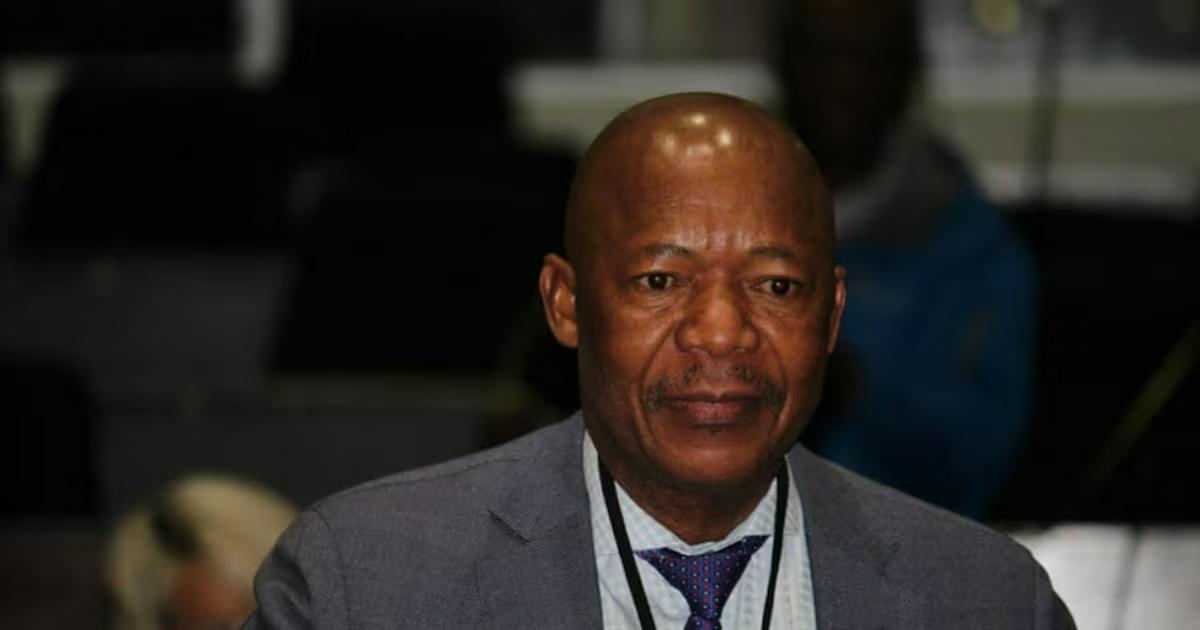
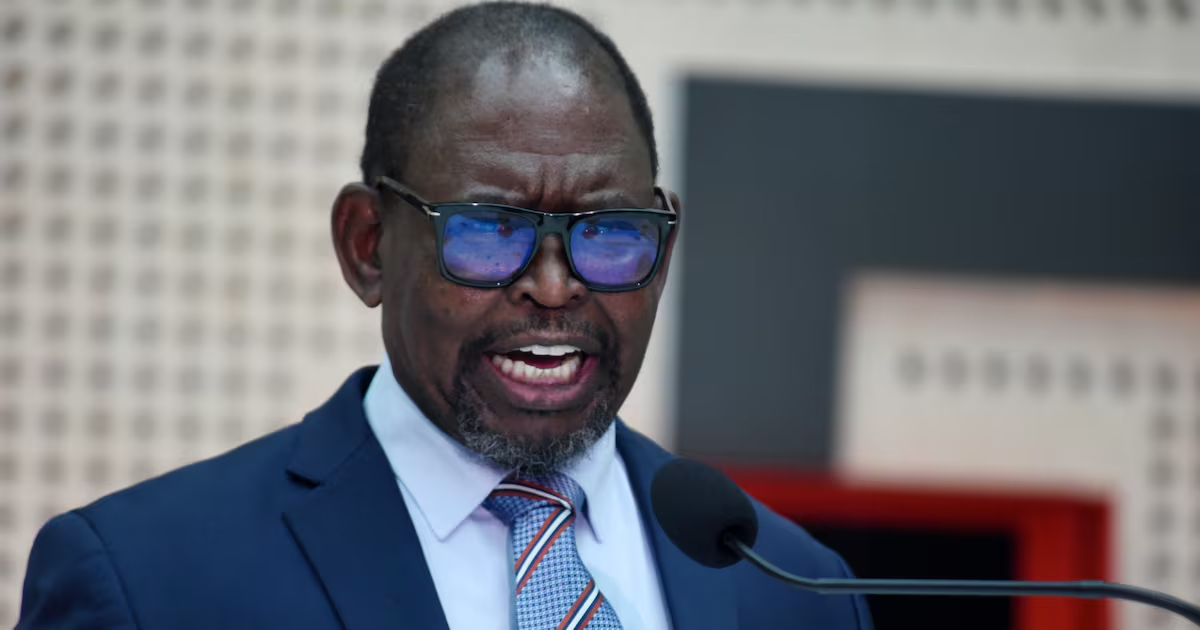
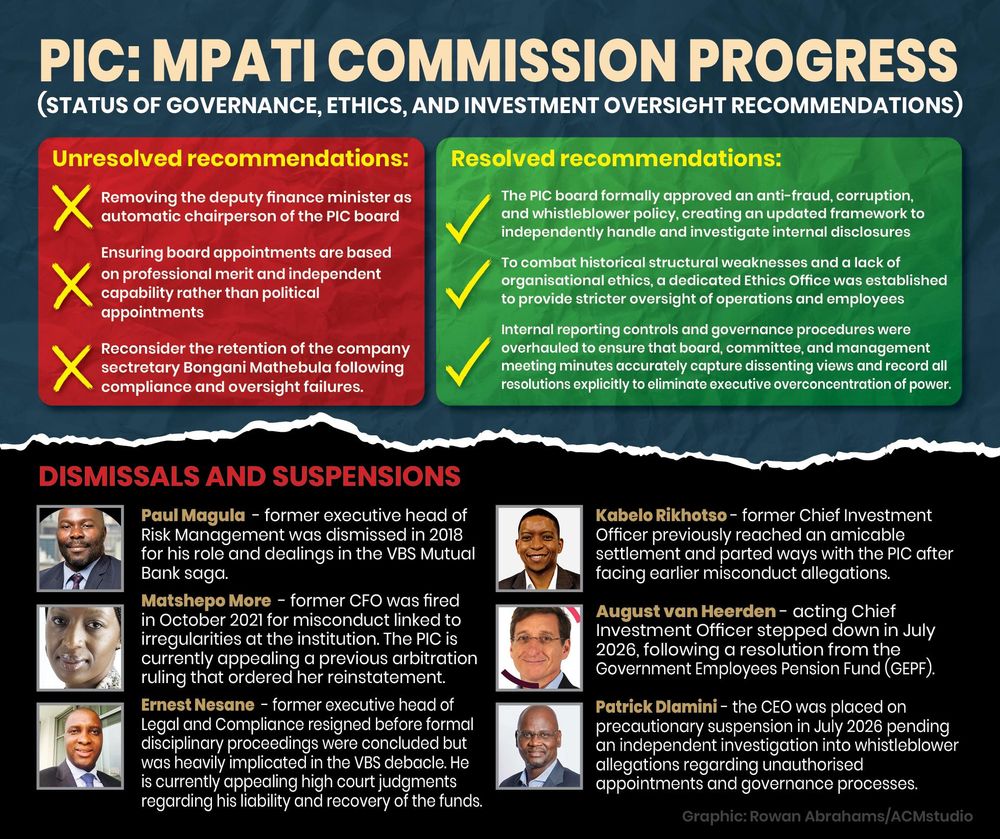
When a board chair comes under attack the stated reasons are seldom the full story. Allegations of misconduct, governance failures or poor oversight may dominate the headlines, but beneath the surface there is often a struggle over power, influence and the future direction of an organisation. Recent events at the Public Investment Corporation (PIC), seen together with the experiences of Sipho Pityana at Absa and Albert Manifold at BP, illustrate a recurring governance reality: battles involving board chairs are rarely about individuals only. More often they are contests over who gets to shape strategy, allocate capital and exercise authority. Reports emerged on June 19 of a rift on the PIC board after a whistleblower report raised concerns about governance, authority, oversight and investment decisions. The reports also suggested tensions between PIC board chair David Masondo and finance minister Enoch Godongwana, prompting a special meeting to address the dispute. The PIC occupies a unique position in South Africa’s economy. It manages more than R3-trillion on behalf of public sector funds, most notably the Government Employees Pension Fund. Any perception of instability at board level inevitably raises questions about governance, accountability and the stewardship of assets belonging to millions of South Africans. Similar governance battles have unfolded elsewhere in South Africa and abroad, often leaving lasting damage in their wake. When Wendy Lucas-Bull retired as Absa chair in 2022, Pityana appeared to be the natural successor. As lead independent director, his appointment was widely regarded as a formality pending regulatory approval. Instead, it triggered a protracted dispute involving the Prudential Authority (PA), Absa and Pityana himself. The PA objected to his appointment based on a historical sexual harassment allegation dating back to his tenure as chair of AngloGold Ashanti in 2014. Pityana challenged both the substance of the objection and the process used by the regulator. The high court ultimately found that the PA had acted unlawfully by relying on an informal process rather than the procedures prescribed in the Banks Act. However, by the time the judgment was delivered, Pityana had already been removed from the Absa board and Sello Moloko appointed as chair. While aspects of the dispute remain before the courts, the episode demonstrates how governance battles can leave all parties worse off. Pityana has been forced to defend his reputation, while the regulator has faced scrutiny over its conduct. Whatever the legal outcome, the reputational damage has already been done. A similar pattern emerged at BP in May when the energy giant removed its chair, Albert Manifold, with immediate effect, citing concerns over governance standards, oversight and conduct. Media reports suggested the decision followed whistleblower allegations relating to aggressive behaviour and other complaints. The market reaction was swift. BP’s share price fell sharply after the announcement, reflecting investor concern. Like Pityana, Manifold has strongly rejected the allegations and criticised the process that led to his removal. He maintains that he was removed without warning and without a proper opportunity to respond. While each case is different, they reveal a common pattern. Challenges to a board chair are often less about personality and more about competing visions for the organisation, control of strategic decisions, resources and the balance of power in governance structures. Board chairs often become targets when governance decisions begin to disrupt established centres of influence. The consequences extend far beyond the individuals involved. At Absa, shareholders have been drawn into a lengthy legal dispute. At BP, investors reacted negatively and value was destroyed. At the PIC, concerns about governance instability inevitably raise questions about the stewardship of one of Africa’s largest pools of capital.While each case is different, they reveal a common pattern. Challenges to a board chair are often less about personality and more about competing visions for the organisation, control of strategic decisions, resources and the balance of power in governance structures. As the saying goes, when elephants fight, it is the grass that suffers most. In governance disputes, the grass includes shareholders, employees, pensioners, customers and citizens whose interests depend on stable and effective leadership. The integrity of the remaining directors is also on the line. Directors have a fiduciary duty to act in the best interests of the organisation rather than in factional or personal interests. While consequences for directors are seldom immediate or visible, board members can be held accountable when their conduct exposes an organisation to undue risk or breaches their fiduciary responsibilities. The real test of governance is not how boards function when everyone agrees. It is how they manage disagreement, succession and competing interests without damaging the institutions they are meant to protect. When a board chair comes under attack, the greatest risk is to the organisation itself. Once trust in governance begins to erode, the costs are ultimately borne by shareholders, employees, pensioners and the public. In the end, the question is not whether a board chair survives a boardroom battle. It is whether the institution emerges stronger once the battle is over. • Dr Vilakazi is an academic and organisational development practitioner whose work focuses on how governance and power are exercised in institutions, particularly where they are misunderstood and misapplied.