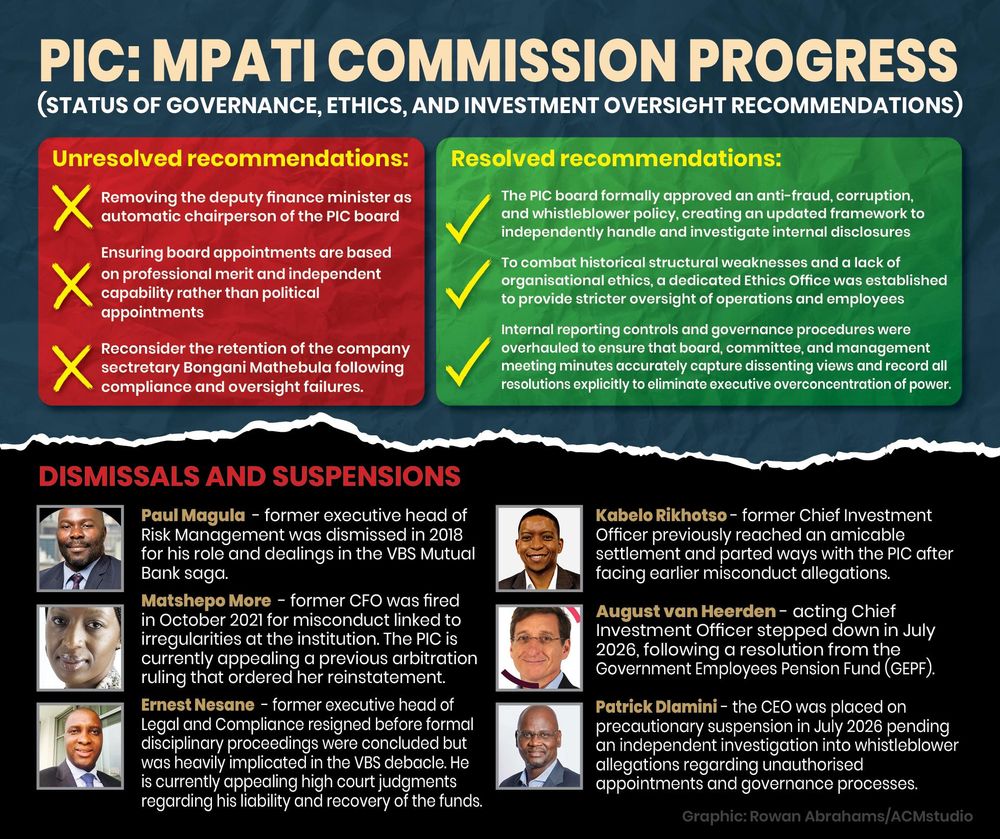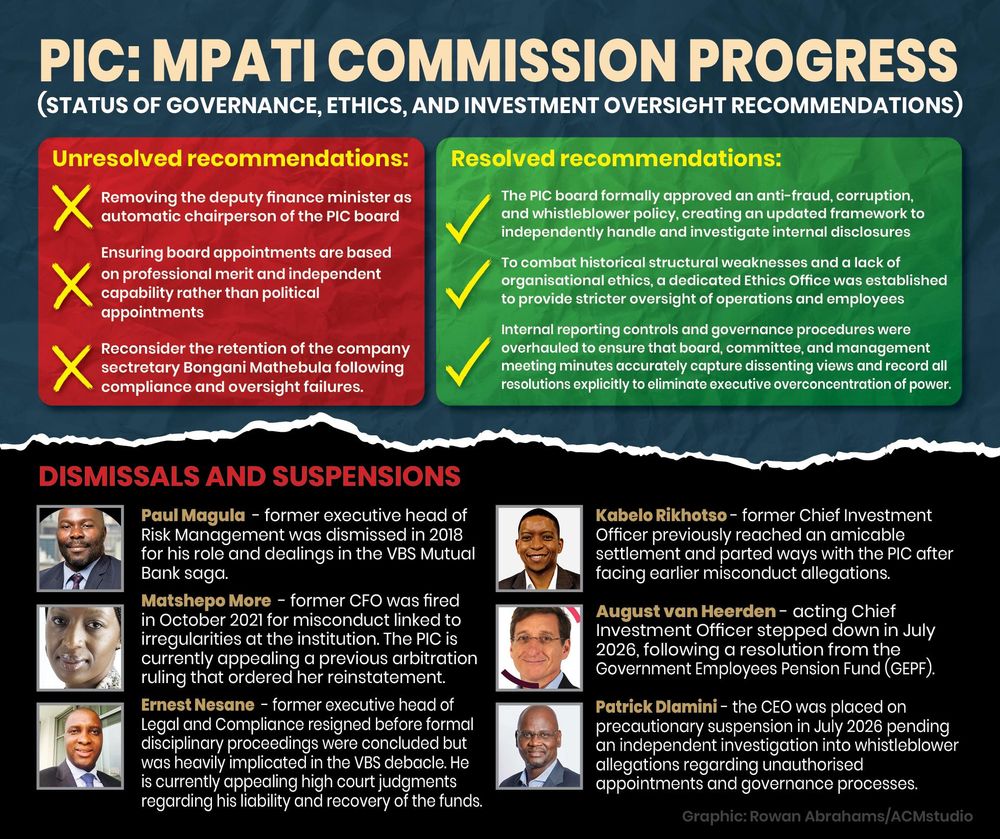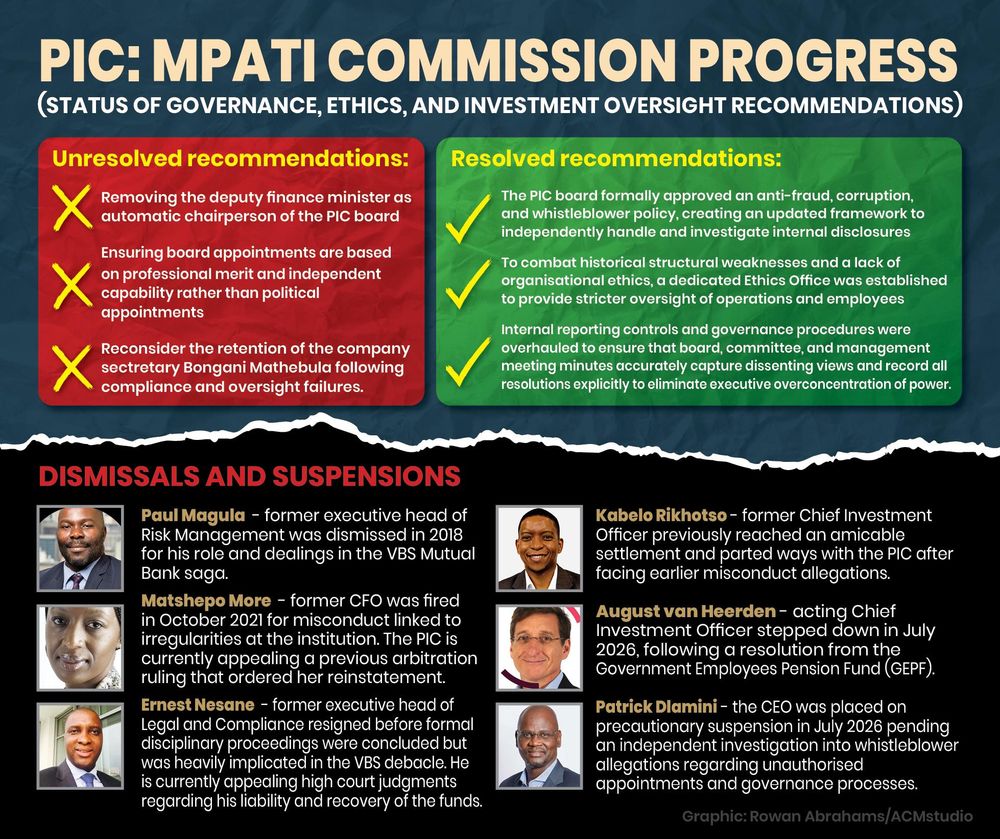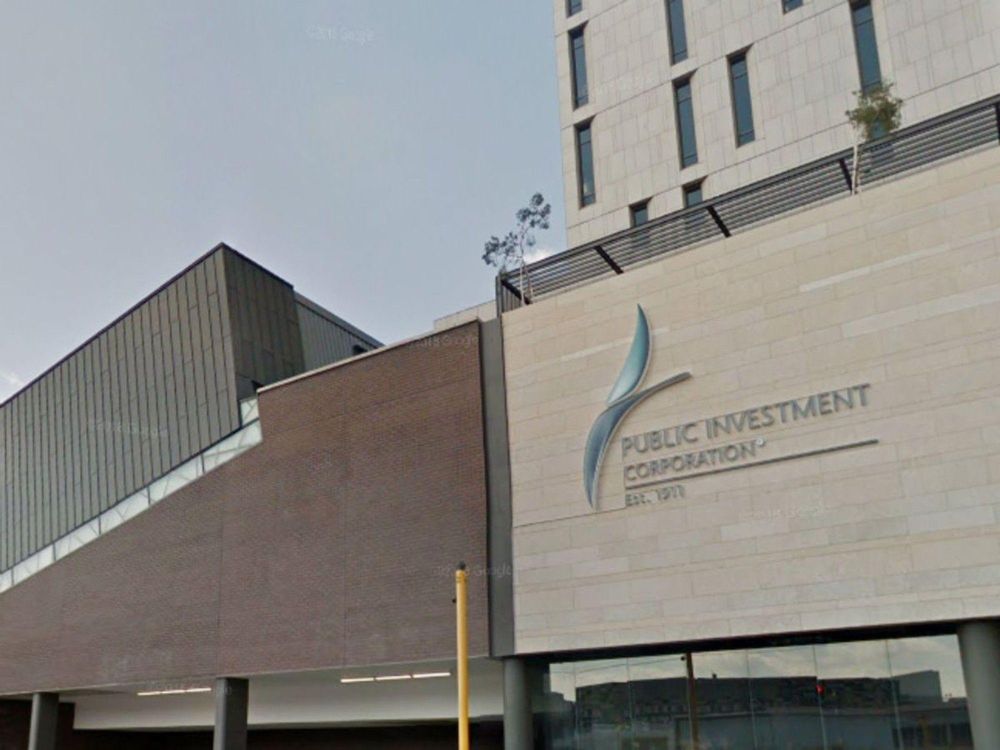
The breakdown in relations between the executives at the Public Investment Corporation (PIC) and the board broke down to the point that critical information was not transmitted to an equally divided board, drawing the ire of the Financial Sector Conduct Authority (FSCA).The regulator, in a strongly worded letter addressed to the PIC board chair David Masondo on Tuesday, which Business Day has seen, called the board to account, particularly on the whistle-blower report that implicated some officials, including the CEO Patrick Dlamini, in alleged wrongdoing.“The FSCA has, since the finalisation of the report by the Mpati commission of inquiry, which highlighted governance concerns at the PIC, been following the implementation of the recommendations of the commission and had regular engagements with the PIC from a supervisory perspective,” FSCA commissioner Unathi Kamlana wrote.“Over the past few months, the FSCA has noted with concern reports and information concerning developments at the PIC, including allegations contained in whistleblower reports and steps taken or contemplated in relation to certain of the PIC’s key persons.Read: CEO Dlamini and CIO Van Heerden gone — turmoil at PIC“At the most recent supervisory meeting with the PIC, held on June 29 2026, the FSCA requested that the relevant whistleblower reports be made available to it. It was indicated that these reports would be provided. However, notwithstanding that undertaking, the reports have, to the best of my knowledge, not been provided to the FSCA.”Kamlana wrote in response to the decision by the board to suspend Dlamini on Monday in a board meeting that saw nine members vote for the suspension and two vote against. In his response, which reveals the breakdown in working relations between the executive and the board, Masondo told Kamlana that the board was not made aware of the request by the FSCA to furnish it with the whistle-blower report.“I note with some concern that your letter indicates this was not the authority’s first request for information relating to the whistleblower report and the associated governance process,” Masondo’s letter reads.“Had the board, or I in my capacity as chairperson, been made aware of the authority’s earlier request following the supervisory meeting of June 29 2026, the board would have ensured that the requested information was provided without delay.“It is therefore regrettable that the board was not afforded the opportunity to respond to the FSCA’s initial request. The board appreciates the FSCA’s supervisory role and shares its commitment to maintaining the highest standards of governance, accountability, and regulatory compliance within the PIC.”Masondo’s letter goes on to remind Kamlana of the progress the board made in implementing the Mpati commission’s recommendations, which were publicly acknowledged by the minister of finance, Enoch Godongwana.The letter also attaches the whistleblower report, the letter to the minister of finance informing him of Dlamini’s suspension, and the legal advice the board sought in this regard, among other documents related to governance issues.The nearly R500m paid to Acapulco Trade and Invest, the BEE partner at Lanseria International Airport, is at the heart of the divisions that have emerged at the PIC.Acapulco in 2013 received a R333.2m loan from the PIC to buy a 25% stake in Lanseria.Under the terms of the deal, Acapulco was expected to use reasonable commercial endeavours during the term to raise funds to refinance a portion of the capital loan amount. The final repayment of the capital loan amount was to fall on the 10th anniversary of the first advance date, which came in the latter part of 2023.Read: Finance Sector Conduct Authority to investigate PICAcapulco defaulted on the loan, which had ballooned to about R600m, including interest. The PIC then moved to perfect its security by taking transfer of Acapulco’s shares in Lanseria.The issue of the valuation of the stake then came into play. The PIC and Acapulco hired the professional services firm BDO to conduct the valuation.Both parties rejected BDO’s draft valuation, with the firm’s mandate terminated in October 2024.A month later, the parties appointed Crowe to conduct the valuation. Crowe in January last year produced its final report, which the PIC disagreed with. Crowe’s valuation was an outlier in that it was far removed from historical valuations of the asset.Ultimately, the PIC’s view was that Crowe’s valuation inflated the value of Lanseria by about R1.7bn.The essence of Crowe’s valuation put Acapulco’s stake in Lanseria at about R1bn, opening the door for the company to walk away with a tidy sum, even after losing its shares to the PIC over the R600m debt.The PIC’s contention was that the Crowe report contained fundamental errors, particularly and most glaringly in the form of double counting.However, Crowe stuck to its guns and did not change its position and, accordingly, issued a valuation certificate without altering the valuation to consider the PIC’s concerns.The PIC then, in writing, informed Acapulco in February that it rejected the Crowe valuation.The deadline saw the parties engage in March to try to find an amicable solution, with Acapulco proposing a “walk away” settlement of R306m compensation for, among other considerations, value added by it and commercial relationships it originated.After a prolonged legal process that included an arbitration that ruled in favour of Acapulco, the PIC in October paid more than R400m to Acapulco to settle the dispute.A PwC report commissioned by Dlamini and dated May 18 2026 found the money was not due to Acapulco.“Although the PIC appears to have acted in accordance with relevant legal agreements, governance frameworks, policies, and procedures —maintaining appropriate governance structures, keeping stakeholders informed, and securing necessary approvals throughout each stage of the process — several apparent missteps occurred," the PwC report reads.“These missteps ultimately resulted in Acapulco receiving nearly R500m, based on a valuation by Crowe that, on the face of it, contains double counting and an arbitration award that seemingly did not consider or was not presented with all relevant information.”The PIC on Wednesday appointed its CFO, Batandwa Damoyi, as acting CEO. Two board members, Thabi Nkosi and Nosiphiwo Balfour, resigned from the board on Wednesday. Nkosi, who previously chaired Land Bank, cited “material differences” between herself and the board “on certain key governance matters”.Business Day understands that the tensions in the board came to the fore in September when new members were appointed, “creating factions” on the board.“We essentially have two boards; some members seem to be reporting directly to the minister, and others seem to be reporting to the chair of the board. This has created serious divisions where people’s motives are questioned when issues are being discussed,” a source told Business Day.Godongwana in September, following the approval of the cabinet, appointed nine new members to the PIC board. We essentially have two boards; some members seem to be reporting directly to the minister, and others seem to be reporting to the chair of the board.— SsourceBuild One South Africa (Bosa) at the time raised concerns about the overhaul of the board, which it said “oversaw the growth of PIC assets from R2-trillion to almost R3.9-trillion”. Bosa at the time foresaw the problems that would beset the PIC.“The sudden purge at the PIC risks financial instability and erodes confidence in the integrity of the state’s largest asset manager,” the Bosa statement read at the time.Bosa leader Mmusi Maimane said he is not surprised by the divisions that have quickly erupted in the board.“It was never properly explained why there was a need in the first place to literally change the whole board. With the history of the PIC, we need more transparency on what informs decisions when seemingly performing boards are overhauled,” Maimane said in an interview with Business Day.“It is unfortunate that when we raised the red flags about what we saw at the time was going to lead to leadership instability, we were ignored, even by the media.”Dlamini was appointed to the role in June last year.
A house divided | Inside the battle for control of the PIC
The Financial Sector Conduct Authority rattles its sabre to try to stabilise governance at the continent’s biggest asset manager
1,301 words~6 min read