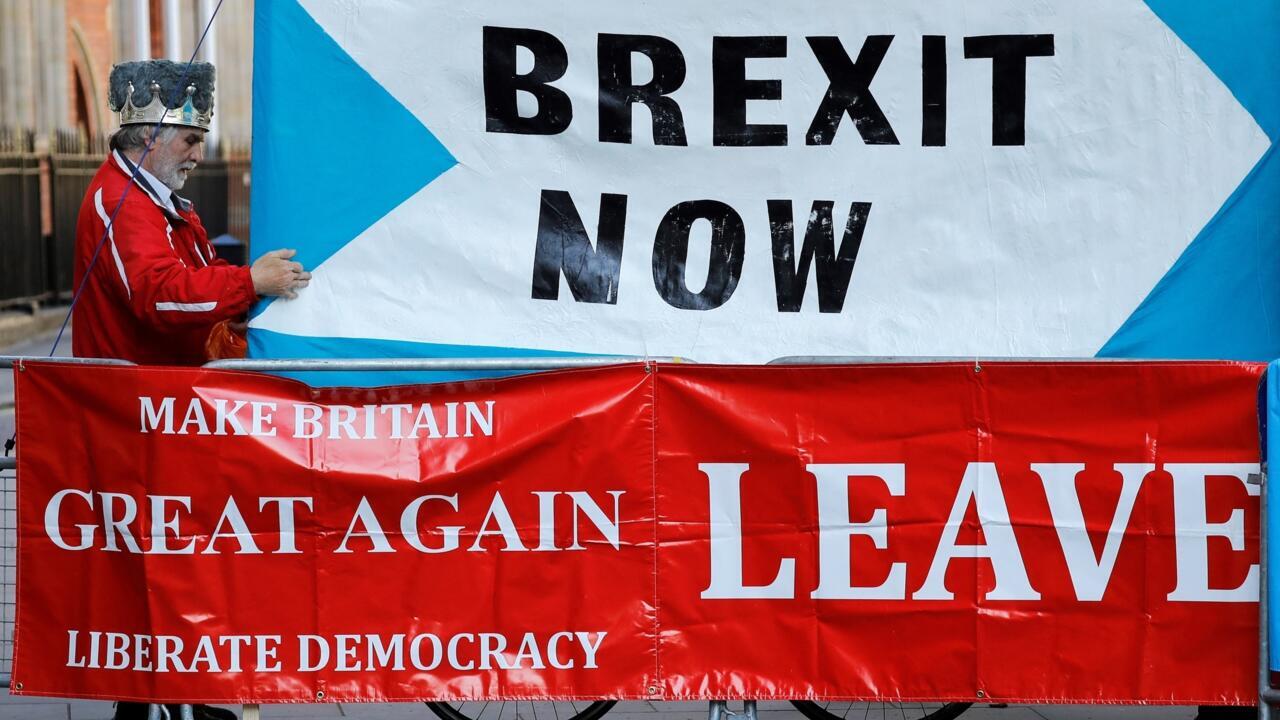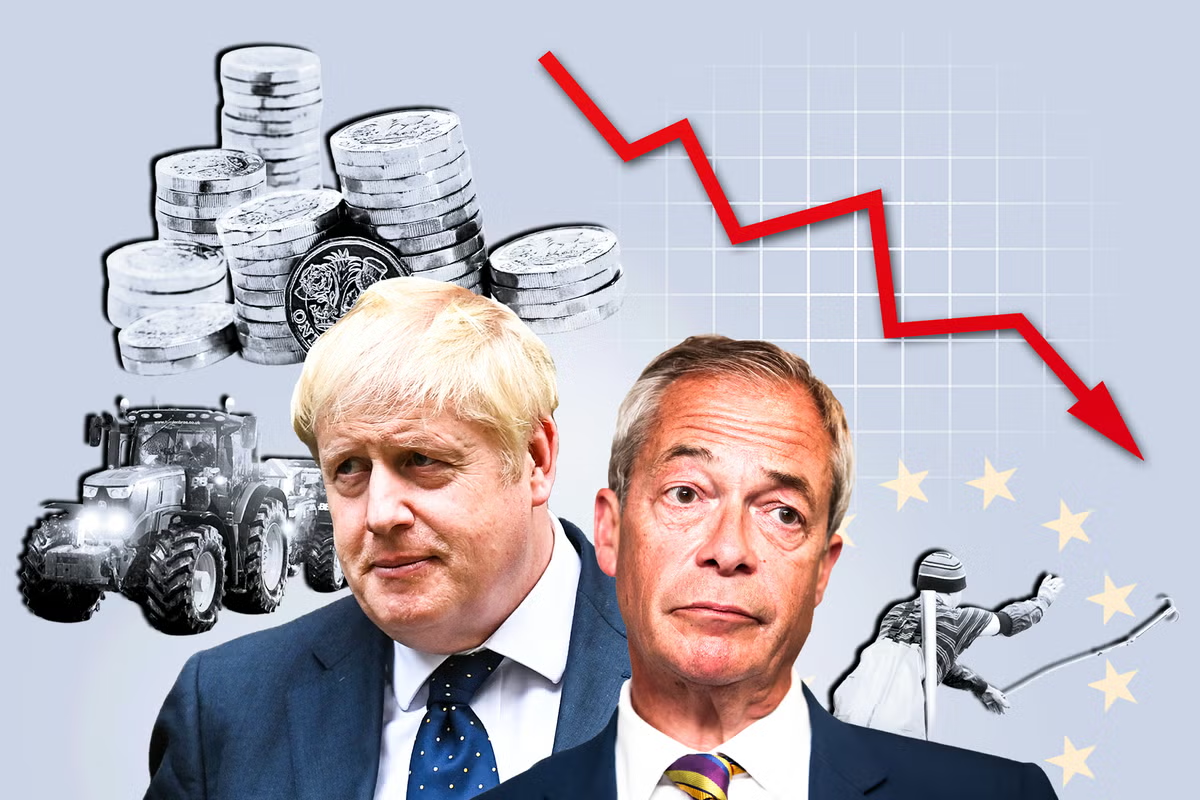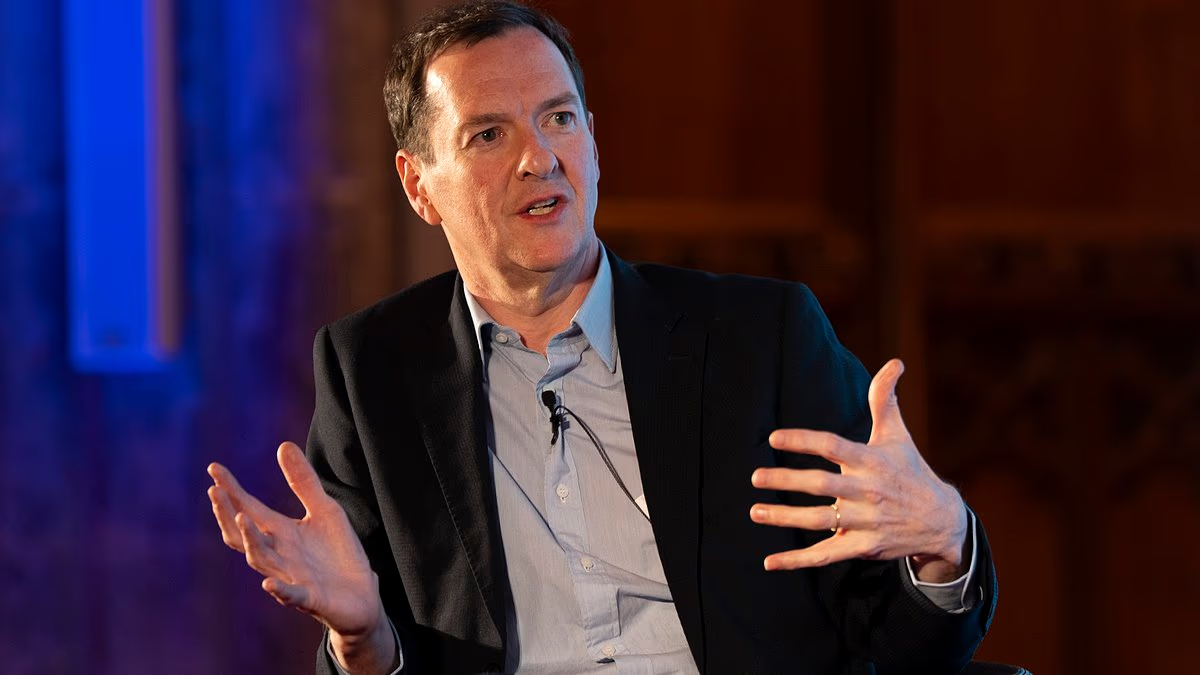
Today, as Britain marks the tenth anniversary of the historic Brexit referendum, the conventional wisdom among the chatterati is that the vote to leave the EU was a terrible, cataclysmic mistake.Infuriated at having to queue at passport control when they arrive in Dordogne and Tuscany for their summer holidays – even though we let EU citizens breeze freely through our own electronic gates – they will scorn our island nation as being hobbled on the international stage, diminished, isolated, xenophobic and ruined.But nothing could be further from the truth.Across a host of economic areas, Britain is markedly better than it was ten years ago, often directly because of Brexit – while many Rejoiner arguments collapse on a moment’s scrutiny.In the furious, febrile spring of 2016, then-Chancellor George Osborne invited me to 11 Downing Street in a doomed attempt to convert me to the Remainer cause.I told him that, though leaving might lead to some friction on trade, it was clear to me that two of Britain’s most important and lucrative sectors – financial services in the City and the ‘creative industries’ of film, music, advertising and IT – would be far better off outside. I told then-Chancellor George Osborne in 2016, writes Alex Brummer, it was clear to me that financial services in the City and the ‘creative industries’ of film, music, advertising and IT would be far better off outside the EUFreed from the EU’s protectionist and regulatory shackles, I told him, these sectors would enter a golden era as their ‘animal spirits’ would be set free.Inevitably, he took the opposite view, insisting that membership of the bloc, imperfect as it was, was worth having.Well, Osborne is now out of politics and having no trouble prospering in Brexit Britain as an investment banker.I’m pleased to say George I was right and you were wrong.In the decade since Brexit, Britain’s service exports have boomed, soaring by more than 70 per cent to £546billion last year. Indeed, we make so much money from banking, insurance and law – not to mention Premier League football – that Britain has since become the world’s second-largest services provider after the US.Services now make up 58 per cent of all our exports, helping to bring us an annual trade surplus of £200billion.But you wouldn’t know any of this from the endless whingeing from Rejoiners – among them our Europhile likely next PM, Andy Burnham, a man whose wisdom on the subject, as outlined last September, runs to the following: ‘I hope in my lifetime, I want to rejoin the European Union [sic]. I believe in unions of all kinds. The union of the UK. The EU benefited this country. Trade unions. People prosper more when they’re part of unions.’ Andy Burnham outlined his wisdom on the subject last September, which runs to the following: ‘I hope in my lifetime, I want to rejoin the European Union [sic]. I believe in unions of all kinds'Be in no doubt, though, that the Rejoiners are deadly serious – and seizing on any data they can find to buttress their flimsy arguments.Last week, in a particularly desperate example, a group of economists re-released (it was first published in November) an ‘analysis’ purporting to show the British economy had somehow taken a 6-8 per cent hit thanks to Brexit. Free market economist Julian Jessop says that figure doesn’t pass the smell test.Britain’s national output has expanded by 12 per cent since 2016 – despite war and pandemic – a performance that already outpaces Japan, Germany, Italy and France.If we were to add another 6-8 per cent to that figure to make up for our supposed Brexit losses, Britain would be leaving all but one of its G7 partners trailing behind it.Only the US economy, supercharged by the ‘magnificent seven’ tech giants (to which we must now add Elon Musk’s SpaceX) is doing significantly better. That seems wildly unrealistic.Mark Carney, the former Bank of England governor now turned Prime Minister of Canada, once assured me that Brexit was a mistake for the simple reason that the most efficient trade is always with your nearest neighbours.That is certainly true for Canada, which is highly dependent on doing business with the US. But for us, the situation is rather different.Of course it makes sense to trade with our nearest neighbours, but Europe – thanks in no small part to the growth-destroying, over-regulation of the EU – is not the economic beast it was.As a force in global trade, the bloc has been steadily declining in importance since we voted to join it in 1973.Even though the European Economic Community (as it was then) consisted of just nine nations, it accounted for 37 per cent of global trade. Today, the EU encompasses 27 countries but accounts for a mere 15 per cent.Meanwhile, ignorant Remainers love to scoff at Britain’s new trade deals with surging Asia-Pacific economies including Australia and New Zealand. London remains Europe’s hub for foreign exchange and derivatives trading, worth trillions of pounds a dayThe reality is that the agreements struck with India and Trans-Pacific Partnership countries (the latter signed by Kemi Badenoch when she was Trade Secretary) have brought us access to the fastest-growing trade blocs in the world, hungry for British services and goods.The Scotch Whisky Association says annual sales to India increased by 15 per cent last year alone.Another canard touted by the Remainers ten years ago was that Brexit would decimate the City of London as a financial centre. Again, how wrong they were.London remains Europe’s hub for foreign exchange and derivatives trading, worth trillions of pounds a day.The City is still home to the world’s largest population of overseas banks. In 2016, some 162,000 people worked in the Square Mile; by 2024, that had swelled to 223,000.Only last November, JPMorganChase boss Jamie Dimon revealed his bank, the world’s biggest, will be building a skyscraper in Canary Wharf to house 12,000 colleagues, potentially bolstering the financial sector by an extra £10billion.In 2019, meanwhile, Goldman Sachs opened a state-of-the-art global HQ in Farringdon to house its 16,000 staff.Wealthy bankers and insurance executives may not be popular among Labour’s hard-Left apparatchiks, but a financial sector in rude health is great for the wider economy. The industry generates, along with professional services such as law and consulting, some 12 per cent of national output and pours a whopping £24billion in taxes into the Exchequer each year.Sure, most Britons hardly feel richer since Brexit (or indeed since the Great Financial Crisis of 18 years ago, when almost no one was talking about leaving the EU).But GDP per capita – the crucial measure that allows us to compare living standards between different countries – shows that our performance has not been anywhere near as catastrophic as is often claimed, and certainly when compared to our continental friends.Over the past decade, we have done better than France, an economy broadly similar to ours in terms of population and economic output, and even – remarkable though it may seem – than Germany, Europe’s traditional economic powerhouse.Of course, it is always possible to find statistics to bolster a Remainer or Brexiteer argument, depending on one’s persuasion, while the fog of Covid and the Ukraine war ensure that many counterfactuals will remain unknowable.But would the French luxury giant Hermes have chosen this year to open a massive new emporium in central London if it believed our country was an economic basket case, fully 6 per cent weaker than we would have been if we’d stuck with Brussels?This month’s launch of Maison Bond Street, a 2,000 sqm ‘house’ packed with bags, fragrances and designer outfits, suggests not.
George Osborne warned me not to back Brexit. Here's why I was right
Today, as Britain marks the tenth anniversary of the historic Brexit referendum, the conventional wisdom among the chatterati is that the vote to leave the EU was a terrible, cataclysmic mistake.
TL;DRAI
UK services exports surged 70% to £546bn post-Brexit; financial sector employment jumped from 162k to 223k workers. JPMorganChase's 12k-person Canary Wharf tower and new Asia-Pacific trade deals signal London's consolidation as global fintech hub, reshaping capital flows.
1,269 words~6 min read