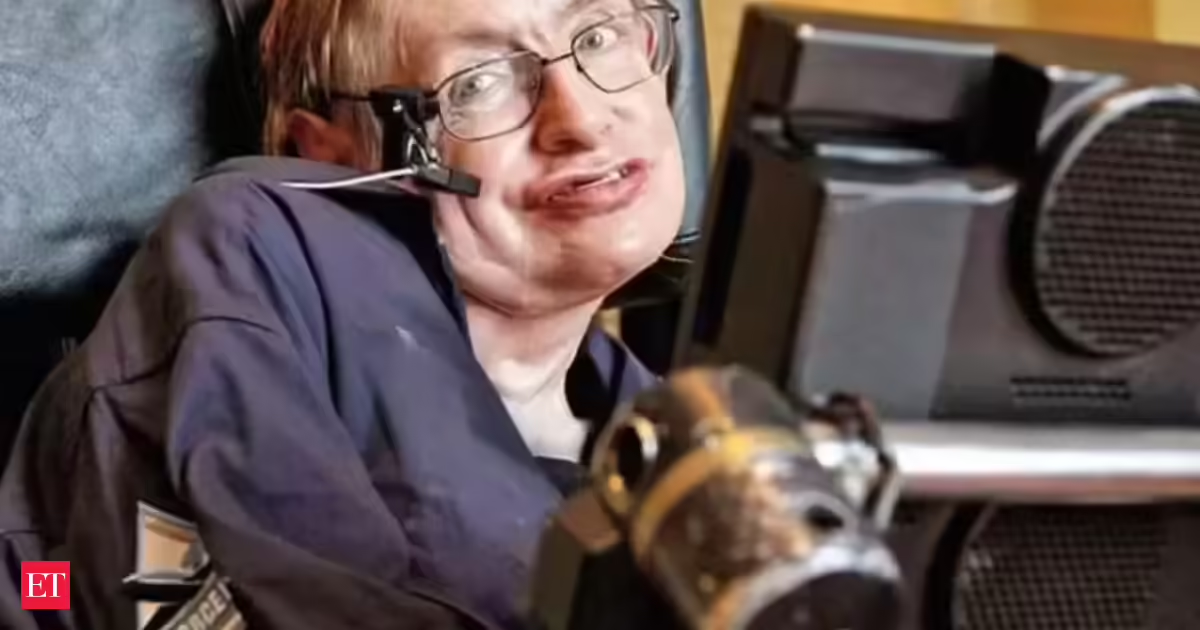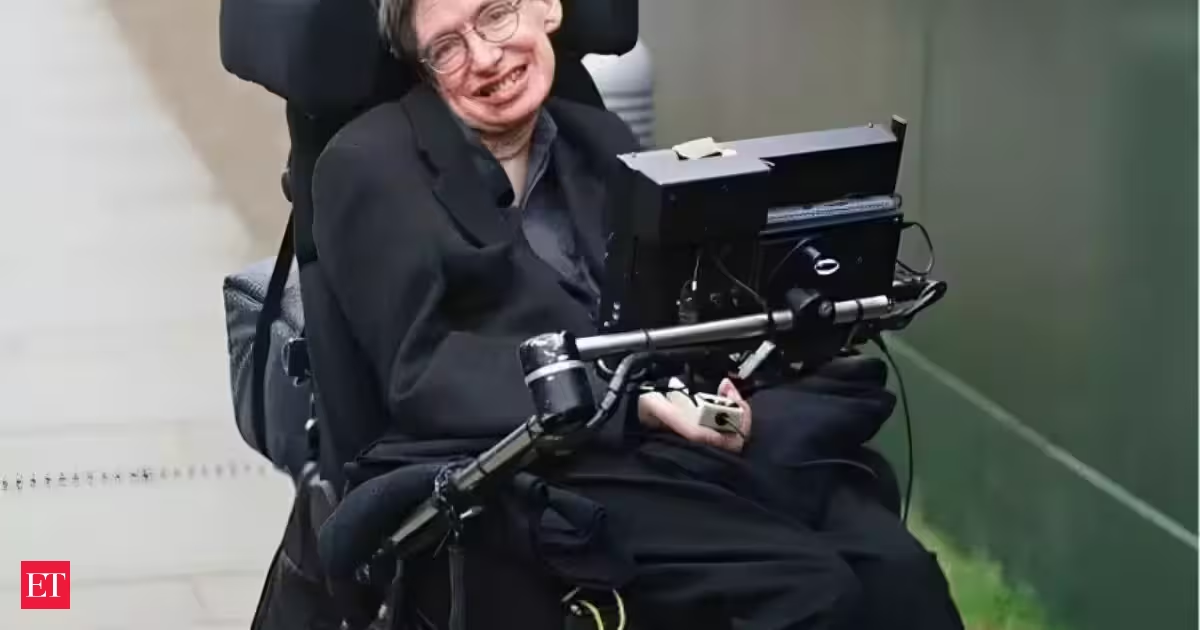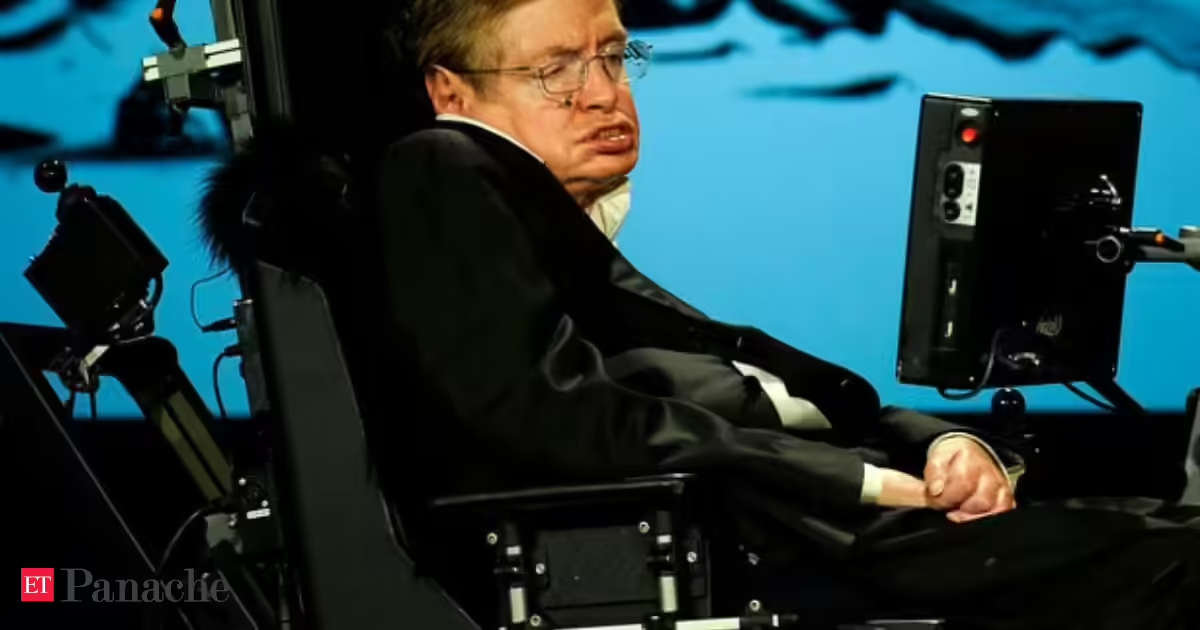
The late physicist Stephen Hawking was known for asking difficult questions about the universe, black holes, and the future of humanity. But some of his most thought-provoking remarks were not about distant galaxies or cosmic mysteries. One such quote, delivered during a lecture at the Macworld Expo in Boston on August 3, 1994, explored an unusual subject: computer viruses. Decades later, the statement is here again because it connects technology, biology, and human behaviour in a way that still feels relevant."I think that computer viruses should count as life. I think it says something about human nature that the only form of life we have created so far is purely destructive. We've created life in our own image." - Stephen HawkingWhat did Stephen Hawking mean by this quote?Hawking's observation was based on the idea that computer viruses share some characteristics with biological viruses. They contain instructions that allow them to reproduce, and they depend on a host system to spread. During his lecture, Hawking argued that these similarities make computer viruses closer to living systems than many people might assume.The second part of the quote shifts attention from technology to human behaviour. Hawking suggested that it reveals something about society that one of the earliest self-replicating creations produced by humans was destructive rather than beneficial. His words were not simply about computers. They were also a reflection on human choices, innovation, and the unintended consequences that can accompany technological progress.The scientist behind the quoteStephen Hawking was born on January 8, 1942, in Oxford, England. He developed an interest in science at a young age and later studied physics at University College, Oxford. Although he initially wanted to study mathematics, the university did not offer the subject as a separate degree at the time, leading him to pursue physics instead.After graduating with first-class honours, Hawking moved to the University of Cambridge to study cosmology. It was there that he began the research that would eventually make him one of the most influential scientists of the modern era.A diagnosis that changed everythingIn 1963, shortly after his 21st birthday, Hawking was diagnosed with amyotrophic lateral sclerosis (ALS), a form of motor neurone disease. Doctors initially believed he had only a short time to live. Instead, he went on to build a career that spanned more than five decades.As the disease gradually affected his mobility and speech, Hawking continued his research and teaching. Following the loss of his natural voice in the 1980s, he used a computerised speech system that became instantly recognisable around the world. Despite significant physical limitations, he remained active in scientific research, writing, and public engagement.Transforming our understanding of black holesHawking's most famous scientific contribution was his work on black holes. For many years, scientists believed that nothing could escape from a black hole once it crossed the event horizon. Hawking challenged that idea.His research showed that black holes can emit energy, a phenomenon now known as Hawking radiation. The theory suggested that black holes are not completely black and may eventually lose mass and disappear over extremely long periods of time. The discovery changed how physicists think about gravity, quantum mechanics, and the nature of the universe.
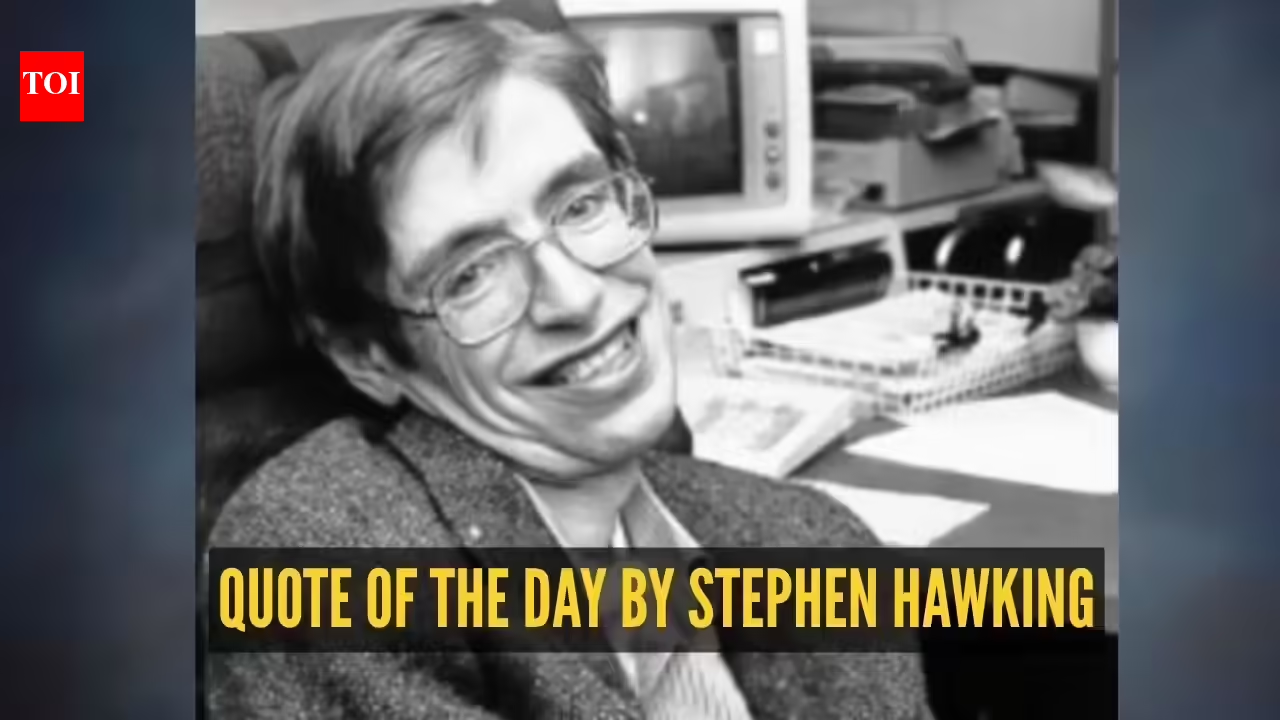
Quote of the day by Stephen Hawking: 'I think computer viruses should count as life. I think it says something about human nature...' How the first artificial life's invention shows a darker reality of human behaviour
Stephen Hawkings 1994 remark that computer viruses could be considered a form of life remains one of his most thought-provoking observations because it links technology, biology, and human nature. Hawking argued that computer viruses resemble biological viruses in their ability to replicate and spread through host systems, while also reflecting on the fact that humanitys first self-replicating creation was largely destructive. The quote highlights both the possibilities and risks of technological innovation.
528 words~2 min read