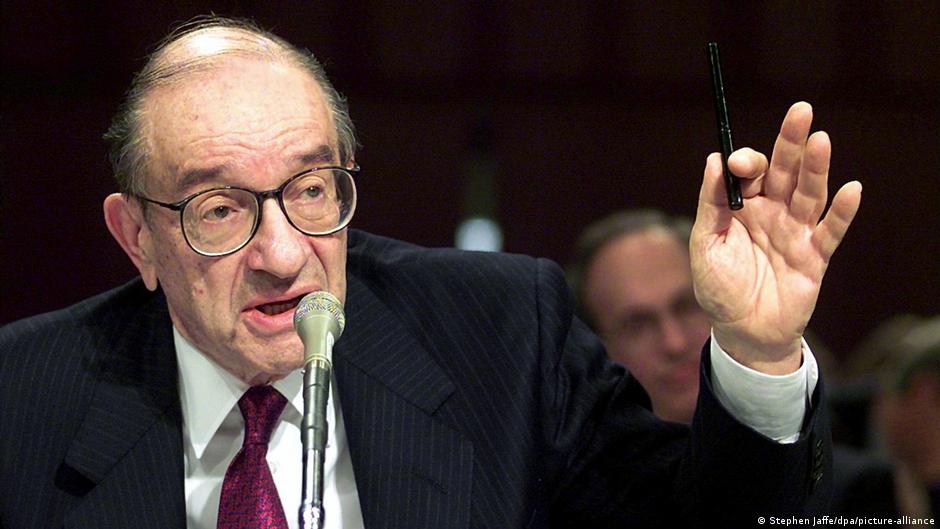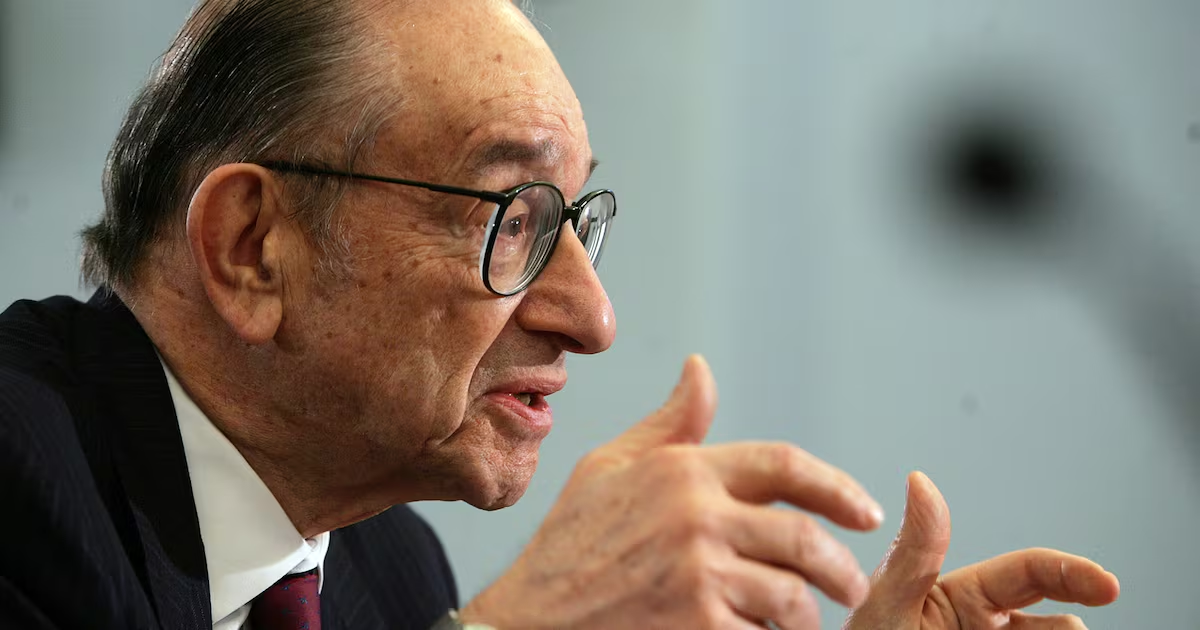
The policies of Alan Greenspan, the former chairman of the US Federal Reserve, were a key part of the international backdrop to the rise and fall of the Irish economy during the Celtic Tiger years, the financial bubble and then the 2008 crash. By then, Greenspan had left office, but the agenda of financial deregulation which he oversaw created huge risks in the system, exposed during the crash. Unfortunately for Ireland, the deregulation agenda had crossed the Atlantic - aided by incompetence among lenders and regulators - and Ireland’s banks were among the most exposed in the world to the collapse that followed. The Fed chair was seen as a shrewd hand to guide the economy via interest rate policy, but his support of a deregulation agenda - based on a a longstanding belief in free markets, meant the Fed did not clamp down on sub-prime mortgage lending or financial derivatives, both points of critical weakness as the financial system crashed two years after he left office. The belief that lenders and financiers would act responsibly proved hopelessly naive. After a period of largely self-inflicted economic pain during the 1980s, Ireland benefited from the era of US and international growth which prevailed during Greenspan’s nearly two decades at the helm of the Fed, serving for five terms under Republican and Democrat administrations. A key financial figure of the time, Greenspan was famous for his tortured grammar, often used to keep the markets guessing. But he was championed on Wall Street, as he stepped in to clear up successive messes and keep markets heading generally higher.Greenspan adjusted policy to get the US economy through a string of challenges - financial upheaval after the 1987 market crash, the dot.com burst in 2000 and the aftermath of 9/11 being the most notable. Easing interest rates when necessary, the low borrowing cost environment after 9/11 was criticised for inflating the lending bubble in the US.The long period of growth under Greenspan’s tenure was beneficial to Ireland and meant that concerns about a serious hit to growth after the dot.com bubble burst and again after 9/11 never came to too much. Irish growth did take a brief dip in early 2002, before accelerating again as the credit bubble built and the era of “light touch” regulation led to a credit boom, built on wholesale funding from other EU countries who had surplus funds. Ireland was the author of its own misfortune here. Complex financial instruments and lack of regulation in sub-prime mortgages - given to people with lower incomes and poor lending records - lay behind the US financial collapse. Ireland’s lending bubble was more straightforward, based on excessive development lending to a market where values had gone crazy. And, of course, to mortgage borrowers, with 70 per cent of new loans in 2006 being for loans worth 100 per cent or more of the property value.In a paper for the National Treasury Management Agency in 2010, economists Rossa White and Lisa Sheehan wrote that Greenspan’s period in charge of the Fed “coincided with the beginning of the dominance of the financial cycle over the business cycle in developed countries.” Growth and recession, in other words, is now driven by interest rate and borrowing cycles along with swings in equity markets and banking and finance. Ireland is not immune to this, as seen most notably in 2008 and from the impact of the period of super low interest rates which ended in 2022.Central banks now use macroprudential rules and other regulatory devices to try to avoid a repeat of the mistakes of the past. Whether the AI-driven boom in markets and lending is leading to other types of risks remains to be seen.
Alan Greenspan’s financial deregulation agenda set the scene for Ireland’s financial crash
Longtime US Federal Reserve chairman did little to clamp down on excessive lending ahead of the global financial crisis
618 words~3 min read