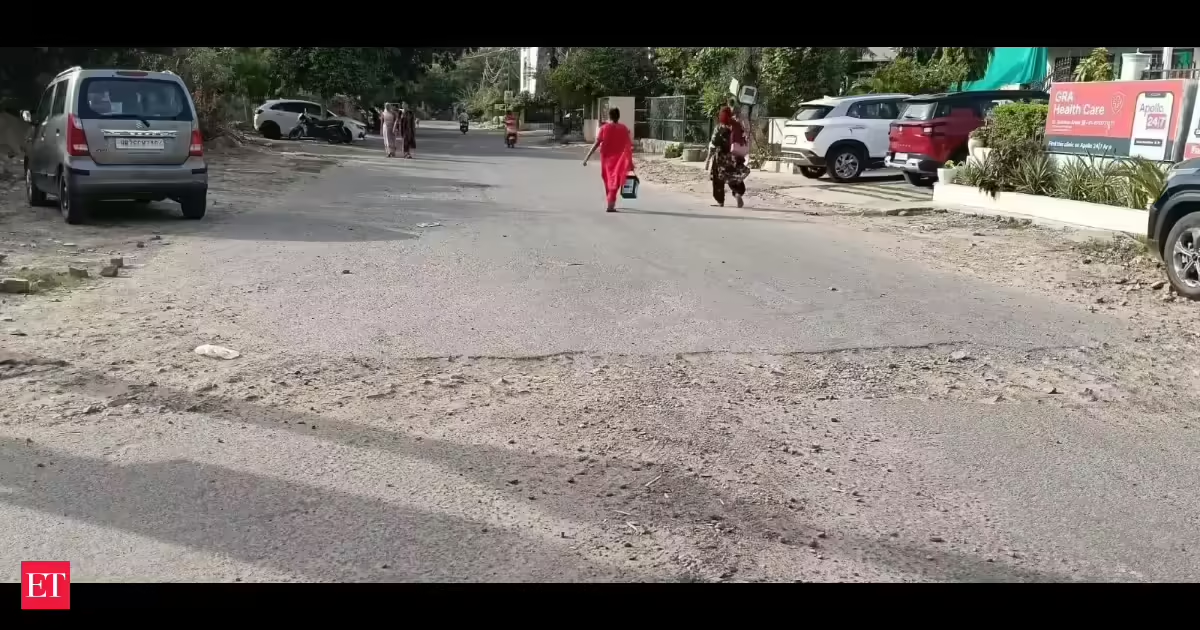
Delhi residents may soon be able to report potholes, damaged roads and maintenance issues with a simple scan of their smartphone. In a major transparency initiative, the Delhi government's Public Works Department (PWD) is preparing to roll out the 'Know Your Road' project across the capital's road network.The initiative will allow citizens to access detailed information about roads and lodge complaints through QR codes installed on roadside signboards.According to official plans, nearly 2,500 QR codes will be installed across around 1,400 kilometres of PWD-managed roads in a phased rollout expected to be completed within 60 days.What is the 'Know Your Road' project?The 'Know Your Road' project aims to make road-related information easily accessible to the public. Under the initiative, every PWD road will be assigned a unique QR code displayed on signboards. Once scanned, the code will direct users to a dedicated citizen portal containing details about the specific road.Residents will be able to view information such as:Road maintenance historyDetails of repairs and upgradesNames of officials responsible for the roadInformation about contractors handling maintenance workComplaint registration and tracking optionsThe platform is expected to be available in English, Hindi and Punjabi.How will Delhi residents benefit?One of the biggest advantages of the system is that complaints can be linked directly to a specific stretch of road.At present, residents often struggle to identify the correct department or official responsible for damaged roads. The new system aims to simplify the process by allowing users to report issues immediately after scanning the QR code.Citizens will be able to flag:PotholesDamaged road surfacesBroken signboardsMaintenance-related concernsOther road infrastructure issuesThe project is also expected to improve accountability by making maintenance records publicly accessible.Nearly Rs 96 lakh earmarked for the projectPWD has floated bids for the implementation, operation and maintenance of the QR-based system. Officials have earmarked approximately Rs 96 lakh for the project, which includes the development of the digital platform, installation of QR codes and ongoing maintenance support.The system will feature:Citizen complaint portalAdministrative dashboardAnalytics and monitoring toolsReal-time grievance tracking mechanismHow will the rollout happen?The implementation has been divided into multiple phases.Phase 1: Digitisation of road recordsDuring the first two weeks, officials will collect and digitise road-related information.This will include:Mapping road IDsIdentifying zones and divisionsRecording engineer detailsListing contractorsGenerating unique QR codesInitially, the system will be activated on five roads.Phase 2: Pilot testing on 100 roadsIn the third week, the pilot project will expand to around 100 roads.Officials will test:QR scan speedComplaint registration processDashboard performanceReporting mechanismsFeedback from this phase will be used to make improvements before citywide deployment.Phase 3: Citywide installationBetween weeks four and eight, teams will begin installing nearly 2,500 QR code signboards across Delhi. The public portal is also expected to become fully operational during this stage.What happens after the rollout?Once the system is operational, authorities plan to continue monitoring and maintaining the platform.The long-term roadmap includes:Regular updates to maintenance recordsAnnual road health auditsContinuous dashboard monitoringMonthly performance reportsOngoing grievance trackingOfficials believe the project could help create a more transparent and responsive road maintenance system across the city.Dedicated teams to oversee implementationThe selected agency will deploy specialised teams to manage different aspects of the project.These will include:Project managers for execution and monitoringTechnology experts for platform developmentField coordinators for QR code installationQuality assurance teams for testing and validationOfficials have also stated that damaged signboards will be repaired or replaced wherever necessary before QR codes are installed.During the Annual Maintenance Contract (AMC) period, any damaged or non-functional QR code identified by PWD will be replaced by the implementing agency.Why the project mattersThe 'Know Your Road' initiative seeks to bridge a long-standing information gap in Delhi's road management system.For the first time, residents may be able to instantly access a road's maintenance history, identify responsible officials and report problems directly from the location itself.If implemented successfully, the project could make road maintenance more transparent, improve accountability and give citizens a more active role in monitoring the city's infrastructure.Inputs from TOI
Delhi roads are about to go digital: 2,500 QR codes planned so residents can check road history & report damage in seconds
Delhi's Public Works Department is launching 'Know Your Road', a project enabling citizens to report road issues via smartphone scans. Nearly 2,500 QR codes will be installed on PWD-managed roads within 60 days, providing access to road maintenance history, contractor details, and complaint tracking. This initiative aims to boost transparency and accountability in road maintenance, empowering residents to actively participate in infrastructure monitoring.
648 words~3 min read