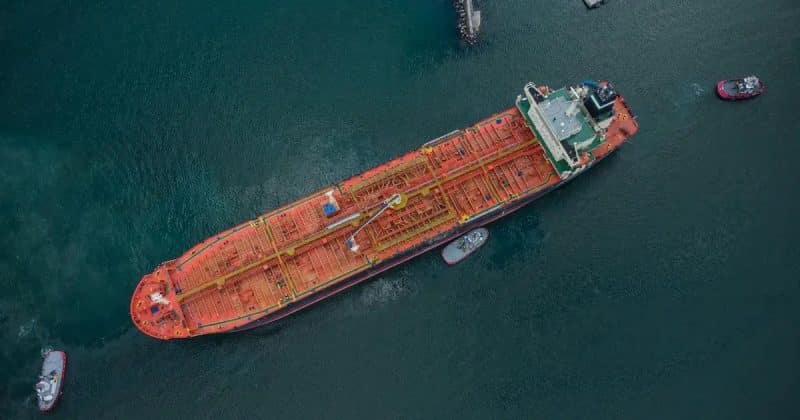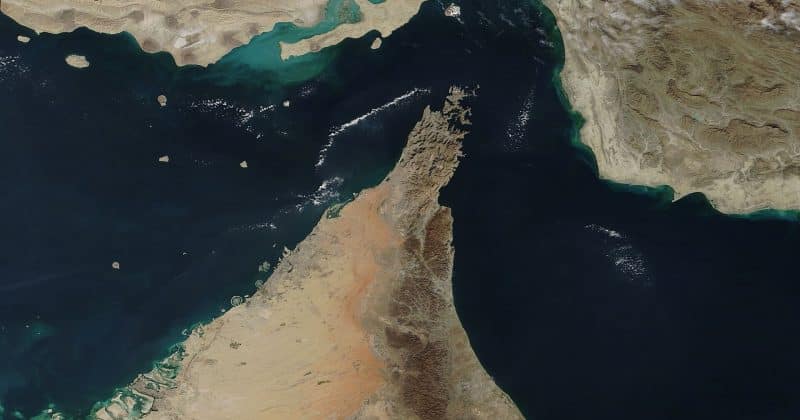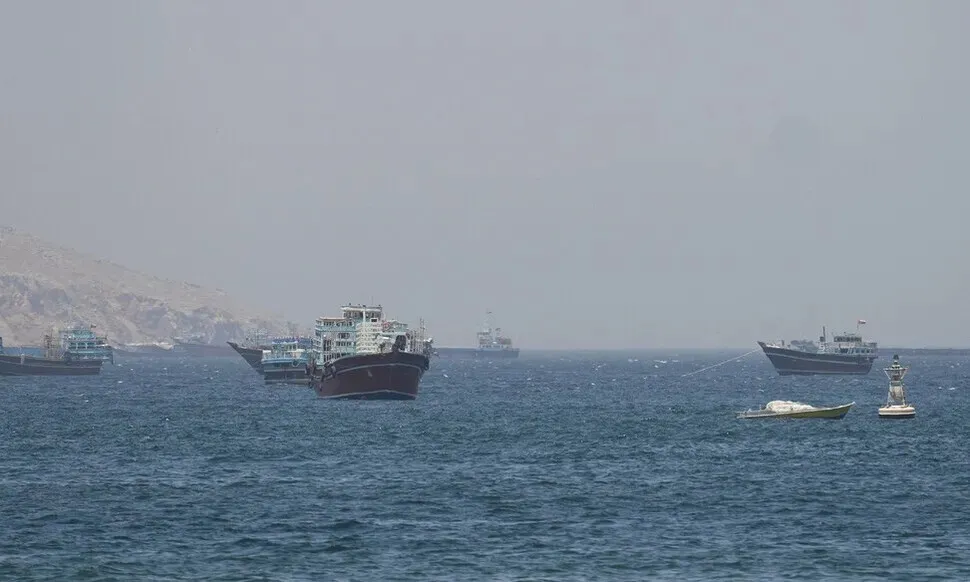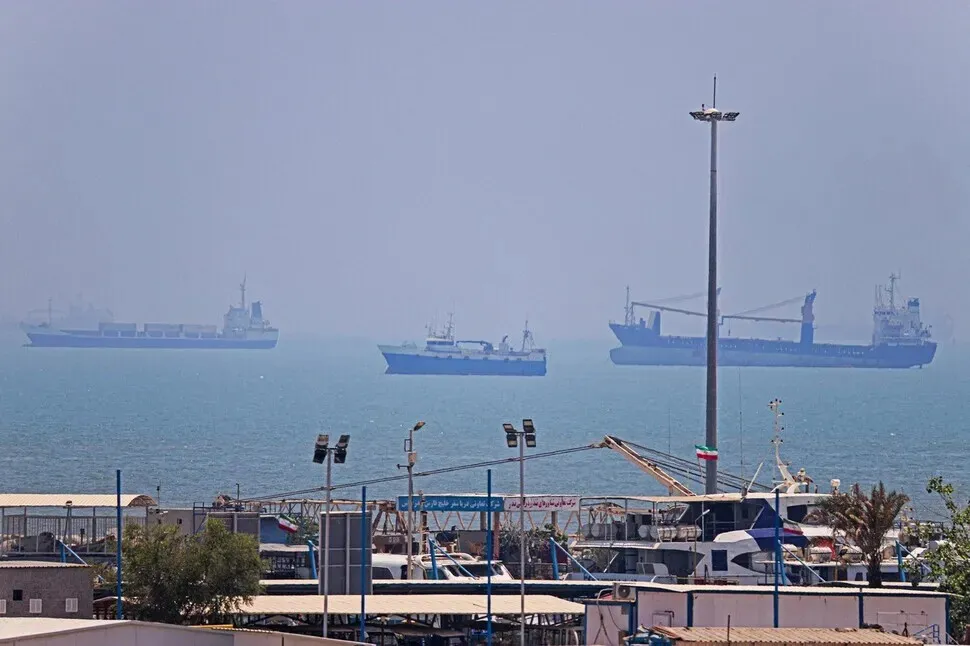
Vessels are pictured anchored in Bandar Abbas along the Strait of Hormuz, on June 18, 2026. (AFP/Yonhap)
A key architect of the policy of maximum pressure on Iran during the first Trump administration said that the US and Iran’s recent memorandum of understanding is just a stopgap solution intended to reopen the Strait of Hormuz and is likely to be extended indefinitely without the two sides ever reaching a final agreement.Richard Goldberg, a senior adviser at the Foundation for Defense of Democracies, told the Hankyoreh in a telephone interview on Friday that alternate transportation routes should be developed to reduce the strategic value of the Strait of Hormuz. Goldberg served as director for countering Iranian weapons of mass destruction for the White House National Security Council in 2019-2020; he remains under sanctions from Tehran today.The following is based on a longer conversation between the Hankyoreh and Goldberg, edited for length and clarity and reorganized into an interview format. Hankyoreh: Some in Trump’s camp are complaining that the US is giving up the leverage gained through its military operations and pressure campaign too quickly. Do you agree that Iran got more out of this MOU than the US did?Goldberg: Well, I think it’s premature to know because we haven’t yet seen the language of any sanctions, waivers or licenses that get issued. There are ways to write this in a lot of different ways, from complete access to billions upon billions to very limited access to a few million.Hankyoreh: In basic terms, how would you describe this MOU?Goldberg: It’s possible this is a very smart, savvy way forward where it’s unlikely you would get to a final agreement we would find acceptable. In the end, it seems very much like a “Hormuz for Hormuz” trade. One could make the argument that the sanctions relief they’re provided by the deal up front essentially is covering the two months of tolls.Hankyoreh: Why did Iran agree to the MOU?Goldberg: I think the IRGC [Islamic Revolutionary Guard Corps] side of the [leadership] had the position that the American side can’t hold out. [They assumed they were] going to get everything from [the US] because [the US would] have to cry uncle when the energy market melts down. And they were waiting for that to happen. Mike Wirth from Chevron and Darren Woods from Exxon were going out in public and saying we only think we have a few weeks left of inventories, [but] US$150 oil never happened. It’s possible that the last few weeks of demonstrating our ability to militarily help cargo get out just enough gave them enough doubt, while also looking at their own economy and the warnings of the other side of the [leadership] that has been urging a deal for several weeks because of the blockade and the fear that they won’t be able to keep the lights on much longer. What if they were about to face a bank collapse? What if they were starting to really fear a popular uprising was on the way? Then the other side said, fine, take the cash that they’re giving us for the oil and we’ll just pocket that cash and not do anything else.Hankyoreh: The US$300 billion reconstruction fund is the most controversial part of the MOU.Goldberg: That’s some “rainbows and unicorns” idea [that could only happen] if Iran just fundamentally changed and was no longer a state sponsor of terrorism and didn’t pursue weapons of mass destruction. This is now assigning an actual idea and a dollar figure to hang over them to say this could be yours if you fundamentally change. But I don’t think we should bet on fundamental change.