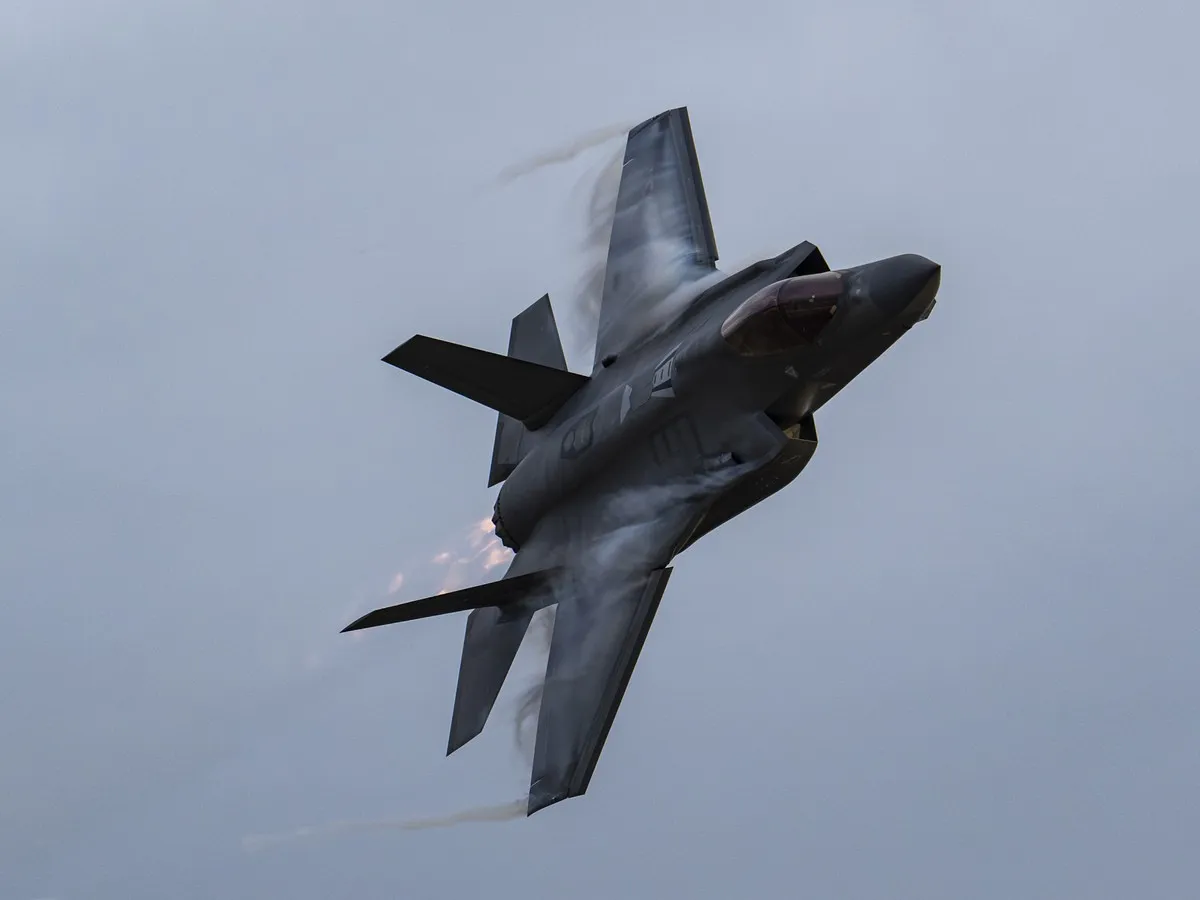
Skip to Content Subscribe Our Offers My Account Manage My Subscriptions FAQ Newsletters Canada Canadian True Crime Canadian Politics Health World Israel & Middle East Financial Post NP Comment Longreads Puzzmo Diversions Comics NP News Quiz New York Times Crossword Horoscopes Life Eating & Drinking Style Sponsored Play for Ontario Travel Travel Canada Travel USA Travel International Cruises Travel Essentials Culture Books Celebrity Movies Music Theatre Television Business Essentials Advice Lives Told Tails Told Shopping Buy Canadian Home Living Outdoor Living Kitchen & Dining Tech Style & Beauty Personal Care Entertainment & Hobbies Gift Guide Travel Guide Amazon Prime Day Deals Savings National Post Store More Sports Hockey Baseball Basketball Football Soccer Golf Tennis Driving Vehicle Research Reviews News Gear Guide Obituaries Place an Obituary Place an In Memoriam Classifieds Place an Ad Celebrations Working Business Ads Archives Healthing Epaper Manage Print Subscription Profile Settings My Subscriptions Saved Articles My Offers Newsletters Customer Service FAQ Newsletters Canada World Financial Post NP Comment Longreads Puzzmo Diversions Life Shopping Epaper Manage Print Subscription HomeNewsCanadaCanadian PoliticsTrump administration growing impatient with Canada’s delayed F-35 choiceThe debate over the F-35 is not just about air combat; Canada is also deciding whether it wants a role in what comes nextLast updated 37 minutes ago You can save this article by registering for free here. Or sign-in if you have an account.U.S. Air Force F-35A aircraft performs aerial maneuvers during a demonstration at the Abbotsford International Airshow in British Columbia, Aug. 8, 2025. Photo by U.S. Air Force/F-35A Demo TeamWASHINGTON, D.C. — Washington is signalling growing impatience with Ottawa’s delays on its F-35 purchase and broader defence reset.Enjoy the latest local, national and international news.Exclusive articles by Conrad Black, Barbara Kay and others. Plus, special edition NP Platformed and First Reading newsletters and virtual events.Unlimited online access to National Post.National Post ePaper, an electronic replica of the print edition to view on any device, share and comment on.Daily puzzles including the New York Times Crossword.Support local journalism.Enjoy the latest local, national and international news.Exclusive articles by Conrad Black, Barbara Kay and others. Plus, special edition NP Platformed and First Reading newsletters and virtual events.Unlimited online access to National Post.National Post ePaper, an electronic replica of the print edition to view on any device, share and comment on.Daily puzzles including the New York Times Crossword.Support local journalism.Create an account or sign in to continue with your reading experience.Access articles from across Canada with one account.Share your thoughts and join the conversation in the comments.Enjoy additional articles per month.Get email updates from your favourite authors.Create an account or sign in to continue with your reading experience.Access articles from across Canada with one accountShare your thoughts and join the conversation in the commentsEnjoy additional articles per monthGet email updates from your favourite authorsSign In or Create an AccountorU.S. defence officials applauded Canada’s 2022 selection of Lockheed Martin’s stealth fighter, and the plan to buy 88 of the U.S.-made jets, but political debate and shifting priorities have left only 30 under contract so far.For years, Washington has been pushing Canada to ramp up defence spending, and there has been progress: Prime Minister Mark Carney has touted Ottawa’s plan to meet the 2 per cent of GDP target this past year. Now, the U.S. is signalling it wants Canada to stay closely aligned on defence.That impatience is not just about the F-35. It’s about what comes next.But how Canada’s enhanced defence budget will be spent remains an open question amid Carney’s push to make Canada less dependent upon the U.S.“The F-35 is not an American plane,” Ambassador Pete Hoekstra said at a recent summit in Toronto. “The F-35 is what? It is an international consortium building the most advanced fighter jet in the world.”Adding pressure for defence cooperation, he hinted that the U.S. could work well with Canada on the sixth-generation fighters.“You may get an invitation to join the U.S. as part of a consortium to do the sixth gen on fighter planes,” he said.“Your choice. You wanna partner with the U.S. or not? Not our decision.”Carney’s jet review, looking at the F-35 vs. Saab’s Gripen, was meant to be completed last summer, but it continues, according to Defence Minister David McGuinty.“We are taking the necessary time to study very, very closely the question of the fighter fleet,” he said recently.McGuinty also said Canada is looking into whether Canada should take part in developing a sixth-generation fighter.If they had a vote, defence analysts and military leaders would largely pick the F-35. It has consistently outperformed competitors and offers the interoperability Canada needs for NORAD and NATO.“It really is the sort of easy button… for moving the Air Force forward,” said Richard Shimooka, senior fellow at the Macdonald-Laurier Institute, noting previous reviews have identified it as the best option.He added that Canada’s industrial benefits from the F-35 program are tied to the number of aircraft purchased, meaning a smaller order would likely reduce long-term work and sustainment opportunities.Shimooka expects Carney to stick with the F-35 and to procure 88 or more of them, but he doesn’t rule out the possibility of a mixed fleet.Christopher Coates, director of foreign policy, national defence, and national security at Macdonald-Laurier Institute, also said he favours the F-35 and hopes Canada buys a lot more of them.“I think the right answer is a greater number than [88],” said Coates, suggesting that 125-135 of the planes would be the “right sort of decision space to be in.”But the debate is becoming politically messy.Canadians are so fed up with the U.S., Coates said, that they’re avoiding American strawberries and instead choosing fruit from Mexico, South America, or domestic greenhouse varieties. He fears the same thing is happening to fighter jets, where the resistance has nothing to do with performance but is more about the political mood toward “Trump and all things American.”“Canadians are applying the same sort of thinking behind strawberries as they are to fighter aircraft,” he said.“It’s politically useful for them to … just kick the can on the F-35 decision,” Coates said. But that can’t last forever, and he thinks Carney may be trying to ease tensions slowly.While the elbows-up approach generated anti-American sentiment that helped the Liberals, Carney’s recent speech in New York — where he said a strong Canada can help make America great again — could be “the start of a bit of détente,” Coates said.He noted that a mixed-fleet approach would be fine so long as it’s well-funded and involved a substantial F-35 component.But the debate over the F-35 is not just about air combat; Canada is also deciding whether it wants a role in what comes next.Carney’s team is reportedly mulling whether to seek observer status in the UK-Japan-Italy Global Combat Air Programme (GCAP), a sixth-gen fighter program plagued by money and timing issues that some fear could affect Japan’s commitment. British Defence Secretary John Healey recently resigned over a lack of British defence spending he feared threatened GCAP.Hoekstra poked holes in the notion of a European partnership for Canada.“Europe was working on sixth gen, and they’ve been working on it for more than five, maybe 10 years. The partnership between Spain, Germany, and France, poof, gone. F6 is gone. Gen 6 is gone in Europe,” he said.“I know you’ve been looking at doing business in Europe on defence. You’re not gonna be doing it on Gen 6.”So should Canada be looking to join a sixth-gen program and, if so, does it matter whether it opts for the GCAP or an American-led system?For Jennifer Kavanagh, senior fellow and director of military analysis at Defense Priorities in Washington, the answers are no and no.“Canada’s defence spending is not high,” she said, “so it cannot afford to waste money on expensive platforms that it does not need.”She explained that sixth-gen fighters may be needed for a major power war, but she questions whether Canada’s comparative advantage is in contributing to air supremacy.Coates disagrees.“I think it’s a reasonable activity for government to future-proof its defence and security portfolio,” he said. “Part of that is being, for a nation with Canada’s resources and ambitions, maybe not at the leading edge, but in the next tier. So maybe not leading the development of a sixth-gen fighter, but participating in such a program would make sense for Canada.”National PostOur website is the place for the latest breaking news, exclusive scoops, longreads and provocative commentary. Please bookmark nationalpost.com and sign up for our newsletters here. Join the Conversation This website uses cookies to personalize your content (including ads), and allows us to analyze our traffic. Read more about cookies here. By continuing to use our site, you agree to our Terms of Use and Privacy Policy.
Trump administration growing impatient with Canada’s delayed F-35 choice
As Ottawa’s review continues, U.S. officials are pushing Canada to decide whether to remain aligned on air power and future defence.
TL;DRAI
Trump administration pressures Canada to finalize F-35 procurement: only 30 of 88 jets contracted since 2022 selection, while U.S. offers sixth-gen fighter partnership. Delays reduce industrial benefits tied to order size and signal potential NATO/NORAD alignment shifts if Canada diversifies toward Gripen.
1,447 words~7 min read