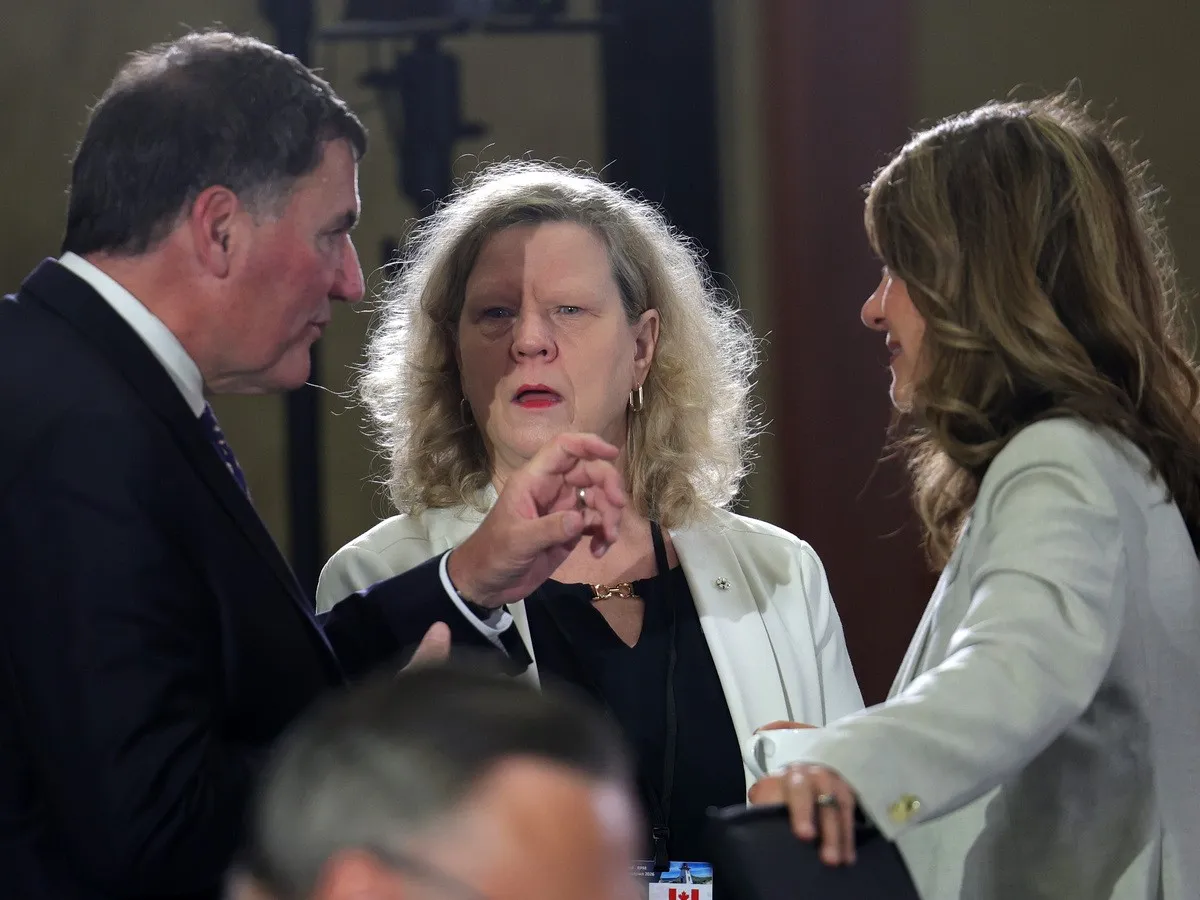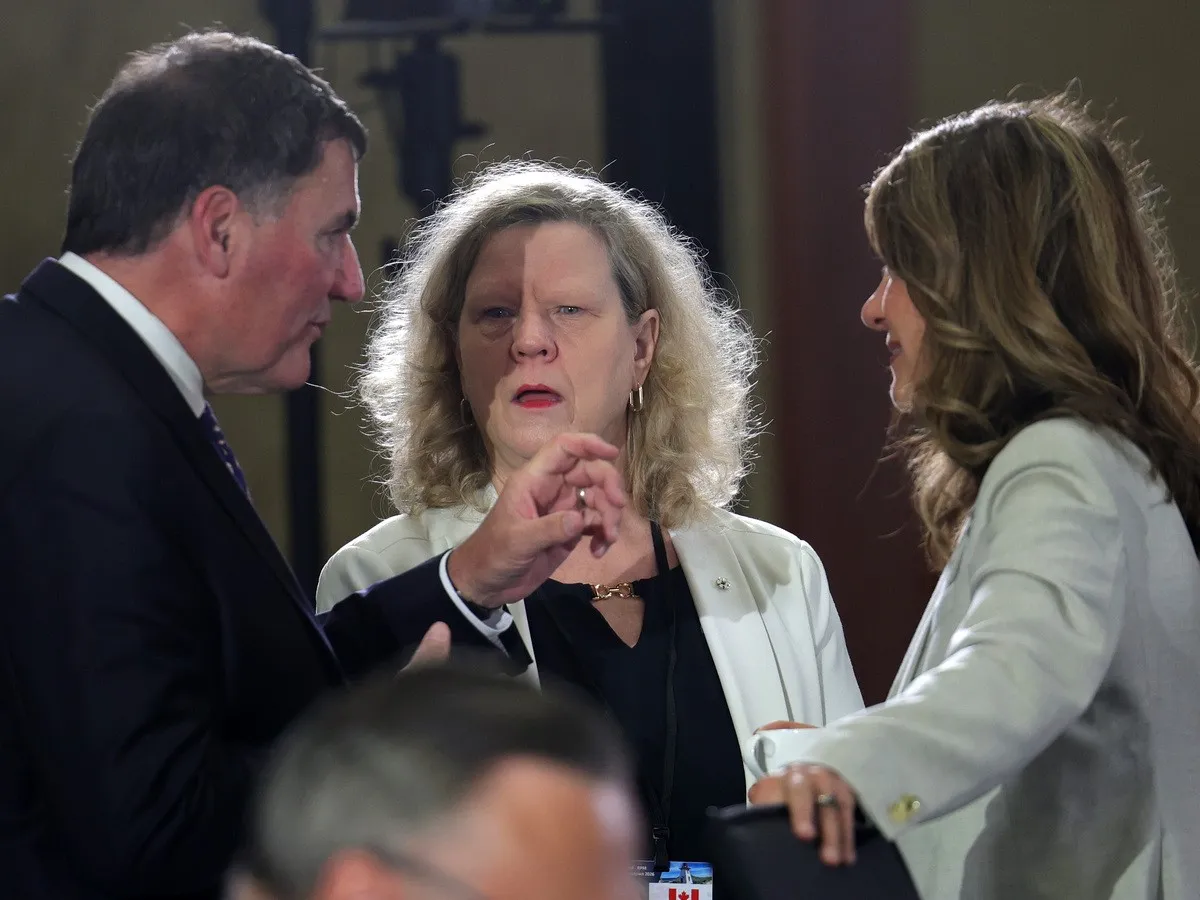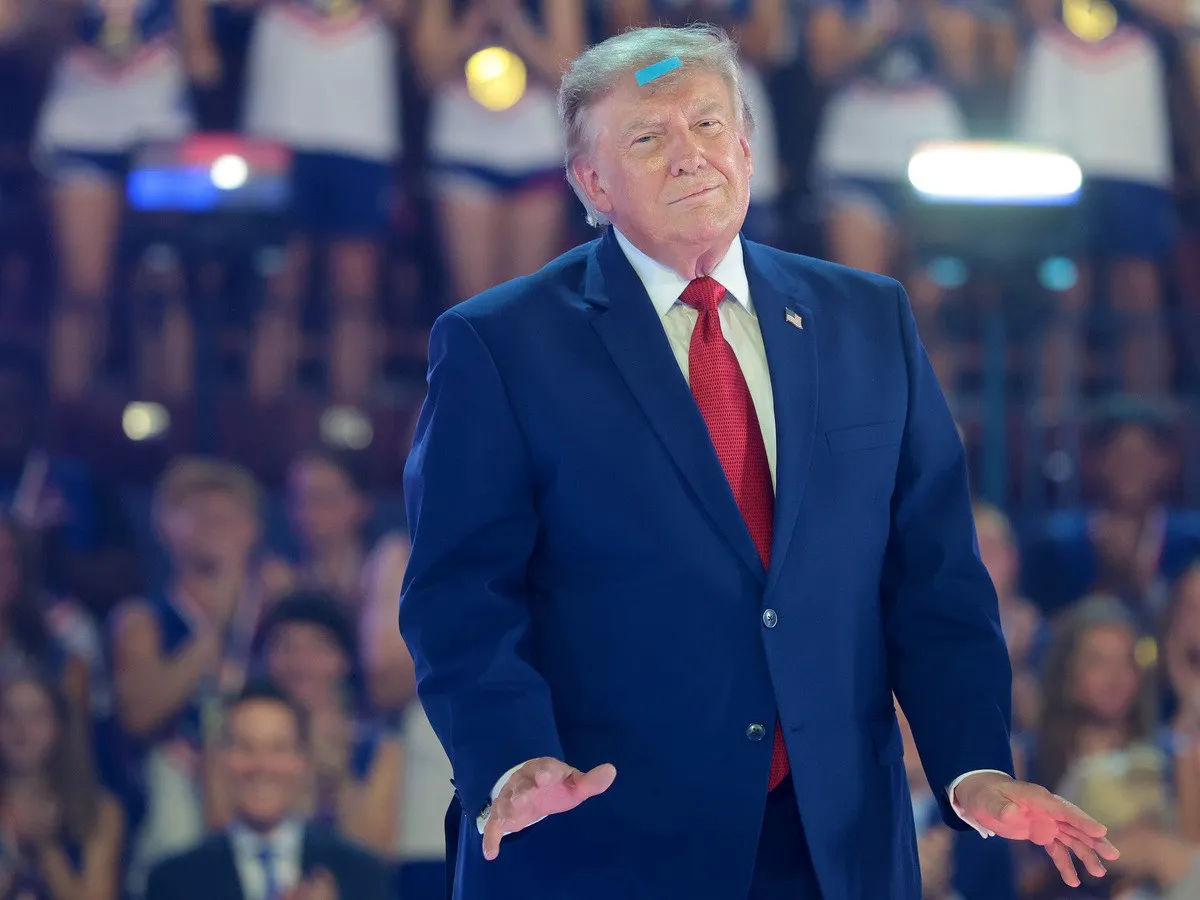
Skip to Content Subscribe Our Offers My Account Manage My Subscriptions FAQ Newsletters Canada Canadian True Crime Canadian Politics Health World Israel & Middle East Financial Post NP Comment Longreads Puzzmo Diversions Comics NP News Quiz New York Times Crossword Horoscopes Life Eating & Drinking Style Sponsored Play for Ontario Travel Travel Canada Travel USA Travel International Cruises Travel Essentials Culture Books Celebrity Movies Music Theatre Television Business Essentials Advice Lives Told Tails Told Shopping Buy Canadian Home Living Outdoor Living Kitchen & Dining Tech Style & Beauty Personal Care Entertainment & Hobbies Gift Guide Travel Guide Amazon Prime Day Deals Savings National Post Store More Sports Hockey Baseball Basketball Football Soccer Golf Tennis Driving Vehicle Research Reviews News Gear Guide Obituaries Place an Obituary Place an In Memoriam Classifieds Place an Ad Celebrations Working Business Ads Archives Healthing Epaper Manage Print Subscription Profile Settings My Subscriptions Saved Articles My Offers Newsletters Customer Service FAQ Newsletters Canada World Financial Post NP Comment Longreads Puzzmo Diversions Life Shopping Epaper Manage Print Subscription HomeNewsCanadaWorldAs tariff deadline nears, what does Trump want from Canada? And will he get it?Most trade watchers agree that any deal beneficial to Canada must still give Trump a political victory he can sell at homeLast updated 0 minutes ago You can save this article by registering for free here. Or sign-in if you have an account.U.S. President Donald Trump attends the 2026 Patriot Games at SPIRE Academy in Geneva, Ohio, on Aug. 11, 2026. Photo by Anna Moneymaker/Getty ImagesWASHINGTON, D.C. — Canada is less than a week away from 50 per cent tariffs taking effect on nearly US$20 billion worth of exports to the United States, after the White House invoked the never-before-used Section 338 of the Tariff Act of 1930 to impose duties on more than 400 Canadian products beginning Aug. 19.Enjoy the latest local, national and international news.Exclusive articles by Conrad Black, Barbara Kay and others. Plus, special edition NP Platformed and First Reading newsletters and virtual events.Unlimited online access to National Post.National Post ePaper, an electronic replica of the print edition to view on any device, share and comment on.Daily puzzles including the New York Times Crossword.Support local journalism.Enjoy the latest local, national and international news.Exclusive articles by Conrad Black, Barbara Kay and others. Plus, special edition NP Platformed and First Reading newsletters and virtual events.Unlimited online access to National Post.National Post ePaper, an electronic replica of the print edition to view on any device, share and comment on.Daily puzzles including the New York Times Crossword.Support local journalism.Create an account or sign in to continue with your reading experience.Access articles from across Canada with one account.Share your thoughts and join the conversation in the comments.Enjoy additional articles per month.Get email updates from your favourite authors.Create an account or sign in to continue with your reading experience.Access articles from across Canada with one accountShare your thoughts and join the conversation in the commentsEnjoy additional articles per monthGet email updates from your favourite authorsSign In or Create an AccountorTrade watchers said the move was designed to create leverage and force Ottawa back to the negotiating table. Canada-U.S. Trade Minister Dominic LeBlanc and Chief Negotiator Janice Charette have heeded the call, repeatedly showing up for meetings in Washington in recent weeks to try to head off the 338 tariffs and reach a deal on the Section 232 sectoral tariffs on steel, aluminum, and lumber.The pair returned to Washington this week, meeting with U.S. Trade Representative Jamieson Greer on Tuesday afternoon, but both sides have been tight-lipped about progress.Get a dash of perspective along with the trending news of the day in a very readable format.By signing up you consent to receive the above newsletter from Postmedia Network Inc.A welcome email is on its way. If you don't see it, please check your junk folder.The next issue of NP Posted will soon be in your inbox.We encountered an issue signing you up. Please try again“Discussions remain ongoing, and we continue to engage at the negotiation table to firmly advance and defend Canadian interests,” LeBlanc posted on social media after his Tuesday meeting. His posts in recent weeks have been similarly opaque, but a source close to the negotiations told National Post that the Canadian side remains “cautiously optimistic” of a breakthrough.Others expect the tariffs to take effect, even if only briefly or in altered form.“I don’t see anything that indicates that the U.S. side is interested in doing a balanced, comprehensive, mutually beneficial deal,” said Lawrence Herman, senior fellow at the C.D. Howe Institute and a specialist in international trade and investment law.“I think we’re going to have those 338 tariffs next week, and I don’t know what can be done to prevent those coming on.”Richard Stern, of the Plymouth Institute for Free Enterprise at Washington-based Advancing American Freedom, also thinks there will be some tariffs, but not in the threatened form. He thinks the Trump team will find a way to claim victory while making some adjustments.“I expect some version of them to go into effect,” Stern said, adding that he would “be surprised if they go into effect in full.”Others believe there could be a delay or quick reversal if the duties are implemented.Inu Manak, senior fellow at the Peterson Institute for International Economics, said she thinks it’s more likely that Trump will avoid full implementation, announce a deal of some sort, or reverse course quickly after the tariffs spark a market reaction.“Looking at patterns of how he’s done things in the past, I would say it’s likely that he probably won’t impose them, that he’ll want to have a deal to announce,” she said, cautioning that any deal would be narrow and unrelated to the CUSMA renewal.But even if Trump imposes the full tariffs, Manak believes they’ll be short-lived owing to market pressures.“When President Trump imposes very large tariffs, you get an immediate market reaction, and typically a few days later he reverses course.”The unresolved question is what Washington would accept as a win.“I wrestle with this question every day,” said Jamie Tronnes, executive director of the Center for North American Prosperity and Security. “It’s really hard to know if you can meet the goalpost if you don’t know what the goalposts are.”“I think it changes every day. At the end of the day, Trump just wants to win. I don’t know if he knows what that looks like, and I think whatever it looks like, it looks like (Prime Minister Mark) Carney taking a public loss,” she added.Most trade watchers agree that any deal beneficial to Canada must still give Trump a political victory he can sell at home — a prize to show Republican and Independent voters ahead of the November U.S. midterm elections.Any agreement Trump could portray as a victory, says Manak, would likely involve Canadian concessions on the irritants being discussed — namely the provincial restrictions on U.S. alcohol sales, the retaliatory auto tariffs, and dairy access.Dropping the provincial alcohol sales bans should be the easiest concession politically and economically, says Manak, who noted that selling U.S. liquor doesn’t change Canadian purchasing behaviour.“Canadians may just not want to buy American liquor anyway,” she said. “Preferences have changed.”But dropping the bans, of course, requires provincial approval, and keeping the provinces on-side for any U.S.-related deal is key to Carney’s political strength domestically.The auto tariffs, most trade watchers agree, could be lifted in exchange for real tariff relief from the U.S., as they hurt Canadian as well as American consumers.But dairy is tougher. Manak says Ottawa can likely adjust or expand the U.S.-specific tariff-rate quotas but won’t be able to eliminate the supply management system as a whole.Herman says Washington really wants Ottawa to change its dairy import-quota system so more quotas go directly to retailers and distributors, allowing American exporters to sell directly to Canadian chains, rather than going through Canadian processors that compete with them.Canada could make that relatively limited, politically manageable concession, he says.“I think that there can be some adjustment on the quota allocation system by Canada that is not going to be painful,” he said.Other concessions, such as aligning Canada’s trade policy on China with Washington’s, would be more problematic.But Stern believes the complaints over alcohol, auto, and dairy are really just part of a broader political exercise aimed at demonstrating that Trump forced Canadian movement.“To be hardball negotiating with Canada as if America doesn’t already have its own protected government-involved dairy market is absurd,” Stern said.He says Greer’s team is really just out to score optical wins, and that those wins are not based on tangible trade parameters or industrial conditions or needs.“They’re here to score optical wins that they can go back home and tell people that they got.”If Canada obtains any tariff relief on the 338 or 232 duties while offering Trump enough visible movement or promises of movement to declare a victory, Tronnes is happy for Trump to take a victory lap.“Let them claim victory… if it’s seen by the White House that Trump has a victory over Mark Carney, then I think that’s great. That’s exactly the position Canada wants to be in,” she said.“Whether that’s an actual victory is a different situation,” she added.The central disagreement is whether Washington would settle for a symbolic Canadian movement that Trump can portray as a win or demand major policy concessions in exchange for tariff relief.Herman, for example, says Trump wants Canada to pay for any tariff relief through major concessions and to align more closely with U.S. economic-security policy.“We’re dealing with a strong-arming bully who wants to extract the most from Canada in return for allowing some form of tariff relief,” he said, noting that he thinks they’re looking for a total cave-in by Canada on dairy, auto tariffs, and on aligning with U.S. trade policy with respect to China.“I think what they’re interested in doing is slamming Canada as hard as they possibly can and forcing Canada to pay an entry fee to get some goods into the U.S. market.”Whether the White House is prepared to accept a symbolic win or insists on a substantive Canadian retreat will likely become clear before the tariffs are scheduled to take effect at 12:01 a.m. next Wednesday.National PostOur website is the place for the latest breaking news, exclusive scoops, longreads and provocative commentary. Please bookmark nationalpost.com and sign up for our newsletters here. Join the Conversation This website uses cookies to personalize your content (including ads), and allows us to analyze our traffic. Read more about cookies here. By continuing to use our site, you agree to our Terms of Use and Privacy Policy.
As tariff deadline nears, what does Trump want from Canada? And will he get it?
With 50 per cent tariffs looming, Ottawa is trying to determine whether Trump wants real concessions — or simply a political win.
1,767 words~8 min read