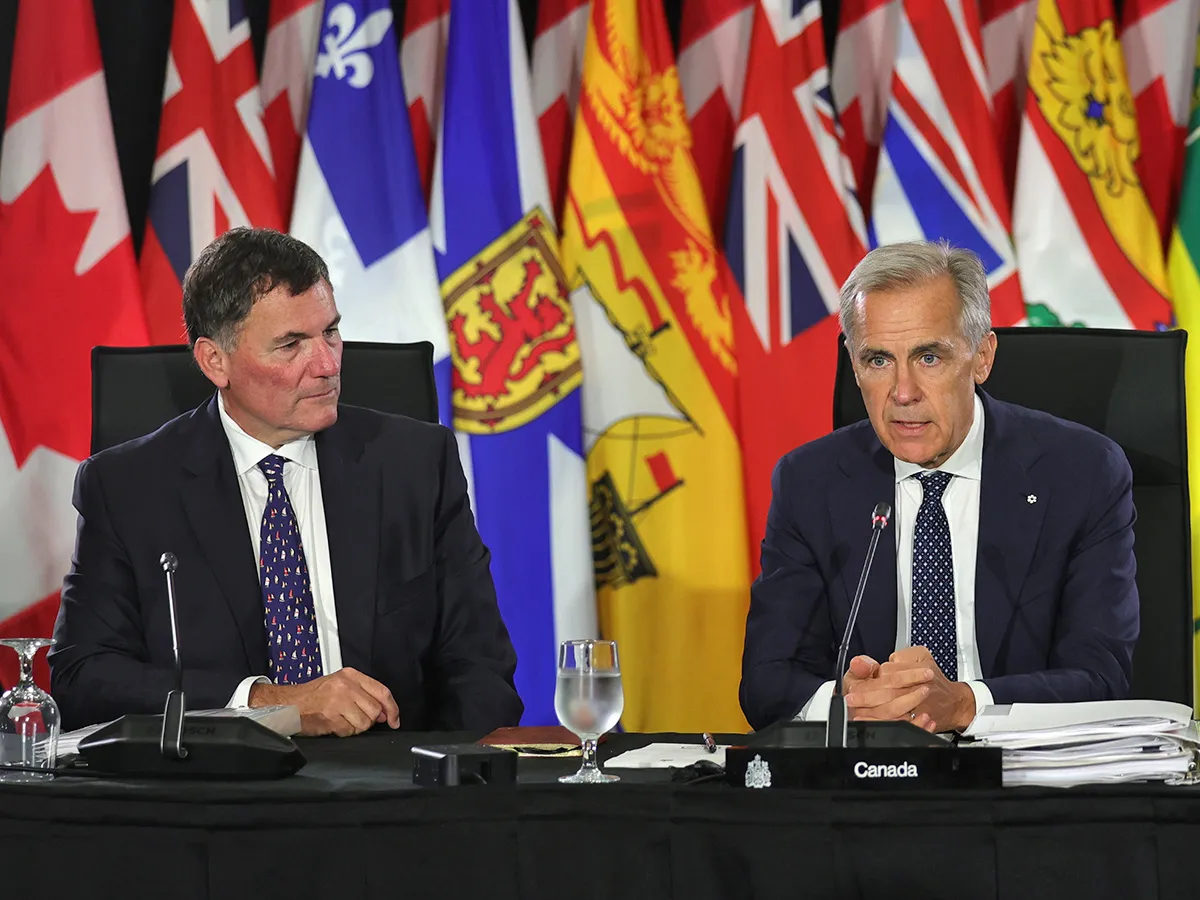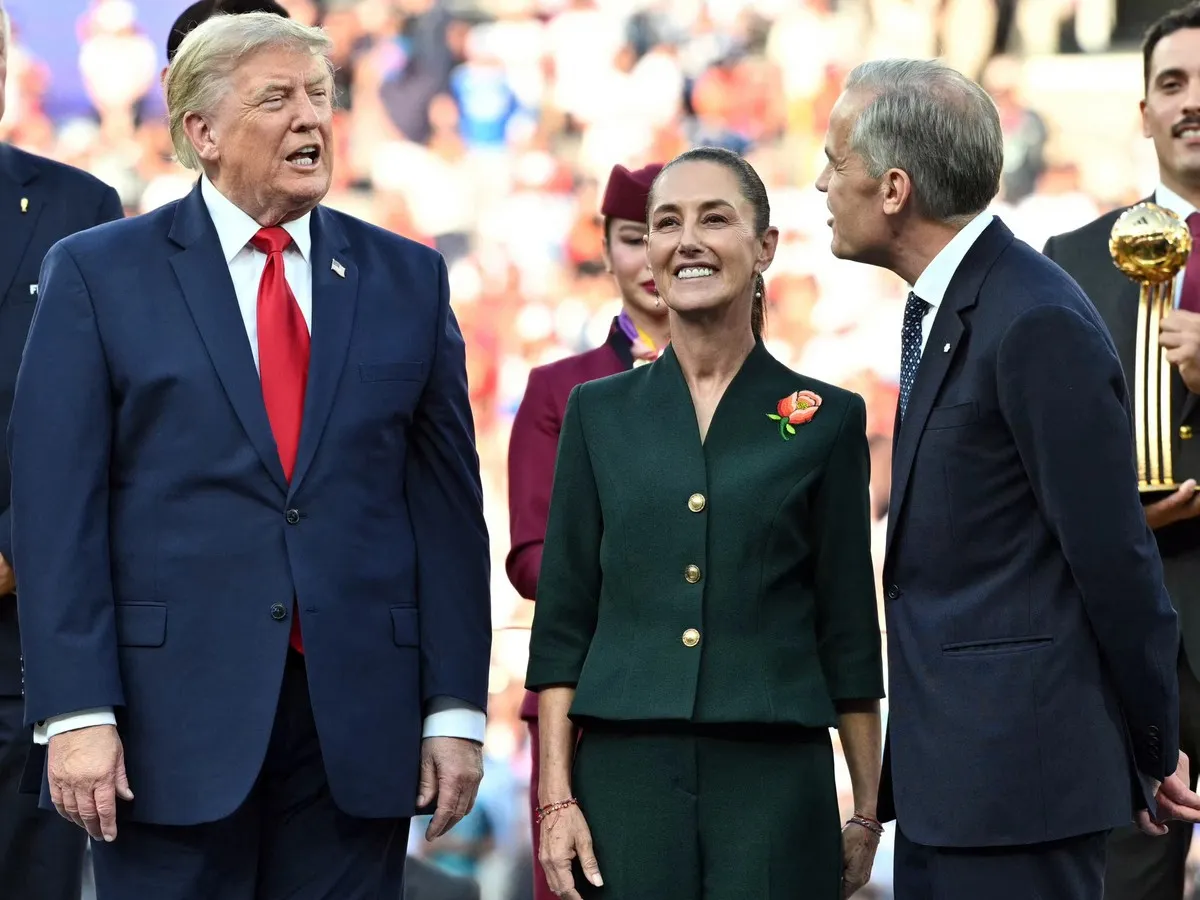
Skip to Content Subscribe Our Offers My Account Manage My Subscriptions FAQ Newsletters Canada Canadian True Crime Canadian Politics Health World Israel & Middle East Financial Post NP Comment Longreads Puzzmo Diversions Comics NP News Quiz New York Times Crossword Horoscopes Life Eating & Drinking Style Sponsored Play for Ontario Travel Travel Canada Travel USA Travel International Cruises Travel Essentials Culture Books Celebrity Movies Music Theatre Television Business Essentials Advice Lives Told Tails Told Shopping Buy Canadian Home Living Outdoor Living Kitchen & Dining Tech Style & Beauty Personal Care Entertainment & Hobbies Gift Guide Travel Guide Amazon Prime Day Deals Savings National Post Store More Sports Hockey Baseball Basketball Football Soccer Golf Tennis Driving Vehicle Research Reviews News Gear Guide Obituaries Place an Obituary Place an In Memoriam Classifieds Place an Ad Celebrations Working Business Ads Archives Healthing Epaper Manage Print Subscription Profile Settings My Subscriptions Saved Articles My Offers Newsletters Customer Service FAQ Newsletters Canada World Financial Post NP Comment Longreads Puzzmo Diversions Life Shopping Epaper Manage Print Subscription HomeNewsIf Trump imposes 50 per cent tariffs, should Canada hit back? Trade analysts disagreeThe Canadian side is 'cautiously optimistic,' but there has been no public indication of a breakthrough You can save this article by registering for free here. Or sign-in if you have an account.US President Donald Trump speaks with Canada's Prime Minister Mark Carney (R) as Mexico's President Claudia Sheinbaum looks on during the presentation ceremony of the 2026 World Cup football tournament final match between Spain and Argentina at the New York/New Jersey Stadium in East Rutherford on July 19, 2026. Photo by MANDEL NGAN /AFP via Getty ImagesWASHINGTON, D.C. — Canada’s trade negotiators are racing to avert 50 per cent tariffs on hundreds of Canadian exports, imposed under the never-before-used Section 338 of the Tariff Act of 1930 and scheduled to take effect on Aug. 19.Enjoy the latest local, national and international news.Exclusive articles by Conrad Black, Barbara Kay and others. Plus, special edition NP Platformed and First Reading newsletters and virtual events.Unlimited online access to National Post.National Post ePaper, an electronic replica of the print edition to view on any device, share and comment on.Daily puzzles including the New York Times Crossword.Support local journalism.Enjoy the latest local, national and international news.Exclusive articles by Conrad Black, Barbara Kay and others. Plus, special edition NP Platformed and First Reading newsletters and virtual events.Unlimited online access to National Post.National Post ePaper, an electronic replica of the print edition to view on any device, share and comment on.Daily puzzles including the New York Times Crossword.Support local journalism.Create an account or sign in to continue with your reading experience.Access articles from across Canada with one account.Share your thoughts and join the conversation in the comments.Enjoy additional articles per month.Get email updates from your favourite authors.Create an account or sign in to continue with your reading experience.Access articles from across Canada with one accountShare your thoughts and join the conversation in the commentsEnjoy additional articles per monthGet email updates from your favourite authorsSign In or Create an AccountorCanada-U.S. Trade Minister Dominic LeBlanc and Chief Negotiator Janice Charette are reportedly working with U.S. Trade Representative Jamieson Greer’s team on a deal to present to Trump early next week, aiming to avert the Section 338 tariffs and secure relief from Section 232 tariffs that have battered the lumber, aluminum and steel industriesWhile a source close to negotiations said the Canadian side is “cautiously optimistic,” there has been no public indication of a breakthrough. With Prime Minister Mark Carney having warned that “everything is on the table depending on the outcome of the negotiations,” trade watchers are contemplating possible next moves should Team Canada’s efforts fail.Get a dash of perspective along with the trending news of the day in a very readable format.By signing up you consent to receive the above newsletter from Postmedia Network Inc.A welcome email is on its way. If you don't see it, please check your junk folder.The next issue of NP Posted will soon be in your inbox.We encountered an issue signing you up. Please try againIf the 338 tariffs are imposed, some analysts think Canada should be prepared to retaliate, but the thoughts range from tough countermeasures to pursuing legal remedies. “I think that the Canadian government should [have] said, ‘Okay, here’s our list of possible tariff countermeasures,” said Lawrence Herman, senior fellow at the C.D. Howe Institute and a specialist in international trade and investment law. In fact, he thinks that list should have been produced immediately after the 338 tariffs were announced last month.“You maintain those tariffs and enact them on the 19th of August, here’s the list that we’re going to use for our counter-tariffs,” he offered as an example of how Ottawa should have responded to the threat.“That is the only thing that would have given us, in my view, some lever to go into the current round of talks.”Having a list of products for potential counter-tariffs would be handy, agrees Inu Manak, senior fellow at the Peterson Institute for International Economics in Washington. But she does not want to see immediate retaliation if Section 338 goes into effect. Instead, she recommends that Carney’s team pause and let the markets react, giving time for U.S. business pressure and congressional concerns to build before Ottawa imposes any countermeasures.“Canada can be effective [by] … itemizing where future retaliation is possible” if the talks fail, she said.“They should list it because then what it does is it creates this conversation …” she added, pointing to political candidates seeking votes in this year’s U.S. midterm elections.“It then also puts pressure on members of Congress to do something, and those who are trying to run for Congress to actually take a stand on some of these contentious issues that will hurt their constituents.”As for measures that Canada should take, Herman said Ottawa should start by leaving the sales bans on U.S. alcohol in place, applying tariffs, and restricting exports, and he’s sure LeBlanc has shared these possibilities with Greer’s team.“I’m confident that the Carney team has made this known to the U.S. side,” he said, reiterating that a list of counter-tariffs would have been a good idea.Manak suggested targeting agricultural products in electoral swing states, as well as auto production and inputs in Michigan. She also highlighted historically politically sensitive goods like Florida orange juice and Harley-Davidson motorcycles. Counter-tariffs, however, may not prove that fruitful, according to Jamie Tronnes, executive director of the Center for North American Prosperity and Security.“I think the retaliatory strategies that Ottawa is probably considering would be ones that would not necessarily move the needle too much.”But retaliation or countermeasures, she said, should not be treated as a binary choice. In other words, Ottawa’s response would not necessarily be limited to matching U.S. tariffs, Tronnes said, but declined to identify possible measures, saying Canada had “a lot of different options” and that discussing unconfirmed steps could move markets.The analysts differ not only over what Canada should retaliate against, but over whether retaliation would strengthen Ottawa’s hand or simply deepen the damage.Richard Stern, of the Plymouth Institute for Free Enterprise at Washington-based Advancing American Freedom, sees any retaliation as a repeat of Trump’s economic mistake: tariffs hurt consumers in the imposing country. “When Canada responds by imposing their own tariffs or their own increased quotas, they’re just doing the same thing Trump is doing,” he said. “They’re just hurting Canadians and Americans.”“It would be one thing if that harm was done only to the other side, but it’s going to be done to Canadians.”Stern thinks even creating a list of potential counter-tariff targets could help the U.S. administration build a stronger protectionist case.“If the conversation is, ‘Look at Canada threatening American companies,’ you will actually make the case for the isolationist pro-tariff crowd,” he warned.He doesn’t see a target list helping build pressure or momentum to push back against the tariffs in the United States.“It’s cleaner … to be an American company that’s saying, ‘We’re being harmed by our own government,’” he said, and noted that even that pressure hasn’t worked.“There’s already a lot of industries that are being harmed by Trump’s policies, and they’re already mounting a lot of pressure, and that hasn’t done anything.”Ed Fast, Canada’s former minister for international trade under PM Stephen Harper, also cautioned against retaliation. He urged Canadian negotiators to keep the economic asymmetry between the two countries front of mind.“If we retaliate with tariffs, as some have suggested, the Americans are much better able to absorb that retaliation than we are to absorb their tariffs against us.”“As more and more tariffs get levied, the more difficult it becomes for Canada.”While many trade watchers have labelled the 338s as illegal, some urge caution on whether there’s a strong legal case against them while others simply dismiss the timelines as unhelpful.Stern, for one, questions whether the administration followed the required process for finding discrimination under Section 338, but the measure is untested, and courts have historically given presidents a wide berth on tariff statutes.Canada could also pursue a dispute settlement through CUSMA’s Chapter 31, but that too would take time, and it might mean little to the Trump administration.“In theory, you can go through the dispute panel. In theory, you can go through the courts,” said Stern.But neither route, he said, would force the Trump administration to comply with a ruling in the near term.National PostOur website is the place for the latest breaking news, exclusive scoops, longreads and provocative commentary. Please bookmark nationalpost.com and sign up for our newsletters here. Join the Conversation This website uses cookies to personalize your content (including ads), and allows us to analyze our traffic. Read more about cookies here. By continuing to use our site, you agree to our Terms of Use and Privacy Policy.
If Trump imposes 50 per cent tariffs, should Canada hit back? Trade analysts disagree
If the U.S. imposes 338 tariffs, Ottawa must weigh whether to retaliate, pursue slow legal action, or simply wait Trump out.
1,632 words~7 min read