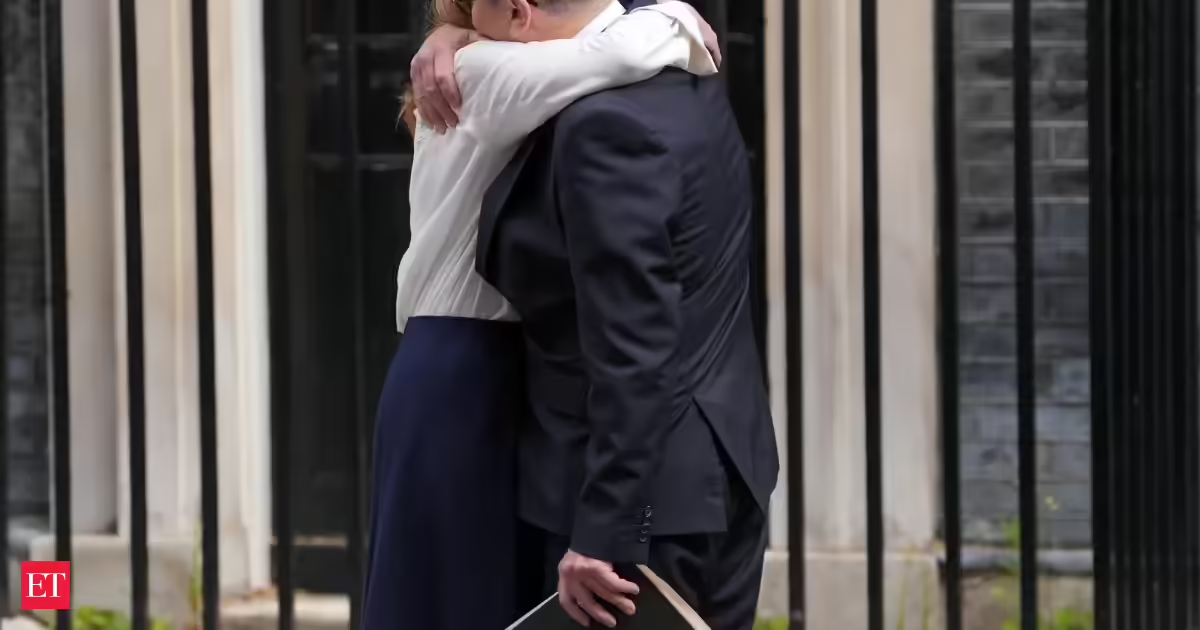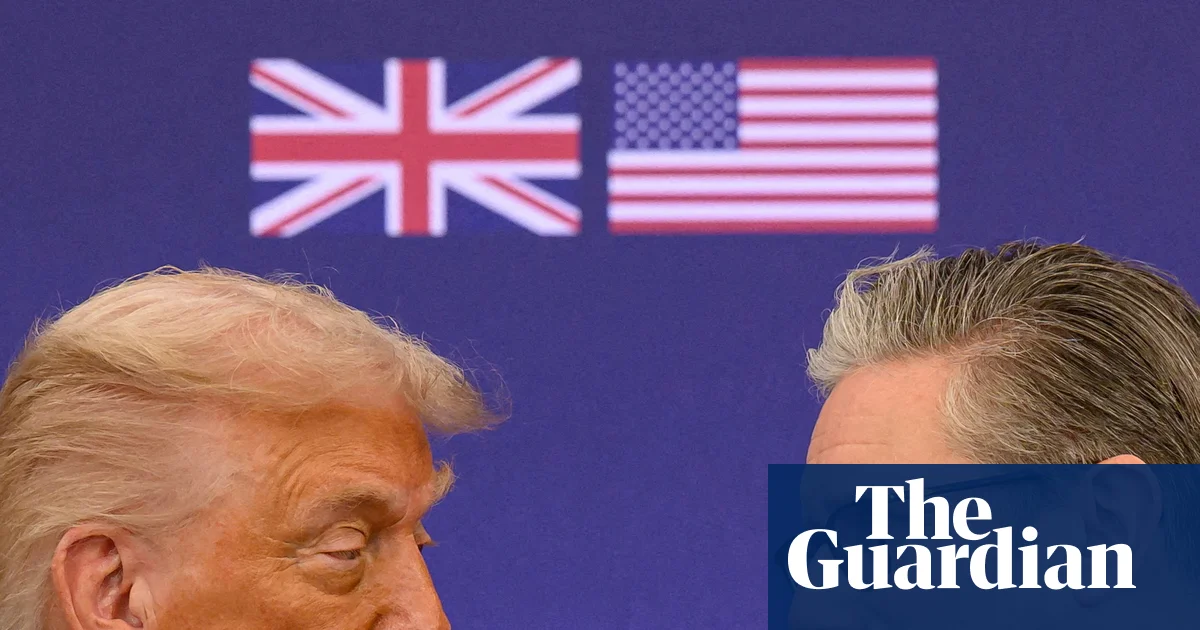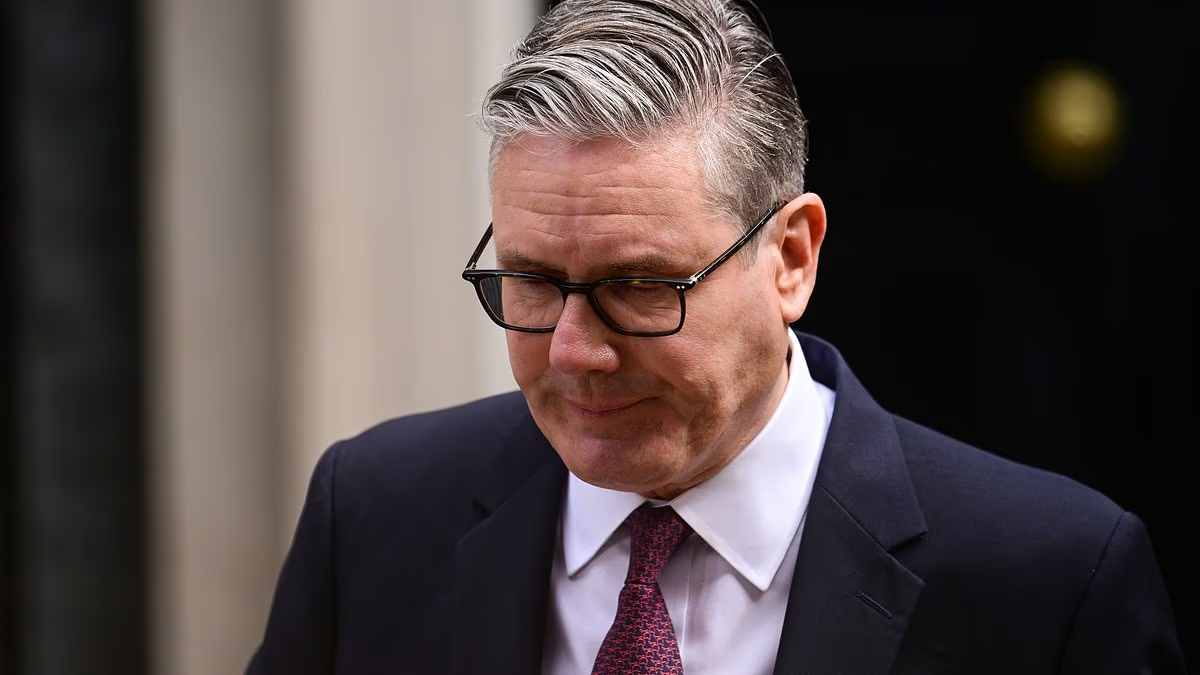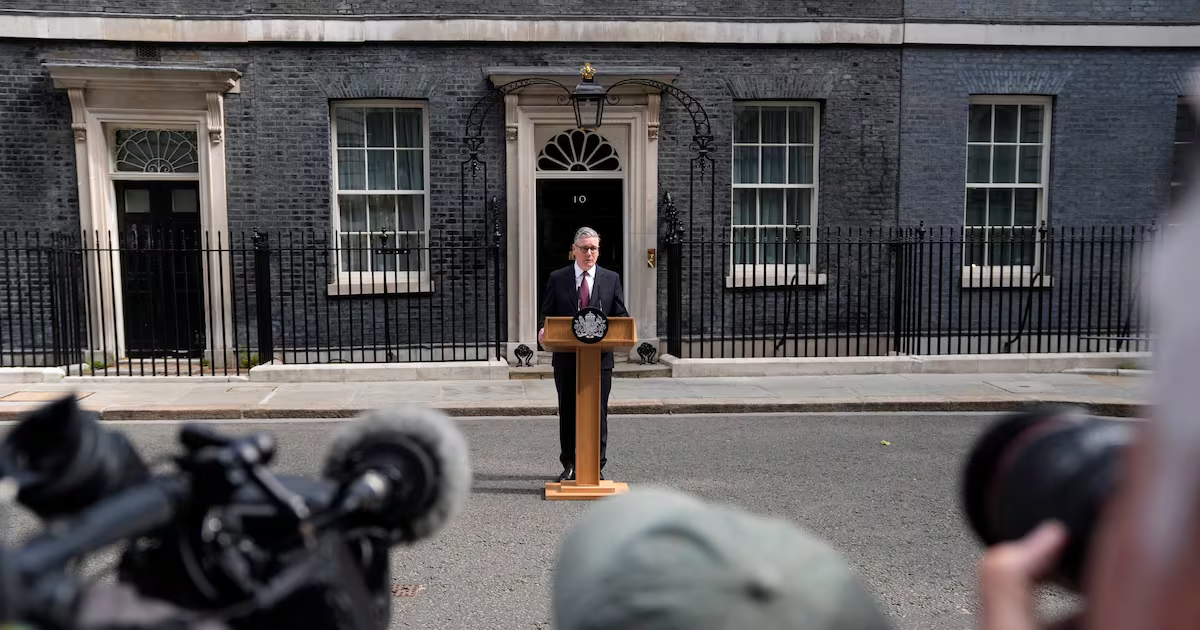
As Keir Starmer is pushed out the door of 10 Downing Street, prepare for a chorus of commentary asserting that while he was a political failure at home, he did better on foreign policy. It’s not true.Starmer’s foreign policy legacyBritain has lost so many prime ministers in the 10 years since Brexit that the ritual surrounding their departure has become a familiar one, from the lectern outside No 10 to the sad, supportive spouse and the staff standing to the side. One element of the prime ministerial political obituaries has become routine too: the conclusion the discarded leader may have been a dud at home but was a triumph on the world stage.This verdict on David Cameron, the man who called and lost the Brexit referendum, saw him return to government as foreign secretary a few years later. Even Boris Johnson retains a reputation in Britain as a foreign-policy success because of his emphatic, early support for Ukraine after Russia’s full-scale invasion in February 2022.The pundits are settling on a similar view of Starmer, citing his successful personal diplomacy in improving relations with European leaders and managing Donald Trump in a way that avoided too destructive a confrontation. These are real achievements, but they are insignificant in comparison with his failure to rescue British foreign policy from the delusions of Johnson’s Global Britain pipedream and his moral emptiness on Gaza and international development aid.Johnson’s vision, set out in the 2021 strategic defence and foreign policy review, was for a pivot away from Europe towards the Anglosphere, the Commonwealth and the Asia-Pacific region, where Britain should be the European power with “the broadest and most integrated presence”. The “Indo-Pacific tilt” found its first expression in the deployment of a carrier strike group to the region, led by the HMS Queen Elizabeth, when the Royal Navy had to borrow most of the F35 fighter jets from the US because it didn’t have enough of its own to fill the aircraft carrier deck.Labour in opposition criticised the Conservatives’ pattern of making commitments on defence that they were unable or unwilling to fund. But in office, Starmer followed the same path, piling one grandiose promise on top of the next until his defence secretary John Healey resigned this month in protest against the prime minister’s failure to fund them.The commitments Healey cited included Starmer’s promises British forces would be deployed to Ukraine after a ceasefire; that it would lead a multinational maritime mission in the Strait of Hormuz; and that Nato’s Arctic Sentry mission would be British-led. Even after making cuts in almost all other departmental budgets and following steep cuts to the international development aid budget, there was not enough to fund these promises.Starmer’s reset with the European Union has been hidebound by his manifesto promises not to rejoin the single market or the customs union and ruling out the return of free movement of people. Although he championed a referendum to reverse Brexit in opposition, Starmer has been timid on the issue since taking office and has failed to make the argument for closer ties that go beyond modest, mostly technical moves.Starmer set the tone for his Gaza policy on 11 October 2023, when he was still opposition leader, and LBC’s Nick Ferrari asked him if it was appropriate for Israel to impose a siege and to cut off water and power.“I think that Israel does have that right. It is an ongoing situation,” Starmer said.“Obviously, everything should be done within international law, but I don’t want to step away from the core principles that Israel has a right to defend herself, and Hamas bears responsibility for these terrorist attacks.”After entering office, Starmer suspended about 30 arms export licences to Israel but left more than 90 per cent of them in place, allowing the supply of components for F-35 combat aircraft as well as radar and targeting equipment. In June last year, his government banned the direct action group Palestine Action and declared it to be a terrorist organisation, putting it in the same category as Isis.Starmer leaves Britain with a foreign and defence policy it cannot afford, which fails to acknowledge its diminished position in the world, lacks moral backbone and does not serve the country’s national interest. But you won’t hear much about that in the next few days.Please let me know what you think and send your comments, thoughts or suggestions for topics you would like to see covered to denis.globalbriefing@irishtimes.com
Myth of Starmer’s foreign policy success
His achievements abroad are outweighed by failures of strategy, judgement and political courage
742 words~3 min read