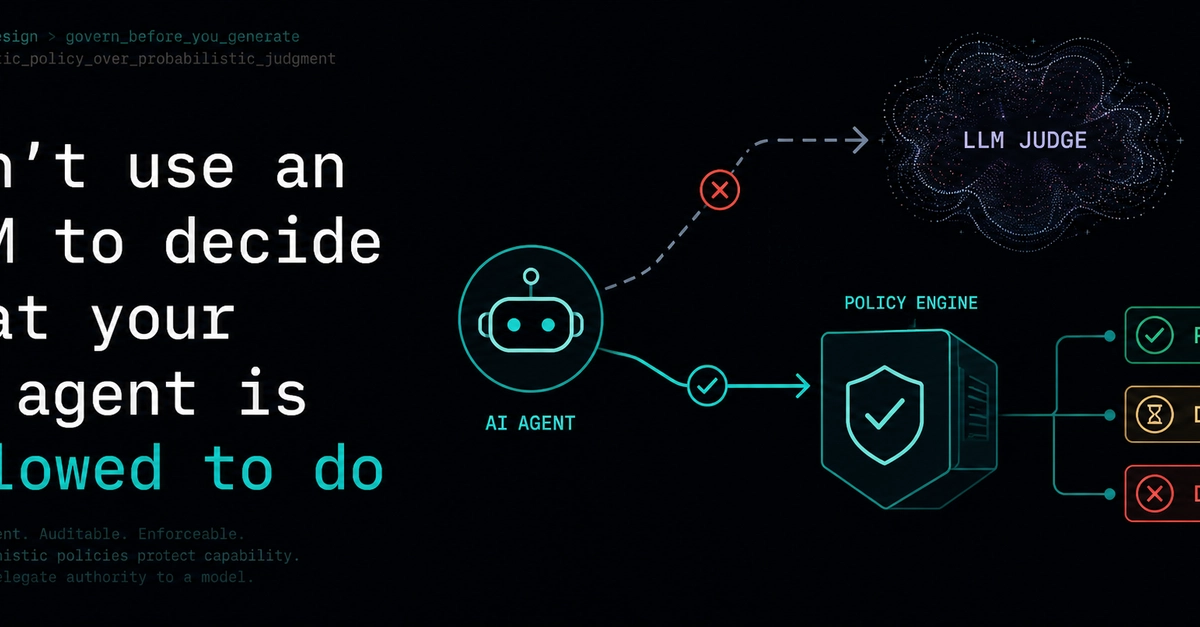
I'm in a group called AARM. It's a bunch of people trying to work out how you actually secure what an AI agent can do once it's running, and the basic idea is that the control has to sit right at the action. You check a tool call before it runs, and the agent can't wriggle around the check. So everyone in there already agrees that telling an agent "please don't" isn't a security model.
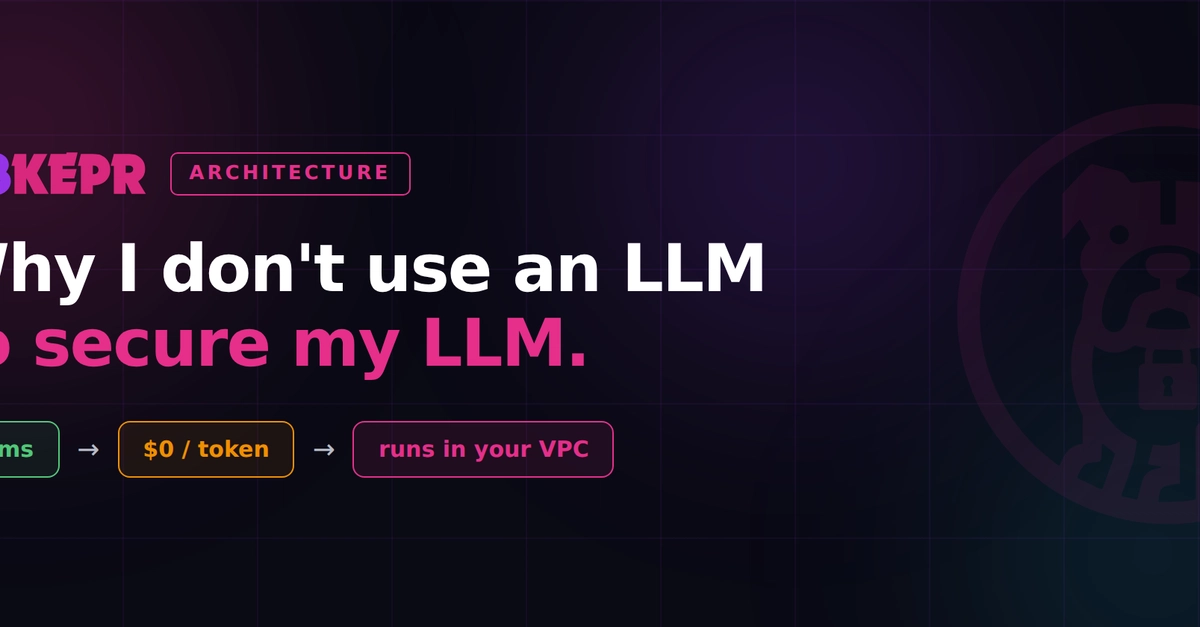
What gets me is that even in that room, I keep seeing people reach for an LLM to be the thing that makes the call. The agent goes to do something, you take that action and hand it to a second model, ask it whether it's fine, and whatever it answers is what happens. A model watching the model. I don't really get it, and I want to walk through why, because I think people lean on this without sitting with what it actually buys them.
What you're actually defending against
Go back to why you want a guard on the agent in the first place. It's there because the agent can be talked into things. Some prompt injection sitting in a page it reads, a tool result that quietly hands it a new instruction, a user who words a request just so. The agent is a thing you can reason with, and the worry is that the wrong person reasons with it.