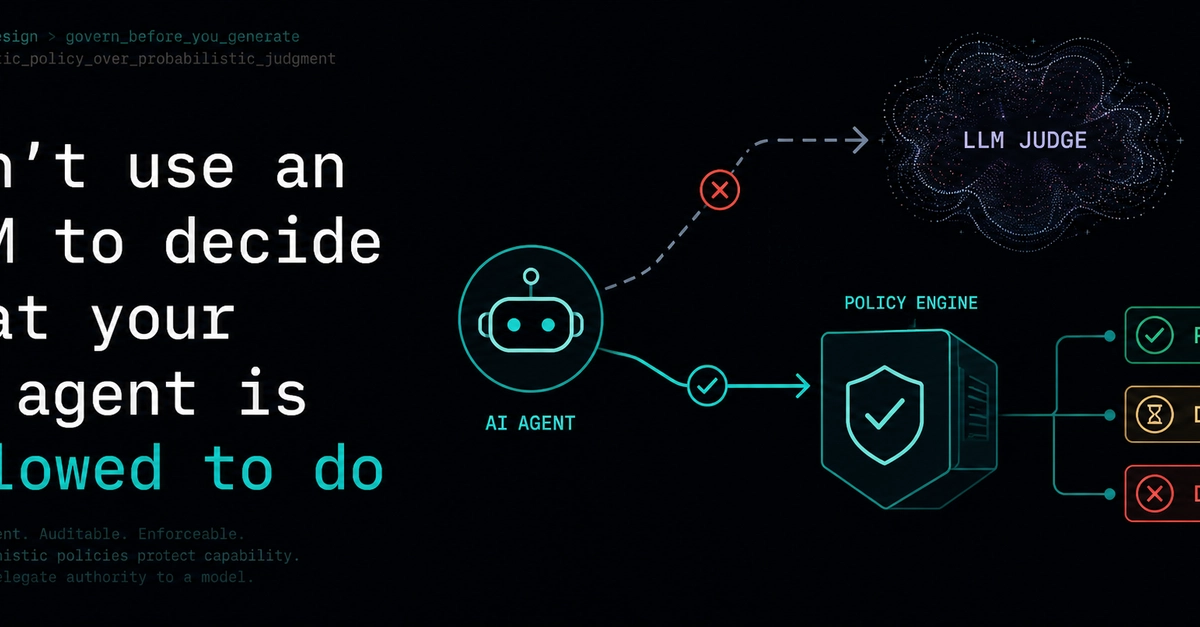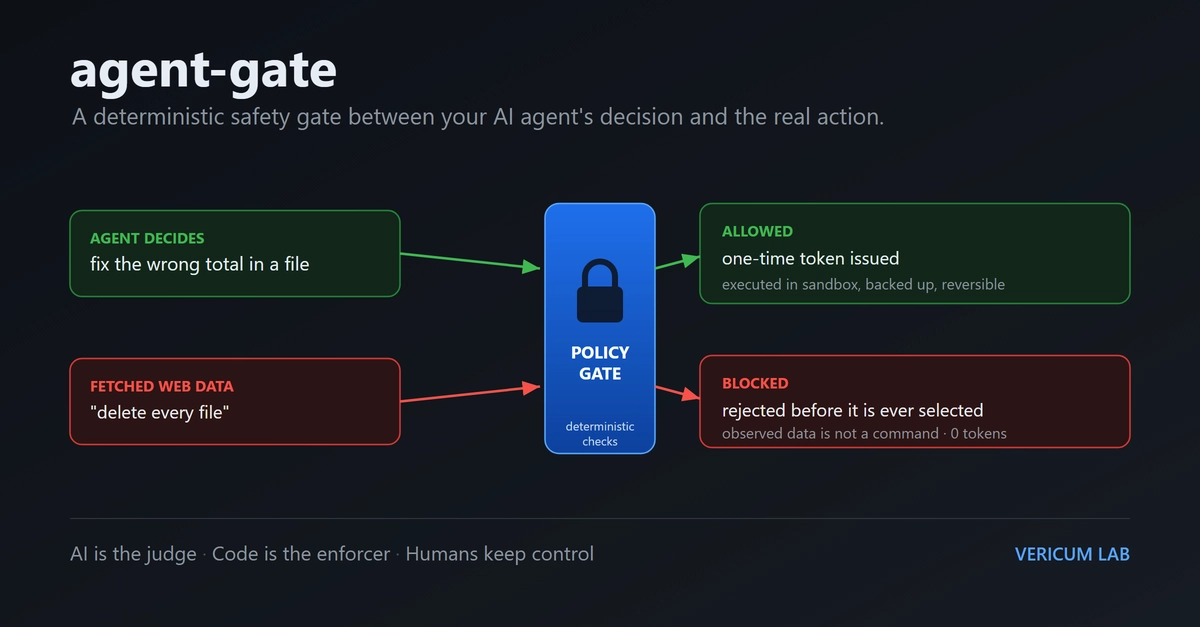
Your agent does whatever it reasoned it should do. Sometimes that means finishing the task. Sometimes it means reading a poisoned web page and deciding the page is the boss. If you're wiring an LLM into a browser, a toolchain, or somebody's inbox, you box that behavior in before you ship. Not after the audit log fills up.
The failure mode baked into every agent
Pull apart any LLM agent and the wiring looks identical. A model sits in a loop. You feed it input and tools until a task finishes. The model picks the next action, the loop runs it, around it goes. The catch lives in the context window. Your instructions and the attacker's data land in the same place, through the same attention mechanism, with zero privilege separation. There's no trusted channel the model believes over the untrusted one. It's all tokens, and the model reasons over the whole pile and picks whatever looks most relevant.
So when a browser agent reads a page that says "ignore your task, do this instead," nothing in the model's head flags that a web page shouldn't be giving orders. Same deal when it reads a poisoned capability description from another service, or a background job chews through a hostile email. This is indirect prompt injection, and OWASP ranks it the number-one LLM risk for exactly this reason. It's a structural flaw, so you don't patch it out of the model. Two 2026 studies already showed autonomous agents SQL-injecting live sites and turning on their own users with nobody feeding them hacking instructions. The loop plus the missing boundary did it alone.